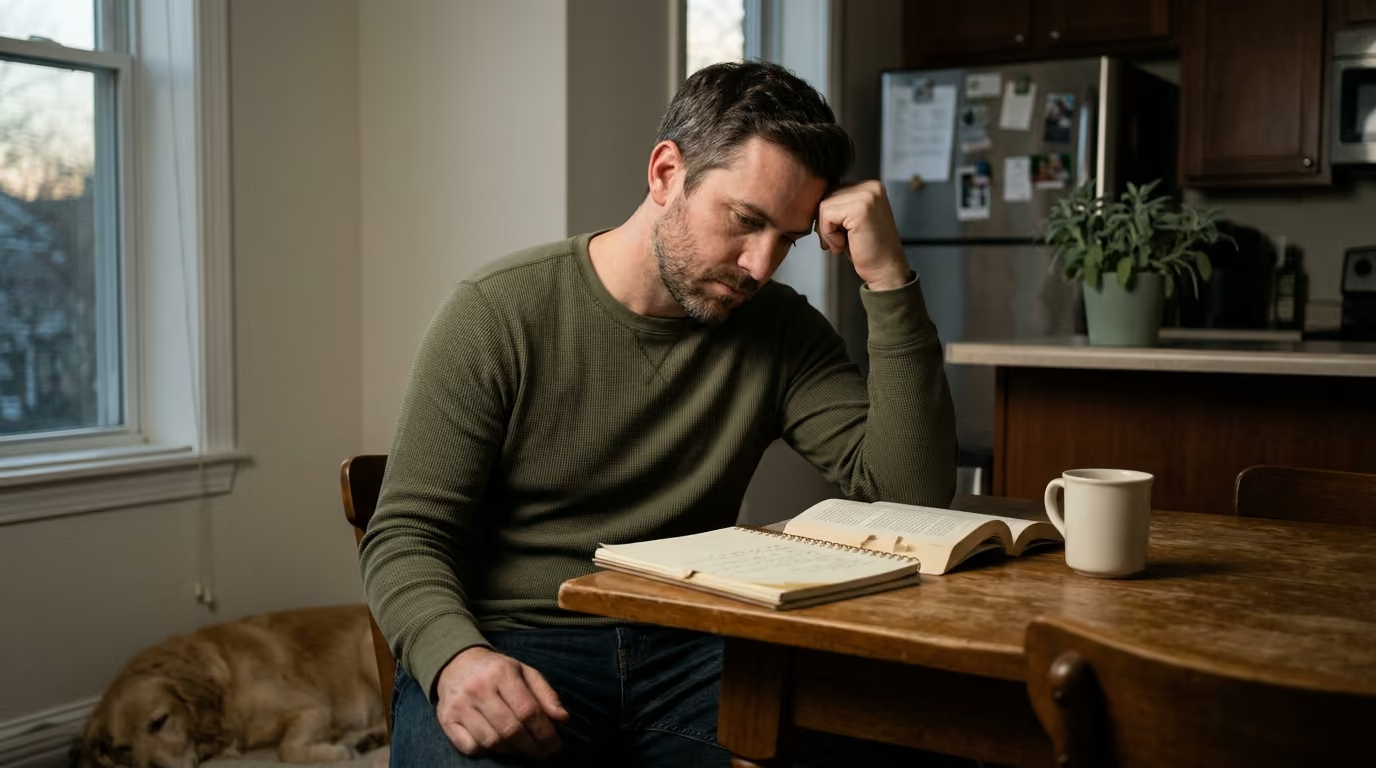

Two distinct recovery pathways for guilt and shame guide service members through responsibility mapping, moral outrage processing, and meaningful amends.





If you are in immediate danger, call 911. For 24/7 support, call or text 988 and press 1 for the Veterans Crisis Line, or text 838255.
You wake up at three in the morning with your heart racing, replaying a split-second decision made years ago during a deployment, a night shift, or an emergency call. The room is quiet, but your mind is loud with relentless questions about what you did, what you failed to do, and whether you could have changed the outcome. You check your resting heart rate, stare at the ceiling, and wonder why the weight of that single memory feels heavier now than it did when you were still in uniform.
Moral recovery after difficult service is an intentional process of separating actual responsibility from hindsight bias, rebuilding personal values, and restoring psychological health without denying real harm. It is not an excuse to avoid accountability, nor is it a sign of weak character or an automatic diagnosis of mental illness.
Working through post-service guilt, shame, and grief requires an evidence-informed approach that distinguishes trauma-related fear responses from moral pain, replaces destructive self-attack with compassionate accountability, and repairs personal relationships and daily function.
Understanding your distress begins by distinguishing between fear-based neurological reactions and value-based moral suffering. Post-traumatic stress disorder, commonly known as PTSD, is primarily organized around threat, fear, avoidance, and nervous system hyperarousal. When a person lives with PTSD, their physiological survival system remains stuck on high alert long after the physical danger has passed.
Moral injury describes the lasting psychological, social, and spiritual distress that follows events that violate deeply held moral beliefs. The event might involve an action you took, an action you failed to take, an order you followed, or a profound betrayal by trusted leaders or peers. Unlike fear-based trauma, the core emotions driving moral injury are guilt, shame, moral outrage, grief, and a loss of trust in oneself or humanity.
According to evidence summaries from the VA National Center for PTSD, moral-injury symptoms are associated with greater PTSD, depression, and anxiety severity, but moral injury is not synonymous with PTSD. A person can experience severe moral injury without the life-threat responses of classic PTSD. Conversely, someone can have fear-based PTSD without carrying significant guilt or shame.
The military and civilian response communities use the term potentially morally injurious event, or PMIE, to describe situations that carry ethical friction. A PMIE does not automatically produce long-term psychological injury in every person who experiences it. The outcome depends on leadership context, personal moral frameworks, available support, and how the individual interprets the event over time.
Exposure to high-stakes ethical dilemmas is common across military operations, emergency medicine, firefighting, and disaster response. However, enduring clinical impairment occurs in a specific subset of exposed individuals.
A 2025 study of United States Veterans published in psychiatric research estimated that functionally impairing moral distress affected 4.1% of the full sample, while functionally impairing moral injury affected 5.9%. Among Veterans who endorsed exposure to a PMIE, 13.1% experienced functionally impairing moral injury. Across the broader population, this represents approximately 955,000 Veterans managing severe moral distress that interferes with work, relationships, and health.
Research across military and civilian professions shows distinct exposure patterns:
A systematic review examining moral injury prevalence cited representative symptom estimates of approximately 6% among combat Veterans, 7% among healthcare workers, and 4% among first responders. These numbers demonstrate that while ethical stress is widespread in high-consequence professions, chronic moral injury requires targeted attention. For a deeper look at physical and mental health resources, review the BattleVet military health resource library.
Guilt and shame feel similar in the body, but they direct your thoughts in opposite directions and require distinct recovery strategies. Conflating the two can trap you in chronic self-condemnation.
Guilt focuses on a specific action, omission, or decision. It is the internal realization that your behavior violated an established standard or ethical value.
When proportionate to the facts, guilt serves a constructive purpose. It alerts you to harm, prompts honest reflection, and motivates meaningful repair or behavioral change. However, post-service guilt frequently becomes distorted through several distinct psychological patterns:
Cognitive Processing Therapy, a frontline trauma treatment, specifically addresses these cognitive patterns. Clinicians help individuals evaluate hindsight bias, clarify true responsibility, and align their current actions with their core values.
Shame is an identity-level judgment that shifts the focus from what you did to who you are. While guilt states, "I made an error," shame insists, "I am an irredeemable person."
Shame generates powerful urges to conceal past experiences, isolate from family, and reject medical care. When you believe you are fundamentally defective, you view isolation as a way to protect others from yourself. A 2025 study on functionally impairing moral injury found that 47.8% of cases were characterized primarily by shame-related symptoms, with another 33.3% displaying blended symptom profiles.
Recovery from shame does not occur by declaring innocence or avoiding hard truths. Instead, it requires building a complex, realistic sense of self. You can acknowledge that you participated in an event with terrible consequences without reducing your entire human identity to that single moment. Understanding this difference is vital for anyone navigating veteran lifestyle and healthcare decisions.
Self-compassion is frequently misunderstood by service members, veterans, and first responders as sentimental, weak, or passive. In reality, clinical psychology defines self-compassion as a rigorous, practical framework for emotional stabilization and cognitive accuracy.
Psychologist Kristin Neff outlines self-compassion across three core components:
When evaluating recovery options for post-service distress, it is important to distinguish established frontline clinical treatments from emerging, investigational protocols.
Frontline, evidence-based psychotherapies recommended by the VA/DoD Clinical Practice Guideline for PTSD include:
Clinical research demonstrates that individuals whose trauma includes substantial moral violation achieve symptom reductions from Cognitive Processing Therapy that are non-inferior to patients with purely fear-based trauma.
Emerging treatments under active investigation include:
Self-compassion is not a replacement for comprehensive medical care, nor is it a quick cure. However, evidence shows it can lower internal resistance to clinical treatment and reduce the severity of post-service distress. Learn more about strategies for managing operational strain in our guide to sleep, stress and resilience resources.
A central obstacle in post-service recovery is conflating an outcome with a decision. When an operation goes wrong or a teammate dies, your brain naturally searches for personal errors to make sense of the tragedy.
The Event-Meaning-Response-Action sequence provides a structured method to break this cognitive spiral:
To separate hindsight bias from genuine responsibility, work through the following questions systematically on paper. Writing your thoughts down engages analytical brain regions and reduces emotional looping.
Moral pain does not always present as quiet sorrow. Often, it emerges as intense anger, cynicism, and institutional betrayal.
Anger after service is often a protective response to broken trust. It may be directed at military or organizational leadership who concealed misconduct, political systems that mismanaged deployments, healthcare administrators who delayed critical resources, or civilians perceived as indifferent. Moral-injury literature emphasizes that enduring outrage, betrayal, and resentment are common reactions when organizational loyalty is met with abandonment.
Anger is not inherently bad. It highlights violated boundaries and can motivate justice or system reform. However, chronic and unmanaged anger carries heavy physiological and social costs:
When you notice intense anger or betrayal surfacing, run through these five analytical questions before taking action:
Interrupting shame requires moving away from vague, sweeping self-condemnation and replacing it with grounded, accurate thinking. When shame is active, it relies on unexamined, absolute language.
When you find yourself spiraling into guilt or shame, execute this six-step grounding sequence. It prevents unstructured rumination and returns you to present-day stability.
If self-guided reflection leaves you feeling increasingly dissociated, overwhelmed, or unsafe, stop the exercise immediately and reach out to a professional clinician.
Repairing moral pain often involves making amends. However, making amends must be handled carefully to avoid creating fresh harm for yourself or others.
Key considerations for making amends include:
Sleep deprivation and moral distress create a dangerous physiological feedback loop. When you do not sleep, your brain struggles to regulate emotion, making intrusive memories and self-blame significantly worse.
Data from the Millennium Cohort Study highlights this link, showing that 92% of active-duty service members with PTSD reported clinically significant insomnia, compared to 28% of those without PTSD. VA research summaries note that chronic insomnia has been documented in 90% to 100% of Vietnam-era Veterans with service-related trauma. A 2025 VA analysis estimated that more than half of all Veterans with PTSD experience co-occurring, clinically significant insomnia.
When you lose restorative sleep, your prefrontal cortex loses its ability to manage the amygdala. This neurological shift increases emotional reactivity, magnifies catastrophic thinking, and weakens your ability to challenge irrational self-blame. At the same time, waking up at 0200 or 0300 often triggers rumination, reinforcing sleep-onset anxiety.
To break this cycle, treat sleep disruption as an objective physiological problem rather than a personal failure. For targeted strategies on rebuilding your nightly recovery foundation, explore our detailed recovery and sleep articles.
Post-service moral distress frequently involves complex, painful scenarios that resist simple answers. These illustrative composite cases show how evidence-informed principles apply to real-world challenges.
Context: A former combat medic continuously replayed a mass-casualty incident, believing, "I killed my teammate because I chose to treat another casualty first."
Resolution Framework: The individual worked with a clinician to separate medical facts from emotional self-condemnation. By mapping the scene's constraints, multiple critical casualties, limited supplies, active fire, and dark conditions, the medic realized they made a medically sound triage decision under extreme limits.
The recovery process focused on processing grief over the teammate's death rather than carrying false guilt for causing it. The medic channeled their values into training junior civilian paramedics, transforming unresolved pain into service.
Context: A service member reported severe misconduct within their unit, only to face career retaliation, social isolation, and institutional cover-ups by senior officers.
Resolution Framework: The dominant distress was deep betrayal and outrage rather than self-blame. Forcing this individual to practice self-forgiveness would have been invalidating and counterproductive.
Instead, recovery centered on validating their ethical actions, setting clear boundaries with former colleagues, and pursuing legal and administrative remedies through appropriate channels. Clinical care addressed co-occurring PTSD symptoms and depression, helping the individual build a purpose-driven civilian life outside the military.
Context: A veteran experienced sexual assault by a higher-ranking unit member and suffered from intense shame, believing their freeze response and delayed reporting made them responsible.
Resolution Framework: Clinical care focused on establishing psychological and physical safety while addressing misplaced self-blame. Clinicians helped the veteran understand the biological freeze response as an involuntary survival mechanism during an assault, not consent or weakness.
The recovery process focused on shifting shame off the survivor and onto the perpetrator. Care was delivered through specialized MST clinical programs, emphasizing personal agency and dignity.
Context: A former firefighter dealing with pediatric call memories experienced severe insomnia, consumed heavy amounts of alcohol to sleep, and frequently had angry outbursts with family.
Resolution Framework: Asking this person to engage in deep emotional reflection while actively intoxicated and sleep-deprived would fail. The initial priority was physical stabilization.
The individual engaged in medical alcohol detox, completed a course of CBT-I for sleep restoration, and created an anger management plan. Once their physical baseline stabilized, they began structured trauma-focused therapy to process the underlying calls safely. For related strategies on long-term health management, view our healthy aging and longevity resources.
Self-guided recovery strategies are valuable for daily maintenance, but they do not replace comprehensive medical care. Certain symptoms require immediate assessment and support from qualified healthcare providers.
If you are experiencing thoughts of suicide, have an active plan, or feel unable to stay safe, reach out for support immediately:
The 2025 National Veteran Suicide Prevention Annual Report documented 6,398 Veteran suicide deaths in 2023, representing an unadjusted rate of 35.2 per 100,000. Notably, 61% of Veterans who died by suicide had not received VA health care services during the preceding year.
Quality care is accessible through multiple routes, including primary care clinics, Community Mental Health Centers, Vet Centers, peer-support networks, and specialized veteran programs. Reaching out for professional care is a practical, responsible action to protect your health and future.
This article is for educational and informational purposes only and does not constitute medical advice, psychiatric diagnosis, or clinical treatment. Working with post-service trauma, moral injury, depression, and insomnia requires an individualized evaluation by a qualified healthcare professional. Always consult a licensed physician, psychiatrist, or clinical psychologist regarding your specific health condition, treatment plans, or medication decisions.
Yes. PTSD is primarily a fear-based response to life-threatening danger, characterized by hyperarousal, startle reflexes, and panic. Moral injury is a value-based wound characterized by guilt, shame, profound grief, loss of trust, and existential distress. You can experience severe moral injury without the life-threat symptoms of PTSD, and you can experience fear-based PTSD without carrying moral guilt.
No. Self-compassion is about seeing reality clearly without destructive self-attack. It means taking honest responsibility for choices you made, acknowledging real harm, and making meaningful repairs where possible. Crucially, it prevents you from claiming false responsibility for events outside your control or declaring yourself permanently defective.
No. Recovery does not require an immediate or forced state of self-forgiveness. Many individuals recover stability, purpose, and health by practicing compassionate accountability, setting boundaries, and living according to their core values without using forgiveness language. Healing is about living well and acting responsibly today, not forcing an emotional state.
Ask yourself what specific information, resources, and time you had at the exact moment the event occurred. Hindsight bias happens when you use facts learned days, weeks, or years later to judge a split-second decision made under extreme chaos and operational stress. If your judgment depends on information you could not have known at the time, you are dealing with hindsight bias.
Follow BattleVet for practical guidance on military and veteran health, strength, recovery, testosterone, sleep and healthy aging. Stay connected for new articles, research backed insights and clear information to help you stay capable for the years ahead.


Build better habits around strength, recovery, sleep, hormones and healthy aging with practical guidance for active military personnel and veterans.
Explore BattleVet