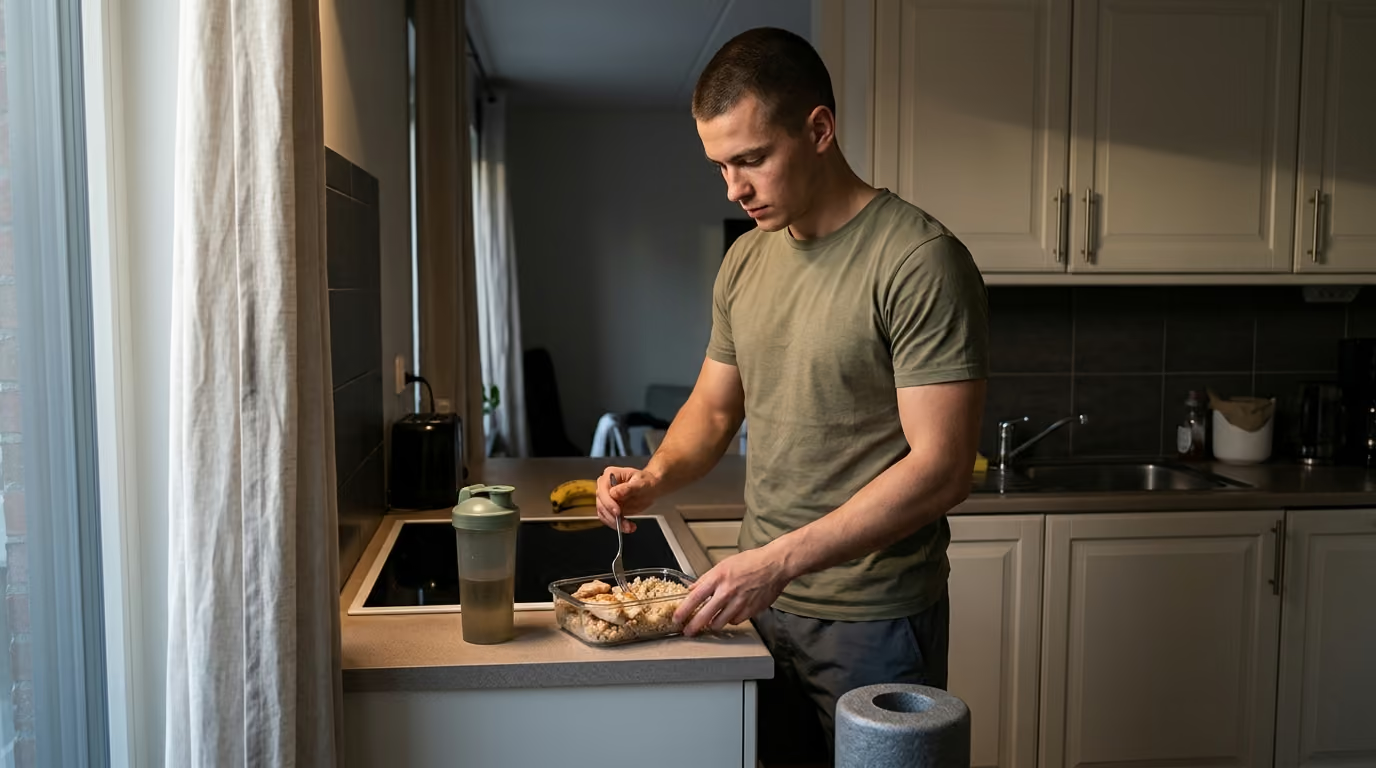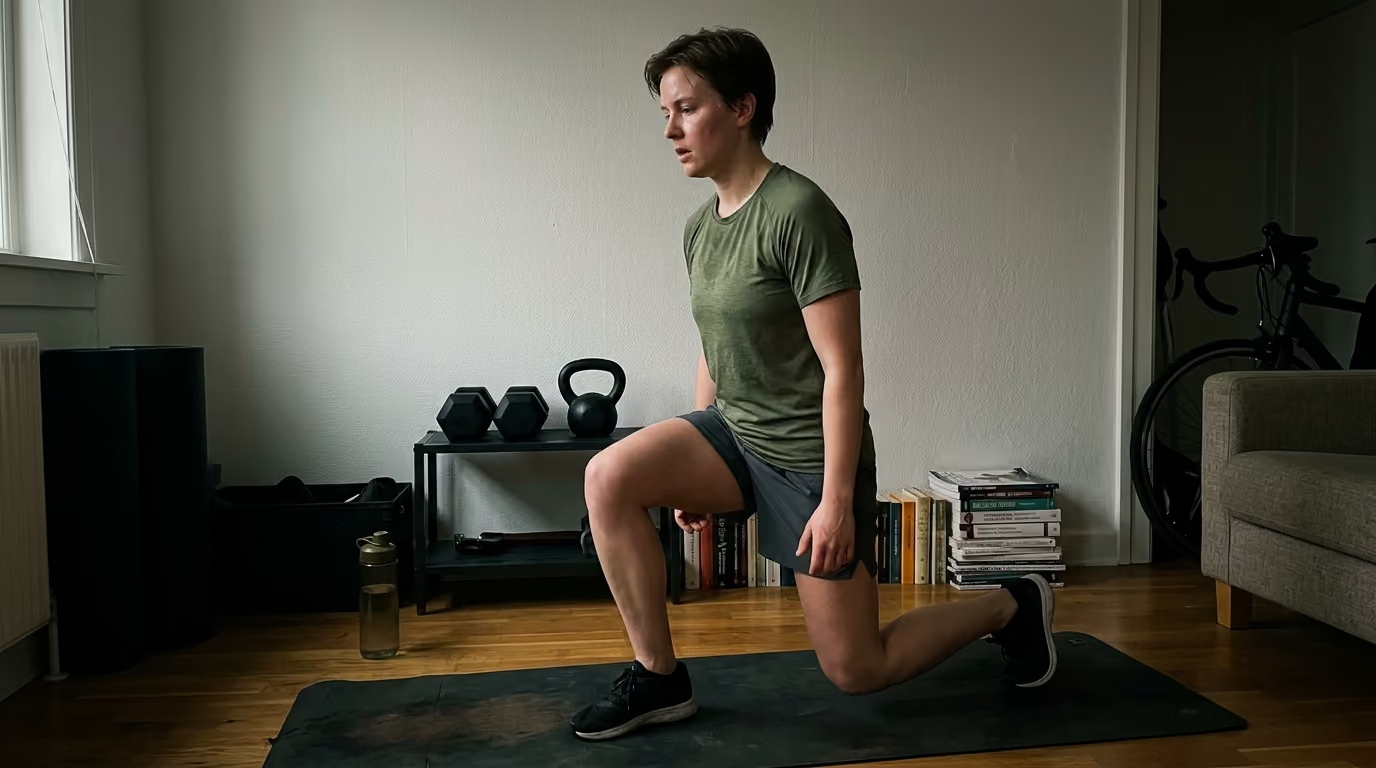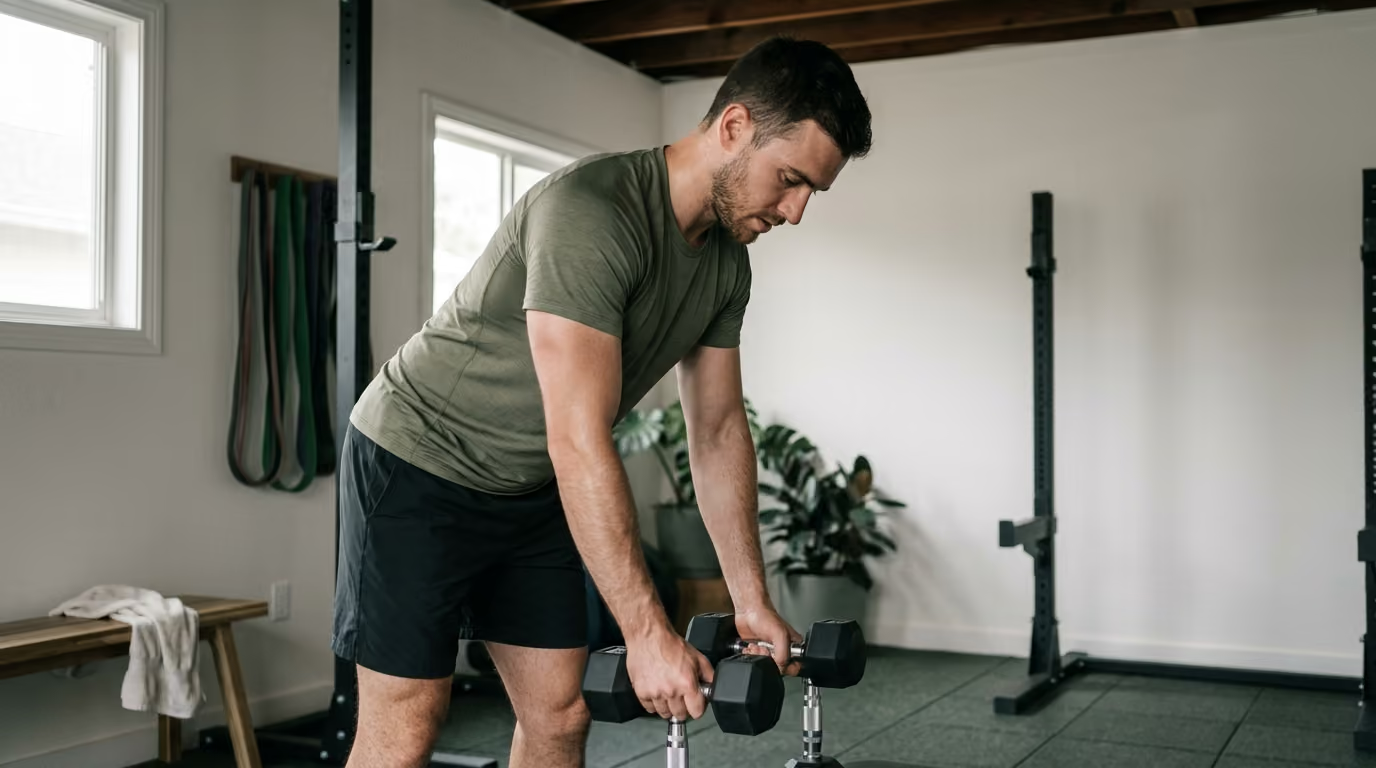

Seven fitness training systems are compared across volume, intensity, and frequency to help you select the ideal methodology for your athletic goals.





Most fitness discussions assume that working harder in the gym automatically produces better real-world physical capability. You can spend months grinding through heavy barbell deadlifts, brutal circuit workouts, or high-mileage runs, only to find yourself struggling under a heavy ruck or dealing with persistent joint irritation. Physical readiness is not a single uniform trait that increases simply because an exercise session felt exhausting. True capability depends on matching specific physiological adaptations to the exact demands of your daily life, service requirements, and long-term health goals.
The most effective fitness approach is not the one with the most aggressive marketing, but the system that directly builds your required physical qualities while respecting your recovery capacity.
Choosing the right training system requires separating your desired physical outcomes from popular exercise methods. Bodybuilding, powerlifting, tactical conditioning, high-intensity functional training, endurance training, calisthenics, and general strength and conditioning each target distinct physiological qualities. No single system excels at everything. Selecting the right path involves identifying your primary performance demands, evaluating your injury history, and combining general physical capacity with task-specific preparation.
In our experience, readiness is much more than simply pushing through physical fatigue. I remember waking up after a poor night of sleep and realizing that my training recovery was taking much longer than it used to. It became clear that sustained performance requires a structured approach to recovery and sleep alongside disciplined programming. That realization completely shifted how our team views long-term capability and sustainable physical development.
A common mistake in physical preparation is confusing a training system with a training goal. A training system is simply an organized method for applying physical stress to the body over time. A training goal is the specific adaptation you want to achieve, such as increased muscle mass, maximal strength, aerobic endurance, or occupational capability.
When you confuse the system with the goal, you risk adopting rigid workout structures that do not serve your actual needs. For example, following a competitive powerlifting template will make you exceptionally skilled at three specific barbell lifts. However, it will not automatically prepare you to carry a fifty-pound pack across uneven terrain or sustain energy through a twelve-hour shift.
To evaluate any fitness discipline objectively, you can assess it across several core criteria:
The American College of Sports Medicine emphasizes that training adaptations are task-dependent. Frequency, intensity, and duration interact to provide an overload stimulus, which must be tailored to the individual. For active military personnel and veterans, the central question is rarely about finding the single best system. Instead, the goal is identifying which combination of systems builds necessary physical qualities while remaining sustainable and medically sound.
Every fitness system has distinct mechanical demands, physiological adaptations, and practical limitations. Understanding these profiles allows you to select the best tool for your current training phase rather than relying on guesswork.
Bodybuilding is a physique-oriented training approach designed to maximize muscle hypertrophy, symmetrical muscular development, and lean body composition. It relies heavily on moderate repetition ranges, controlled movement tempos, targeted isolation exercises, and relatively high weekly training volumes.
Bodybuilding methods provide exceptional control over mechanical tension and metabolic stress across specific muscle groups. Research published in sports medicine reviews shows that higher weekly resistance training volumes, often around 10 or more sets per muscle group per week, produce superior muscle growth. Bodybuilding allows lifters to work around orthopedic restrictions by substituting exercises that cause joint pain with biomechanically friendlier options. This makes hypertrophy-style training highly useful for reinforcing connective tissues and correcting muscular imbalances.
Muscle size does not automatically translate to maximal force production, explosive power, or sustained cardiovascular endurance. Heavy reliance on fixed machines and isolated single-joint movements can neglect multi-planar core stability, loaded carrying capacity, and awkward-object handling. High-volume split routines can also generate extensive localized muscle soreness. This soreness can interfere with field duties, running performance, or job-related physical demands.
Bodybuilding methods are ideal for rebuilding lean tissue after periods of detraining, illness, or physical rehabilitation. They serve as an excellent supporting system during general preparatory phases for service members looking to reinforce durability. They are also well-suited for veterans seeking structured, joint-friendly routines that improve body composition without requiring heavy spinal loading.
Powerlifting is a strength sport focused entirely on maximizing absolute force production in three specific barbell movements: the back squat, the bench press, and the deadlift. Training is structured around low-repetition sets, heavy external loads, long rest periods, and technical proficiency in the competition lifts.
Powerlifting develops high levels of maximal voluntary neuromuscular recruitment. Training with loads near maximal capacity teaches full-body tension, efficient bracing, and progressive overload under objective standards. The high strength reserve built through heavy lifting can make submaximal physical tasks, such as lifting heavy gear or carrying equipment, feel significantly lighter.
The three competitive lifts occur entirely in the sagittal plane and do not develop unilateral stability, rotational power, or lateral movement skills. Powerlifting training does not build aerobic conditioning, heat tolerance, or sustained work capacity. The high neurological and joint stress generated by regular heavy lifting requires substantial recovery resources. This can be difficult to sustain during periods of restricted sleep or high occupational stress.
Powerlifting is highly effective when your primary goal is increasing absolute strength or raising your force ceiling. It works well during dedicated off-season strength blocks for tactical athletes who already possess a solid aerobic foundation. It is also beneficial for individuals preparing for physical assessments that specifically include heavy deadlifts or maximal strength events.
Tactical conditioning is an integrated performance approach tailored to the operational demands of military service, law enforcement, firefighting, and rescue operations. It blends absolute strength, explosive power, aerobic capacity, muscular endurance, and job-specific physical tasks into a unified program.
This approach provides the highest direct transfer to occupational performance. Systematic reviews show that combined training programs incorporating strength work, aerobic conditioning, and progressive load carriage produce large, measurable improvements in military task capability. Tactical conditioning prioritizes multi-planar movements, loaded carries, sled drags, obstacle negotiation, and prolonged marches. This ensures that physical development directly supports real-world requirements.
Because tactical conditioning attempts to develop multiple physical qualities simultaneously, it carries a high risk of programming errors. Many poorly designed programs devolve into unorganized, exhausting circuits that create excessive fatigue without progressive adaptation. Frequent heavy rucking and high-impact conditioning can also lead to chronic overuse injuries, particularly in the lower back, knees, and feet, if volume is increased too quickly.
Tactical conditioning is the premier choice for active-duty military personnel, special operations candidates, first responders, and individuals preparing for physical selection courses. It is also appropriate for veterans who want to maintain well-rounded, real-world capability across strength, movement, and endurance. To dive deeper into programming for operational demands, review our resources on training and performance.
High-Intensity Functional Training (HIFT), commonly associated with CrossFit-style programming, combines Olympic weightlifting derivatives, gymnastics movements, powerlifting, kettlebell exercises, running, and rowing into constantly varied, timed, or scored workouts.
HIFT efficiently builds work capacity across multiple energy systems within a single training session. Systematic reviews evaluating military and tactical populations have found that nontraditional functional training programs can produce greater improvements in power, muscular endurance, and repetition-maximum strength than traditional military calisthenics routines. The structured group environment also offers strong community accountability, which many veterans find motivating.
Performing complex, high-skill movements such as snatches or kipping pull-ups under severe cardiovascular fatigue increases the risk of technical breakdown. Research examining injury patterns in functional fitness participants shows that overall injury rates are comparable to other sports, roughly 0.2 to 18.9 injuries per 1,000 training hours, with the shoulders and lumbar spine being most vulnerable. The constant variation can also make it difficult to target and correct specific physical weaknesses in a linear, predictable manner.
CrossFit-style training is well-suited for individuals seeking broad physical preparedness, high training variety, and a supportive team environment. It works best for trainees who have established baseline movement competency and possess the discipline to scale workouts appropriately rather than training to absolute failure every session.
Endurance training focuses on improving the cardiorespiratory system and muscular efficiency to sustain physical output over extended periods. It spans continuous low-intensity steady-state work, tempo sessions, interval training, running, swimming, cycling, and rowing.
Aerobic conditioning significantly improves cardiovascular efficiency, mitochondrial density, cardiac stroke volume, and movement economy. A well-developed aerobic base accelerates recovery between high-intensity bouts of work, both in training and during physical tasks. Low-impact modalities like swimming, rowing, and cycling allow athletes to build extensive aerobic capacity without exposing their joints to repetitive ground impacts.
Endurance training alone does not develop the maximal force, grip strength, or spinal stability required to lift heavy loads, drag casualties, or handle awkward equipment. High volumes of running can aggravate impact-related musculoskeletal issues, especially in older athletes or individuals carrying substantial body mass. When performed in high volumes alongside heavy lifting, endurance work can also blunt maximal strength and muscle growth adaptations.
Endurance training is essential for personnel preparing for timed runs, long-distance marches, aquatic tests, and prolonged field operations. It is also an exceptional tool for veterans rebuilding foundational cardiovascular health through low-impact cross-training.
Calisthenics uses your own body mass as resistance. Core movements include push-ups, pull-ups, dips, bodyweight squats, lunges, inverted rows, handstands, and advanced gymnastics progressions.
Bodyweight training requires minimal equipment, making it uniquely suited for travel, deployments, and austere environments. It develops exceptional relative strength, shoulder girdle stability, core control, and movement awareness. Controlled intervention studies show that progressive bodyweight training can significantly increase upper-body strength, push-up capacity, and pull-up performance while improving posture and body composition.
Progressive overload is difficult to calibrate precisely for lower-body development without external resistance. While calisthenics can build impressive upper-body relative strength, it cannot fully replicate the heavy axial loading needed to maximize deadlift strength or prepare the skeleton for heavy load carriage. Rapidly increasing pull-up or dip volume can also cause overuse irritation in the elbows and shoulders.
Calisthenics is ideal for deployed personnel, remote workers, home gym trainees, and anyone preparing for standard military physical assessments. It is also valuable for beginners establishing baseline body control before adding external barbell loads.
General strength and conditioning (GPP) is a balanced training methodology that develops multiple physical attributes in a coordinated structure. It typically combines compound barbell or dumbbell lifts, basic calisthenics, targeted core exercises, and mixed aerobic conditioning.
GPP avoids extreme specialization, offering balanced development across strength, power, cardiovascular health, mobility, and body composition. It follows the comprehensive exercise guidelines set forth by the American College of Sports Medicine, which recommend combining resistance training, cardiorespiratory exercise, and neuromotor training. It is highly sustainable over decades, making it a foundational model for lifelong functional health.
Because training volume is distributed across multiple physical qualities, progress in any single discipline will be slower than in a specialized program. It will not produce the maximal strength of a dedicated powerlifter or the cardiovascular times of a competitive distance runner.
GPP is the most practical default training system for recreationally active adults, veterans maintaining lifelong fitness, and military personnel outside of specialized pre-deployment pipelines. You can explore structured approaches to balanced physical development in our strength, fitness and body composition library.
Manipulating acute training variables is what determines the physical adaptations your body produces. Every training system organizes these variables differently to achieve its specific outcomes.
Volume represents the total quantity of work performed over a given period, typically measured as total sets, repetitions, or tonnage lifted. For muscle growth, higher weekly volumes correlate with greater hypertrophy up to the limit of individual recovery capacity. However, in military and tactical contexts, resistance training volume must be balanced against occupational physical demands, running, and rucking. Adding excessive gym volume on top of daily physical labor frequently leads to systemic overtraining and stalled progress.
Intensity describes two distinct concepts: relative load (the percentage of your one-repetition maximum) and effort (how close a set is taken to momentary muscular failure). Maximal strength gains require high relative loads, generally 80 to 90 percent of your maximum, which forces the nervous system to recruit high-threshold motor units. Conversely, muscle hypertrophy can be stimulated across a broad range of loads, provided sets are taken reasonably close to failure. A major error among tactical athletes is treating every workout as an all-out test of mental toughness rather than a stimulus for physiological adaptation.
Frequency refers to how often you train a specific muscle group, movement pattern, or energy system per week. Scientific meta-analyses demonstrate that when total weekly volume is equated, training a muscle group once, twice, or three times per week produces similar rates of hypertrophy. This flexibility allows you to schedule workouts around operational shifts, family commitments, and recovery needs. For specialized tasks like heavy rucking, research suggests that spacing specific sessions every 7 to 14 days provides adequate stimulus while minimizing tissue breakdown.
The principle of specificity dictates that your body adapts precisely to the demands placed upon it. Running develops running economy, but it does not prepare your upper back and core for a heavy sandbag carry. Progressive overload requires systematically increasing physical demands over time. You can achieve overload by adding external load, increasing repetitions, shortening rest periods, improving movement tempo, or increasing distance. For complex tasks like load carriage, you should change only one variable at a time, such as increasing pack weight or distance, to avoid overwhelming your connective tissues.
Understanding how the body adapts to conflicting exercise stimuli is critical for anyone trying to build strength and endurance at the same time. The scientific literature provides clear insights into how these adaptations interact.
Decades of exercise science research confirm that concurrent training, which means performing resistance and endurance training in the same weekly program, produces substantial improvements in both muscular strength and cardiovascular fitness. However, the evidence also reveals an interference effect under specific conditions.
When endurance training is performed at very high volumes or high frequencies, it can slightly attenuate lower-body maximal strength, explosive power, and muscle-fiber hypertrophy compared to resistance training alone. This interference is primarily driven by competing intracellular signaling pathways, residual neuromuscular fatigue, and chronic glycogen depletion.
For military personnel, the evidence strongly favors concurrent training over single-mode training. Research examining military physical readiness shows that combined strength and endurance training produces superior results on occupational tasks, such as repetitive lifting, casualty drags, and loaded marches, compared to running or lifting alone.
While the existence of the interference effect is well documented, scientists continue to debate its exact molecular mechanisms and clinical significance in non-elite athletes. Some studies suggest that spacing strength and endurance sessions by at least six to eight hours eliminates most negative interference. Other research indicates that using cycling or rowing instead of running reduces muscle damage and minimizes strength interference.
The degree to which concurrent training affects upper-body versus lower-body adaptations also remains an active area of investigation. Evidence suggests that lower-body power is more susceptible to interference than upper-body absolute strength.
Selecting a training system requires matching the program to your dominant physical requirement while maintaining supporting capacities.
If your primary goal is increasing lean muscle mass or rebuilding muscular support around previously injured joints, prioritize a bodybuilding-oriented framework. Structure your training around 8 to 12 repetitions per set, utilize moderate loads, emphasize full ranges of motion, and accumulate 10 to 15 weekly sets per major muscle group. Keep cardiovascular training to low-impact modalities at moderate volumes to avoid interfering with muscle growth and recovery.
When absolute force production is your top priority, powerlifting protocols provide the clearest path forward. Focus on multi-joint compound barbell lifts performed for 3 to 6 repetitions with heavy loads and full recovery between sets. Complement these primary lifts with targeted accessory exercises to protect vulnerable areas like the rotator cuff, upper back, and hamstrings.
If your objective is excelling in tactical environments, your program must combine multi-joint strength training, aerobic conditioning, and progressive load carriage. A tactical conditioning model should include deadlifts, squats, overhead presses, heavy carries, interval running, low-intensity steady-state cardio, and bi-weekly rucks. This multi-faceted approach builds the structural durability needed to carry external loads over long distances without injury.
When access to barbells and specialized machines is restricted, calisthenics combined with running and loaded pack training provides a highly effective solution. Use progressive bodyweight variations to challenge relative strength, integrate high-volume pull-ups and push-ups, and utilize an issued pack or sandbag for loaded carries and squats.
Misconceptions about physical preparation often lead to wasted effort, chronic overtraining, and avoidable injuries.
Many athletes assume that workout effectiveness is directly tied to exhaustion, nausea, or debilitating soreness. A workout can be brutally hard while delivering very little useful physiological adaptation. Sustainable physical progress is driven by consistent, repeatable training stresses that stimulate recovery and adaptation, not by routine self-destruction.
Maximal strength is a foundational physical quality, but it is not a complete fitness system on its own. Being able to deadlift 500 pounds will not protect you from cardiovascular collapse if you are required to move quickly over hilly terrain under a heavy load. Complete physical readiness requires balancing maximal strength with an efficient aerobic engine and movement competence.
Running builds cardiovascular endurance and leg turnover, but it does not adequately condition the spine, shoulders, hips, and feet for the compressive forces of a heavy pack. Systematic reviews of military physical training demonstrate that running alone produces inferior load-carriage improvements compared to programs that integrate heavy resistance training and progressive rucking.
Carrying a weighted pack fundamentally alters your gait mechanics, increases joint impact forces, and imposes sustained compressive loads on your spine and shoulders. Treating a heavy ruck march as a casual stroll frequently results in foot blisters, knee pain, and lower-back strain. Load carriage must be programmed as a serious, high-stress training session with structured progressions in weight, pace, and distance.
The belief that all cardiovascular exercise causes muscle loss is unsupported by scientific evidence. Moderate amounts of low-intensity aerobic training actually support muscle growth by improving capillary density, enhancing nutrient delivery, and speeding up recovery between heavy lifting sessions. Interference only becomes significant when endurance volume is excessive or recovery resources are inadequate.
Reviewing practical scenarios illustrates how to adjust training systems to match specific operational backgrounds and physical limitations.
Designing a sustainable, goal-oriented fitness program follows a logical sequence.
Determine the single most important physical quality required for your current phase. If you are preparing for a specific military school, your focus must be tactical readiness. If you are rehabbing an injury, tissue tolerance and muscle rebuilding take priority.
List the exact physical tests or daily duties you must perform. Identify required run distances, ruck weights, lifting standards, obstacle challenges, and occupational carry requirements. These specific demands will dictate your accessory work.
Honestly evaluate your current lifestyle factors. Account for your sleep duration, operational shift patterns, stress levels, nutrition, and orthopedic history. For broader context on sustaining physical capability through changing life stages, explore our resources on military health and healthy aging and longevity.
Select one primary system that aligns with your dominant goal, then integrate secondary methods to cover remaining gaps:
Track your performance using standardized benchmarks rather than subjective feelings of fatigue:
Training systems place distinct mechanical stresses on the musculoskeletal, cardiovascular, and hormonal systems. This educational resource provides general training analysis and is not a substitute for individualized medical evaluation, physical therapy, or formal clinical care. Active personnel and veterans managing persistent joint pain, prior surgical repairs, metabolic conditions, or cardiovascular symptoms should discuss their exercise programming with a qualified healthcare professional before beginning high-intensity training.
Yes, you can build or maintain high levels of strength while performing endurance training by carefully managing overall volume. Performing endurance work at low intensities, separating heavy lifting and running sessions by several hours, and consuming adequate carbohydrates and protein will minimize the interference effect.
For most candidates, programming a dedicated ruck march once every 7 to 14 days is optimal. Increasing ruck frequency beyond this range significantly elevates the risk of overuse injuries to the feet, knees, and lower back without providing additional performance benefits.
Calisthenics is effective for building upper-body relative strength, core stability, and muscular endurance. However, complete military readiness also requires external resistance training to prepare your body for heavy lifting, casualty carries, and the compressive forces of load carriage.
A combination of machine- and dumbbell-based bodybuilding exercises paired with low-impact cardiovascular training, such as swimming, rowing, or stationary cycling, is generally easiest on the joints. This combination allows you to build muscle and cardiorespiratory health while minimizing joint impact forces.
Selecting the right training system is ultimately about choosing the precise physical stimulus that supports your operational readiness, protects your joint health, and maintains your functional capability over a lifetime of service.
Follow BattleVet for practical guidance on military and veteran health, strength, recovery, testosterone, sleep and healthy aging. Stay connected for new articles, research backed insights and clear information to help you stay capable for the years ahead.


Build better habits around strength, recovery, sleep, hormones and healthy aging with practical guidance for active military personnel and veterans.
Explore BattleVet