
Seven core criteria help lifters evaluate home and gym setups to train major movement patterns safely without expensive gear or wasted travel time.





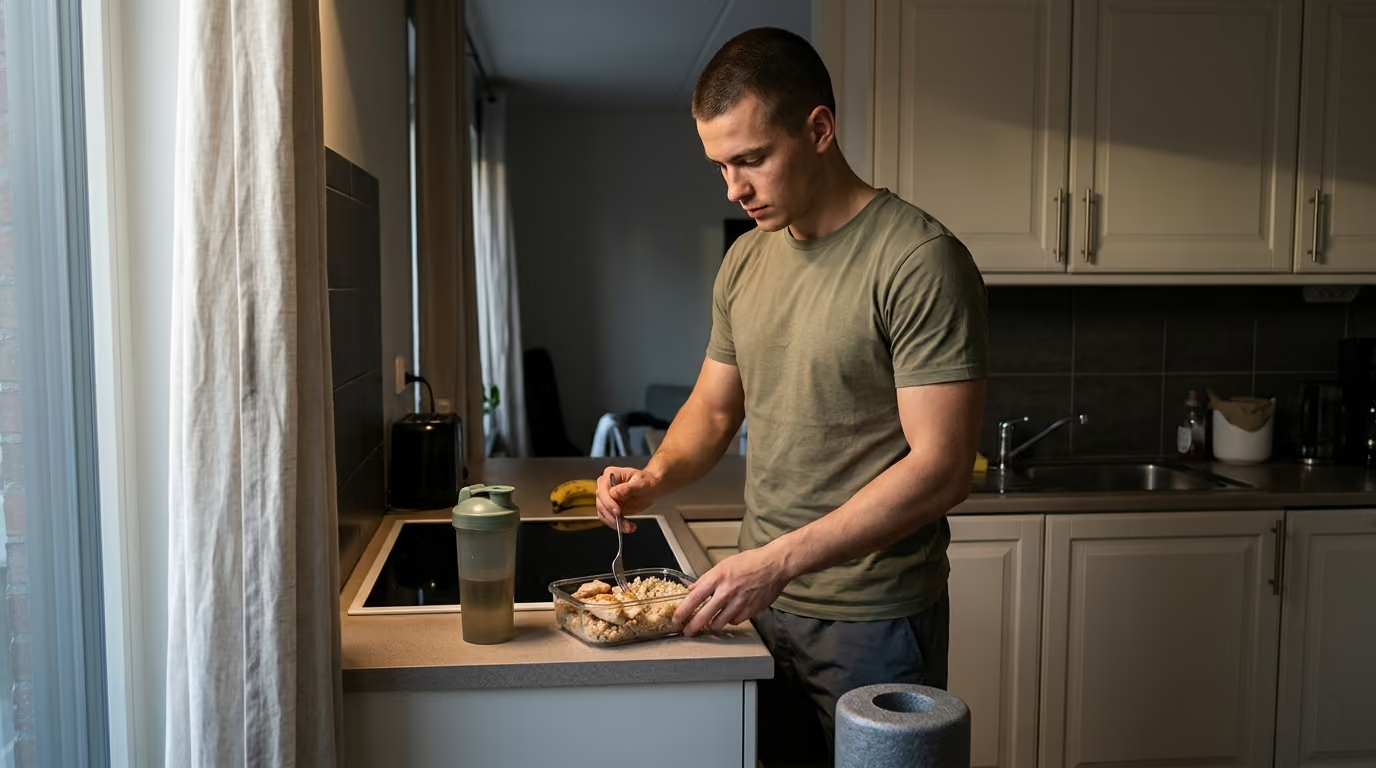
You wake up early to train before work, but your lower back is stiff from poor sleep and long commutes. You step into a crowded garage or drive to a loud gym where half the equipment is broken or occupied. The friction drains your momentum before you even touch a weight. Finding the right setup is not about buying the most expensive gear or copying an elite facility.
The best training environment is the one that allows you to train major movement patterns safely, progress resistance over time, and show up consistently without unnecessary logistical friction.
To build an effective strength routine, you need a stable space that matches your physical capabilities, schedule, budget, and instruction needs. You do not need a commercial gym packed with specialized machines to build lasting physical capability. A corner of a room with adjustable resistance, clear floor space, and a structured plan can deliver the exact same long term adaptations as a commercial fitness center.
Most lifters make the mistake of shopping for equipment before defining their actual training needs. A productive training environment must solve a specific physical problem. A veteran returning to fitness after joint injuries requires different tools than someone training for maximal powerlifting strength.
To determine the right environment, evaluate any potential setting against seven core criteria:
The World Health Organization recommends that adults perform muscle-strengthening activities involving all major muscle groups on at least two days per week. Your environment must make that minimum baseline simple and sustainable. If getting to your workout takes forty minutes of traffic, you are far more likely to skip sessions when fatigue accumulates.
Align your training space with your immediate physical goal. If your goal is general health, simple bodyweight tools and adjustable resistance are sufficient. If your focus is building significant lean muscle mass, you need enough loading variety to challenge major muscle groups across multiple rep ranges. If your priority is orthopedic rehabilitation or healthy aging, stable support surfaces, seated options, and fine-grained resistance adjustments take priority over heavy barbells. For deeper guidance on setting these initial goals, explore our military and veteran health resources.
Equipment is merely a tool to apply mechanical tension to muscle tissue. You do not need dozens of single-purpose machines to build a strong, resilient body. Instead, choose equipment that allows you to load the fundamental human movement patterns safely.
Every complete strength program requires a way to train:
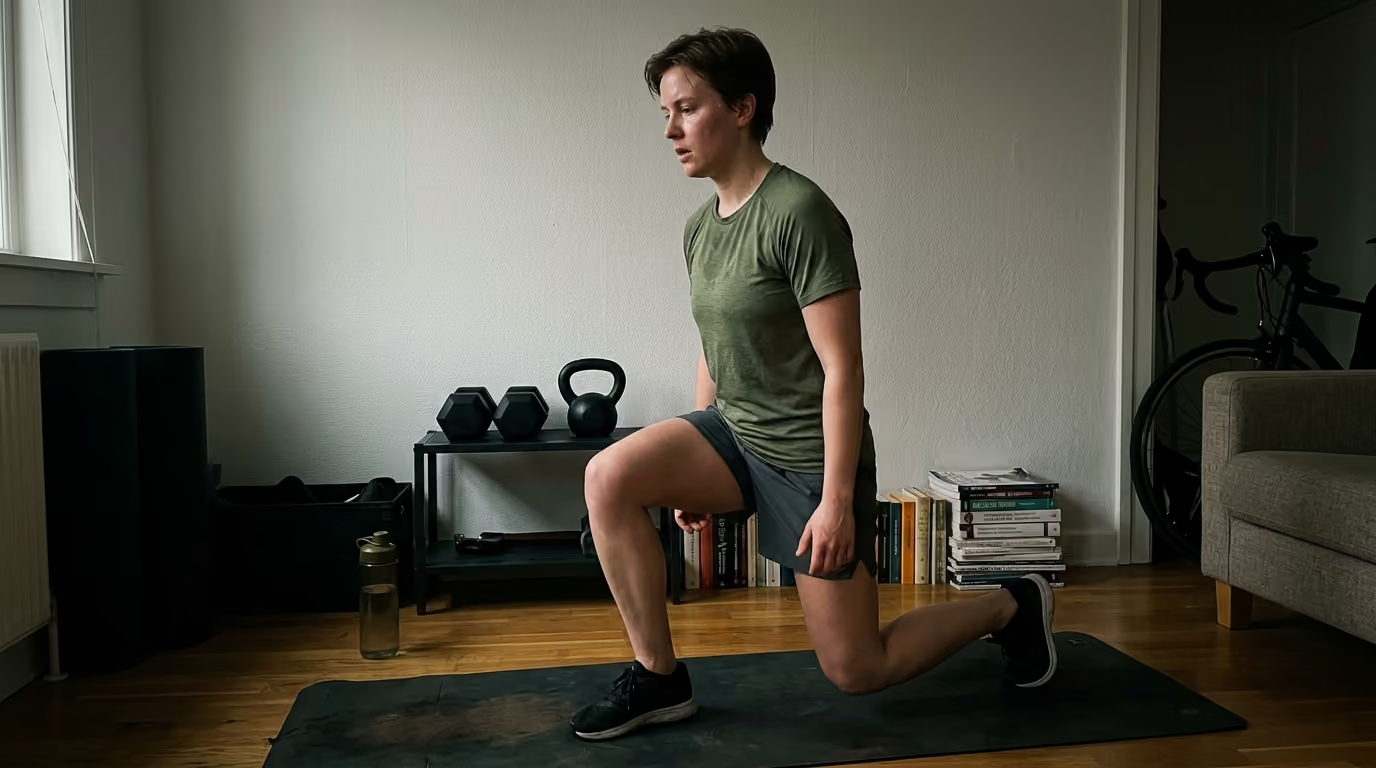
A functional home gym does not require converting an entire two-car garage. A compact training area can fit into a spare bedroom, office corner, or patio.
A highly capable baseline home setup includes:
This compact setup allows you to train presses, rows, split squats, hinges, and core bracing. You can add a suspension trainer, a single kettlebell, or a dip stand as your training evolves. If you want to review structured workout programs that use minimal gear, check out our strength and body composition guides.
If you prefer a commercial gym, ensure the facility provides reliable access to core tools. A good facility does not need novelty equipment, but it must have well-maintained basics.
Look for these essential tools during your walk-through:
Debates over free weights versus machines often ignore injury data and training context. Free weights build balance, coordination, and stabilizer strength because you must control the bar path. However, free weights also introduce higher risks of impact injuries if you lose control of the load.
An analysis of emergency department data from 1990 through 2007 estimated approximately 970,801 weight-training injuries nationwide. Dropping weights onto the body accounted for 65.5% of all observed injuries. Furthermore, 90.4% of total injuries involved free weights rather than machines.
Free weights carry a higher incidence of fractures, dislocations, and crush injuries when lifters train without safety supports or spotters. Conversely, selectorized machines provide fixed movement paths and external stability. They allow lifters to train close to muscular failure with minimal risk of being pinned under a load.
The same emergency room data revealed that older adults aged 55 and older experienced a higher proportion of machine-related injuries than younger lifters, often due to slips, pin adjustments, or improper seat alignment. Neither tool is universally superior. Free weights and machines should be selected based on your technical skill, joint health, and immediate fatigue levels.
A crowded room creates physical hazards and mental frustration. Space is a critical safety variable when moving heavy loads or performing explosive exercises.
The National Strength and Conditioning Association provides clear facility safety standards. The NSCA recommends at least two feet of clear space between machines, with three feet considered optimal. The NSCA also recommends maintaining at least three feet of open space between the ends of Olympic barbells to allow safe loading and walking room. In professional training facilities, a standard planning benchmark is 100 square feet per active participant.
When inspecting a prospective gym or setting up a home garage space, look for these specific layout elements:
In a home gym, you must calculate the total movement envelope rather than the resting footprint of the gear. A power rack may only take up four feet by four feet of floor space. However, loading an eight-foot barbell and performing walking lunges or barbell rows requires an envelope of at least ten feet by ten feet. Plan your space around your active movements, not your equipment storage.
True accessibility is about practical usability, not simply having a ramp at the front door. A strength environment should accommodate lifters recovering from orthopedic surgeries, service members managing chronic back pain, and older adults with balance limitations.
The United States Access Board outlines specific standards for exercise facilities. Federal guidelines require at least one of each type of exercise machine to provide a clear floor space of at least 30 by 48 inches. This space must be connected directly to an accessible route for individuals using wheelchairs or mobility aids.
Evaluate accessibility using these practical questions:
An accessible strength setup provides multiple exercise substitutions for every major muscle group. If a flare-up prevents you from loading your spine with a barbell back squat, your environment should allow you to switch immediately to a belt squat, leg press, or supported split squat. Flexibility in equipment prevents injuries from derailing your long-term consistency. To learn more about training around wear and tear, read our military health editorial guides.
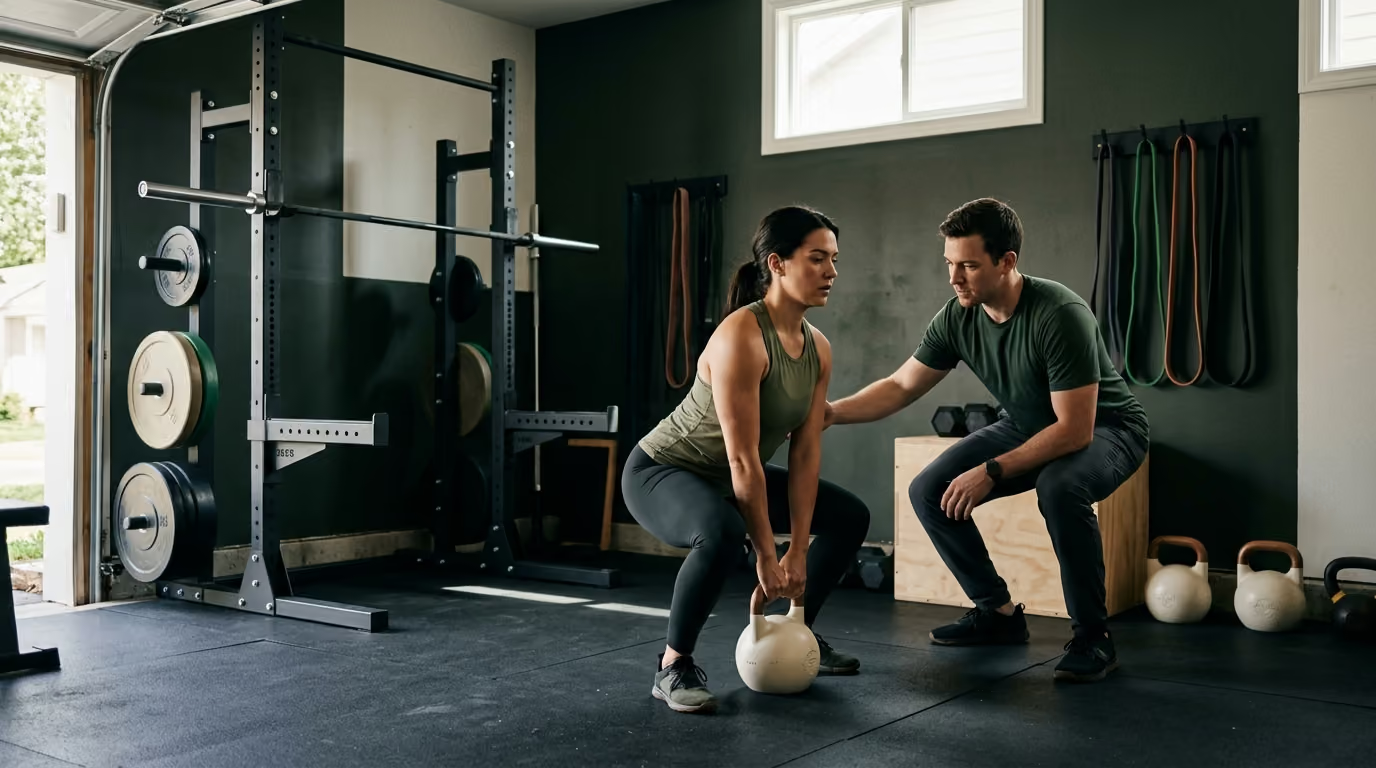
A quality coach does not yell clichés or push you to vomit. Professional coaching provides objective movement screening, appropriate starting loads, technical feedback, and intelligent load progression.
Scientific research demonstrates measurable physical advantages from supervised strength training. A systematic review and meta-analysis published in 2024 examined 34 randomized controlled trials involving 2,830 adults aged 60 and older. The researchers found that supervised exercise produced superior physical function and psychological well-being compared to unsupervised programs. Interestingly, attendance rates were similar between groups, indicating that the superior physical gains came from better training quality rather than higher attendance alone.
Earlier controlled research by Mazzetti and colleagues demonstrated that supervised resistance training produced significantly greater increases in squat and bench press strength in moderately trained men. Direct supervision led to better load selection, greater training intensity, and tighter technique. However, the evidence also confirms that unsupervised training remains a highly cost-effective and viable strategy for lifters who cannot afford regular coaching.
Before hiring a personal trainer or strength coach, ask these specific questions:
Avoid coaches who display these red flags:
Safety is an active system involving maintenance, environment design, and lifting protocols. An environment that encourages reckless behavior or lacks functional safety equipment will eventually cause preventable injuries.
Inspect your training equipment regularly to prevent mechanical failures:
Every lifter will eventually misjudge a repetition. You must establish and practice your failure protocols before attempting heavy loads:
A well-managed facility enforces operational standards that protect everyone in the room. Lifters should always use bar collars on barbell exercises to prevent plates from sliding during uneven reps. Weights must be returned to storage trees immediately after use to keep walkways clear.
Emergency stop lanyards on motorized treadmills must be functional and used consistently. First-aid kits, automated external defibrillators, and clear emergency contact instructions should be visible and accessible to all members and staff.
Choosing an environment requires balancing financial costs against convenience, privacy, and training culture.
Training at home eliminates travel friction, eliminates wait times for equipment, and provides complete privacy. You can listen to your own music, wear whatever you want, and train on your exact schedule.
However, home training requires an initial cash investment for equipment, takes up living space, and places all maintenance and cleaning responsibilities on you. It also requires high personal discipline, as there are no external social cues or training partners to keep you accountable.
Commercial gyms offer an expansive array of barbells, dumbbells, selectorized machines, and cardio equipment that would cost tens of thousands of dollars to buy privately. They provide built-in social energy and access to staff.
The downsides include recurring membership contracts, peak-hour crowding, noise, commute times, and occasional broken equipment. For lifters with sensory sensitivities or gym anxiety, crowded commercial floors can be overwhelming.
Private studios provide highly focused, low-distraction environments with personal coaching and zero waiting for gear. They offer superior privacy, cleaner facilities, and structured accountability.
The primary drawback is financial cost. Private studio sessions and semi-private coaching packages are significantly more expensive than standard gym memberships.
Apartment gyms and community centers provide free or low-cost access with zero commute time. They are ideal for quick maintenance workouts, mobility sessions, and basic dumbbell routines.
However, these facilities often feature low ceiling heights, broken machine pins, missing dumbbell pairs, and strict noise restrictions that prohibit deadlifts or heavy lifting.
To evaluate the real value of an environment, use this practical calculation:
> Monthly Training Value = (Useful Sessions Completed × Quality of Each Session) − (Financial Cost + Travel Time + Logistical Friction)
A thirty-dollar monthly gym membership that requires a thirty-minute drive each way often delivers lower real value than an eight-hundred-dollar home setup that you use four times every week for three straight years. Calculate the value of your time, fuel, and mental energy alongside the membership price. For strategies on staying consistent with busy schedules, read our training and performance articles.
Lifters frequently encounter dogmatic advice regarding the best way to set up their workouts. Looking at the evidence helps clarify these common debates.
Having access to dozens of machines does not guarantee better results. Progressive overload, adequate volume, high mechanical effort, and nutritional recovery drive muscle growth. A lifter who progressively overloads a basic dumbbell split squat and a chest-supported row will build more functional muscle than someone who wanders through a massive gym performing random machine sets without progressive tracking.
Direct supervision from a qualified coach improves technical mastery and accelerates strength gains, especially in beginners and older adults. However, unsupervised training is entirely capable of building strength and muscle if the trainee uses a structured, evidence-based program and records their sets. You can record video of your primary lifts on your phone to review your bar path, depth, and spinal alignment between sets.
Home gyms are exceptionally safe when lifters use quality equipment with functional safety catches. Most catastrophic weight-training injuries occur when individuals lift alone using free weights without safety pins, bar collars, or emergency failure plans. If you train alone at home, invest in a heavy-duty four-post power rack with welded safety arms and never bench press alone without them.
Beginners can start safely with either tool, but starting with machines, dumbbells, and bodyweight movements often accelerates motor learning. Machines provide external balance, allowing new lifters to build base muscular strength and tendon resilience without high technical anxiety. As baseline strength and body awareness improve, lifters can transition smoothly to complex barbell patterns.
Review these practical scenarios to see how different lifters optimize their training environments based on real-world constraints.
This individual cannot afford a thirty-minute round-trip commute to a commercial gym.
This lifter experiences pain under heavy spinal compression but wants to maintain lower-body strength and lean muscle mass.
This lifter lives on the third floor of an apartment complex with strict noise rules and limited floor space.
This trainee is actively training for competitive powerlifting or tactical fitness tests requiring high absolute strength.
To understand how physical conditioning connects with recovery, nutrition, and systemic health, visit our veteran wellness portal.
Before signing a commercial gym contract or buying home equipment, use this systematic checklist to audit the space.
Building a capable body requires consistent effort in an environment that removes friction and keeps you safe.
You can build meaningful baseline strength and endurance using bodyweight movements and heavy resistance bands. However, as you adapt, progressively overloading lower-body movements like squats and deadlifts becomes difficult with bands alone. Adding adjustable dumbbells or external weights ensures you can continue to challenge large muscle groups over years of training.
A basic dumbbell and bench setup requires an open floor area of roughly six feet by six feet. If you plan to install a full power rack, barbell, and plate storage, you will need a dedicated space of at least ten feet by ten feet with eight to nine feet of vertical ceiling clearance.
Machines provide external balance and eliminate the risk of dropping weights onto the body, making them valuable for older adults or lifters with balance concerns. However, machines must be adjusted correctly to align with individual joint axes. Combining stable machine exercises with supported free-weight and balance exercises provides the best overall functional outcome.
If you must bench press without safety arms, do not use collars on the barbell when lifting alone. This allows you to tilt the bar and dump the weight plates off the sides if you fail a repetition. Alternatively, use a power rack with safety pins or substitute the barbell bench press with heavy dumbbell presses.
This article is for educational and informational purposes only and does not constitute medical advice, diagnosis, or treatment. Consult a qualified healthcare professional or physical therapist before starting any new exercise program, especially if you have pre-existing cardiovascular, orthopedic, or chronic medical conditions.
Follow BattleVet for practical guidance on military and veteran health, strength, recovery, testosterone, sleep and healthy aging. Stay connected for new articles, research backed insights and clear information to help you stay capable for the years ahead.


Build better habits around strength, recovery, sleep, hormones and healthy aging with practical guidance for active military personnel and veterans.
Explore BattleVet