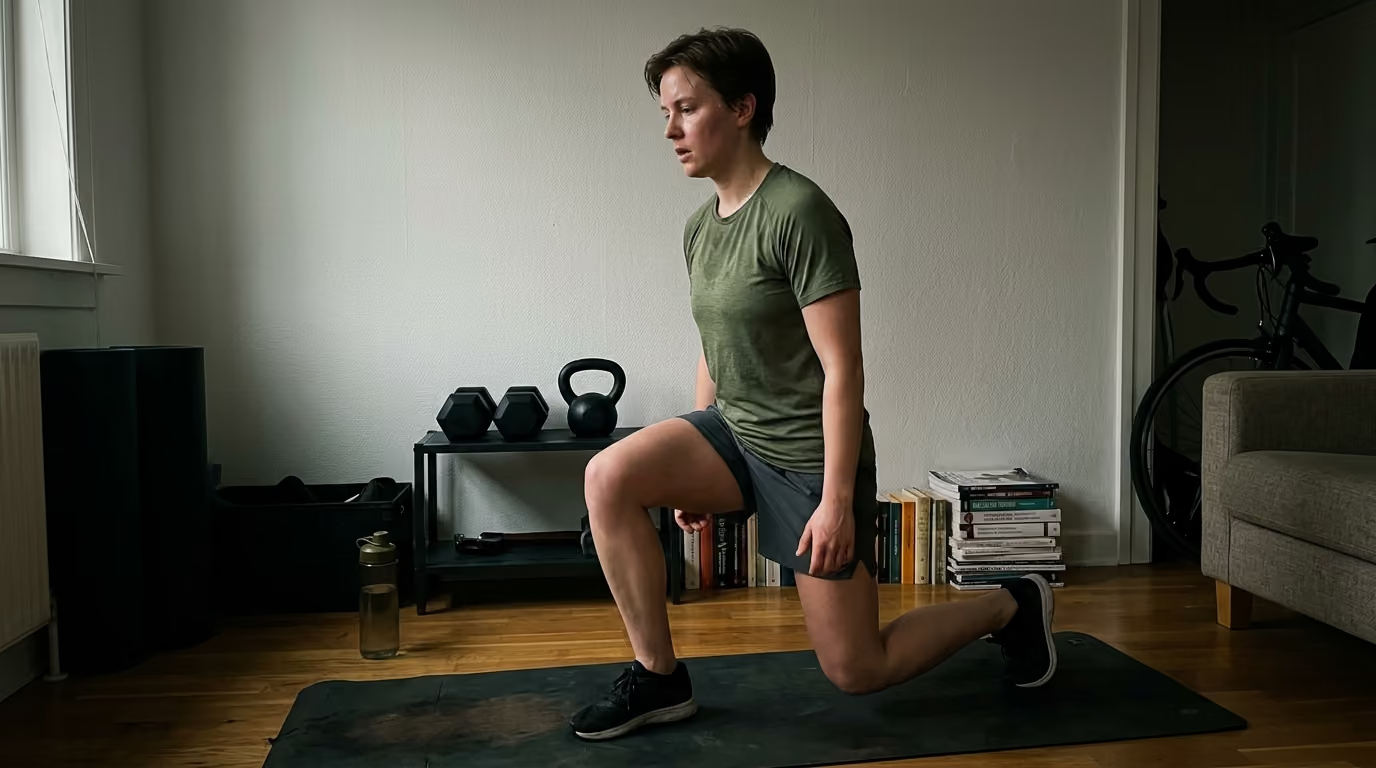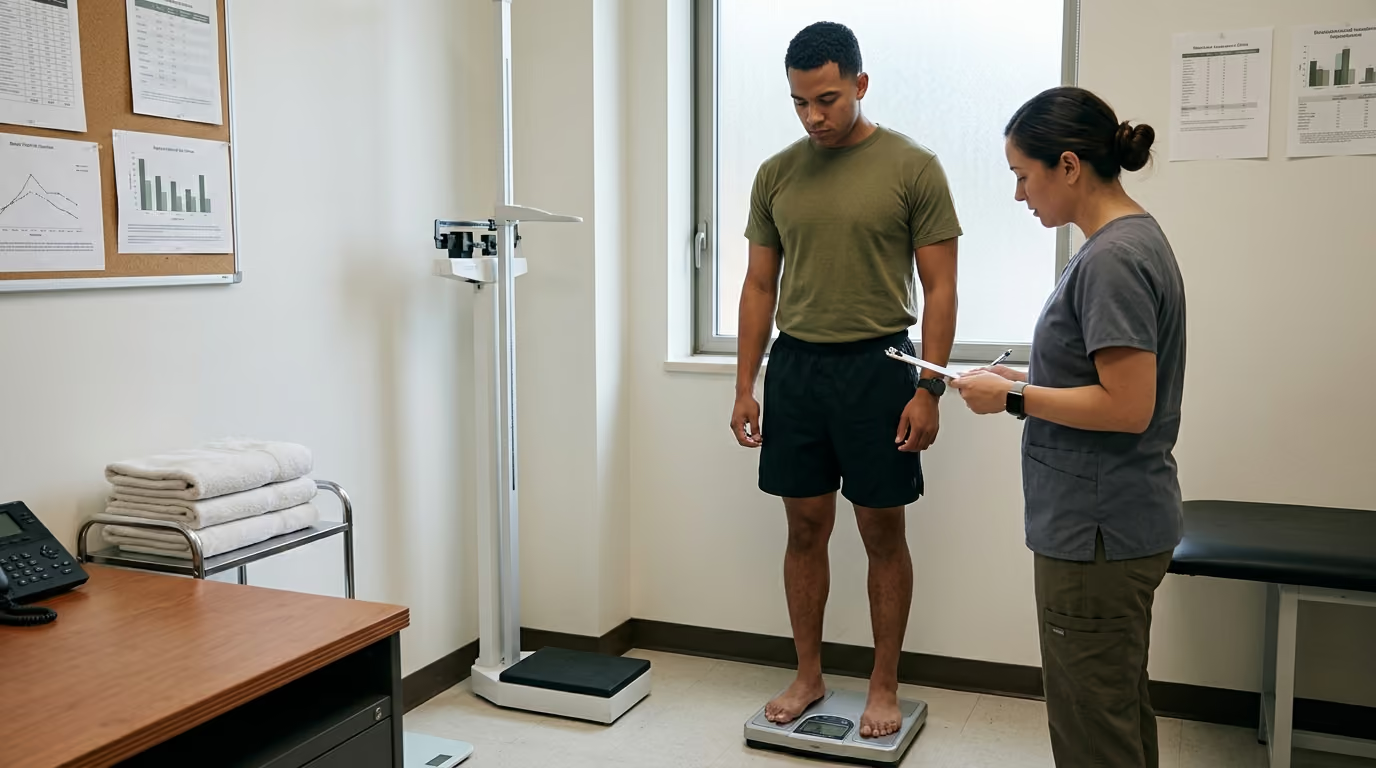

Accurate military fitness tracking becomes easier through reliable body composition methods that evaluate functional muscle mass and practical operational readiness.





You wake up early, drink a glass of water, and step onto the bathroom scale before physical training. The digital readout shows you are five pounds heavier than last month, even though your waist fits looser in your uniform and your deadlift numbers are moving up. Later that morning, an administrative height and weight screening flags you as overweight based purely on standard body mass index tables. You find yourself wondering how a single number can classify you as out of standards when your physical capability and daily performance tell an entirely different story.
Body composition for military readiness is a multi-dimensional balance between functional lean mass, nonfunctional fat mass, and structural health rather than a single number on a scale.
Body composition describes how your total weight is divided among muscle, fat, bone, and water. In a military setting, physical readiness requires enough functional muscle to move external loads and perform high-intensity tasks, paired with low enough nonfunctional fat mass to maintain aerobic endurance, movement economy, and long-term metabolic health. Standard screening tools like body mass index and tape tests offer rapid administrative estimates, but they frequently fail to capture true changes in muscle mass, tissue distribution, or occupational capability.
Total body mass is the combined weight of every tissue, fluid, and stored substance in the human body. The scale measures the whole system at once. It cannot distinguish between skeletal muscle, visceral adipose tissue, subcutaneous fat, bone mineral content, blood volume, or water retained in your muscles. When service members track their physical progress solely through total weight, they often mistake normal fluid shifts or muscle gain for unwanted fat gain.
Fat mass consists of all extractable lipids from adipose and other tissues. Scientists divide this into essential fat and storage fat. Essential fat is required for normal physiological work, including hormone production, nerve conduction, and organ protection. Storage fat accumulates primarily in subcutaneous depots beneath the skin and visceral depots surrounding internal organs.
Nonfunctional fat mass increases the energetic cost of running, marching, climbing, and calisthenics. In a prospective study of 140 healthy Finnish male conscripts, higher fat percentage was significantly associated with poorer 12-minute running performance and lower muscle strength. Increasing fat mass consistently predicted poorer overall physical fitness in that cohort. However, dropping body fat too low impairs testosterone production, compromises immune function, and increases bone stress injury risk.
Fat-free mass represents all body components that contain no fat, including skeletal muscle, bone, internal organs, and extracellular water. Lean body mass is a closely related term that includes fat-free mass plus essential lipids in cell membranes and internal organs. When assessing military personnel with dual-energy X-ray absorptiometry, researchers often examine lean soft tissue. Lean soft tissue excludes bone mineral content, giving a clearer picture of functional muscle mass and organ weight.
Percent body fat is the proportion of total body mass made up of adipose tissue. You can reduce your body fat percentage by losing fat mass, gaining muscle mass, or doing both at the same time. Conversely, your body fat percentage can climb even if your scale weight stays flat if you lose muscle during intense field operations while maintaining fat stores. Percent body fat provides a standardized descriptor, but its accuracy depends entirely on the technology and equations used to measure it.
Physical readiness demands both absolute capacity and relative capacity. Absolute capacity refers to the total force or power a service member can generate, regardless of their own body weight. Moving a heavy artillery shell, lifting a wounded teammate, or breaking through an obstacle requires high absolute force. Larger service members with greater total lean soft tissue generally perform better on these pure strength tasks.
Relative capacity refers to strength, power, or aerobic output divided by total body mass. Calisthenic movements like pull-ups, push-ups, and sprint intervals depend heavily on relative capacity. Every pound of nonfunctional fat mass acts as dead weight that muscles must accelerate against gravity. High relative strength ensures that a service member can control their own body weight quickly and repeatedly during tactical movements.
Load carriage sits at the intersection of absolute and relative capacity. When marching under a heavy pack, a service member must move their own biological mass plus their uniform, armor, weapon, and supplies. A heavier individual with substantial muscle mass may carry an 80-pound pack with less relative fatigue than a lighter individual. However, if that extra body mass comes from fat rather than muscle, the metabolic cost increases dramatically over long distances.
Aerobic endurance is particularly sensitive to central adiposity and excess fat mass. Research published on military personnel tracked over continuous service demonstrates that reductions in waist circumference, fat mass, and visceral fat area correlate with improved aerobic run times. The largest performance gains appear in individuals who transition out of overweight classifications. Carrying excess body fat increases heat storage during prolonged exercise, raising core body temperature and elevating cardiac strain.
Long-term durability requires structural resilience against the physical toll of military training. Adequate lean mass supports joint stability, absorbs ground reaction forces, and preserves bone mineral density under load. Service members who restrict calories too aggressively to meet weight limits frequently lose protective muscle and bone mass. This metabolic deprivation increases their vulnerability to stress fractures, tendon problems, and chronic fatigue.
The body mass index remains the most widely used initial screening tool across military and civilian populations. Calculated as body mass in kilograms divided by height in meters squared, it provides an inexpensive way to classify populations. Standard categories from the Centers for Disease Control and Prevention define a body mass index under 18.5 as underweight, 18.5 to 24.9 as normal, 25.0 to 29.9 as overweight, and 30.0 or higher as obese.
Body mass index cannot distinguish between skeletal muscle and adipose tissue. Muscular service members routinely score in the overweight or obese ranges despite carrying low body fat and demonstrating exceptional physical fitness. Military leadership recognizes this limitation, treating height and weight screening as an administrative trigger for secondary assessment rather than a diagnostic measurement.
Circumference measurements offer a simple, portable field method for estimating body composition and fat distribution. Historically, military services used multi-site tape tests combining neck, waist, hip, or wrist measurements to calculate body fat percentage through predictive equations. These equations estimate body density based on population averages, but they carry significant individual error.
In a large investigation of 1,407 men and women undergoing basic combat training, circumference-based tape methods underestimated dual-energy X-ray absorptiometry measurements of body fat by approximately 6 percentage points at baseline across both sexes. Furthermore, the circumference formulas failed to detect the 4.0 percentage point reduction in body fat that female recruits achieved during training. Tape formulas often track external dimensions rather than true internal tissue reorganization.
The U.S. Army modernized its assessment framework by adopting the waist-to-height ratio as its primary administrative body composition standard. Service members measure their waist circumference at the navel and divide that value by their standing height in inches. The standard administrative threshold requires a ratio of less than 0.55. A score of 0.549 passes, while a score of 0.550 fails under the established recording rules.
Waist-to-height ratio improves upon simple scale weight because it scales central abdominal girth directly to skeletal height. It removes the confusing mathematical artifacts of older multi-site circumference equations. However, service members must remember that the 0.55 cutoff is an administrative boundary designed for force-wide management. It serves as a practical screening line rather than an exact biological definition of individual fitness.
Standardizing the measurement process is vital when taking circumference readings. The measuring tape must sit flat against the skin or light physical training clothing, parallel to the floor, without compressing the underlying soft tissue. Measurements must be recorded at the end of a normal, relaxed exhalation. Pulling the tape tight, holding the breath, or shifting the tape above or below the navel introduces substantial error that distorts the administrative result.
Dual-energy X-ray absorptiometry stands as the premier reference standard for three-compartment body composition analysis. The scanner passes low-dose X-ray beams at two distinct energy levels through the body, measuring the attenuation of the beams across different tissues. This process separates total mass into bone mineral content, fat mass, and lean soft tissue.
DXA scans deliver detailed regional analysis, showing exactly how lean tissue and fat are distributed across the arms, legs, trunk, and android or gynoid regions. This regional breakdown helps identify muscular imbalances or dangerous visceral fat accumulation. However, DXA access is largely limited to medical centers, university research laboratories, and specialized human performance facilities. The equipment is expensive, requires certified technicians, and involves low doses of ionizing radiation that make frequent weekly testing impractical.
Air-displacement plethysmography, commonly known by the trade name Bod Pod, determines body composition through densitometry. The individual sits inside an enclosed, calibrated fiberglass chamber while pressure sensors measure the volume of air displaced by their body. Dividing total body mass by body volume yields overall body density, which is then converted to percent body fat using standard physiological equations.
Research in military populations shows that air-displacement plethysmography provides reliable tracking of body composition changes during strenuous physical conditioning. It avoids radiation exposure and takes less than ten minutes to complete. Its primary limitations include high machine costs, physical space requirements, and extreme sensitivity to testing conditions. Trapped air in body hair or loose clothing can alter volume readings, requiring participants to wear tight compression garments and swim caps.
Bioelectrical impedance analysis estimates body water, fat-free mass, and body fat by passing a weak, imperceptible alternating electrical current through the body. Lean tissue contains high concentrations of water and electrolytes, conducting electricity with low resistance. Adipose tissue contains very little water, resisting or impeding the electrical flow. Modern multi-frequency, direct segmental devices measure impedance across multiple pathways to assess intracellular and extracellular water balance.
BIA devices are lightweight, safe, and fast, making them popular for unit-level screening and commercial fitness tracking. However, BIA does not measure tissue directly; it measures electrical properties and inserts those numbers into proprietary mathematical models. Readings are easily skewed by hydration status, recent meals, physical exercise, ambient temperature, skin moisture, and glycogen storage. A dehydrated service member may register an artificially elevated body fat reading simply because their total body water is temporarily suppressed.
Three-dimensional optical body scanning is an emerging field method that uses light sensors and cameras to generate a digital avatar of the body. The software extracts hundreds of precise surface measurements within seconds, calculating circumferences, volumes, and surface areas. In studies evaluating extreme-performing U.S. Marines, 3D optical scanning matched DXA averages reasonably well across the cohort, though individual prediction errors increased at the extreme lean and heavy ends of the spectrum.
Field assessment tools and laboratory reference systems frequently yield conflicting numbers. A service member might register 14 percent body fat on a high-end bioelectrical impedance scale, 18 percent on a traditional military tape test, and 16 percent on a DXA scan taken the same afternoon. These discrepancies occur because each technology evaluates different physical properties and relies on different baseline assumptions.
In a comprehensive study of 609 fit active-duty Marines, researchers compared abdominal circumference equations, bioelectrical impedance analysis, and DXA scans. The abdominal circumference formulas systematically underestimated body fat percentage in men while overestimating it in women. Bioelectrical impedance analysis exhibited smaller average group biases, but individual prediction errors varied considerably depending on the mathematical equation applied.
A systematic review and meta-analysis examining body composition tools in athletic populations found that BIA devices overestimated fat-free mass by an average of 2.78 kilograms compared to DXA. The authors observed wide limits of agreement, demonstrating that strong statistical correlations do not make two assessment tools interchangeable. Switching from a BIA scale at home to a DXA scan at a medical clinic will often look like sudden tissue gain or loss when it is merely a difference in measurement mechanics.
Understanding technical error is critical when evaluating physical progress over time. In a controlled validation trial involving 65 male and female soldiers, the test-retest reliability limits for the best skinfold and BIA protocols fell within approximately plus or minus 1 percentage point. However, the validity limits when compared against reference standards expanded to approximately plus or minus 3.5 percentage points.
This means that an apparent shift of 1 or 2 percentage points on a field assessment may represent random measurement noise rather than true biological change. Service members and leaders must avoid making drastic program alterations based on small, single-day fluctuations. Meaningful body composition monitoring requires looking at multi-week trends captured under identical testing conditions.
Training environments also alter body mass and tissue composition independently. During continuous field maneuvers or sustained basic training, total body mass can remain virtually unchanged while dramatic internal shifts occur. In an investigation of 1,644 young adults completing basic combat training, scale weight failed to reflect significant DXA-measured reductions in adipose tissue and simultaneous gains in lean mass.
Body composition directly influences lifelong cardiometabolic health, joint integrity, and operational longevity. While subcutaneous fat stored around the hips and thighs is relatively inert, visceral adipose tissue stored within the abdominal cavity is metabolically active. Visceral fat releases inflammatory cytokines, increases insulin resistance, promotes dyslipidemia, and elevates the long-term risk of cardiovascular disease and type 2 diabetes.
Epidemiological evaluations by the Centers for Disease Control and Prevention show that waist circumference and waist-to-hip ratio frequently predict cardiovascular disease risk more accurately than body mass index alone. The CDC identifies waist circumferences exceeding 40 inches in men and 35 inches in women as clear markers of heightened health risk in the general adult population. In an analysis of 4,118 adults, 39 percent met the definition for obesity based on BMI, but 55 percent exhibited a high-risk waist circumference.
Elevated central adiposity impairs respiratory mechanics during heavy physical work. Excess abdominal tissue increases intra-abdominal pressure, restricts diaphragmatic movement, and reduces functional residual lung capacity. When service members operate in chemical defense gear, body armor, or extreme heat, central fat accumulation compounds thermal strain and accelerates cardiovascular drift.
Skeletal health is another vital health consideration. Rapid, unmonitored weight loss achieved through severe caloric deficits strips away structural bone mineral density alongside fat mass. When service members cut weight unsustainably to pass an administrative screening, they compromise their hormonal balance and suppress bone remodeling. Maintaining adequate lean tissue mass and sufficient energy availability protects long-term bone density, reducing the incidence of catastrophic stress fractures during loaded marches.
As service members transition across their careers, age-related changes alter tissue distribution. Skeletal muscle mass naturally declines unless actively countered with progressive resistance training, while abdominal fat storage tends to increase. Monitoring waist-to-height ratio alongside performance markers helps veterans managing physical readiness preserve operational capacity, metabolic health, and physical independence across decades of service.
Navigating body composition data requires a structured interpretation hierarchy. You should evaluate readiness first, clinical health markers second, body composition measurements third, long-term trends fourth, and administrative policy compliance fifth. Administrative compliance proves only that an individual meets a specific regulatory rule on a specific day; it does not automatically guarantee superior operational fitness, optimal health, or tactical capability.
Consider a heavily muscled infantryman standing 5 feet 10 inches tall and weighing 215 pounds. His calculated body mass index is 30.8, which places him in the CDC obesity category. However, his waist circumference at the navel measures 31 inches, giving him a waist-to-height ratio of 0.44, well below the Army compliance threshold of 0.55. He runs five miles in 35 minutes, deadlifts 450 pounds, and carries a combat load without difficulty. In this scenario, the elevated BMI is an artifact of high skeletal muscle mass, and his physical readiness is outstanding.
Now consider a service member who comfortably passes an annual physical fitness test by running fast but carries an expanding waist circumference of 39 inches at a height of 5 feet 9 inches. His waist-to-height ratio is 0.565, failing the administrative standard. While his unloaded running speed is acceptable, his expanding central adiposity signals rising cardiometabolic risk, declining relative strength, and compromised movement economy under heavy combat loads. The administrative flag correctly highlights an underlying health and conditioning issue that a simple run test missed.
Another common pattern involves simultaneous body recomposition during a dedicated strength and conditioning phase. A service member starts a heavy lifting and conditioning program. After ten weeks, their scale weight is unchanged, but their waist circumference has dropped by 1.5 inches, their pull-up repetitions have increased from 8 to 14, and their deadlift has increased by 40 pounds. The flat scale weight masked a successful loss of body fat accompanied by a concurrent gain in functional muscle.
Finally, consider a service member who engages in crash dieting, extreme sauna sessions, and severe carbohydrate restriction to drop 10 pounds in ten days for a weigh-in. The scale drops rapidly, and they pass the screening. However, their 3-mile run time slows by two minutes, their maximum lift drops by fifteen percent, and they feel irritable and mentally fatigued. This rapid weight loss was driven by water depletion, glycogen stripping, and lean tissue breakdown, actively impairing their tactical readiness.
Scientific understanding of body composition continues to evolve as measurement technologies and longitudinal tracking methods improve. Separating established, undisputed facts from early or conflicting evidence helps service members make informed choices about their physical development.
Achieving a capable, durable body composition requires an integrated approach combining progressive resistance training, smart conditioning, structured nutrition, and adequate physical recovery. Service members should view body composition management as a continuous professional habit rather than an emergency reaction to an upcoming administrative test.
Resistance training forms the foundation of functional body recomposition. Lifting heavy loads stimulates muscle protein synthesis, signalling your body to retain or build lean soft tissue even when total caloric intake is slightly reduced. Focus your training on compound movements that stress multiple joints, including squats, deadlifts, overhead presses, rows, pull-ups, and loaded carries. Incorporating evidence-based strength programming guarantees that your lean mass contributes directly to operational performance.
Cardiovascular conditioning should blend low-intensity steady-state work with targeted high-intensity intervals. Low-intensity aerobic training, performed at a conversational pace, expands mitochondrial density, improves capillary networks in skeletal muscle, and enhances your body's ability to oxidize fat as fuel. High-intensity interval sprints and loaded sled work build anaerobic power and elevate excess post-exercise oxygen consumption without requiring hours of joint-pounding mileage.
Nutrition should focus on fueling performance while managing total energy balance. When fat loss is the objective, establish a modest caloric deficit of 300 to 500 calories below your daily total energy expenditure. Aggressive deficits exceeding 1,000 calories trigger protective metabolic adaptations, increase muscle protein breakdown, and degrade training intensity. Explore practical nutrition and physical performance strategies to sustain energy output during intense training cycles.
Protein intake must remain consistently high during periods of training and body recomposition. Consuming between 0.7 and 1.0 grams of high-quality protein per pound of body mass daily protects skeletal muscle from breakdown during energy deficits. Distribute this intake across three to five meals containing complete protein sources like lean meats, poultry, fish, eggs, dairy, or quality plant proteins. Complement your protein with unrefined carbohydrates to replenish glycogen stores and healthy dietary fats to support endocrine production.
Physical recovery serves as the biological catalyst for tissue adaptation. Chronic sleep restriction elevates cortisol, suppresses testosterone, impairs glucose tolerance, and increases cravings for highly processed, calorie-dense foods. Aim for seven to nine hours of quality sleep per night in a cool, dark environment. Prioritizing sleep and physical recovery ensures that your hormones remain balanced, allowing your body to repair damaged muscle fibers and mobilize stored fat efficiently.
This educational guide is designed solely to provide evidence-based context on physical performance, body composition assessment, and training physiology. It does not provide personalized medical advice, clinical diagnoses, or individualized treatment plans.
Service members experiencing unexplained, sudden weight changes, chronic fatigue, metabolic issues, or persistent performance declines should consult a qualified physician, military medical officer, or registered dietitian. A comprehensive medical evaluation, including clinical blood panels, can identify underlying conditions such as thyroid dysfunction, hormonal deficiencies, or nutritional deficits that may interfere with physical readiness and body composition regulation.
Yes. Body mass index only measures the mathematical relationship between your height and total weight. It cannot distinguish between dense skeletal muscle and adipose tissue. Muscular service members frequently exceed BMI cutoffs while maintaining low body fat, excellent cardiovascular health, and superior scores on occupational fitness tests.
The waist-to-height ratio is an anthropometric screening tool, not a three-compartment body composition measurement. It does not measure your exact body fat percentage or quantify your lean soft tissue. However, it correlates strongly with central visceral adiposity and cardiovascular health risk, making it a reliable, low-cost method for screening military populations without exposing personnel to radiation.
Different testing methods evaluate entirely different physical properties. A bioelectrical impedance device measures electrical resistance through body water, a tape test uses circumference equations to estimate body density, and a DXA scan measures X-ray beam attenuation through soft tissue and bone. Because each method relies on unique assumptions and equations, you should never compare numbers from different devices directly.
Use a multi-metric approach under standardized conditions once every two to four weeks. Measure your body weight and your waist circumference at the navel first thing in the morning before eating or drinking. Pair these numbers with objective performance markers in the gym, such as your deadlift strength, pull-up repetitions, and timed running pace, to confirm that you are gaining functional capability while controlling central fat.
Apply these practical steps to build an accurate, performance-focused body composition profile:
Follow BattleVet for practical guidance on military and veteran health, strength, recovery, testosterone, sleep and healthy aging. Stay connected for new articles, research backed insights and clear information to help you stay capable for the years ahead.


Build better habits around strength, recovery, sleep, hormones and healthy aging with practical guidance for active military personnel and veterans.
Explore BattleVet