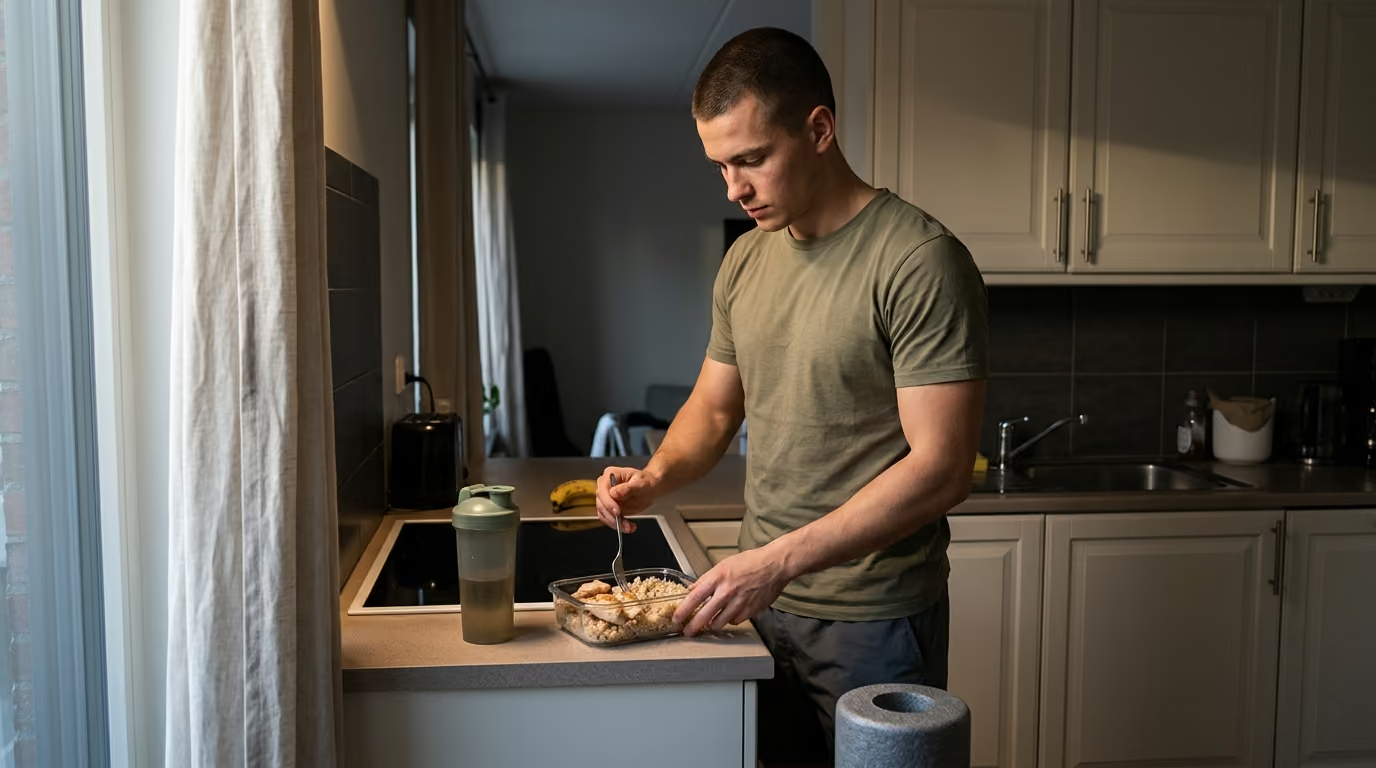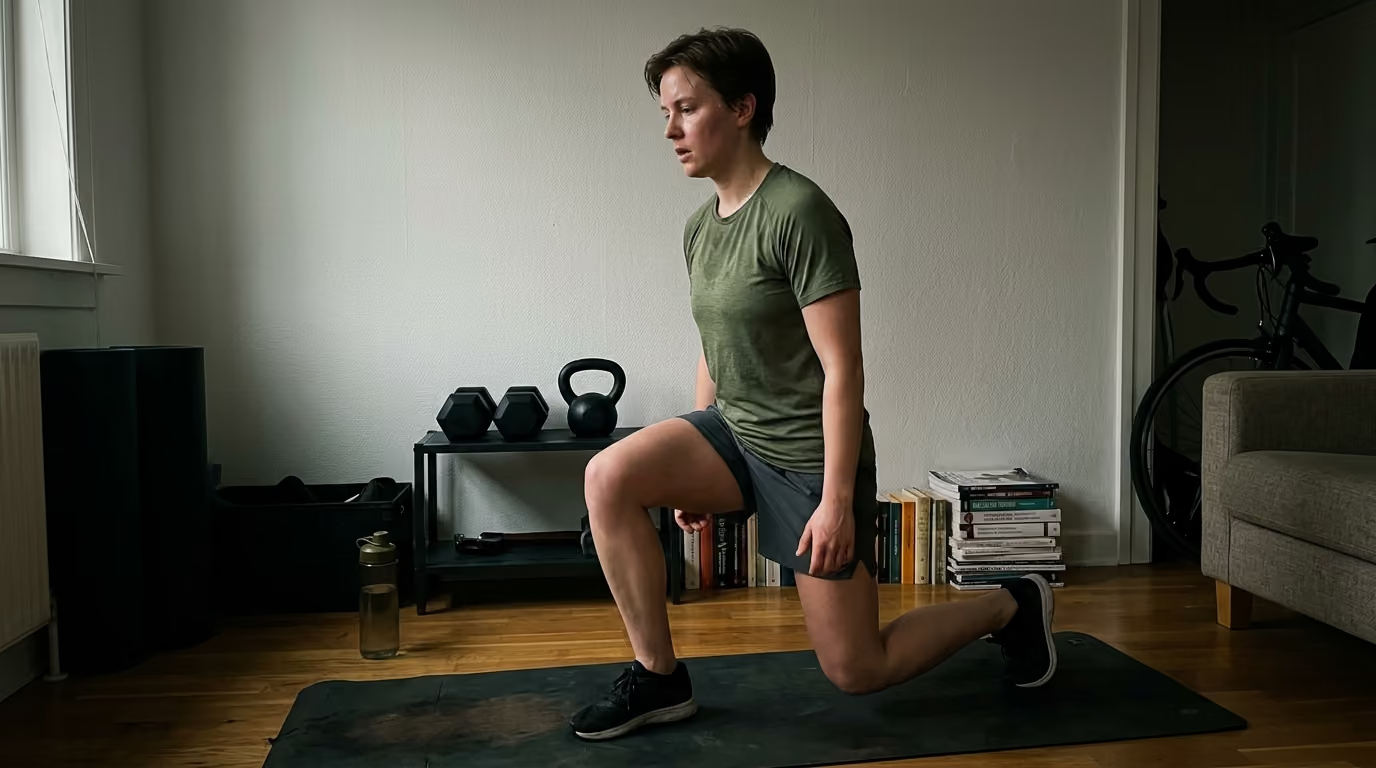

While rigid percentage programs assume constant strength, autoregulated training dynamically adjusts lifting loads using RPE, RIR, and bar velocity metrics.





You wake up after four hours of broken sleep with stiff joints and an demanding workday ahead. Your training spreadsheet calls for five heavy sets of squats at eighty-five percent of your one-rep maximum. Forcing those exact numbers when your physical readiness is depleted often leads to missed repetitions, lingering joint strain, or persistent systemic fatigue. Learning how to adjust your training to your daily capacity allows you to maintain consistent physical progress without burning out.
Autoregulated training provides a structured framework to adjust your daily training load, volume, and exercise selection based on current physical readiness rather than rigid mathematical percentages.
Autoregulation measures your capacity through subjective tools like Repetitions in Reserve (RIR) and Rating of Perceived Exertion (RPE), or objective metrics like bar velocity and warm-up performance. You then adjust your daily weights, set counts, or movement choices according to predefined rules. This process ensures that every workout delivers the intended physiological stimulus, regardless of how life stress, poor sleep, or physical fatigue fluctuate from day to day.
Traditional resistance programming relies heavily on fixed percentage-based prescriptions. A coach or program might dictate four sets of six repetitions at seventy-five percent of your historical one-repetition maximum (1RM). This model assumes that your physical capacity remains stable from week to week. It presumes that seventy-five percent represents the exact same physiological challenge on a day following eight hours of deep sleep as it does after a grueling work shift.
In reality, your true maximum strength fluctuates constantly. Daily strength can shift up or down by five to ten percent based on hydration, nutritional intake, mental stress, and accumulated muscle damage. When you experience a high-readiness day, a fixed percentage may significantly undertrain your muscular system. Conversely, on a low-readiness day, attempting that same fixed load can force you to train closer to failure than intended.
Autoregulation solves this problem by creating a continuous feedback loop. Rather than treating a workout as a rigid script, autoregulation treats it as an adaptable plan. The system operates on a simple two-part model:
Autoregulation is not an excuse to skip difficult work or train randomly based on fleeting mood. It is a disciplined decision-making system designed to protect the true objective of the workout. When applied correctly within a structured training and performance routine, autoregulation preserves the intended training stimulus while accounting for real-world stress.
Subjective autoregulation relies on your internal perception of physical effort and muscular proximity to failure. The two primary tools used in modern strength training are the Rating of Perceived Exertion (RPE) scale and the Repetitions in Reserve (RIR) target.
In resistance training, the modern RPE scale is anchored directly to proximity to muscular failure rather than general cardiovascular breathlessness. This scale assigns a numerical score from 6.0 to 10.0 based on how many additional technically sound repetitions you could have completed.
At an RPE of 10, you have zero repetitions left in reserve. You gave maximal effort, and you could not have completed another repetition with acceptable technique.
At an RPE of 9, you completed the set with approximately one repetition remaining before failure. The bar slowed noticeably, but one more clean repetition was possible.
At an RPE of 8, you ended the set with approximately two repetitions left in reserve. The movement was challenging, but you maintained crisp technique and solid bar speed.
At an RPE of 7, you completed the set with roughly three repetitions remaining. This level represents a standard baseline for vigorous warm-ups or moderate strength work.
At an RPE of 6 or lower, four or more repetitions remain. The weight moved quickly with minimal strain, making it ideal for warm-up sets or speed-focused technical practice.
RIR asks a direct, intuitive question: "How many more good repetitions could I have completed?" This question removes ambiguity for lifters who struggle to translate their physical effort into abstract numbers.
You can use RPE and RIR to regulate both intensity and volume. For intensity regulation, a coach might prescribe three sets of five repetitions at RPE 8. You work up to whatever load produces an RPE 8 on that specific day, whether that load is heavier or lighter than last week.
For volume regulation, you might perform sets of six repetitions with a fixed load until your effort reaches RPE 9. Once a set hits RPE 9, you terminate the exercise. This structure automatically cuts off extra volume on days when fatigue accumulates rapidly.
Subjective tools require no expensive equipment, work across any exercise variation, and function seamlessly in any gym environment. They also capture subjective factors that technology cannot see, such as joint discomfort, mental distraction, or transient coordination issues.
However, subjective ratings depend heavily on individual experience and honest effort. Research indicates that novice lifters often underestimate their true capacity when sets are terminated far from failure. Accuracy improves substantially when working sets are taken within zero to three repetitions of true failure. Maintaining consistent movement tempo, standardized range of motion, and strict technical standards is essential for accurate RIR tracking.
Velocity-based training (VBT) uses specialized technology to measure the speed of barbell movement in real time. By tracking concentric velocity, athletes can objectively quantify their acute readiness, fatigue accumulation, and daily strength capabilities.
Velocity tracking typically utilizes linear position transducers, specialized accelerometers, or validated optical camera applications. These devices track the mean concentric velocity or peak velocity of a barbell, usually measured in meters per second (m/s).
As an athlete fatigues during a set, muscle fibers produce less force, causing repetition velocity to drop. Slower movement under standardized loads reflects greater neuromuscular fatigue or higher relative physical effort. Tracking this change allows for precise adjustments without guessing.
Velocity loss represents the percentage drop in movement speed from the fastest repetition of a set to the final repetition. It is calculated using a straightforward formula:
Subtract your final repetition velocity from your fastest repetition velocity. Divide that result by your fastest repetition velocity, and multiply by one hundred to determine your percentage of velocity loss.
Different velocity-loss thresholds produce distinct physiological adaptations:
Low velocity-loss thresholds prioritize repetition quality, explosive power, and minimal neuromuscular fatigue. Stopping sets within this range avoids substantial metabolite accumulation, making it ideal for athletic power development and speed maintenance.
Moderate velocity loss balances strength gains with manageable fatigue. It provides sufficient mechanical tension to stimulate muscular adaptation while keeping systemic exhaustion low enough to permit high training frequency.
High velocity loss intentionally drives muscles close to failure. This threshold produces significant metabolic stress and muscular damage, which can support hypertrophy but demands extended recovery periods.
Athletes can use standardized warm-up loads to test daily readiness objectively. If your typical warm-up with 225 pounds moves at 0.70 m/s, but today moves at 0.58 m/s, your central nervous system is experiencing acute fatigue. You can instantly reduce your planned working weights before attempting a maximal effort.
While VBT provides objective data, it requires consistent equipment setup and strict adherence to lifting intent. If an athlete does not attempt to move the barbell with maximal concentric intent on every repetition, the resulting velocity data becomes unreliable.
Effective autoregulation begins before you ever touch a barbell. Tracking simple pre-training markers helps you anticipate your capacity and make proactive adjustments to your workout structure.
Collecting brief subjective metrics provides context for how external life stressors affect your physical performance. A simple daily questionnaire using a 1 to 5 scale can track several core recovery variables:
Recording these markers takes less than one minute each morning. The value of this data lies in comparing daily scores against your own historical baseline rather than an arbitrary external standard. An isolated low score serves as a warning signal, prompting a more cautious approach during initial warm-up sets.
A single difficult workout is often just normal noise caused by daily lifestyle fluctuations. Autoregulation should evaluate performance trends across three distinct time frames:
Short-term trends occur within a single session or set. Examples include a sudden drop in bar velocity during back-off sets or an unexpected jump in RPE during warm-up progressions.
Moderate-term trends span across several consecutive workouts or an entire training week. A consistent inability to hit expected loads across three straight sessions points toward accumulated fatigue or under-recovery.
Long-term trends track performance over multi-week training blocks. Comparing your average working loads at RPE 8 across several weeks reveals whether your underlying baseline strength is steadily improving, plateauing, or regressing.
Evaluating these trends prevents overreacting to one poor day. If your pre-session readiness is low but your warm-up bar speed is completely normal, you can proceed with your planned workout. Conversely, if your subjective readiness is low and your warm-up speed drops significantly, a programmed adjustment is warranted.
To prevent emotional decision-making, an autoregulated program relies on predetermined rules. Athletes can implement a green, yellow, and red framework to categorize their physical state and apply structured adjustments.
Your pre-session readiness score is normal or high. Warm-up sets feel light, move with high velocity, and show crisp technical precision. You execute the programmed workout as written, working up to your target RPE or prescribed velocity targets without modification.
Your sleep was restricted, stress is elevated, or warm-up sets feel slightly sluggish. Bar velocity drops between five and ten percent below normal baselines. You maintain the main movement pattern but reduce top-set loads by roughly five percent, or eliminate one to two back-off sets to manage fatigue.
You are experiencing significant sleep deprivation, high systemic stress, or acute joint pain. Warm-up sets move slowly and feel awkward or painful. You modify the workout significantly by substituting a joint-friendly movement variation, cutting working volume in half, or shifting the session toward light active recovery.
Autoregulation allows you to modify multiple program variables depending on the specific limitation you face:
Your physical capacity is not dictated solely by the work you perform in the gym. External life stressors consume systemic recovery resources, directly altering how much training volume you can tolerate. Understanding how sleep, stress, and resilience interact with physical exertion is essential for long-term athletic longevity.
Research shows that acute and chronic sleep restriction directly impairs physical performance. A single night of poor sleep causes minor decrements in raw strength, but multiple consecutive nights of restricted sleep significantly impair multi-joint strength, muscular endurance, and mental focus.
Sleep loss reduces bar velocity and increases perceived exertion at identical submaximal loads. Lifting a submaximal weight after five hours of sleep feels substantially heavier than lifting that exact same load after eight hours of quality rest.
When you experience severe sleep debt, your autoregulated response should prioritize technical safety. Reduce the use of high-skill, heavy compound movements taken close to failure. Instead, focus on moderate-load strength work or stable machine exercises where balance and coordination are not compromised by fatigue.
Life stress, occupational pressure, and emotional tension draw from the exact same physiological recovery pool as heavy resistance training. Research demonstrates that individuals experiencing high life stress recover muscular function much more slowly following strenuous workouts.
While an unstressed athlete might recover full muscular force within forty-eight hours, an athlete under high psychological stress may require seventy-two to ninety-six hours to achieve the same recovery. High life stress demands proactive volume reductions. Capping sets at two to three repetitions in reserve prevents excessive muscle damage during periods of high lifestyle strain.
Autoregulation must clearly differentiate between normal muscular fatigue and joint pain. Muscular fatigue is characterized by diffuse soreness, general heaviness, and slower movement speed. Joint pain often presents as sharp, localized discomfort that worsens with specific joint angles or loading parameters.
Never attempt to push through worsening joint pain simply because a target RPE or velocity metric has not been reached. If a movement produces pain, use autoregulation to alter your range of motion, change your lifting tempo, or substitute an alternate exercise that trains the same muscle groups without provoking symptoms.
Autoregulation applies differently depending on whether your primary objective is maximal strength, muscle hypertrophy, or explosive power. Real-world scenarios demonstrate how to apply these principles under varying conditions.
Strength development relies heavily on neural efficiency and the ability to produce high force against heavy loads. Autoregulate strength sessions using top sets prescribed at RPE 8 or 1 to 2 RIR. This ensures heavy mechanical loading without driving the central nervous system into premature exhaustion.
Muscle growth requires sufficient mechanical tension, adequate training volume, and proximity to failure. Autoregulate hypertrophy by working between 1 and 3 RIR on most working sets. Monitor your total weekly set volume, ensuring that systemic fatigue does not compromise your performance on subsequent exercises.
Power training demands maximal movement velocity and pristine technical execution. Autoregulate power sessions using strict velocity-loss thresholds between 10 and 15 percent. Terminate sets immediately once bar speed drops, ensuring that every repetition reinforces explosive rate of force development.
An athlete sleeps four hours due to family obligations. During warm-ups, their barbell squat feels slightly heavy, but movement mechanics remain stable and joint pain is absent. The athlete works up to their planned top set but reduces the target load from 315 pounds to 295 pounds to maintain their prescribed RPE 8. They also drop their back-off volume from four sets to two sets, successfully maintaining strength without creating deep systemic fatigue.
An athlete experiences a stressful work week with long hours at a desk. Their energy is depleted, but their scheduled workout calls for heavy deadlifts. Warm-up sets move smoothly, but mental focus is low. The athlete completes their primary deadlift sets at an RPE 7.5, staying well clear of failure. They then substitute standard barbell rows with chest-supported machine rows to reduce spinal loading, prioritizing efficient recovery while maintaining their weekly training schedule.
An athlete feels energetic, but their objective warm-up tracking reveals that their barbell bench press speed is 0.12 m/s slower than normal. Rather than ignoring the data, the athlete recognizes hidden neuromuscular fatigue. They reduce their planned working weights by eight percent, keeping their training stimulus aligned with their true physiological capacity.
During a heavy set of overhead presses, an athlete feels a sharp ache in their anterior shoulder. Rather than grinding through the remaining sets, the athlete stops the movement. They swap the overhead barbell press for a neutral-grip dumbbell incline press, which allows pain-free movement through a full range of motion.
An athlete records three consecutive workouts where working loads drop by ten percent at the same RPE, accompanied by lingering muscle soreness and poor motivation. The athlete recognizes an accumulated recovery deficit. They convert the remainder of the training week into a planned deload, cutting their working sets by fifty percent and keeping all efforts below RPE 7 to allow full physiological restoration.
Implementing autoregulation requires a balanced understanding of its strengths, practical challenges, and current scientific limitations.
Autoregulation is designed to match training to genuine physical capacity, not to provide an excuse for avoiding hard work. Modifying a workout should be based on objective readiness signals or honest effort calibration, not momentary laziness.
Inexperienced lifters often believe they are at an RPE 8 when they are actually at an RPE 5. Calibrating your subjective scale by occasionally taking safe, machine-based exercises to true technical failure provides the reference point necessary for accurate RIR tracking.
Small day-to-day fluctuations in strength are completely normal. Do not overhaul your entire training program or slash fifty percent of your volume because of one difficult set. Make measured, conservative adjustments.
When using velocity tracking devices, some athletes alter their lifting mechanics, shorten their range of motion, or bounce weights to artificially inflate their bar speed numbers. Velocity data is only valid when movement technique and range of motion remain strictly standardized.
Scientific research broadly supports autoregulation as an effective method for enhancing strength and managing fatigue. Systematic reviews comparing autoregulated training to fixed percentage-based programming demonstrate that autoregulated protocols consistently produce comparable or superior improvements in one-repetition maximum strength and vertical jump performance.
The scientific literature highlights distinct nuances:
Understanding these distinctions ensures that you apply autoregulation as a practical decision tool rather than an inflexible ideology. Combining subjective awareness with structured rules creates an adaptable, sustainable approach to lifelong healthy aging and physical resilience.
Integrating autoregulation into your routine does not require complex software or radical changes to your favorite program. Follow this straightforward implementation process to begin autoregulating your training this week.
Choose one primary autoregulation method for your main compound lifts. If you do not own a velocity tracker, use the Repetitions in Reserve (RIR) scale. Keep your tracking consistent across all sessions.
Assign specific RIR targets to your primary exercises instead of fixed percentages. For heavy compound strength movements, aim for 2 to 3 RIR (RPE 7 to 8). For accessory and hypertrophy work, aim for 1 to 2 RIR (RPE 8 to 9).
Track your sleep duration, stress levels, and joint soreness each morning using a simple 1 to 5 scale. Use these scores to establish your baseline readiness before arriving at the gym.
Pay close attention to your final two warm-up sets on primary exercises. Note how the weight feels and how quickly the bar moves. If your final warm-up feels significantly heavier than usual, reduce your planned top-set load by five to ten percent.
Follow your predetermined framework without hesitation:
Record your completed loads, repetitions, and actual RPE/RIR for every working set in your training log. Review your log at the end of the week to identify multi-session fatigue trends before they lead to overtraining or injury. Exploring further educational materials on strength, fitness, and body composition can help you refine these programming strategies over time.
Autoregulated training is an educational framework designed for healthy individuals seeking to optimize their exercise programming and fatigue management. It is not a diagnostic tool or a substitute for medical care. If you experience sharp, persistent, or worsening pain, joint instability, or symptoms of medical illness, discontinue the aggravating activity and consult a qualified healthcare professional or physical therapist for a comprehensive clinical assessment.
Novice lifters can use basic autoregulation, but they should focus primarily on mastering movement technique before relying heavily on RIR estimates. Beginners often struggle to accurately gauge their proximity to failure, typically underestimating how many repetitions they have left. A beginner can start by logging subjective RPE after each set while following a structured program, using the scale for self-reflection before using it to adjust their working weights.
Training by feel is often unstructured, reactive, and driven by fleeting motivation, which frequently leads to inconsistent progress or skipping difficult work. Autoregulation is a structured, feedback-based system with clear constraints. You follow a predefined program with specific exercise selections, set ranges, and target intensities, but you use objective metrics or standardized effort scales to adjust the daily dosage to match your current physiological capacity.
Yes. Many effective training programs combine both methods by prescribing a percentage-based target load alongside an RPE ceiling. For example, a program might call for three sets of five repetitions at seventy-five percent of your 1RM, with a rule that the effort must not exceed RPE 8. If the prescribed percentage feels heavier than RPE 8 on a low-readiness day, you reduce the load to respect the effort ceiling.
A consistent downward trend in strength, bar speed, or readiness across two or more consecutive weeks indicates that your accumulated fatigue exceeds your current recovery capacity. When this happens, do not attempt to force progress by adding more volume. Implement a planned deload week by cutting your training volume in half, reducing your working intensity to RPE 6 to 7, and reviewing your lifestyle recovery factors, particularly sleep duration, nutrition, and psychological stress.
Follow BattleVet for practical guidance on military and veteran health, strength, recovery, testosterone, sleep and healthy aging. Stay connected for new articles, research backed insights and clear information to help you stay capable for the years ahead.


Build better habits around strength, recovery, sleep, hormones and healthy aging with practical guidance for active military personnel and veterans.
Explore BattleVet