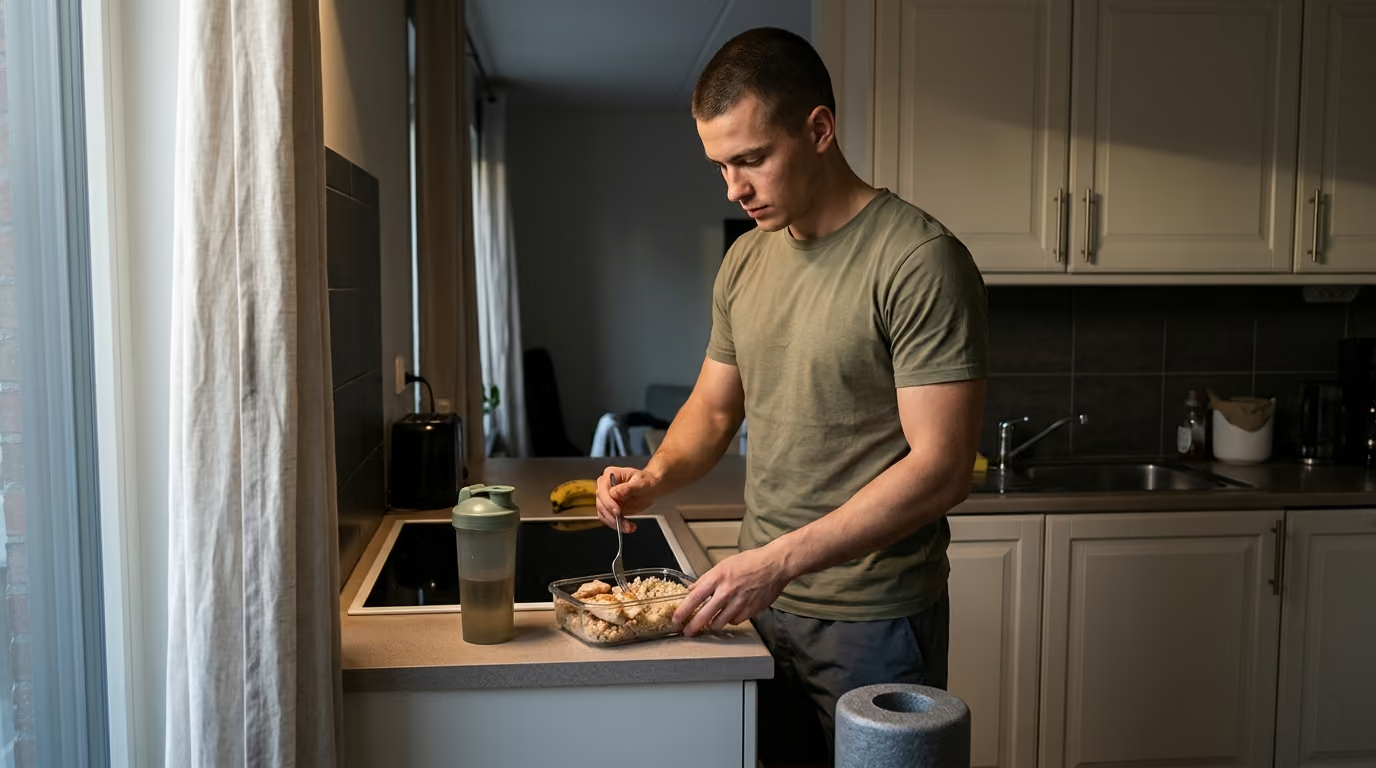

Aggressive bulking often causes unwanted fat gain, whereas structured caloric surpluses paired with targeted training build functional military lean mass.





You step on the scale after two weeks of eating extra food at the dining facility, but your body weight has not shifted. Between mandatory morning formations, ten-mile ruck marches, and erratic sleep schedules, your body burns energy faster than you can supply it. For many veterans, the challenge shifts to joint pain, altered metabolic baselines, and desk-bound work that makes adding muscle without unwanted fat feel equally difficult. Building lean mass while maintaining operational capability requires an exact, evidence-based approach rather than guesswork.
A successful lean-mass gain plan requires a conservative caloric surplus, high-yield daily protein distribution, progressive resistance training, and systematic monitoring to build muscle while avoiding unnecessary fat gain.
To build lean mass effectively, you must consume a modest energy surplus of roughly 200 to 400 calories per day, ingest 1.6 to 2.0 grams of protein per kilogram of body weight spread across three to four meals, and apply progressive overload across roughly ten weekly working sets per muscle group. This approach provides your body with the energy and raw materials needed for muscle protein synthesis without overwhelming metabolic pathways that store excess calories as fat.
Gaining scale weight is easy, but gaining lean skeletal muscle requires precision. Scale weight can fluctuate due to hydration levels, glycogen storage, digestive contents, and adipose tissue. When your goal is to build physical capacity, you must distinguish between general weight gain and functional muscle growth.
An energy surplus occurs when daily caloric intake exceeds daily energy expenditure. The human body has a strict upper limit on how quickly it can construct new skeletal muscle tissue. Consuming calories far beyond this physiological limit does not accelerate muscle growth. Instead, excessive calories are directed toward adipose storage.
A 2023 controlled trial comparing small energy surpluses of approximately 5% against larger surpluses of 15% demonstrated that faster body-mass gain primarily increased body-fat accumulation rather than delivering greater muscle size or strength gains. Conservative surpluses protect body composition. They also prevent the sluggishness associated with rapid fat accumulation.
Establishing your personal baseline begins with direct observation rather than generic online calculators. Track your typical daily food and fluid intake for seven to fourteen consecutive days while weighing yourself every morning under identical conditions. Note your duty requirements, physical training sessions, and sleep quality. If your average weekly body weight remains flat across this window, your average daily intake represents your maintenance baseline.
Once you establish this baseline, add a conservative surplus of 200 to 400 calories per day. A smaller service member or an individual with lower baseline activity may start at 200 calories above maintenance. A larger individual or someone enduring heavy operational physical training may need 400 calories.
Military operational nutrition research highlights that extended field exercises or intense training blocks can drive energy requirements up to 3,600 calories per day or higher. Adjust your initial surplus based on real-world energy expenditure rather than a static mathematical formula.
Muscle protein synthesis and muscle protein breakdown occur simultaneously in the body. When synthesis exceeds breakdown over time, skeletal muscle hypertrophy occurs. Resistance exercise provides the mechanical stimulus to activate synthesis, but adequate amino acid availability is necessary to complete the process.
The International Society of Sports Nutrition recommends an overall daily protein intake of 1.4 to 2.0 grams per kilogram of body weight for exercising individuals. The U.S. Army Holistic Health and Fitness doctrine recommends 1.2 to 2.0 grams per kilogram of body weight to support lean-mass development. Active personnel and veterans pursuing hypertrophy should aim for 1.6 to 2.0 grams per kilogram of body weight per day.
For an 80-kilogram individual, a daily intake of 1.6 to 2.0 grams per kilogram translates to 128 to 160 grams of protein daily. If you are training at very high volumes, recovering from an injury, or operating in an energy deficit during field training, your protein requirements trend toward the higher end of that range. Consuming protein above 2.0 grams per kilogram does not harm healthy individuals, but it offers little additional muscle-building benefit during a caloric surplus.
How you distribute this protein across the day directly influences how effectively your body builds muscle. Research confirms that consuming 20 to 40 grams of high-quality protein per meal triggers a robust muscle protein synthesis response. Spacing these feedings every three to four hours sustains amino acid availability more effectively than consuming the majority of your daily protein in a single large evening meal.
Focus each feeding on complete protein sources that contain adequate essential amino acids, particularly leucine. Aim for roughly 700 to 3,000 milligrams of leucine per meal. Complete sources include:
Protein supplements are practical tools for meeting your daily targets when field exercises, operational duties, or tight schedules limit access to whole foods. However, commercial powders do not possess unique muscle-building properties compared to an equivalent serving of whole chicken breast, eggs, or Greek yogurt. Use them as convenient logistics solutions rather than dietary foundations. You can read more about structured nutritional approaches in our nutrition and fueling protocols.
Carbohydrates are the primary fuel source for high-intensity muscular contractions, tactical physical training, and sustained operational labor. Restricting carbohydrates while attempting to gain lean mass impairs training intensity, limits glycogen storage, and compromises recovery between sessions.
Military nutrition standards recommend that carbohydrates provide roughly 3 to 6 grams per kilogram of body weight daily for personnel participating in regular operational conditioning. When training demands increase, carbohydrates can supply up to 60 percent of your total daily caloric intake. Complex carbohydrates provide sustained energy release, essential micronutrients, and dietary fiber.
Prioritize nutrient-dense carbohydrate sources throughout your main meals:
Time your carbohydrate intake to support physical performance. Consume a carbohydrate-rich meal containing moderate protein two to three hours before demanding resistance training or unit physical training. Following intense exercise sessions, consume carbohydrates alongside 20 to 30 grams of protein to replenish depleted glycogen reserves and initiate muscle tissue repair.
Dietary fat plays a critical role in hormone production, cellular membrane structure, and nutrient absorption. Because fat provides nine calories per gram compared to four calories per gram for protein and carbohydrates, it serves as an efficient tool for achieving a caloric surplus without excessive food volume.
Allocate 20 to 35 percent of your total daily calories to dietary fat. Emphasize unsaturated fats and essential fatty acids that support cardiovascular health and reduce systemic inflammation. Reliable sources include extra virgin olive oil, avocados, almonds, walnuts, natural peanut butter, and fatty fish. Avoid dropping fat intake below 20 percent of total calories, as very low fat diets can impair normal endocrine function.
Service members and active veterans often struggle to consume enough food to maintain a caloric surplus. Long work shifts, physical fatigue, stress, field exercises, and suppressed hunger after intense workouts can make eating enough food challenging. Overcoming poor appetite requires deliberate strategy rather than relying on hunger cues alone.
Increase the energy density of your meals rather than merely increasing the physical volume on your plate. Large bowls of plain vegetables and high-fiber grains can fill your stomach quickly, making it hard to consume adequate calories. Adjust your food preparation to include more calories without expanding meal volume.
Use these practical methods to increase caloric density:
Liquid calories are exceptionally valuable for individuals with suppressed appetites. Fluids pass through the stomach faster than solid foods, causing less prolonged fullness. Blending a post-training smoothie with milk, whey protein, oats, peanut butter, and a banana provides 600 to 800 high-quality calories that digest smoothly without causing heavy gastrointestinal discomfort.
Field exercises and shift work present logistical barriers to consistent eating. Relying solely on standard field rations or sporadic dining facility hours often leads to unintentional caloric deficits. Keep stable, travel-ready nutrition in your gear to bridge long gaps between meals.
Practical field options include:
A standard Meal, Ready-to-Eat (MRE) provides approximately 1,300 calories, 170 grams of carbohydrates, and 40 grams of protein. During high-output field exercises, service members frequently discard ration components due to time limits or fatigue. Make a conscious effort to consume the carbohydrate and protein portions of your field rations to protect lean muscle tissue from catabolism during extended operational tasks.
Nutritional surpluses provide the raw material for muscle growth, but progressive resistance training provides the mandatory mechanical stimulus. Without progressive overload, excess calories simply convert into adipose tissue. Your training program must apply sufficient tension to target muscle groups on a regular schedule.
Training frequency should ensure each major muscle group is stimulated at least twice per week. While split routines, upper and lower divisions, and full-body structures can all produce muscle growth, distributing training across multiple weekly sessions helps you accumulate productive volume without excessive fatigue in a single workout.
The American College of Sports Medicine highlights that roughly ten weekly working sets per muscle group serves as an effective baseline for hypertrophy. Beginners can often stimulate growth with fewer sets, while experienced lifters may require twelve to sixteen weekly sets. Account for mandatory military physical training when calculating weekly volume. Daily push-ups, pull-ups, and loaded carries contribute directly to muscular fatigue and must be factored into your total training balance.
Apply the principle of double progression to ensure continuous adaptation without complicated periodization schemes:
Proximity to failure dictates the effectiveness of each working set. Training to absolute muscular failure on heavy compound exercises like squats and deadlifts creates excessive central nervous system fatigue and increases injury risk.
For the majority of your compound training, stop each set roughly one to three repetitions short of technical failure. This corresponds to a Repetitions in Reserve (RIR) of 1 to 3. You can safely take lighter, single-joint machine exercises closer to failure to maximize local muscle recruitment without compromising your recovery capacity. Explore our complete collection of training and performance strategies for further programming frameworks.
Service members and tactical athletes cannot focus purely on strength training in isolation. Running, ruck marching, swimming, and calisthenics are fundamental military requirements. When you train endurance and strength simultaneously, you run the risk of the interference effect, where heavy cardiovascular fatigue impairs resistance training performance and limits muscle growth.
You do not need to eliminate conditioning to gain lean mass. Instead, manage fatigue and schedule workouts thoughtfully to minimize conflicting physical signals.
Use these structural guidelines to manage concurrent training:
Physical recovery occurs primarily during sleep. Operational commitments, shift work, and military duties frequently disrupt sleep quality and duration. Chronic sleep restriction elevates systemic cortisol, lowers testosterone production, impairs insulin sensitivity, and increases muscle protein breakdown rates.
When your sleep is restricted to less than six hours per night due to operational schedules, adjust your training expectations. Reduce total training volume by 20 to 30 percent while keeping the intensity of your remaining sets high. Do not attempt to force excessive training volume on an under-rested body, as this sharply increases the risk of overtraining and soft-tissue injury. Prioritize consistent sleep hygiene whenever you are in garrison, and review our dedicated resources on rest and physical recovery.
Accurate progress tracking ensures that your caloric surplus is converting into functional muscle rather than excess body fat. Never rely on a single scale measurement to guide your nutrition. Body weight fluctuates daily based on hydration, salt consumption, and gastrointestinal transit.
Weigh yourself every morning immediately after waking and using the bathroom, before eating or drinking. Record the daily number and calculate a weekly average at the end of every seven days. Compare weekly averages to evaluate your genuine weight trend.
Aim for a slow, steady weight gain of roughly 0.5 to 1.0 percent of your total body weight per month if you are an experienced lifter. A novice trainee can comfortably aim for 1.0 to 1.5 percent per month during their first year of structured training.
Gaining weight faster than these rates almost always accelerates fat storage without producing extra muscle tissue. For an 80-kilogram lifter, a target gain of 0.8 to 1.2 kilograms per month represents an ideal rate of progress.
Track waist circumference measurements every two weeks using a standard tape measure across the navel. A stable or slowly increasing waist measurement alongside rising gym performance confirms that the weight gain is mostly lean mass. If your waist circumference increases rapidly while your lifting numbers stall, your caloric surplus is too high.
Evaluate your progress every three to four weeks and apply these systematic adjustment rules:
Physical demands vary significantly across active service, deployment, and civilian transition. A lean-mass gain plan must adapt to your current environment rather than relying on an inflexible, ideal scenario.
Younger service members entering operational units frequently present with low body weight, high metabolic rates, and demanding daily physical training schedules. These individuals often believe they cannot gain weight despite eating large amounts of food. In practice, their daily energy expenditure simply outpaces their food intake.
The solution for this group is structured, scheduled eating rather than relying on spontaneous appetite. Establish four to five mandatory feeding windows daily. Rely on energy-dense liquid shakes, double servings of complex carbohydrates at the dining facility, and portable snacks like trail mix and beef jerky during training pauses. Maintain a consistent protein intake of 1.6 to 2.0 grams per kilogram and focus gym training on basic compound movements using the double progression method.
Field exercises and austere deployments create severe logistical hurdles for mass gain. Caloric expenditure rises sharply while access to fresh food decreases. The primary objective during extended field training shifts from aggressive hypertrophy to muscle preservation.
Protect your lean mass by carrying compact, calorie-dense foods in your field gear. Prioritize consuming the complete protein and carbohydrate components of your rations. In the gym, drop your lifting volume to a maintenance level of four to six intense sets per muscle group weekly. You can preserve existing muscle mass with remarkably low training volume as long as your training intensity remains high and protein intake stays adequate.
Veterans transitioning to civilian life often experience a drop in daily occupational activity combined with lingering musculoskeletal injuries, joint pain, or metabolic shifts. Attempting an aggressive bulking program in this setting often leads to rapid fat gain and aggravated joint injuries.
Veterans should use a conservative surplus of 150 to 250 calories per day, paired with joint-friendly resistance training. Substitute aggravating barbell lifts with stable dumbbell or machine variations, such as chest-supported rows, dumbbell bench presses, and leg presses. Focus on pain-free ranges of motion and steady progressive overload.
If you are managing service-connected physical limitations, explore our resources on strength, fitness, and body composition resources and general strategies for navigating veteran life.
Understanding which nutritional and training strategies are supported by rigorous evidence helps you avoid ineffective fitness trends. Nutrition science provides clear principles in some areas, while other topics remain subject to ongoing research.
The necessity of an energy surplus for maximizing skeletal muscle hypertrophy in trained individuals is well established. While untrained individuals and people with higher body fat levels can build muscle in an energy deficit, trained individuals need a surplus for optimal muscle protein synthesis.
Research also firmly supports a daily protein range of 1.6 to 2.0 grams per kilogram for active populations, as well as the value of distributing protein across multiple meals to stimulate muscle protein synthesis throughout the day.
Other concepts remain less certain or have been revised by recent investigations. The idea of an urgent thirty-minute anabolic window immediately following exercise has been largely revised. Current evidence indicates that total daily protein intake and consistent meal distribution matter far more than consuming protein immediately upon dropping a weight.
Furthermore, the optimal magnitude of a caloric surplus continues to be studied. While conservative surpluses of 200 to 400 calories are widely recommended, individual metabolic adaptations, non-exercise physical activity levels, and genetics cause wide differences in how people respond. Continuous personal tracking remains essential.
Implementing a successful lean-mass gain plan requires consistent execution across your nutrition, training, and recovery routines. Use this straightforward process to establish your program:
This article is for educational purposes only and is not personal medical advice. Adjusting dietary intake, increasing caloric consumption, and performing intense resistance training place unique demands on the cardiovascular system, kidneys, metabolic pathways, and musculoskeletal framework. Service members and veterans with pre-existing conditions, including kidney disease, uncontrolled hypertension, cardiovascular conditions, chronic joint injuries, or metabolic disorders, should consult a qualified healthcare provider or registered dietitian before making major changes to their diet or training routine.
Yes, you can build muscle while performing regular unit physical training. You must account for unit running, calisthenics, and marches within your total energy expenditure. Add enough carbohydrates and dietary fats to maintain a caloric surplus, separate hard running from heavy leg training by several hours when possible, and ensure your total weekly resistance sets do not cause excessive fatigue.
Do not rush to make immediate changes based on brief weight plateaus. If your weekly average body weight remains completely flat across three consecutive weeks while your lifting numbers fail to improve, add 150 to 200 calories per day to your diet. Add these calories using easily digested carbohydrate sources or energy-dense foods like nut butters, olive oil, or whole grains.
Protein powder is not required to gain lean mass. Whole foods like eggs, chicken, beef, fish, Greek yogurt, and cottage cheese provide complete amino acid profiles that stimulate muscle protein synthesis just as well as supplements. Protein powders serve simply as a convenient, portable tool for meeting your daily protein targets when operational commitments or busy schedules limit access to whole foods.
An experienced lifter should aim to gain roughly 0.5 to 1.0 percent of their total body weight per month, which equals approximately 1 to 2 pounds for a 180-pound individual. A novice trainee during their first year of structured training can aim for 1.0 to 1.5 percent per month. Gaining weight faster than this typically increases body-fat accumulation rather than accelerating skeletal muscle growth.
Take immediate action by working through this checklist over the next seven days:
Follow BattleVet for practical guidance on military and veteran health, strength, recovery, testosterone, sleep and healthy aging. Stay connected for new articles, research backed insights and clear information to help you stay capable for the years ahead.


Build better habits around strength, recovery, sleep, hormones and healthy aging with practical guidance for active military personnel and veterans.
Explore BattleVet