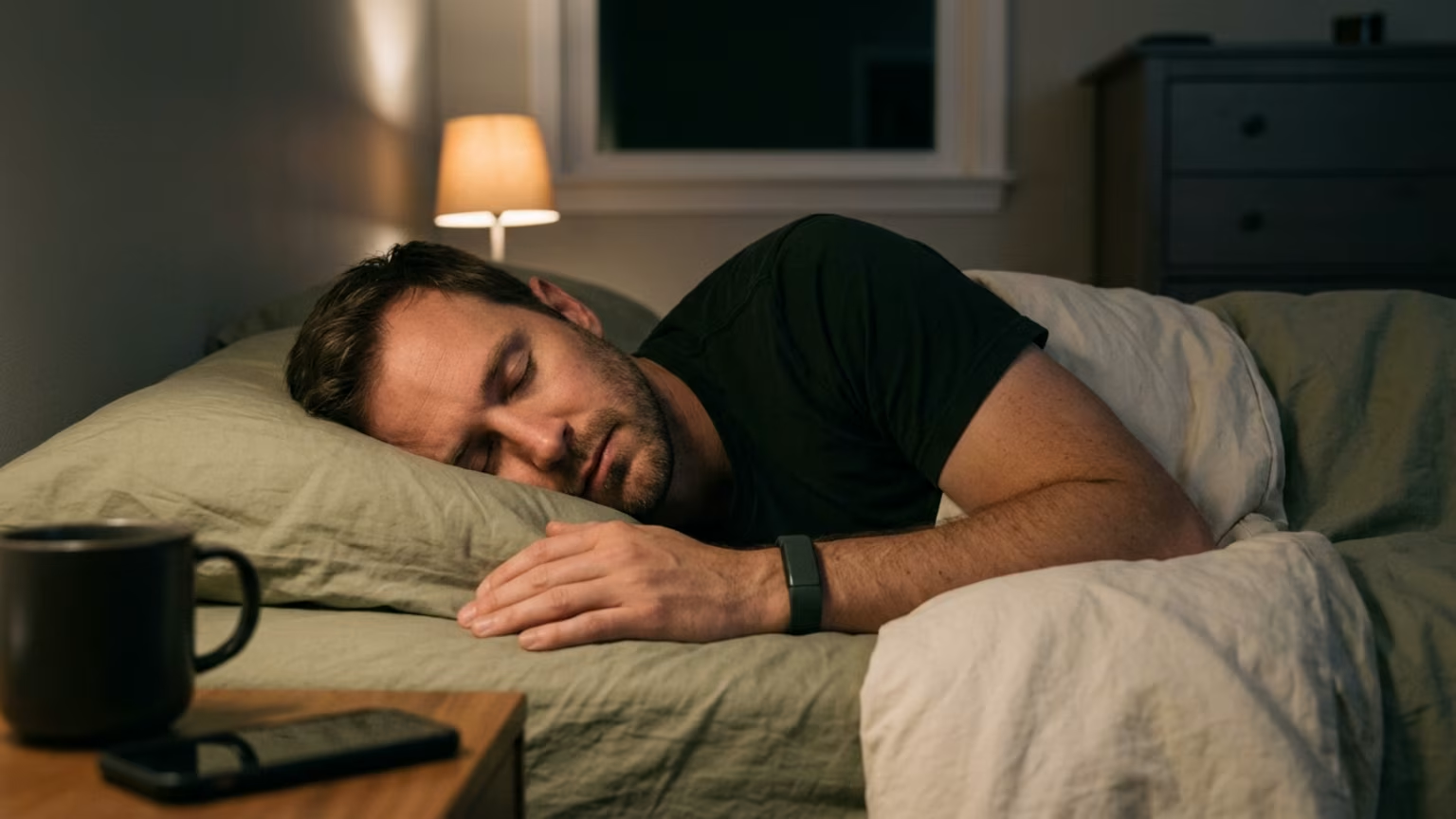

A new UK Biobank study links higher estimated REM and deep sleep to lower risk for 83 diseases. We explain what this means for veteran health and recovery.





In September 2026, PLOS Medicine published a major prospective study analyzing how objectively estimated sleep patterns relate to later disease diagnoses. Researchers examined wrist-accelerometer data from 95,559 adults in the UK Biobank cohort. The participants wore the tracking devices for seven consecutive days. Researchers then followed their health records for a median of 8.9 years to evaluate future medical conditions.
The study utilized a deep-learning algorithm called SleepNet to estimate different sleep stages. The researchers analyzed 1,049 well-defined clinical phenotypes that were derived from more than 10,000 ICD-10 codes. By mapping these estimated sleep patterns against long-term health records, the analysis identified dozens of statistical associations. The findings provide broad population-health evidence regarding how sleep stages might influence disease risk.
For active military personnel and veterans, sleep is often treated as a secondary priority behind pressing operational demands. I remember waking up after a poor night of sleep and realizing that my training recovery was taking much longer than it used to. I realized that readiness is more than just pushing through the fatigue. It requires a dedicated approach to sleep and hormonal health, which completely shifted how I view long term capability.
This recent epidemiological research highlights that sleep should be viewed as structural health infrastructure. The study emphasizes that total sleep time is not the only variable that matters for long-term outcomes. Nighttime awakenings and sleep irregularity also show strong associations with future health risks. Protecting a consistent sleep schedule can be an important strategy for preserving physical and mental capability as you transition into veteran life.
The study population consisted of middle-aged and older adults with a mean age of 56.2 years. The group was 43.7% male and 96.9% identified as White. The median estimated sleep profile included 392.4 minutes of total sleep and 64.1 minutes of wake after sleep onset. It also included 81.7 minutes of estimated REM sleep and 102.6 minutes of estimated deep sleep.
After applying a Bonferroni statistical correction, the researchers identified 97 significant associations involving sleep stages. The vast majority of these findings involved estimated REM sleep. Specifically, there were 83 significant associations involving REM sleep, seven involving deep sleep, and seven involving light sleep. The researchers also found 50 significant associations involving total sleep duration and six involving wake after sleep onset.
The data showed that an interquartile-range increase of 47.6 minutes in estimated REM sleep was associated with lower risk for 83 diseases. These conditions spanned 12 different disease categories. Cardiovascular conditions showed notable statistical links in the analysis. The reported hazard ratio was 0.74 for heart failure, 0.83 for atrial fibrillation, and 0.87 for ischemic heart disease.
The study also reported strong associations between estimated REM sleep and neurological conditions. The reported hazard ratio was 0.54 for dementia and 0.69 for Alzheimer’s disease. Parkinsonism showed a particularly strong statistical relationship with a hazard ratio of 0.20. These figures represent statistical associations within a large phenome-wide analysis rather than proven preventive effects.
An interquartile-range increase of 47.5 minutes in estimated deep sleep was associated with lower risk of seven diseases. Type 2 diabetes showed a hazard ratio of 0.89. Major depressive disorder showed a hazard ratio of 0.86, and Parkinson’s disease showed a hazard ratio of 0.70. Higher estimated deep sleep was also associated with a lower risk of sleep apnea.
Getting six to eight hours of rest generally aligned with more favorable sleep patterns and lower risk across multiple outcomes. Compared with the six-to-eight-hour reference group, sleeping less than six hours was associated with higher risk of 51 phenotypes. Sleeping more than eight hours was associated with higher risk of four phenotypes. In a more extreme comparison, 37 of 41 higher-risk associations occurred among people sleeping fewer than five hours per night.
The authors reported elevated risks among short sleepers for several serious conditions. These conditions included heart failure, type 2 diabetes, and chronic obstructive pulmonary disease. The study generally found the most favorable associations in the six-to-eight-hour range, while some outcomes were associated with longer sleep. However, the researchers noted that longer sleep durations may actually reflect an underlying illness rather than act as the cause.
Sleep continuity proved to be another critical factor in the analysis. Higher sleep irregularity was associated with elevated risk of anxiety disorders, showing a hazard ratio of 1.23. It was also associated with major depressive disorder, displaying a hazard ratio of 1.26. Greater wake after sleep onset was linked to higher risk for six different diseases.
While the sample size is massive, the authors explicitly state that this observational study cannot establish causation. Undiagnosed illnesses might have influenced sleep patterns before a formal medical diagnosis was made. After researchers expanded the washout period for early disease events to two years, approximately 60% of the findings remained statistically significant. This suggests that reverse causation cannot be completely excluded from the results.
Additionally, sleep stages were estimated using wrist movement rather than polysomnography. Polysomnography remains the clinical gold standard because it directly measures brain waves and muscle activity. SleepNet’s reported F1 score for REM, non-REM, and wake classification was 0.49. Compared with polysomnography, the accelerometer method underestimated REM duration by roughly 17.1 minutes and overestimated non-REM duration by 31.1 minutes.
The study cohort also features a healthy-volunteer selection bias and represents a predominantly White demographic. Participants were originally recruited in England, Scotland, and Wales between 2006 and 2010. The researchers did not specifically evaluate active-duty personnel, combat exposure, military shift work, or service-related trauma. Therefore, these results should be viewed as broad population health evidence rather than a strict guide for military health protocols.
The research supports protecting the overall sleep opportunity rather than just focusing on time spent in bed. Because short sleep durations and frequent awakenings correlate with higher disease risk, maintaining a consistent schedule is highly practical guidance. Veterans should treat severe nighttime fragmentation as a reason to seek clinical evaluation. You should not dismiss persistent snoring, witnessed breathing pauses, or severe daytime sleepiness as ordinary fatigue.
Veterans should avoid using consumer wearable scores as absolute medical diagnoses. Because wrist movement estimates differ from direct brain wave measurements, wearable deep sleep numbers are just rough trend indicators. An estimated REM score on a watch cannot diagnose insomnia, sleep apnea, or PTSD-related sleep disturbances. Instead of chasing daily wearable metrics, individuals with chronic sleep problems should access established healthcare resources.
The VA and Department of Defense clinical-guideline system lists chronic insomnia disorder and obstructive sleep apnea as dedicated clinical-practice topics. This provides an important practical bridge between new observational studies and established veteran-care pathways. VA clinical materials describe cognitive behavioral therapy for insomnia, or CBT-I, as a structured treatment for clinical insomnia. This approach aims to change sleep-related behaviors and thoughts rather than relying primarily on medication.
People concerned about their sleep can easily discuss a referral for CBT-I or a formal sleep study with their primary-care provider. Evidence-based interventions are highly accessible for veterans dealing with chronic sleep disruptions. VA-reported research notes that veterans using a smartphone-based CBT-I Coach app reported improvements in sleep quality and insomnia symptoms. The app showed similar benefits among participants with and without PTSD or sleep apnea.
The military-health system also continues to investigate methods for improving alertness and performance during periods of unavoidable sleep deprivation. These resources provide a solid foundation for treating sleep and stress resilience as a core pillar of long-term wellness. Framing sleep as readiness infrastructure is crucial, even when operational demands make perfect rest impossible.
As large population-health studies continue to highlight the long-term impacts of poor sleep, how will military health systems adapt these insights for active personnel who face unavoidable operational sleep restriction?
Follow BattleVet for practical guidance on military and veteran health, strength, recovery, testosterone, sleep and healthy aging. Stay connected for new articles, research backed insights and clear information to help you stay capable for the years ahead.



A new study involving over 600,000 patients found that equal access to structured VA oncology care effectively eliminates racial survival gaps among Veterans.

A 2026 study in npj Aging links physical fitness to healthier brain structure in older adults, though it does not show a direct baseline memory advantage.
Canada’s Department of National Defence announced the return of the Canada Army Run to downtown Ottawa, including the Juno 1K Challenge and combined race formats.
Build better habits around strength, recovery, sleep, hormones and healthy aging with practical guidance for active military personnel and veterans.
Explore BattleVet