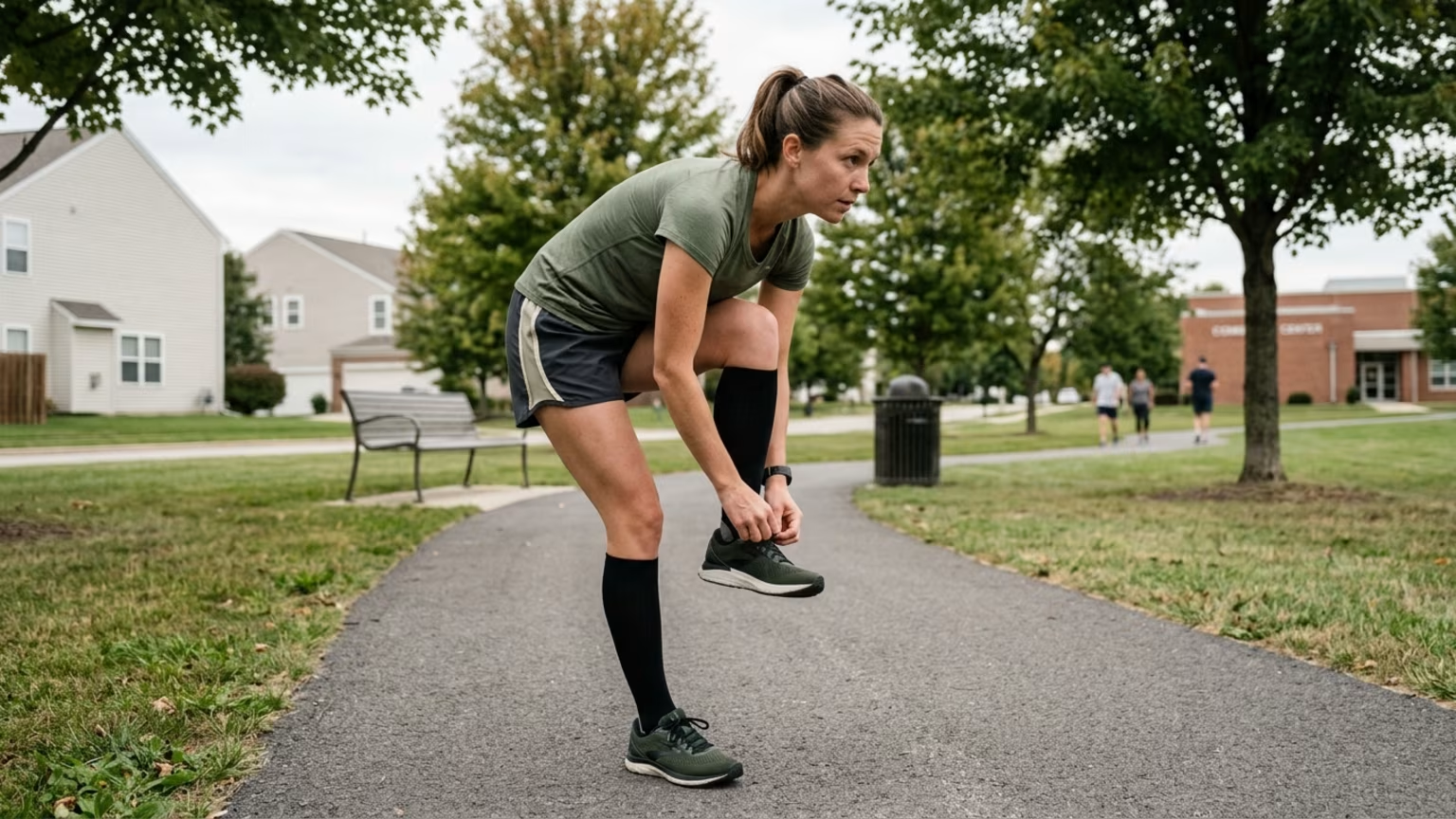

Canada’s Department of National Defence announced the return of the Canada Army Run to downtown Ottawa, including the Juno 1K Challenge and combined race formats.





Canada’s Department of National Defence announced that the Canada Army Run 2026 returns to downtown Ottawa today, Sunday, September 20, 2026. The event is presented by BMO and expects thousands of participants to take part in organized physical fitness challenges. The race weekend began with the Canadian Tire Race Expo and the BMO Kids Zone on Friday, September 18. Operations are based at the Cartier Square Drill Hall, which is located at 2 Queen Elizabeth Driveway in Ottawa.
The official race starts at Ottawa City Hall, and the finish line is located near the National War Memorial on Elgin Street. Opening ceremonies began at 7:25 a.m. this morning, with race starts continuing periodically until approximately 9:30 a.m. The event includes a 5K, a 10K, a half marathon, and two combined distance challenges. The inaugural Juno 1K Challenge also took place on Saturday, September 19, at 11 a.m.
The new 1K event is named after the Canadian Army official mascot, Juno. It is designed to give young participants a fun introduction to racing and physical activity. The overall event raises funds for Support Our Troops and Soldier On. These programs directly support serving members, veterans, ill and injured personnel and their families. Virtual participation options are also available through September 25, 2026, which allows former service members outside of Ottawa to maintain engagement.
For nearly two decades, this event has connected civilians with the Canadian Armed Forces. The race structures offer a practical look at how scalable endurance targets support long term physical capability. Serving members and veterans often need flexible, externally scheduled goals to maintain their conditioning without risking overtraining. The combined distance options, such as the Sergeant Major’s Challenge and the Commander’s Challenge, provide progressive endurance targets for participants.
I remember waking up after a poor night of sleep and realizing that my training recovery was taking much longer than it used to. I realized that readiness is more than just pushing through the fatigue. It requires a dedicated approach to sleep and hormonal health, which completely shifted how I view long term capability. Our team learned that readiness requires a dedicated approach to physical restoration, rather than just forcing the body to reach a distance goal. Participating in structured community events can help veterans establish healthy training rhythms. Setting specific race dates helps structure annual training blocks effectively.
Maintaining cardiovascular fitness after active service requires a balanced approach to physical restoration. The variety of distances at the Canada Army Run allows participants to select an appropriate level of endurance demand rather than committing strictly to a long distance race. This flexibility is highly useful for former military personnel adjusting to civilian schedules and different training environments. Properly managing training loads is a core part of long term health.
Consistent physical activity requires ongoing adjustments as individuals age. Building a routine around a specific target date keeps daily workouts focused. Without a clear goal on the calendar, it is easy to skip mobility exercises or ignore minor muscle aches. The structured nature of this event helps establish a reliable framework for physical restoration.
Readers interested in structuring their own routines can review our resources on Training and performance Articles to establish consistent habits. The community aspect of the race weekend, including military displays and interactions with Army members, makes it more than a conventional road race. These events reinforce the connection between physical fitness and active community support. The financial backing generated by the race provides material support to critical programs.
Military organizations continue to update how they manage physical training and injury recovery. A recent report on a U.S. Army study analyzed approximately 1.42 million musculoskeletal injuries among active duty soldiers between 2017 and 2025. Researchers examined the impact of the Holistic Health and Fitness program, which embeds physical therapists, athletic trainers, and strength coaches directly into brigades. The study found that soldiers in units with embedded support teams spent 5.9% less time on limited duty after a musculoskeletal injury.
The difference in restricted duty time expanded as the program matured. In the first year of implementation, soldiers averaged 2.7 fewer restricted duty days. By 2025, that figure reached 5.7 fewer days of limited duty. Researchers noted that this pattern likely reflects earlier identification and intervention, rather than a proven reduction in the overall number of injuries. Access to immediate rehabilitation support allows personnel to address minor issues before they become severe operational limits.
The Holistic Health and Fitness model represents a significant evolution in how military leaders view physical capability. Instead of treating injuries only after they severely limit performance, the focus has shifted toward immediate, localized care. By placing specialized rehabilitation professionals directly in the units, the U.S. Army ensures that soldiers receive consistent guidance on their physical health. This immediate access prevents small aches from developing into major musculoskeletal issues.
While these findings involve active duty U.S. soldiers, they highlight a broad shift in how military populations handle physical readiness. Proper monitoring systems ensure that minor joint or muscle complaints receive attention quickly. For individuals preparing for distance events, this data underscores the value of seeking timely care rather than ignoring early signs of strain. Veterans can benefit significantly by adopting a similar proactive mindset toward their personal health.
The U.S. military study also indicated that participating soldiers were slightly more likely to be placed on limited duty initially, while returning to full duty sooner. This suggests that cautious, early intervention improves the overall timeline for returning to regular activity. Prioritizing rest and proper care aligns well with effective Recovery and sleep Articles, which emphasize physical restoration over continuous exertion. Ignoring early discomfort often leads to prolonged absences from training.
These findings reinforce the importance of monitored recovery for both active personnel and veterans preparing for endurance events. Service members returning from injury should not use a race entry as proof that they are ready for unrestricted activity. The military health data indicates that early detection and access to physical therapy are highly effective strategies for maintaining long term capability. Veterans planning to participate in the Canada Army Run 5K, 10K, or half marathon should select a distance that matches their current conditioning and medical guidance.
The new Juno 1K Challenge is officially designed as a youth oriented event to encourage physical activity. It is not an established clinical intervention or a formal veteran fitness test. However, shorter distances provide an accessible starting point for inexperienced runners or families. A sensible preparation strategy involves building distance gradually, integrating strength and mobility routines, and paying close attention to pain or fatigue.
Newer runners often struggle with pacing and end up pushing too hard during their early training blocks. The variety of distances offered in Ottawa allows individuals to test their conditioning without extreme physical strain. Proper preparation involves tracking weekly mileage and ensuring adequate rest between intense sessions. Seeking professional advice on running mechanics can also reduce the risk of joint injuries over time.
Seeking qualified medical advice when symptoms persist is essential for maintaining physical performance during and after service. Participants choosing the Sergeant Major’s Challenge combine the 5K and 10K events, while the Commander’s Challenge combines the 5K and the half marathon. These stacked formats require careful pacing and a clear understanding of personal endurance limits. Building a solid aerobic base before attempting combined distances reduces the risk of joint stress.
Veterans should evaluate their injury history before committing to high impact challenges that exceed their recent training volumes. Adapting to a post service lifestyle often involves redefining what optimal fitness looks like. Focusing on mobility, targeted strength work, and scalable cardiovascular goals ensures that training remains sustainable. Our Veteran life Articles often discuss how managing expectations and adjusting workouts can improve long term physical capability.
The goal is to stay strong and capable without accumulating unnecessary injuries over time. Community events provide a great framework for fitness, provided that participants listen to their bodies and utilize available rehabilitation resources. Integrating regular medical feedback into a training plan is much more effective than relying on sheer effort alone. Structured participation ensures that veterans can enjoy these events for years to come.
As military branches gather more data on injury prevention, fitness protocols will likely continue to shift toward proactive, multidisciplinary support. The integration of community endurance events and enhanced rehabilitation access creates a practical framework for maintaining operational readiness. How will upcoming observational studies further refine injury recovery timelines for veterans transitioning into civilian fitness routines?
Follow BattleVet for practical guidance on military and veteran health, strength, recovery, testosterone, sleep and healthy aging. Stay connected for new articles, research backed insights and clear information to help you stay capable for the years ahead.


The VA awarded a record $1.17 billion in FY 2027 grants to 680 community organizations to prevent veteran homelessness. Learn how to access these resources.


The University of West Florida and Home Base Florida launched a free 90 day wellness program for veterans in Pensacola. Learn how this impacts health routines.
A 2026 UC San Diego study links naturally occurring anti-NMDAR1 autoantibodies to lower depression and PTSD scores in Marines following a traumatic brain injury.
Build better habits around strength, recovery, sleep, hormones and healthy aging with practical guidance for active military personnel and veterans.
Explore BattleVet