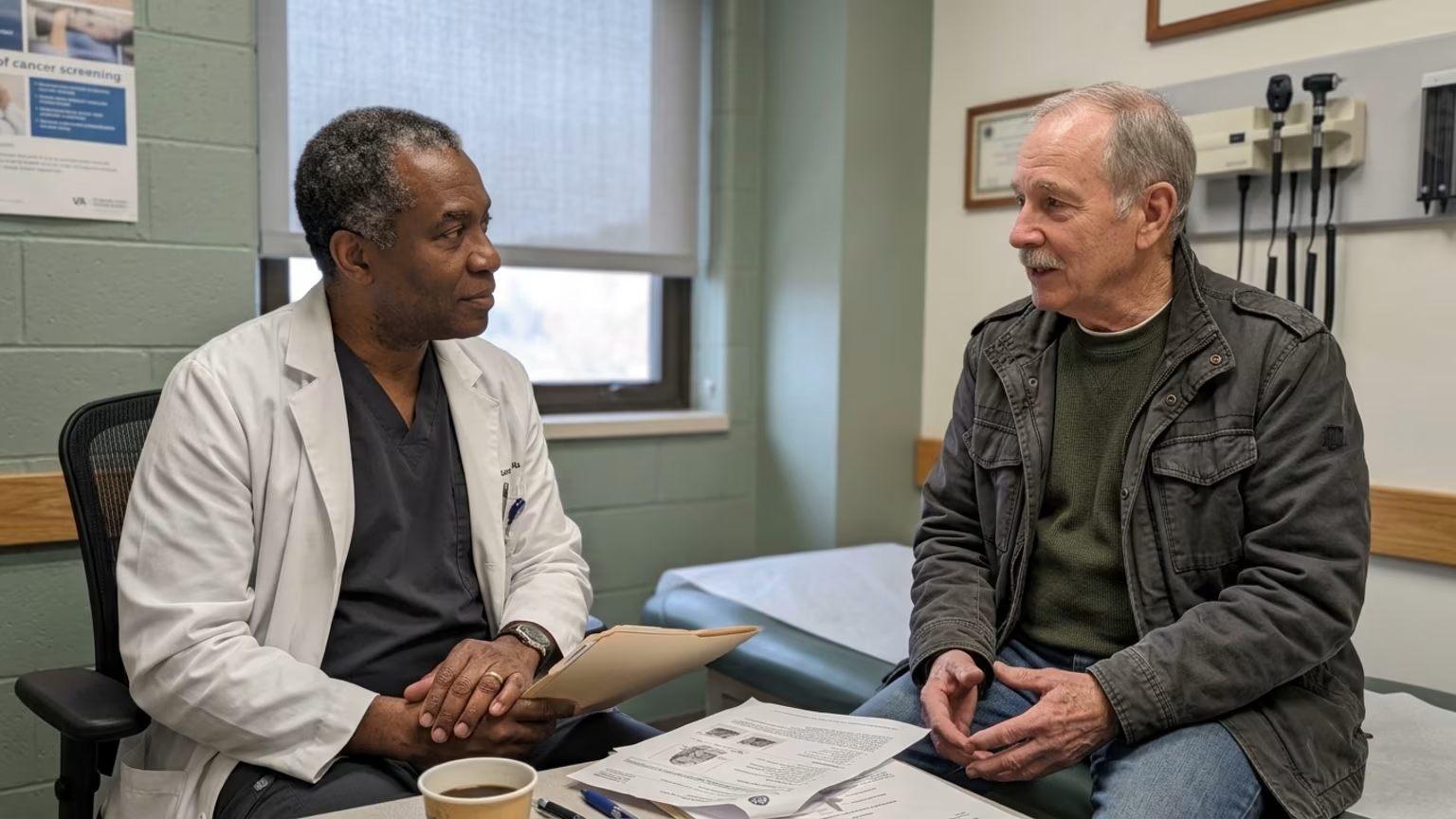

A new study involving over 600,000 patients found that equal access to structured VA oncology care effectively eliminates racial survival gaps among Veterans.





On September 1, 2026, the VA Greater Los Angeles Health Care System reported new research regarding cancer outcomes. The institution published an article titled “VA Study Finds Equal Access in VA Healthcare Removes Racial Differences in Cancer Outcomes.” This detailed report provided an overview of how integrated healthcare systems affect long term patient prognosis. The underlying study, titled “Equity and Cancer Survival Among Veterans Health Administration Patients,” examined clinical data involving more than 600,000 Veterans with cancer.
These patients were all managed directly through the Veterans Health Administration. The scope of the research was substantial, drawing on 39 eligible studies conducted over several decades. After analyzing this extensive pool of patient records, researchers concluded that racial differences in cancer survival were effectively eliminated among Veterans receiving care through this specific system. The VA article presents this finding as strong evidence that equal access to comprehensive cancer care works.
It suggests that structured healthcare systems can remove the racial survival differences that have repeatedly been observed in other clinical settings across the United States. Dr. Drew Moghanaki, the study’s senior author, is a radiation oncologist and researcher stationed at the VA Greater Los Angeles Healthcare System. His team's findings provide a critical look at how robust, well funded medical infrastructure directly changes patient trajectories.
Understanding how clinical infrastructure influences survival is critical for military veterans navigating their medical benefits. Moghanaki characterized the results as confirmation that comparable care can produce comparable cancer outcomes across different racial groups. He emphasized that modern cancer treatment requires substantial resources from both the patient and the provider. According to his statements in the report, the VA had spent decades building the necessary infrastructure to manage these complex medical cases.
This established infrastructure provides multiple layers of support that directly impact patient outcomes. The VA article identifies four specific mechanisms that may help explain the positive survival results. These factors include reduced financial barriers, consistent diagnostic testing, access to oncology specialists, and supportive services. Dr. Donna Washington, a co-author and VA Greater Los Angeles general internist, linked the survival findings to organizational systems rather than to race itself.
Washington noted that cancer survival involves multiple complex steps, requiring robust processes for screening, early detection, treatment, and social service support. The VA systems are designed to connect Veterans with oncology specialists across the country. They aim to accomplish this without the out of network obstacles that frequently limit access to cancer specialists in private care settings. Eliminating these administrative barriers allows patients to begin their targeted treatments much faster.
In our experience at BattleVet, shifting from a reactive mindset to a proactive approach changes everything. I remember waking up after a poor night of sleep and realizing that my training recovery was taking much longer than it used to. I realized that readiness is more than just pushing through the fatigue. It requires a dedicated approach to sleep and hormonal health, which completely shifted how I view long term capability.
The exact same principle applies to navigating serious medical conditions. Relying on integrated, continuous care processes provides a stronger foundation than waiting until severe symptoms force an emergency response. Regular interaction with a structured health system builds a baseline of data that makes early detection possible. When patients view their healthcare as ongoing maintenance rather than periodic crisis management, they typically see better long term results.
While the primary analysis of 600,000 Veterans found that broad racial differences in survival were effectively eliminated, related research reveals important nuances across different diagnoses. A separate national study reviewed records from 1,463,996 patients, which included 79,027 Veterans Health Administration patients. This research found that adjusted three year overall survival for non-small-cell lung cancer increased significantly in the VA group between 2007 and 2019. Survival rates for this demographic rose from 24 percent to 51 percent during that timeframe, compared to an increase from 24 percent to 41 percent in the non-VHA comparison group.
Despite these broad improvements, disparities can still persist in specific screening, diagnostic, and treatment pathways. A 2026 report focusing on low-risk prostate cancer found that active surveillance rates among Veterans were high overall. However, Black Veterans had lower adjusted odds of receiving active surveillance than White Veterans, with an odds ratio of 0.95. Similarly, Hispanic or Latino Veterans had an odds ratio of 0.85 when compared with non-Hispanic Veterans.
These localized findings indicate that while integrated care narrows broad survival gaps, differences in specific diagnostic and treatment decisions remain an area for continued focus. The evidence clearly suggests that access alone does not automatically equalize every single step of the cancer care process. Researchers and medical professionals must continue examining these specific disparities to understand why certain populations still experience different rates of active surveillance. Continued monitoring of these specific conditions remains essential for improving the overall quality of care.
These detailed findings reinforce the importance of staying actively engaged with VA primary care and all recommended diagnostic pathways. Staying informed about military health protocols allows you to advocate effectively for your own screening needs. Veterans should never treat these broad survival statistics as a reason to delay care while waiting for symptoms to appear. The research specifically emphasizes systematic screening and early detection processes as vital tools to support more timely intervention.
Instead of waiting, you should actively ask your primary care team whether you are due for age appropriate and risk appropriate cancer screenings. If you receive a diagnosis, ask your medical providers about the full treatment pathway, including staging, specialist consultation, and specific options. Understanding the available veteran lifestyle and healthcare resources helps ensure you utilize the full range of integrated benefits. Veterans who are unsure about their enrollment status or referral coverage should contact their enrollment office before assuming that specialist care is inaccessible.
You must also clearly communicate any practical or logistical barriers to your medical providers. Let your care team know immediately if you face transportation issues, work obligations, mental health challenges, or housing instability. Proactive management of these logistical factors is a key element of healthy aging and continuous care for all former service members. The VA specifically incorporates social services into its oncology infrastructure to help patients maintain adherence to complex and demanding treatments.
Finally, remember that screening and treatment decisions should always be individualized through discussions with your clinicians. The reported study does not replace direct medical advice, nor does it establish that every Veteran should receive identical tests or procedures. Veterans should treat the findings as encouraging evidence that access to coordinated care improves equity across populations. However, you should still actively report delays, missed referrals, or difficulty obtaining tests so that your care team can address them promptly.
The data clearly indicates that structured access and comprehensive support can remove broad racial differences in cancer survival among Veterans. The VA continues to build infrastructure to support complex cases, but researchers are still investigating why disparities remain in specific screening referrals and treatment selections. As these integrated healthcare systems expand their early detection programs and specialist networks, will future policies fully close the remaining gaps in specialized cancer care across all patient populations?
Follow BattleVet for practical guidance on military and veteran health, strength, recovery, testosterone, sleep and healthy aging. Stay connected for new articles, research backed insights and clear information to help you stay capable for the years ahead.


A 2026 study in npj Aging links physical fitness to healthier brain structure in older adults, though it does not show a direct baseline memory advantage.


Canada’s Department of National Defence announced the return of the Canada Army Run to downtown Ottawa, including the Juno 1K Challenge and combined race formats.

The VA awarded a record $1.17 billion in FY 2027 grants to 680 community organizations to prevent veteran homelessness. Learn how to access these resources.
Build better habits around strength, recovery, sleep, hormones and healthy aging with practical guidance for active military personnel and veterans.
Explore BattleVet