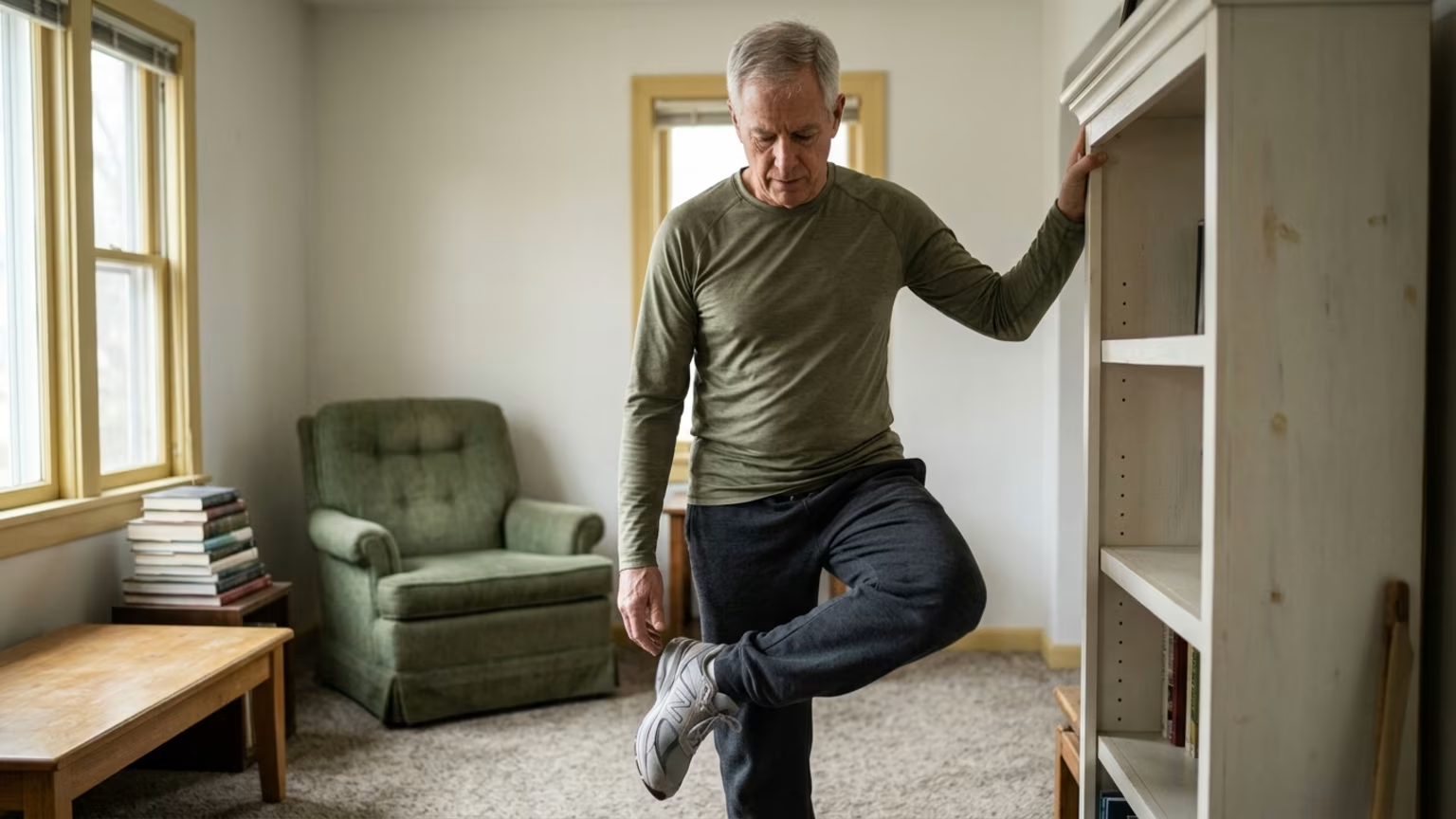

A 2026 study in npj Aging links physical fitness to healthier brain structure in older adults, though it does not show a direct baseline memory advantage.





In September 2026, a study published in npj Aging examined the relationship between physical fitness and brain health in older adults. The paper, volume 12, article 129, analyzed objectively measured aerobic and muscular fitness in cognitively unimpaired adults aged 60 to 94. Researchers sought to understand how physical capacity connects to brain structure, brain pathology, and cognition. They found that higher fitness is linked to several imaging markers of healthier brain structure. However, the study found no direct association between either aerobic or muscular fitness and baseline global cognition or episodic memory.
Veterans are accustomed to viewing physical training strictly through the lens of physical capability and operational readiness. During active service, the primary goal of physical conditioning is maintaining the strength and endurance required to perform demanding tasks. As we age, that focus often shifts toward preventing physical decline and preserving independence. The recent npj Aging findings highlight a different reason to maintain conditioning for the long term.
Physical training can act as a long term structural investment for the aging brain. I remember waking up after a poor night of sleep and realizing that my training recovery was taking much longer than it used to. I realized that readiness is more than just pushing through the fatigue. It requires a dedicated approach to sleep and hormonal health, which completely shifted how I view long term capability. That same shift applies to how we view fitness and brain health in later life.
We cannot treat the brain and body as separate systems that operate independently of one another. The distinction between brain structure and daily memory performance is vital for aging service members. Many veterans worry about memory loss and cognitive decline as they get older. Some popular health messages suggest that exercise will immediately sharpen memory or guarantee the prevention of dementia.
This study provides a more grounded and realistic perspective for aging adults. It suggests that fitness supports underlying structural health, even if it does not automatically produce higher scores on a short term memory test. This helps veterans set realistic expectations for their daily health routines. Relying on fitness as a simple memory cure can lead to frustration if short term recall does not noticeably improve.
By viewing physical training as a method of structural brain maintenance, older veterans can appreciate the hidden value of their workouts. The effort you put into cardiovascular and strength conditioning works beneath the surface. It helps maintain the physical architecture of the brain over the long term. This structural foundation is a critical component of healthy aging for former service members.
The researchers in the npj Aging study did not rely on participants reporting their own exercise habits. Instead, they assessed aerobic fitness and muscular capacity objectively in a clinical setting. The findings showed that higher aerobic fitness was associated with greater total gray-matter volume. It was also linked to a thicker medial temporal-lobe cortex.
These structural markers are generally associated with a healthier aging brain, providing a physiological rationale for staying active. Muscular capacity showed a different set of structural associations in the study. Higher muscular capacity was associated with significantly lower perivascular-space volume in the basal ganglia. Perivascular spaces are fluid-filled spaces surrounding small blood vessels.
This finding serves as an imaging marker associated with brain vascular health. The researchers noted that this finding is not proof that strength training actively prevents cerebrovascular disease. Despite these positive structural signs, the cognitive test results were entirely neutral. The study found no direct association between aerobic or muscular fitness and baseline global cognition.
There was also no significant relationship with episodic memory in the tested subjects. The cognitive models were strictly adjusted for age, sex, and education, and the results remained unchanged. The study design includes important limits that affect how we interpret the structural data. Because the analysis was cross-sectional, the authors said it could not establish that fitness preserved brain structure over time.
A cross-sectional study looks at data from a single point in time rather than tracking changes. It cannot determine if fitness caused the healthier brain structure, if people with healthier brains were more likely to stay fit, or if both were influenced by other factors. The study does not prove dementia prevention. The source describes associations with imaging markers and baseline cognition, not a reduction in dementia diagnoses or future cognitive decline.
Healthy user bias is also a possible factor in these findings. People with better cardiovascular health, better sleep routines, higher socioeconomic resources, or greater access to exercise may also show healthier brain imaging. The available report does not establish that fitness alone explains the observed structural differences in the brain. Understanding these variables is important for evaluating medical literature accurately.
The sample does not establish veteran-specific effects. The reported study involved cognitively unimpaired older adults rather than a dedicated military cohort. Its results should not be generalized as though combat exposure, traumatic brain injury, post-traumatic stress, or military occupational demands were directly analyzed.
These findings reinforce the need for a balanced approach to physical conditioning. Because aerobic fitness and muscular capacity showed different structural associations, relying on just one training method is not optimal. Veterans should maintain both cardiovascular conditioning and strength training to support overall structural health. Focusing exclusively on running or solely on lifting weights may leave gaps in your long term physical maintenance.
Proper training and performance routines should evolve as you age to include multiple forms of exercise. Service members and veterans should use progressive training appropriate to their age, injury history, and medical status. The study itself does not prescribe a workout plan or establish a specific dose of exercise. Veterans should avoid presenting its findings as evidence for a particular weekly program.
The absence of a baseline memory advantage does not mean fitness lacks cognitive value entirely. A separate report on aerobic exercise training looked at different cognitive domains. It found improved executive-function performance among participants assigned to an active training program compared with people maintaining their usual activity level. However, that study also found no improvement in episodic memory.
This reinforces the importance of measuring specific cognitive skills rather than treating all brain function as a single outcome. Veterans should keep their memory concerns clinically grounded rather than relying on exercise to fix them. A normal memory score does not mean physical training is useless. Conversely, a new or worsening memory problem should not be dismissed simply because you exercise regularly.
Veterans with specific cognitive concerns should discuss them with a primary care clinician or VA provider. The broader veteran health system is also adapting its approach to physical function and cognitive aging. The Veterans Health Administration and Stanford University developed a pilot program called Balanced Brain. This program used acceptance and commitment therapy to help older veterans address concerns about cognitive aging while adopting healthier lifestyles.
It was delivered through video telehealth to two small cohorts. Participants reportedly rated the program highly and largely remained engaged with it. The VA Geriatric Research Education and Clinical Center is taking similar remote approaches to physical function. They have been recruiting veterans aged 60 and older for a telehealth physical therapy study.
This study is intended to assess whether remote rehabilitation can improve and sustain physical functioning. It compares telerehabilitation with an education control group. The VA announcement said the planned study aimed to recruit 126 veterans nationwide by December 2026. Telehealth is becoming a critical tool for modern veteran lifestyle and healthcare.
These related developments show a shift toward accessible, sustained care models for older veterans. Whether the goal is preserving physical function or building cognitive confidence, remote delivery may help veterans maintain their health when geography or mobility limits their options.
As remote rehabilitation and targeted fitness programs become more integrated into routine care, how will the military and veteran health systems measure the long term cognitive benefits of keeping older veterans physically capable?
Follow BattleVet for practical guidance on military and veteran health, strength, recovery, testosterone, sleep and healthy aging. Stay connected for new articles, research backed insights and clear information to help you stay capable for the years ahead.


Canada’s Department of National Defence announced the return of the Canada Army Run to downtown Ottawa, including the Juno 1K Challenge and combined race formats.


The VA awarded a record $1.17 billion in FY 2027 grants to 680 community organizations to prevent veteran homelessness. Learn how to access these resources.

The University of West Florida and Home Base Florida launched a free 90 day wellness program for veterans in Pensacola. Learn how this impacts health routines.
Build better habits around strength, recovery, sleep, hormones and healthy aging with practical guidance for active military personnel and veterans.
Explore BattleVet