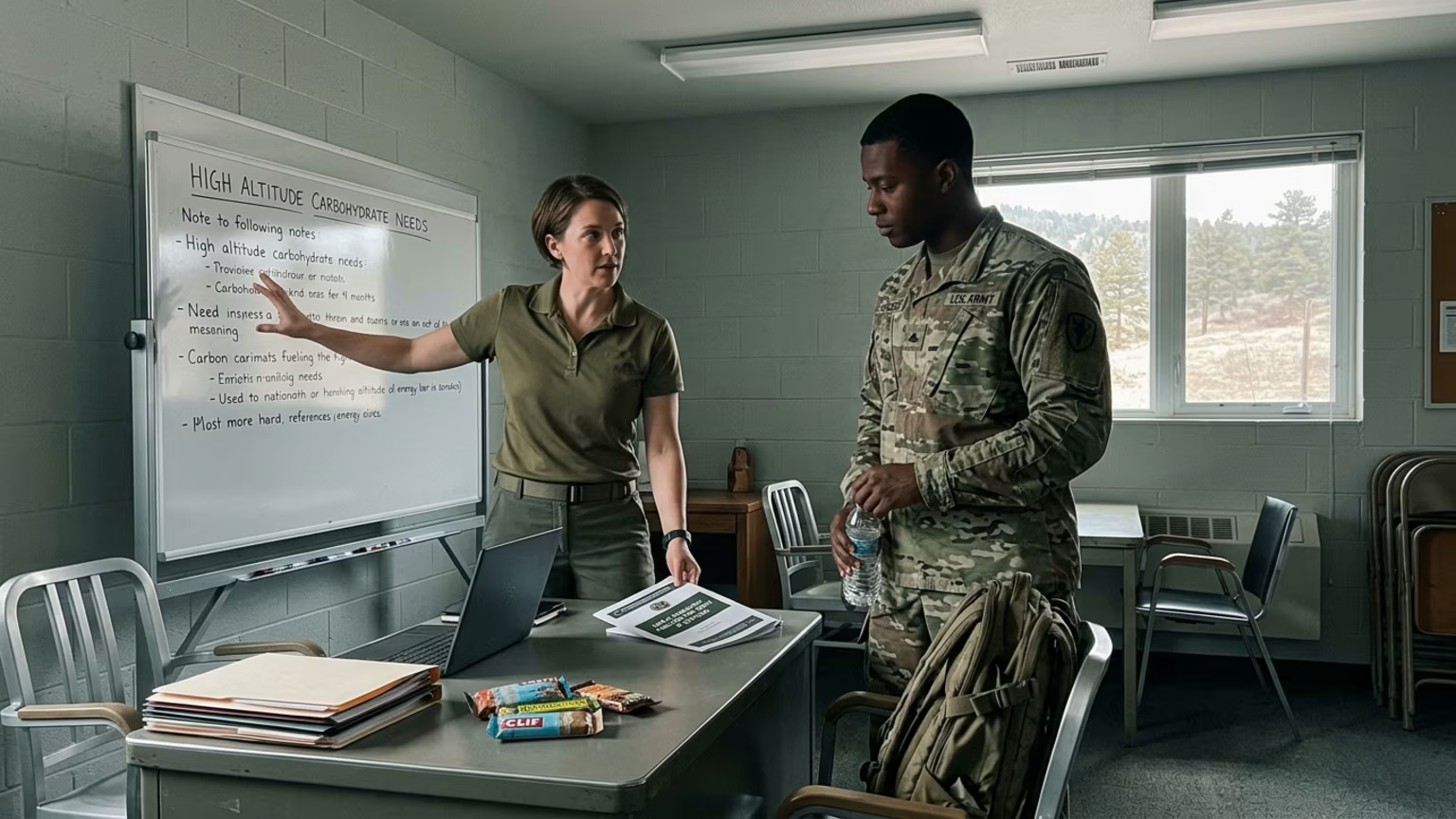

The U.S. Army highlights carbohydrates and adequate calories as practical field guidance for sustaining soldier performance during high altitude operations.





On September 22, 2026, the U.S. Army published an article detailing nutrition support for soldiers. This updated report describes operations in Auli, India, during Exercise Yudh Abhyas 2026. The bilateral exercise involves United States troops training alongside the Indian Army. The primary goal is to improve combined interoperability and strengthen the defense partnership between the two nations.
Sgt. Clinton Dofredo Wyatt deployed to India to provide hands on nutrition support. He is a 68M nutrition care specialist assigned to the Holistic Health and Fitness team. His team supports the 1st Mobile Brigade Combat Team of the 11th Airborne Division. This airborne division operates out of Fort Wainwright, Alaska.
Dofredo Wyatt supported soldiers who were conducting specific mountain warfare training. These personnel were preparing for a field training exercise with the Indian Army. The published guidance focuses on practical ways to sustain physical capability. It addresses the unique energy demands of operating in the harsh Himalayan environment.
Operating at high elevations places immediate physiological stress on the human body. This stress requires clear priorities for daily fueling and consistent hydration. The immediate concern for deployed soldiers is consuming enough total energy to function. Detailed optimization of every single nutrient takes a back seat to meeting basic demands.
Dofredo Wyatt noted that the primary focus is ensuring soldiers get enough calories first. He stated that troops need sufficient energy and water to maintain operational capability. Soldiers must consume enough fuel to stay lethal and train alongside their Indian counterparts. If personnel fail to eat enough food, fine tuning their diet will not matter.
This practical approach prevents soldiers from under fueling during critical training cycles. Our team at BattleVet understands how foundational these basic principles are for health. I remember waking up after a poor night of sleep and realizing that my training recovery was taking much longer than it used to. I realized that readiness is more than just pushing through the fatigue.
It requires a dedicated approach to sleep and hormonal health, which completely shifted how I view long term capability. The Army approaches physical readiness in harsh environments with a similar integrated mindset. Nutrition is not treated as a separate issue from physical training or sleep. Food unfamiliarity can become a significant hurdle for troops deployed internationally.
Dofredo Wyatt advised personnel to adapt their expectations regarding the available food options. Soldiers should use what is provided rather than automatically rejecting unfamiliar meals. When service members cannot reliably access adequate food, advanced nutrition recommendations fall flat. Readers interested in broader health foundations can review our military health articles.
The recent Army report reinforces a shift away from complex dietary prescriptions. It emphasizes carbohydrates as a highly practical energy source for mountain exertion. An earlier Indian Army medical briefing reinforced this specific carbohydrate focused approach. The briefing indicated that adequate carbohydrates help the body use oxygen efficiently.
This efficiency makes carbohydrates more useful at altitude than relying on protein. Fats also require more oxygen to metabolize than carbohydrate sources do. The Army guidance treats carbohydrates as a functional performance fuel for demanding environments. It clearly prioritizes this energy source over basic dietary preferences during operations.
The report does not provide a universal calorie target or specific hydration volume. It also omits any rigid grams per kilogram recommendation for the soldiers involved. The information serves as practical field advice rather than a published clinical trial. It should not be viewed as a formal Army wide dietary standard.
Hydration remains a constant priority alongside daily calorie consumption in the field. The Army guidance identifies water intake as a critical component of altitude adaptation. You can find more information on physical restoration in our recovery and sleep resources. Soldiers must maintain adequate hydration to support their overall energy metabolism.
The Army emphasizes that nutrition must coordinate directly with physical training schedules. Separate reporting notes that altitude can require adjustments to physical routines. Soldiers need time to adapt to a new environment before resuming baseline workloads. Nutrition, hydration, sleep, and training adjustments act as connected components of adaptation.
This integrated approach fits perfectly within the broader Holistic Health and Fitness system. The H2F system treats physical training and readiness support as unified concepts. Dofredo Wyatt’s role involves educating soldiers on fueling, recovery, and performance together. Performance is not treated as an isolated or gym only issue.
Individual physical requirements will always vary based on workload and body size. The specific altitude level and mission duration also change how a soldier responds. The report does not supply a measured performance result to guarantee specific outcomes. Soldiers should avoid false precision when estimating their nutritional needs in the mountains.
Instead, personnel should use professional resources for individualized planning when available. The Army article notes that Dofredo Wyatt works directly with registered dietitian counterparts. H2F personnel and medical treatment facility staff can help translate general field guidance. This support is vital for individuals with medical conditions or dietary restrictions.
The primary directive from this deployment is to secure enough calories first. Soldiers face a real risk of under fueling when operating in unfamiliar environments. Trying to optimize a diet perfectly can lead to restrictive eating habits. This restriction ultimately harms operational readiness and overall physical capability.
The physical environment dictates much of what soldiers can actually consume. Recent Army reporting highlights broader efforts to improve food availability at installations. If soldiers cannot access nutritious choices easily, theoretical dietary guidelines hold little value. Food access remains a fundamental readiness consideration for the entire military.
The specific emphasis on carbohydrates connects directly to oxygen utilization. At high elevations, thinner air makes oxygen management a critical physical factor. According to the Indian Army medical briefing, carbohydrates provide a distinct metabolic advantage. They require less oxygen to produce energy compared to breaking down other macronutrients.
This does not mean that proteins and fats are unnecessary for service members. It simply means that carbohydrate containing foods offer a straightforward way to meet demands. To read more about maintaining capability, check our training and performance articles. Carbohydrates support the intense physical exertion required during demanding mountain exercises.
Even with perfect nutrition, the human body needs time to adjust to altitude. The Army clearly states that training schedules often require temporary adjustments upon arrival. Pushing through severe fatigue without altering the workload can severely increase injury risk. Physical readiness requires a balanced and measured approach to stress and recovery.
We see similar physiological principles apply to long term health after military service. Veterans who want to maintain fitness must learn to adjust their training schedules. Ignoring the body's clear need for adaptation usually leads to unnecessary physical setbacks. You can explore more on this topic in our strength, fitness and body composition resources.
The lessons from Exercise Yudh Abhyas 2026 highlight a highly practical operational approach. The military continues to update its Holistic Health and Fitness doctrine and publications. These ongoing updates reflect a deeper understanding of how the human body operates. How will future military doctrine integrate specific nutritional timing to optimize high altitude performance?
Follow BattleVet for practical guidance on military and veteran health, strength, recovery, testosterone, sleep and healthy aging. Stay connected for new articles, research backed insights and clear information to help you stay capable for the years ahead.



A recent KRDO feature and clinical research highlight trauma-sensitive yoga as a practical tool for veterans managing PTSD and stress recovery.

Men’s Journal recently published a 15-minute military core circuit. Discover how this bodyweight routine fits into broader functional readiness and recovery.

Open Arms offers Australian veterans free counselling for sleep disturbance and stress. Read how new pilot programs and DVA funding support long term health.
Build better habits around strength, recovery, sleep, hormones and healthy aging with practical guidance for active military personnel and veterans.
Explore BattleVet