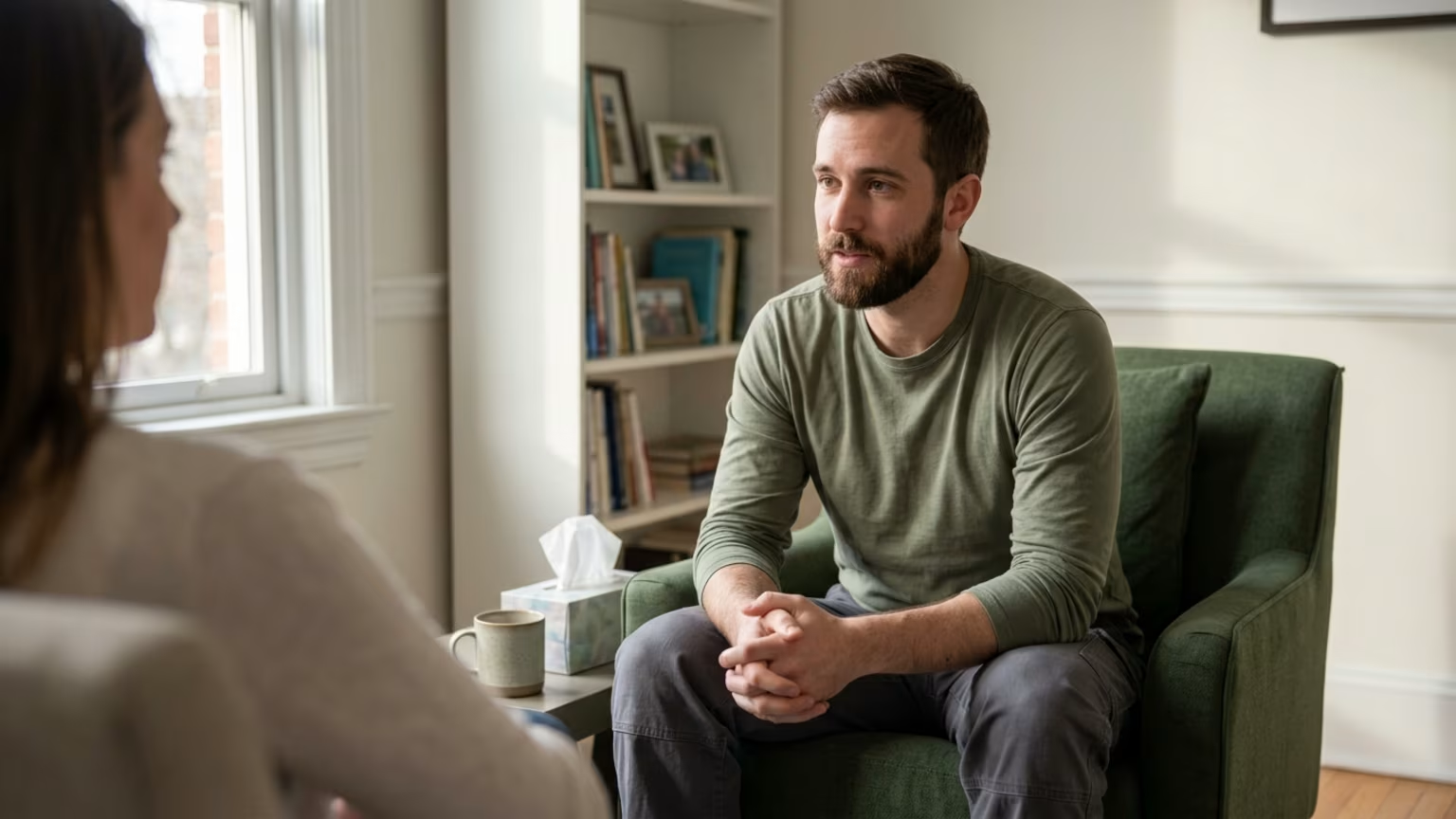

Open Arms offers Australian veterans free counselling for sleep disturbance and stress. Read how new pilot programs and DVA funding support long term health.





If you are in immediate danger, call 911 or 000. For the Veterans Crisis Line, call 988 and press 1, or text 838255. These resources provide immediate emergency support.
In September 2026, new local support options became available for Australian Defence Force personnel. RSL Queensland scheduled a dedicated Sleeping Better program at Open Arms Townsville. This local initiative ran between 11 and 18 September 2026. A clinician and a peer facilitated the sessions to help participants manage disturbed sleep.
Concurrently, Open Arms launched a relationship education pilot called CoupleCARE. This free program is available from September 2026 to December 2027 in selected regions. The pilot covers North Queensland, Sydney, Greater New South Wales, and Western Australia. It is designed specifically for current and former ADF members and their partners.
These local and regional programs operate alongside a much broader national service. Healthdirect recently highlighted Open Arms as a free nationwide counselling option. The service provides confidential support for war and service related conditions. These include post-traumatic stress disorder, anxiety, depression, sleep disturbance, and anger.
The Department of Veterans' Affairs continues to fund massive healthcare access across the country. DVA reported providing more than $15 billion in payments and services throughout 2025 and 2026. This extensive funding reached more than 360,000 veterans and their families. Approximately $5 billion of that total was dedicated directly to healthcare and treatment.
Open Arms operates as a highly accessible pillar within this national system. Healthdirect confirms that no payment or Medicare card is required for their counselling services. An appointment is not strictly necessary to make initial contact. However, calling the national number at 1800 011 046 to check availability and wait times is highly recommended.
Financial barriers often prevent former service members from seeking timely care. DVA plans to implement a $5,000 annual allied health threshold for treatment. Importantly, psychology and counselling services delivered through Open Arms do not count toward this planned limit. This exemption preserves the $5,000 threshold for other necessary allied health treatments like physical therapy.
Healthdirect also notes that the service extends beyond the individual veteran. Open Arms explicitly supports relationship and family matters associated with military life. This is vital because physical and mental health challenges usually impact the entire household. Dependents and partners require resources and guidance just as much as the veterans themselves.
Sleep disruption often compounds other mental and physical stressors. A recent study examined 74 veterans who were discharged within the past three years. Researchers found that poorer sleep quality predicted higher next day stress. This lack of rest also predicted subsequent alcohol consumption within this specific sample group.
The same study noted that PTSD symptoms strongly correlated with daily negative affect. Addressing these interconnected issues requires specific and careful clinical approaches. A 2026 review evaluated trauma informed insomnia research to find better methods. The review detailed approaches that adapt standard insomnia treatments for better veteran care.
These specific clinical approaches often combine PTSD and insomnia interventions. Some methods intentionally address PTSD related nightmares alongside general insomnia. Treating these conditions together provides a much more comprehensive path to mental recovery. It prevents the cycle of poor sleep causing stress, which in turn causes worse sleep.
The first three years after service are critical for establishing civilian routines. During this window, irregular sleep patterns can easily become entrenched long term habits. Breaking this cycle early requires the kind of targeted interventions discussed in the recent research. Proper clinical support provides a clear path forward for those struggling to adjust.
Veterans are heavily trained to endure discomfort and push through physical limitations. While this mindset is necessary during active service, it can be detrimental during civilian life. Ignoring chronic sleep disturbance often leads to decreased physical performance and poor mood regulation. Professional counselling offers a structured space to unlearn these counterproductive habits.
By working directly with clinicians, veterans can identify the root causes of their sleep issues. Sometimes, the problem stems from unresolved stress or lingering hypervigilance from active duty. Other times, it is simply a matter of poor sleep hygiene developed over years of shift work. Identifying the specific cause allows for a much more effective and targeted treatment plan.
Support networks also play a crucial role in maintaining these new healthy habits. The peer facilitation seen in the Townsville Sleeping Better program is a great operational example. Peers provide a level of accountability that is hard to find in a purely clinical setting. Sharing experiences with other veterans makes the recovery process feel much less isolating.
This combination of clinical expertise and peer support creates a highly effective environment. It allows individuals to rebuild their physical and mental resilience methodically over time. Taking these practical steps is essential for maintaining strength and capability as veterans age. It shifts the focus from simply surviving fatigue to actually thriving.
The availability of these programs reinforces highly practical health decisions for veterans. Knowing that confidential care is available completely removes a major hurdle. Veterans do not have to wait until sleep problems become severe before seeking assistance. Early intervention is a crucial part of maintaining overall long term capability.
I remember waking up after a poor night of sleep and realizing that my training recovery was taking much longer than it used to. I realized that readiness is more than just pushing through the fatigue. It requires a dedicated approach to sleep and hormonal health, which completely shifted how I view long term capability.
This is exactly why improving recovery and sleep must be a central priority. Sleep dictates muscle recovery, hormone regulation, and cognitive sharpness. Without adequate rest, the body simply cannot repair itself from intense daily physical demands. Connecting physical performance to restorative sleep is absolutely essential for a capable life.
DVA clearly states that mental health services are available 24 hours a day. Personnel are heavily advised to call 000 if a life is in immediate danger. For non emergencies, building a routine that incorporates structured professional support is highly beneficial. Programs like the one in Townsville show how targeted interventions provide excellent practical tools.
These resources make navigating veteran life much more manageable and predictable. Reestablishing a healthy sleep routine after military service is notoriously difficult for many. Using available counselling and educational programs provides a very solid foundation for physical restoration. It ensures that veterans have the professional backing they need to succeed.
By treating sleep as a cornerstone of health, veterans can vastly improve their overall resilience. Effective managing sleep and stress strategies require professional guidance and sustained personal commitment. Engaging with available services ensures that veterans have the robust support they actually need.
As pilot programs like CoupleCARE conclude in late 2027, will the collected data lead to permanent regional options for veteran households?
Follow BattleVet for practical guidance on military and veteran health, strength, recovery, testosterone, sleep and healthy aging. Stay connected for new articles, research backed insights and clear information to help you stay capable for the years ahead.


A 2026 GeroScience study associates lifelong aerobic exercise with higher vitality capacity in older adults. Learn what this research means for veteran health.

The September 8 executive order aims to improve military records sharing and transition benefits. Learn how these updates impact separating service members.
U.S. Special Operations Command awarded a contract for a nutrition platform connecting tactical troops with dietitians. We examine the operational impact.
Build better habits around strength, recovery, sleep, hormones and healthy aging with practical guidance for active military personnel and veterans.
Explore BattleVet