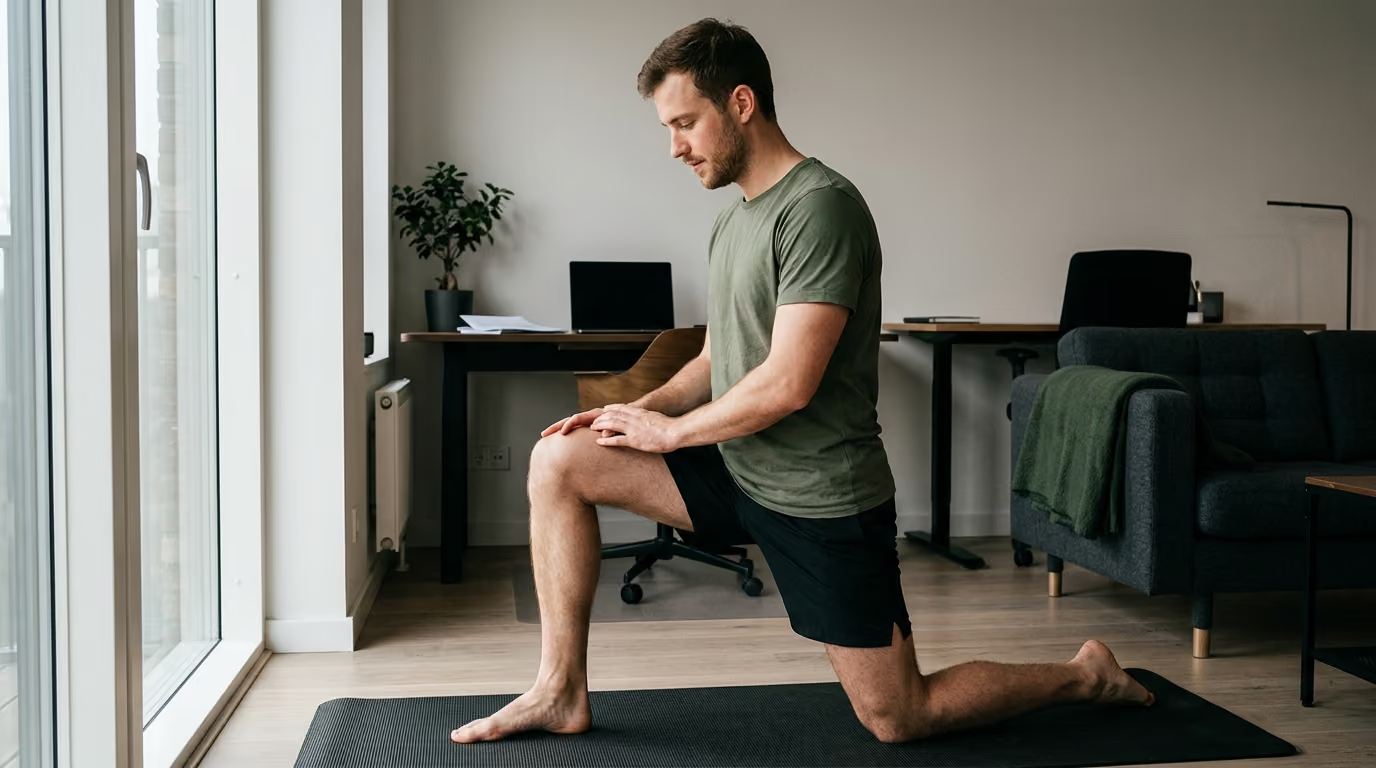

Four distinct care levels help patients assess critical red flags, apply the SAFE checklist, and navigate timely rehabilitation recovery milestones safely.





Toughness is often mistaken for endurance, but ignoring declining physical capability rarely speeds up your restoration. You wake up at 0500 with joint pain that has lingered for four weeks, hoping extra mobility work will finally clear the stiffness. By midday, simple daily actions like climbing stairs or carrying gear trigger sharp discomfort, and your sleep remains broken. Pushing through unexplained physical setbacks without clear criteria often turns minor tissue strains into persistent impairments.
A recovery problem requires professional medical evaluation whenever symptoms worsen, basic physical function drops, red-flag warning signs emerge, or progress stalls past standard healing milestones.
To decide between self-care and medical attention, you must evaluate symptom trajectory, functional capability, and specific warning signs rather than pain tolerance alone. Mild, steadily improving symptoms that allow basic daily tasks can generally be managed with conservative monitoring. In contrast, progressive weakness, joint instability, severe night pain, breathing difficulty, or an inability to bear weight require prompt clinical care.
Recovery does not grant immunity from medical emergencies. A person recovering from a common training injury or seasonal illness can experience a sudden, severe complication. Emergency care pathways exist for conditions where delaying evaluation could create permanent disability or life-threatening harm. When acute red flags appear, self-management must stop immediately.
Cardiopulmonary red flags demand immediate intervention. Severe shortness of breath, sudden chest pressure, or pain radiating to the jaw, neck, or left arm should never be dismissed as muscular soreness. MedlinePlus notes that severe breathing difficulty, chest pain, or sudden fainting are classic emergency signals. If you cannot speak in full sentences because of breathlessness, call emergency services immediately.
Neurological deficits represent another non-negotiable emergency category. Sudden weakness in a limb, facial drooping, slurred speech, acute confusion, or loss of coordination require immediate hospital evaluation. Research from the U.S. Centers for Disease Control and Prevention (CDC) identifies worsening headaches, repeated vomiting, seizures, and an inability to wake as critical danger signs after a head impact.
Major physical trauma and structural injuries also require emergency intervention. These include uncontrolled bleeding, visible bone protruding through skin, deep open wounds, or obvious skeletal deformities. A suspected spine or neck injury accompanied by numbness or loss of movement must be immobilized and assessed by emergency medical personnel immediately.
Not every serious symptom warrants an ambulance, but many problems cannot wait weeks for a standard routine appointment. Healthcare systems utilize urgent assessment pathways to evaluate significant injuries that require same-day or next-day attention. Understanding the distinction between urgent care and routine evaluation protects your long-term function while conserving acute medical resources.
Urgent clinical assessment is designed for conditions that are stable but require rapid diagnostics, prescription intervention, or professional physical examination. Musculoskeletal injuries involving significant joint swelling that develops within an hour of impact belong in this category. NHS guidance on sprains and strains emphasizes that sudden joint swelling, gross bruising, and an inability to bear weight for four consecutive steps warrant urgent clinical advice.
A hot, swollen, reddened area that rapidly spreads across a joint or soft tissue suggests potential infection rather than simple inflammation. If localized tenderness is accompanied by fever, chills, or systemic malaise, prompt medical attention is necessary. Early antibiotic or surgical management of joint infections prevents permanent cartilage degradation.
Routine professional evaluations are appropriate for chronic, subacute, or slowly evolving recovery barriers. When an injury produces mild to moderate pain without structural deformity or systemic illness, a scheduled primary care or physical therapy visit is ideal. This level of care focuses on long-term mechanical alignment, graded exercise progression, and comprehensive diagnostic reviews.
Pain is subjective and often misleading. Highly conditioned individuals frequently ignore serious tissue damage because their mental tolerance for discomfort is high. To make an objective decision, you can use the SAFE checklist, which focuses on functional capacity, symptom trajectory, and clinical risk factors.
The first element is Serious warning signs. Scan for red-flag symptoms such as breathlessness, chest tightness, cognitive disorientation, or localized joint heat. If any serious warning sign is present, bypass home management immediately and seek clinical care.
The second element is Activity and functional performance. Evaluate what you can actually do rather than how much the injury hurts while resting. Can you walk across a room, carry a bag of groceries, rotate your shoulder through its full range, or sleep for six continuous hours? When an injury actively blocks essential daily tasks, conservative self-management has reached its practical limit.
The third element is the Follow-up trend over a multi-day period. Symptoms generally follow one of four trajectories: improving, plateaued, relapsing, or worsening. Improving injuries show steadily decreasing severity and expanding functional capacity. A plateau suggests stalled tissue adaptation. Relapsing symptoms indicate that load exceeds current tissue capacity, while worsening symptoms demand an immediate pause and professional diagnostic review.
The fourth element is Expected course and treatment response. Consider whether your body is responding to evidence-informed conservative care like adequate sleep, balanced nutrition, and appropriate movement modification. You can explore structured strategies through our recovery and physical restoration guidance to support baseline tissue repair. If targeted self-care produces zero improvement after ten to fourteen days, professional intervention is indicated.
Recovery is not an instantaneous event, but it does follow established biological phases. Tendons, ligaments, muscle fibers, and bones heal at different rates depending on vascular supply and mechanical demand. Relying on calendar time alone is insufficient, but tracking time in combination with functional milestones provides clear decision markers.
The early phase spans the first zero to seventy-two hours following an acute setback. Mild to moderate pain, localized minor swelling, and temporary movement restrictions are typical. Conservative self-care is fully justified during this window as long as no red flags appear. The primary objective is preventing secondary tissue damage while supporting natural circulatory processes.
The checkpoint phase occurs between day seven and day fourteen. By this stage, acute inflammatory swelling should be significantly reduced. A clinical leaflet from NHS Lanarkshire regarding acute ankle sprains emphasizes that if a patient still cannot bear weight after ten days of conservative management, direct clinical assessment is necessary. Missing a condition-specific milestone indicates that tissue damage may be more severe than originally assumed.
The persistent phase spans weeks two through twelve. During this window, subacute healing transitions into tissue remodeling. If joint stiffness, functional avoidance, or focal pain persists without progress, self-care should be replaced by a structured rehabilitation program. The National Institute for Health and Care Excellence (NICE) categorizes pain lasting beyond three months as chronic pain. Managing symptoms before they reach the three-month threshold significantly reduces the risk of long-term central sensitization.
For cognitive and neurological conditions like mild traumatic brain injury, timelines are even more sensitive. CDC concussion protocols note that most post-concussive symptoms resolve within two to three weeks. If headaches, light sensitivity, memory issues, or emotional volatility persist past day twenty-one, immediate medical oversight is required before returning to strenuous training. You can read more about overall resilience on our sleep and stress resource library.
The World Health Organization (WHO) defines rehabilitation as a set of interventions designed to optimize functioning and reduce disability in individuals with health conditions. WHO data indicates that approximately 2.4 billion people worldwide live with a health condition that would benefit from formal rehabilitation. This number grew from 1.48 billion in 1990 to 2.41 billion, representing a 63% increase driven by aging populations and modern health challenges.
Established clinical evidence consistently demonstrates that active, progressive rehabilitation outperforms prolonged passive rest. Complete bed rest for musculoskeletal strains leads to rapid muscle atrophy, joint stiffness, and decreased connective tissue tensile strength. However, early research also shows clear limitations to unmonitored self-management. When tissue damage involves high-grade mechanical tears or deep nerve impingement, generic exercise often aggravates the underlying structural defect.
Scientific consensus supports relative rest, which involves modifying load rather than eliminating all physical activity. CDC guidelines on concussion recovery explicitly recommend an initial short period of relative rest followed by gradual, symptom-guided reintroduction of light cognitive and physical tasks. Pushing through severe symptoms causes neurochemical setbacks, while complete darkness and total isolation prolong post-concussive recovery.
Research from peer-reviewed sports medicine institutions shows that self-management succeeds primarily when loading matches the biological healing capacity of the tissue. If mechanical load exceeds tissue capacity, cellular inflammation persists and structural remodeling fails. This is why professional physical therapists use objective strength testing and joint mobility metrics to calibrate training volume. You can examine evidence-based movement progressions across our military health publications.
There are boundaries where home management ceases to be scientifically supported. Self-management cannot correct severe structural tears, reduce joint dislocations, or resolve systemic bacterial infections. Relying on conservative measures when objective functional markers are declining directly contradicts current clinical standards.
Misunderstandings regarding physical healing often lead individuals to delay necessary medical care. Many people pride themselves on high pain thresholds, assuming that discomfort is the only metric that matters. Discarding these common recovery fallacies helps you make informed choices that preserve physical capability.
Believing that high pain tolerance makes an injury safe is dangerous. Severe structural injuries, such as complete ligament ruptures or certain stress fractures, may produce minimal resting pain while completely compromising joint mechanics. Conversely, minor soft tissue irritation can generate high levels of perceived pain. Basing your decision solely on pain tolerance overlooks neurological deficits, instability, and structural failure.
Assuming that lying in bed until pain completely disappears will fix an injury is incorrect. Extended bed rest weakens bone density, reduces tendon stiffness, and slows cardiovascular efficiency. Tissues require progressive, tolerable mechanical stress to align collagen fibers correctly. Structured movement, calibrated below the threshold of sharp pain, is an essential element of modern physical restoration.
Many people assume that if a joint is not visually swollen, no serious tissue damage exists. Deep anatomical structures, such as the hip labrum, deep rotator cuff fibers, or spinal discs, rarely show external swelling after an acute injury. Neurological compressions and systemic illnesses also present without obvious surface inflammation. Evaluate movement mechanics, coordination, and strength rather than relying on visual inspection alone.
Expecting healing to proceed in a straight, uninterrupted line creates unnecessary frustration. Normal biological healing includes minor fluctuations in daily soreness as physical activity increases. However, a minor temporary soreness after new activity is very different from a progressive relapse. If an activity causes sharp symptoms that persist into the next morning, your progression volume was too aggressive.
Counting calendar days without assessing real-world capability is a frequent mistake. Reaching the six-week mark following a fracture or strain does not automatically mean the tissue is ready for full training loads. Biological healing rates vary widely based on systemic nutrition, sleep quality, age, and baseline fitness. Functional readiness must always supersede arbitrary calendar deadlines.
When the decision is made to consult a healthcare provider, arriving prepared ensures an accurate diagnosis and an actionable treatment plan. Rushing into a clinical appointment without organized information often results in overlooked symptoms or generic advice. Structuring your health history turns a brief consultation into a productive clinical strategy session.
MedlinePlus guidelines on patient communication emphasize the importance of bringing a written symptom timeline. Document the exact date of injury, the mechanism of onset, and how your symptoms have evolved over time. Be precise about which movements trigger discomfort and which positions provide relief. Bring concrete functional data, such as how many yards you can walk before pain begins, or how many hours of sleep you lose each night.
A complete medication and supplement inventory is critical. Bring a physical list of all prescription drugs, over-the-counter anti-inflammatory medications, vitamins, and ergogenic aids you use. Certain supplements alter bleeding risk, while high-dose pain relievers can mask warning signs during a manual joint examination. Full transparency regarding training habits, alcohol use, and prior injuries ensures your provider understands your complete physiological context.
You must also prepare specific, direct questions. Rather than simply asking when you will feel better, ask your provider about exact functional boundaries and testing requirements. To review comprehensive educational archives on maintaining physical capacity, browse through the BattleVet research resources.
Effective physical recovery requires an active, measured approach rather than passive hope. Establishing clear daily tracking parameters allows you to catch stalled progress early and adjust your activity before secondary complications arise. A structured monitoring system keeps your physical restoration grounded in measurable reality.
Begin by establishing an objective baseline. Record your morning resting pain score, morning joint stiffness duration in minutes, and your ability to perform three basic daily movements. Track these metrics in a simple notebook for seven consecutive days. If morning stiffness drops from forty-five minutes down to ten minutes over two weeks, your tissue is adapting favorably.
Apply load management rules systematically. When introducing a new restorative movement or returning to light activity, use the twenty-four-hour response rule. If a modified exercise causes mild discomfort during execution but settles back to baseline within two hours, that load is generally safe. If the exercise produces sharp pain that lingers into the next morning, reduce volume by fifty percent on your next attempt.
Integrate comprehensive lifestyle foundations that support cellular tissue repair. Adequate deep sleep, proper protein distribution, and systematic stress mitigation provide the biological fuel for connective tissue synthesis. You can explore structured strategies through our recovery and sleep articles to optimize systemic restoration. If your recovery remains stalled despite optimized baseline habits, schedule a professional clinical evaluation without delay.
This article is for educational and informational purposes only. It does not provide medical diagnoses, treatment plans, or individual health consultations. Always consult a qualified physician, physical therapist, or emergency healthcare professional regarding persistent pain, sudden functional loss, or any medical condition.
Go to an urgent care clinic for stable, non-life-threatening conditions that still require prompt same-day evaluation, such as suspected simple sprains, minor joint swelling, or injuries where you cannot bear weight comfortably. Go directly to an emergency department if you experience crushing chest pain, severe shortness of breath, sudden neurological changes like slurred speech or numbness, severe head trauma with vomiting, or an obvious bone deformity.
You can generally self-manage a mild joint sprain for seven to ten days if pain is mild, swelling is steadily decreasing, and you can bear weight. If you still cannot walk four steps without severe pain after several days, or if swelling and pain show zero improvement by day ten, schedule a professional medical examination.
No. Deep structural tissues, such as the hip labrum, spinal discs, deep shoulder ligaments, and internal knee cartilage, often sustain significant damage without showing surface bruising or external swelling. Evaluate your physical capability, joint stability, and strength rather than relying solely on visual skin changes.
Symptom recurrence indicates that the mechanical demands of your exercise exceed the current capacity of your healing tissue. Stop the aggravating movement, return to your previous baseline of tolerable activity, and consult a physical therapist or sports medicine physician for a structured, graded rehabilitation plan.
Making smart, timely decisions about your health is not a sign of hesitation, but a fundamental discipline that preserves your long-term strength, mobility, and physical independence.
Follow BattleVet for practical guidance on military and veteran health, strength, recovery, testosterone, sleep and healthy aging. Stay connected for new articles, research backed insights and clear information to help you stay capable for the years ahead.


Build better habits around strength, recovery, sleep, hormones and healthy aging with practical guidance for active military personnel and veterans.
Explore BattleVet