
A complete physical recovery system balances sleep, nutrition, mobility, and stress management to help athletes track daily metrics and optimize performance.





You wake up at five in the morning to an alarm you dread. Your joints feel stiff, your lower back aches from yesterday's training session, and your wearable device tells you that your readiness is poor. You drink another cup of black coffee, put on your boots or running shoes, and wonder why the expensive massage gun on your nightstand has not fixed your constant fatigue. Pushing through heavy fatigue works for a few days, but eventually your performance drops, minor aches linger, and daily motivation disappears.
A complete physical recovery system is an integrated operating routine that balances training stress, sleep, nutrition, hydration, and psychological strain against your actual capacity to perform.
To design an effective recovery plan, you must track your total workload, monitor daily physical and mental feedback, establish consistent baseline habits, and adjust training intensity when fatigue accumulates. Recovery is not a single post-workout shake, a cold shower, or a passive rest day. It is an active management process that ensures your body adapts positively to physical stress rather than breaking down under unmanaged volume.
Many active service members and veterans approach recovery as a collection of disjointed tactics. They buy compression boots, take random supplements, and schedule occasional deep-tissue massages while ignoring chronic sleep deficits and erratic nutrition. When performance stalls or chronic pain surfaces, they assume they need another tool or device. This approach fails because it treats symptoms in isolation rather than addressing the total stress placed on the body.
The International Olympic Committee defines total load broadly. Load includes structured exercise, occupational physical demands, travel, congested schedules, illness, and psychological stress. When you evaluate your recovery, you cannot look at your training log alone. A demanding week in the field, long shifts, family pressures, and poor sleep all draw from the exact same physiological reserve as a heavy barbell session or a ten-mile ruck march.
To understand why your body responds the way it does, you must distinguish between external load and internal load. External load is the objective physical work you perform, such as miles run, pounds lifted, or hours spent moving under weight. Internal load is the biological and psychological stress that physical work creates within your body. Running five miles in cool weather after eight hours of sleep produces a low internal load. Running that exact same distance while sleep-deprived, dehydrated, and stressed produces a dramatically higher internal load.
Another vital concept is the difference between restoration and adaptation. Restoration is the short-term process of returning your body to baseline function so you can complete your next task. Adaptation is the long-term structural change, such as bigger muscles or a stronger heart, that occurs when your body recovers from progressive stress. If you eliminate all physical stress, you eliminate fatigue, but you also eliminate adaptation. If you pile on endless stress without adequate restoration, you risk illness, injury, and nonfunctional overreaching.
Sleep is the single most important recovery behavior available. It regulates tissue repair, hormonal balance, cognitive function, immune defense, and emotional resilience. While many people search for advanced physical therapies, research consistently shows that basic sleep extension delivers greater physiological restoration than any commercial recovery tool.
Expert consensus guidelines indicate that healthy adults need between seven and nine hours of sleep per night, while individuals undergoing heavy physical training often require more. The critical principle is matching your sleep opportunity to your total physical and mental demand. When your weekly mileage increases, your work stress spikes, or you are recovering from an illness, you must extend your time in bed to accommodate that increased demand. You can learn more about managing these variables by exploring practical recovery frameworks for sleep and stress.
A dependable sleep system requires consistent habits rather than occasional catch-up nights. Establishing a consistent sleep schedule helps regulate your circadian rhythm and improves sleep efficiency over time.
Sleep tracking devices can provide helpful general trends, but you should not let a wearable score dictate how you feel. Many trainees experience unnecessary anxiety when a device reports a poor score despite feeling rested. Your subjective sleep quality, morning energy levels, and daytime alertness are reliable indicators of true sleep adequacy.
A common challenge among veterans and active personnel is insomnia or broken sleep caused by shift work, physical discomfort, or elevated stress. If you spend eight hours in bed but wake up repeatedly, simply staying in bed longer will not solve the issue. You must address sleep hygiene, manage evening light exposure, and speak with a medical provider if chronic sleep disruptions persist.
Nutrition serves as the continuous supply system that fuels physical work, repairs muscle tissue, replenishes energy stores, and supports the immune system. Post-workout nutrition is only one small part of this system. If your daily energy and nutrient intake is inadequate, specific post-exercise timing will not prevent physical breakdown.
Protein intake is the primary driver of muscle repair and structural adaptation. The International Society of Sports Nutrition position stand states that 1.4 to 2.0 grams of protein per kilogram of body weight per day is sufficient for most exercising individuals. For an individual weighing 80 kilograms, this equates to roughly 112 to 160 grams of total daily protein. Distributing this protein across three to five meals, spaced roughly three to four hours apart, provides a steady supply of amino acids for muscle protein synthesis.
Carbohydrate intake must be scaled to your actual physical volume and intensity. High-volume conditioning, endurance sessions, and intense lifting deplete muscle glycogen stores. The American College of Sports Medicine notes that consuming 30 to 60 grams of carbohydrate per hour during prolonged endurance exercise helps sustain performance. Consuming 1.0 to 1.2 grams of carbohydrate per kilogram of body weight per hour during early post-exercise windows accelerates glycogen resynthesis after demanding sessions.
Hydration status directly affects blood volume, thermoregulation, nutrient transport, and joint function. Starting a training session in a dehydrated state increases internal cardiovascular strain and elevates your perceived effort. To review complete fueling strategies for training, consult our guides on nutrition and physical restoration resources.
Indiscriminate overdrinking of plain water without electrolytes during prolonged sweating is dangerous and can lead to hyponatremia. Ensure your fluid replacement includes adequate sodium when training in hot environments or during sessions lasting longer than sixty minutes.
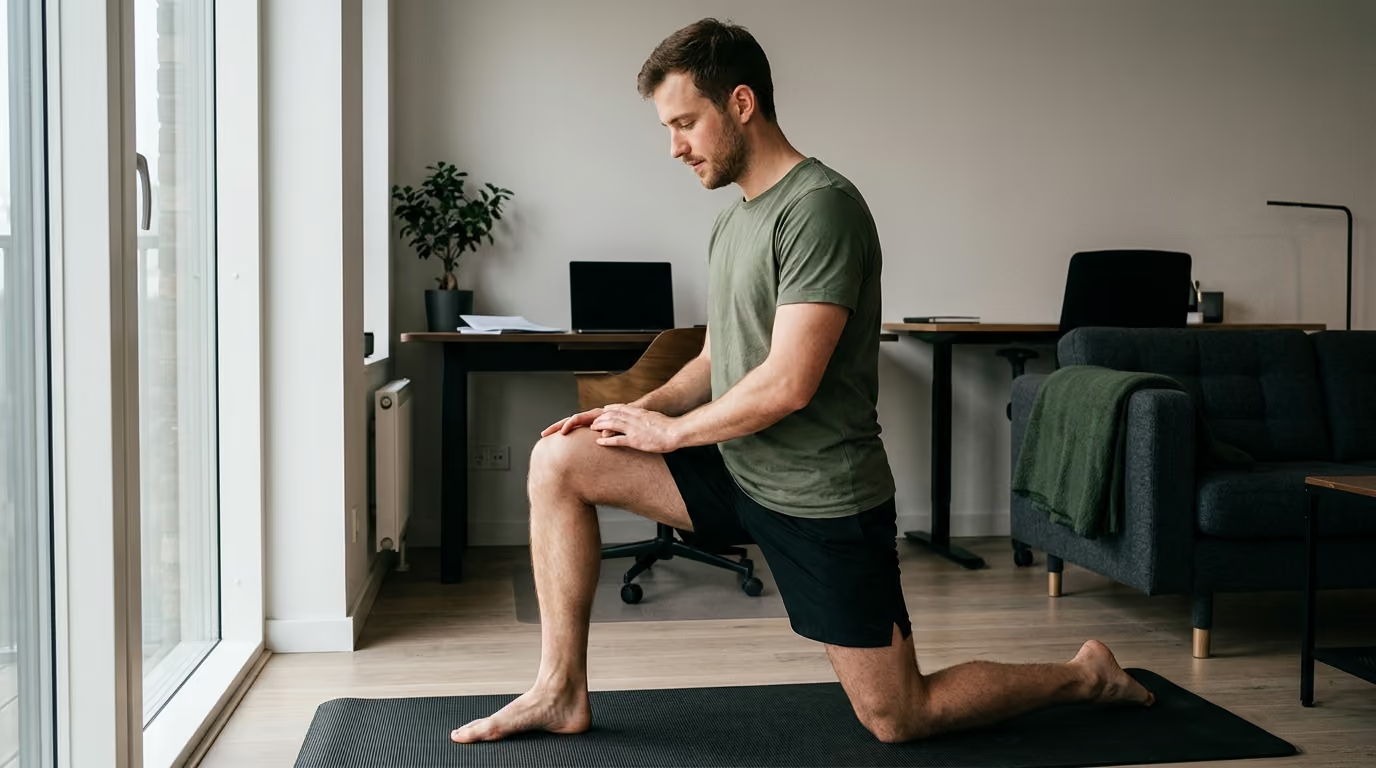
Mobility work and active movement support recovery by preserving joint range of motion, stimulating blood flow, and reducing subjective sensations of muscular stiffness. However, you should not view mobility as a pursuit of extreme flexibility. For military personnel and athletes, mobility means maintaining the specific movement quality required to execute your duties and training safely.
You must categorize your movement practices accurately to use them effectively.
A structured preparation protocol that raises core body temperature, lubricates joints, and primes the nervous system for specific exercise patterns.
Dedicated technical work designed to improve control, stability, and motor coordination through full joint ranges.
A short, low-intensity transition that helps lower heart rate, promotes venous blood return, and transitions the nervous system toward a resting state.
Low-intensity physical activity, such as walking, cycling, or light swimming, performed at an easy pace to promote circulation without causing fatigue.
Specific, targeted corrective exercises prescribed to manage or rehabilitate an identified clinical injury.
Many popular recovery tools, including foam rollers, massage guns, stretching routines, and cold plunges, are marketed as essential solutions. Systematic reviews show that while stretching, foam rolling, and light massage can temporarily reduce perceived muscle soreness and stiffness, they do not accelerate long-term muscular adaptation. Use these tools when they provide comfort or improve movement quality, but do not allow them to replace proper sleep, balanced fueling, and sensible load management.
Cold-water immersion requires careful application. Immersing yourself in cold water immediately after resistance training can blunt the inflammatory signals necessary for muscle hypertrophy and strength gains. Cold-water immersion can be useful during multi-day events or field exercises where rapid short-term performance restoration is needed. However, you should avoid regular cold plunges immediately following hypertrophy workouts.
Your central nervous system does not separate physical training fatigue from the psychological stress caused by high-pressure occupations, financial worries, or relationship friction. High levels of mental stress elevate circulating stress hormones, alter sleep architecture, increase perceived exertion during exercise, and impair tissue healing rates.
The International Olympic Committee emphasizes that psychological load, travel, and schedule congestion must be treated as direct components of total workload. When life stress escalates, your physiological capacity to recover from heavy strength or endurance training drops. Continuing to execute high-volume training during periods of extreme personal stress often leads to burnout or injury. To build better overall physical stamina, examine our training and performance guidance.
Simple breathing drills and mindfulness habits do not instantly repair muscle fibers. Instead, they help lower baseline autonomic arousal, making it easier to fall asleep, digest food, and maintain consistent daily routines.
Resistance training is not the enemy of recovery. Properly dosed strength work strengthens connective tissues, increases bone mineral density, and expands your physical capacity to handle daily tasks. Trouble begins when training volume, intensity, and frequency exceed your systemic ability to adapt.
To maintain long-term physical capability, you must organize your training sessions according to their physiological cost. You can explore structured methods for building resilient physical capacity in our strength, fitness, and body composition resources.
When unexpected fatigue strikes, apply an adjustment hierarchy rather than skipping the gym entirely or pushing through blindly.
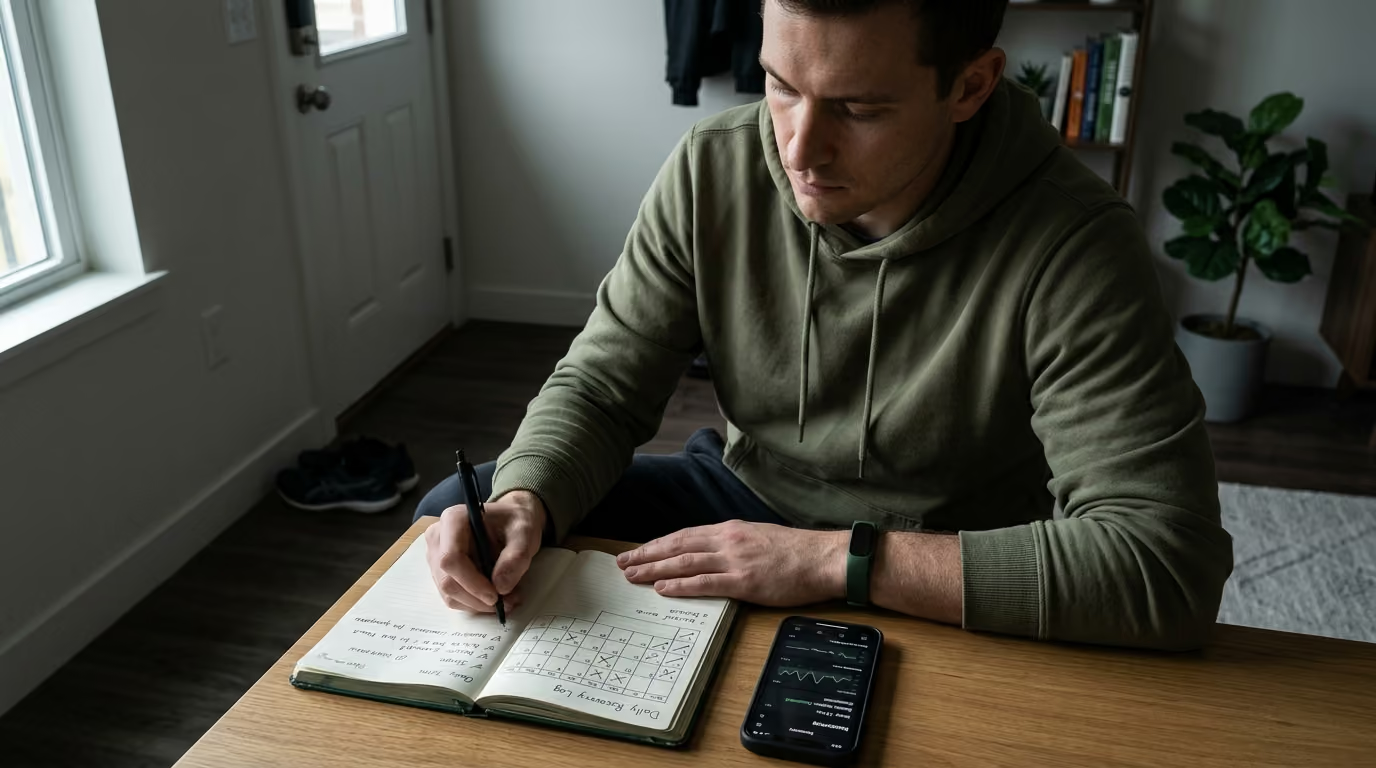
An effective recovery system relies on consistent, straightforward data collection. You do not need expensive laboratory equipment or complex software to monitor recovery effectively. A simple notebook, spreadsheet, or mobile notes app provides all the information required to make informed adjustments.
The Session-RPE method is one of the most reliable, research-validated tools for monitoring internal training load. Developed by sports scientists, it quantifies the total demand of a workout by multiplying session duration by perceived exertion.
$$\text{Session Load} = \text{Session Duration (in minutes)} \times \text{Session RPE (Scale 1 to 10)}$$
For example, a 60-minute strength session rated at an RPE of 7 produces a load score of 420 arbitrary units. A 30-minute light recovery spin rated at an RPE of 3 produces a load score of 90 units. Tracking this product across the week allows you to observe shifts in total workload and identify unplanned spikes in internal physical strain.
You should combine Session-RPE with a brief daily wellness check before you begin training.
Research shows that subjective presession wellness ratings correlate directly with subsequent perceived exertion. When your wellness score drops due to poor sleep and high stress, a standard workout will feel harder and impose a higher physiological cost.
The acute-to-chronic workload ratio has been heavily marketed in sports science as an injury prediction formula. However, recent critical reviews demonstrate that this mathematical ratio is prone to statistical artifacts and cannot reliably predict individual injury risk.
Do not rely on automated ratio calculations to decide if you are safe from injury. Instead, monitor your absolute training volume, watch for sharp weekly spikes, track subjective wellness scores, and listen to physical warning signs.
A functional recovery dashboard tracks six basic components:
Data collection is useless without clear rules for action. A three-zone traffic light framework provides straightforward decision boundaries for daily training adjustments.
Your sleep was adequate, energy levels are normal, muscle soreness is manageable, and life stress is low. Your warm-up feels crisp, and joint movement is comfortable. Execute your planned training session with full target intensity and volume.
You experienced two or more poor nights of sleep, your life stress is elevated, muscle soreness is high, or your warm-up feels sluggish and heavy. Do not force an intense capacity-building session in this state. Apply the adjustment hierarchy: drop one or two sets per exercise, reduce your working weights by ten to fifteen percent, or replace high-impact running with low-impact rowing or cycling.
You are experiencing acute joint pain, sharp localized discomfort, signs of fever or systemic infection, severe dizziness, or overwhelming physical exhaustion. Training through these symptoms increases your risk of serious injury and prolonged illness. Take a complete rest day, focus on hydration and nutrition, and consult a qualified medical professional if symptoms persist.
Recognizing multi-day patterns is far more important than reacting to a single poor morning. One bad night of sleep does not justify cancelling a workout, but a full week of deteriorating sleep, rising internal load, and declining performance requires an immediate training adjustment.
A recovery system operates on a continuous feedback loop. At the end of every week, spend five minutes reviewing your training log and wellness dashboard to prepare for the upcoming week.
When progressing your training, follow the single-stressor progression rule. Increase only one major variable at a time: volume, intensity, frequency, or modality. For example, if you increase your weekly running mileage, do not simultaneously increase your lower-body lifting volume.
The International Olympic Committee notes that large weekly jumps in training load increase the risk of injury and illness. While the common ten percent progression rule is a helpful guideline rather than a strict law, keeping weekly increases small and gradual protects your long-term consistency. To learn more about navigating systemic stress over time, read our guide on sleep, stress, and resilience resources.
Reviewing real-world applications helps illustrate how this recovery system operates under varying conditions.
A veteran training for a half-marathon increases weekly running volume while managing a high-stress project at work. Over two weeks, easy runs begin to feel exhausting, resting heart rate rises, and sleep becomes fragmented. Rather than taking energy supplements or pushing through the fatigue, the individual identifies that total load has exceeded capacity. The solution is dropping the weekly mileage by twenty percent, turning one hard interval workout into an easy recovery walk, and prioritizing an eight-hour sleep window until perceived exertion normalizes.
An active service member begins a strict fat-loss diet while attempting to maintain heavy powerlifting numbers. Session-RPE on standard working weights rises from 7 to 9, recovery between workouts slows, and overall motivation plummets. Recognizing that a calorie deficit reduces recovery reserves, the lifter reduces total working sets from four to two per exercise, maintains lifting intensity to preserve muscle mass, and increases daily dietary protein to 2.0 grams per kilogram.
A tactical athlete experiences schedule changes and travel across multiple time zones. Instead of attempting high-intensity workouts on broken sleep, the athlete shifts to maintenance workouts, utilizes twenty-minute afternoon naps, and increases fluid and sodium intake. Once the travel schedule stabilizes and normal sleep returns, high-effort capacity-building sessions resume.
An individual tracks sleep stages, heart rate variability, body temperature, continuous glucose, and daily steps using three separate devices. Despite the data, the individual continues to run hard on painful knees and regularly sleeps fewer than six hours. The solution is simplifying the monitoring process down to a basic daily log, removing wearable-induced anxiety, and focusing entirely on consistent bedtime habits and sensible workout modifications.
Delayed onset muscle soreness is simply a response to unaccustomed exercise, novel movement patterns, or eccentric muscle loading. It is not an accurate indicator of workout quality, muscle growth, or cardiovascular adaptation. You can achieve excellent physical progress with minimal soreness, and experiencing severe soreness often interferes with training frequency and movement quality.
The choice depends on your current physical and mental state. If you are dealing with systemic illness, sharp joint pain, or severe exhaustion, a complete passive rest day is best. If you are experiencing normal residual muscle stiffness and mild fatigue, twenty to forty minutes of light, low-impact movement like walking, easy cycling, or mobility work will promote blood flow and help you feel better than sitting still all day.
Normal acute fatigue resolves after twenty-four to forty-eight hours of rest, balanced food intake, and quality sleep. Overtraining syndrome is a serious neuroendocrine and physical condition characterized by persistent performance drops, chronic mood disturbances, frequent infections, altered resting heart rate, and sleep disruptions that last for weeks or months. True overtraining syndrome is rare, but nonfunctional overreaching is common and requires a multi-week reduction in training volume.
No supplement can compensate for chronic sleep deprivation, inadequate total energy, low protein intake, or excessive training volume. Basic supplements like creatine monohydrate, whey protein, or electrolytes offer targeted support, but they represent less than five percent of your total recovery capacity. Establishing regular sleep habits, balanced nutrition, and structured workload tracking must always come first.
This resource provides educational information on physical training, recovery principles, and lifestyle monitoring for general fitness purposes. It is not a substitute for professional medical advice, clinical diagnosis, or personalized treatment. Always consult a qualified healthcare provider or sports medicine physician before making major changes to your exercise programming, especially if you have underlying medical conditions, chronic pain, cardiovascular symptoms, or persistent sleep disorders.
Review this guide whenever your occupational physical demands change, when you prepare to start a new training block, or when you notice persistent drops in physical performance. Return to the decision frameworks and tracking methods whenever life stress escalates to ensure your training volume remains matched to your actual recovery capacity.
A well-structured physical recovery system protects your health, keeps you resilient, and ensures you remain capable of meeting every physical challenge you face.
Follow BattleVet for practical guidance on military and veteran health, strength, recovery, testosterone, sleep and healthy aging. Stay connected for new articles, research backed insights and clear information to help you stay capable for the years ahead.


Build better habits around strength, recovery, sleep, hormones and healthy aging with practical guidance for active military personnel and veterans.
Explore BattleVet