
Reaching for a heavy top shelf with a pinching shoulder signals the need for evidence-based rotator cuff strengthening and mobility restoration.





You wake up, reach into an overhead cabinet for coffee, and feel a sharp pinch in the front of your shoulder. You try to press a barbell overhead or push through a set of military presses, but your arm feels weak and unstable. Reaching behind your back to grab your wallet triggers an ache that lingers for hours. This definitive guide breaks down the exact mechanics, clinical evidence, and progressive protocols required to eliminate shoulder pain and rebuild dependable overhead capacity.
Restoring overhead shoulder function requires rebuilding total muscular capacity, motor control, and tissue tolerance across the entire upper extremity.
Overhead shoulder recovery is achieved by systematically identifying tissue irritability, restoring joint mobility in the thoracic spine and glenohumeral joint, progressively loading the rotator cuff and scapular stabilizers, and reintroducing overhead pressing and pulling through graded variations. Returning to demanding occupational tasks or heavy training requires multi-domain readiness rather than simply waiting for symptoms to fade.
The human shoulder is not a simple ball-and-socket joint. It is a complex anatomical complex consisting of the glenohumeral joint, the scapulothoracic articulation, the acromioclavicular joint, and the sternoclavicular joint. True overhead function demands synchronized movement across all four articulations. If one component fails to move or stabilize, the surrounding tissues absorb excessive stress.
Overhead reaching requires dynamic coordination known as scapulohumeral rhythm. When you elevate your arm, the humerus moves in the glenoid fossa while the scapula rotates upward, tilts posteriorly, and rotates externally. Research shows that for every two degrees of glenohumeral elevation, the scapula contributes approximately one degree of upward rotation. Interfering with this rhythm decreases the functional subacromial space and places increased mechanical demand on the rotator cuff tendons.
A muscle strain involves micro-tearing or overload within muscle bellies or myotendinous junctions. Strains often resolve with short-term load management and progressive reintroduction of tension. Rotator cuff tendinopathy, however, involves a failed healing response and structural disorganization within the supraspinatus, infraspinatus, subscapularis, or teres minor tendons. Tendinopathy is not an acute inflammatory condition. It represents a reduction in the tendon's load-bearing capacity.
Instability occurs when the humeral head translates excessively across the shallow glenoid fossa. This condition ranges from subtle micro-instability and dynamic apprehension to full subluxation and dislocation. Instability can stem from traumatic tissue disruption, such as a labral tear, or atraumatic generalized ligamentous laxity. The 2022 Bern Consensus Statement emphasizes that rehabilitation for instability must prioritize dynamic neuromuscular control and position-specific tolerance rather than generic strengthening.
Scapular dyskinesis describes visible alterations in resting scapular position or dynamic motion during arm elevation. Dyskinesis is a clinical sign rather than an independent medical diagnosis. It occurs in both injured and completely healthy shoulders. The clinical objective is not forcing a rigid, artificial position, but rather restoring functional upward rotation, posterior tilt, and muscular endurance during loaded movement.
True overhead function is the capacity to elevate, position, stabilize, and produce force with the arm above the head under varied loads, tempos, and fatigue states. Load tolerance represents the specific threshold of force, volume, and velocity that the shoulder tissues can withstand without experiencing an inflammatory flare or persistent neural inhibition. Building load tolerance is the central objective of all long-term shoulder rehabilitation.
A structured physical examination helps determine whether shoulder pain can be managed with active rehabilitation or requires medical imaging and surgical evaluation. Shoulder pain is the third most common musculoskeletal complaint in primary care, accounting for roughly 4.5 million annual clinical visits in the United States. Evaluating symptoms accurately ensures that valuable training time is not wasted on ineffective treatments.
The clinical assessment begins with a thorough history covering onset, provocative positions, and symptom behavior. Pain that occurs during sleep when lying on the affected side often indicates elevated tissue irritability. Pain experienced during the middle arc of arm elevation between 60 and 120 degrees suggests subacromial involvement. Sensations of slipping, dead-arm numbness, or apprehension during combined abduction and external rotation strongly point toward anterior instability.
Clinicians use specific orthopedic tests to screen the shoulder, but individual tests have significant diagnostic limitations. Systematic reviews show that isolated orthopedic special tests, such as the Neer, Hawkins-Kennedy, or Speed test, lack the diagnostic accuracy to confirm a single anatomical pathology. Diagnostic value improves when findings are clustered together. A positive painful arc test, a positive infraspinatus muscle test, and a positive Hawkins-Kennedy test together substantially increase the likelihood of rotator cuff disease.
Lag signs offer greater diagnostic utility when full-thickness structural tears are suspected. The external rotation lag sign and the drop arm test evaluate the integrity of the posterior and superior rotator cuff. If an individual cannot actively hold their arm in external rotation or slowly lower it from an elevated position, the clinician must suspect a significant structural tendon disruption. These presentations warrant rapid referral for diagnostic imaging.
Magnetic resonance imaging and diagnostic ultrasound provide detailed views of internal shoulder architecture, but structural abnormalities on imaging do not automatically explain a patient's pain. Systematic reviews have documented rotator cuff tears, tendinopathy, and labral changes in large numbers of completely pain-free individuals. Structural changes often reflect normal biological adaptations to aging and athletic exposure. Clinical decisions must rely on functional capability and physical symptoms rather than imaging reports alone.
Immediate medical referral is required when specific red flag presentations appear. These include sudden inability to raise the arm following a traumatic event, progressive numbness or tingling extending below the elbow, severe resting pain accompanied by fever or systemic illness, and visible joint deformity following high-energy trauma. Individuals seeking broader guidance on navigating healthcare decisions can consult BattleVet resources to understand clinical referral pathways.
Exercise is the primary evidence-based intervention for restoring shoulder health, managing tendinopathy, and correcting subacromial pain. The 2025 Journal of Orthopaedic & Sports Physical Therapy Clinical Practice Guideline confirms that active exercise therapy consistently outperforms passive modalities such as ultrasound, laser therapy, and manual therapy alone. Active loading stimulates tendon remodeling, increases rotator cuff recruitment, and rebuilds muscular endurance.
Scientific research shows no significant difference in long-term outcomes between isolated eccentric training, concentric training, or heavy slow resistance protocols. A comprehensive network meta-analysis revealed that progressive concentric and heavy slow resistance exercise rank high for reducing pain and improving daily function. The critical driver of tissue adaptation is progressive mechanical tension rather than a specific contraction style. Exercise programs must apply sufficient mechanical stress to stimulate muscular and tendinous adaptation.
Exercise dosing must match the tissue irritability of the shoulder system. For highly irritable tissues, loading should emphasize submaximal isometric contractions performed in mid-range positions. Isometrics provide analgesic effects through central nervous system pathways while maintaining motor unit recruitment without irritating sensitive peritendinous tissues. As irritability decreases to moderate and low levels, loading protocols must shift toward full-range isotonic exercises using external resistance that challenges muscular capacity.
Research confirms that complete pain avoidance during rehabilitation is unnecessary for long-term recovery. Systematic reviews comparing painful versus pain-free exercise demonstrate that training with low-to-moderate, tolerable discomfort yields equivalent or superior functional outcomes. Pain levels during training should remain at or below a 3 to 4 on a 10-point scale. Symptoms must settle back to baseline levels within 24 hours without disturbing nighttime sleep.
If symptoms remain elevated the following morning or sleep is disturbed, the overall mechanical load exceeded the current biological capacity of the tissue. In this scenario, modify the subsequent session by reducing total volume, decreasing external resistance, or shortening the range of motion. For additional strategies on managing physical restoration and training recovery, review our educational articles on recovery and sleep.
Restoring overhead range of motion requires a systematic approach to thoracic extension, scapular mobility, and glenohumeral capsular flexibility. Attempting to force the arm straight overhead in the presence of a rigid upper back forces the glenohumeral joint to compensate through excessive anterior translation and mechanical impingement. Mobilization must address the entire kinetic chain in a structured progression.
The thoracic spine must extend approximately 10 to 15 degrees to allow full bilateral arm elevation. Without thoracic extension, the scapula cannot achieve the posterior tilt required to clear the acromion from the ascending humeral head. Foam roller thoracic extensions, seated active thoracic rotations, and quadruped extensions provide immediate improvements in thoracic mobility. These drills should be performed daily before engaging in overhead loading.
Scapular mobility exercises ensure that the shoulder blade moves freely across the posterior rib cage. The pectoralis minor often becomes short and hypertonic, pulling the scapula into anterior tilt and internal rotation. Gentle doorway stretches combined with active serratus anterior activation drills restore the necessary upward rotation. Scapular wall slides and prone floor glides encourage coordinated scapular movement without placing high compressive loads on the rotator cuff.
Glenohumeral joint restrictions frequently manifest as deficits in internal rotation or flexion. Posterior shoulder tightness, involving the posterior deltoid, infraspinatus, and posterior capsule, restricts internal rotation and causes the humeral head to shift upward during elevation. Cross-body horizontal adduction stretches and modified sleeper stretches can improve posterior shoulder compliance. Perform these stretches gently to avoid provoking anterior subacromial structures.
Active range of motion exercises must immediately follow passive stretching to reinforce the nervous system's control over newly accessed joint angles. Performing active end-range isometric holds in prone or quadruped positions trains the brain to stabilize the shoulder in newly opened ranges. Consistent application of these mobility protocols establishes the structural foundation required for loaded overhead training and protects against compensatory movement patterns.
A durable shoulder requires high levels of muscular endurance and strength within the rotator cuff and scapular musculature. The rotator cuff muscles act primarily as dynamic stabilizers that compress the humeral head into the center of the glenoid fossa during arm movement. Strengthening these structures requires targeted, progressive resistance rather than arbitrary, unweighted arm circles.
External rotation strengthening targeting the infraspinatus and teres minor is essential for countering anterior instability and subacromial compression. Side-lying dumbbell external rotation produces high levels of electromyographic activity in the infraspinatus while minimizing compensatory deltoid dominance. Perform 3 sets of 10 to 15 repetitions with a slow, controlled eccentric tempo, selecting a weight that creates moderate muscular fatigue by the final repetition.
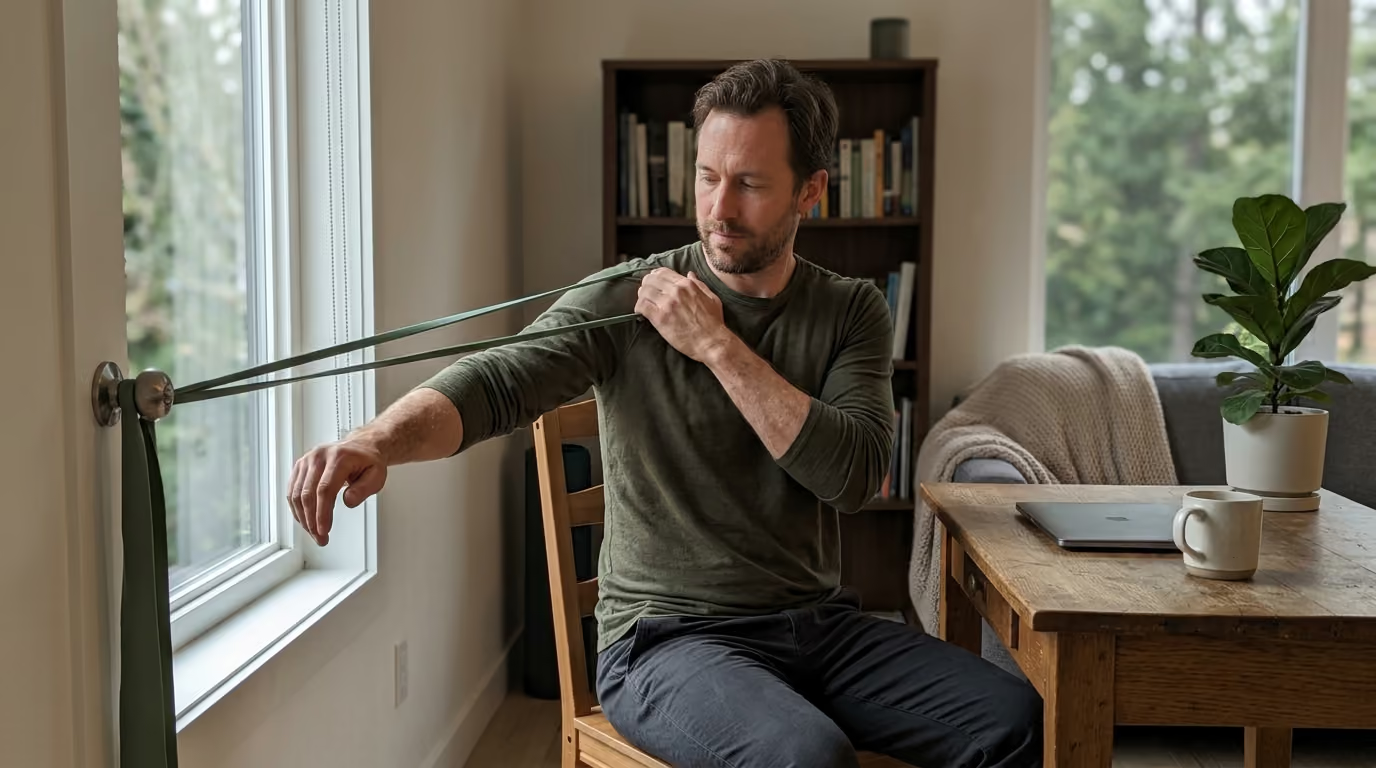
The subscapularis, the largest muscle of the rotator cuff, provides critical anterior stability and dynamic compression. Internal rotation can be trained using resistance bands or cables with the elbow fixed at 90 degrees of flexion against the torso. To progress toward overhead demands, transition internal rotation training into positions of 90 degrees of abduction. This position strengthens the subscapularis in the functional orientation required for throwing, striking, and pressing.
The serratus anterior and lower trapezius muscles are responsible for scapular upward rotation and posterior tilt during arm elevation. The push-up plus exercise targets the serratus anterior by requiring maximal protraction at the top of a standard push-up movement. Individuals with reduced upper-body strength can begin this exercise with hands placed on an elevated bench or wall before progressing to the floor. The prone Y-raise effectively recruits the lower trapezius when performed in the scapular plane with thumbs pointed upward.
Loaded carries, such as single-arm suitcase carries and farmer carries, recruit the entire rotator cuff through dynamic reflex stabilization. As you walk with a heavy weight, the rotator cuff fires continuously to prevent the humeral head from distracting from the glenoid socket. Carries build static muscular endurance and reinforce core stability across the entire kinetic chain. Incorporating structured strength work supports long-term joint health and enhances strength, fitness, and body composition.
Returning to overhead lifting requires systematic modifications to traditional pressing and pulling patterns. Completely avoiding all upper-body training during shoulder rehabilitation leads to rapid muscular atrophy, reduced tendon stiffness, and heightened kinesiophobia. Adjusting joint angles, grip orientations, and movement planes allows you to continue training while protecting irritated tissues.
The dumbbell floor press eliminates deep shoulder extension by using the floor as a physical depth stop. This variation reduces anterior capsular stretch and decreases subacromial compression, making it an excellent primary pressing movement for an irritable shoulder. Using a neutral grip, with palms facing each other, places the shoulder in the scapular plane and reduces mechanical impingement of the supraspinatus tendon.
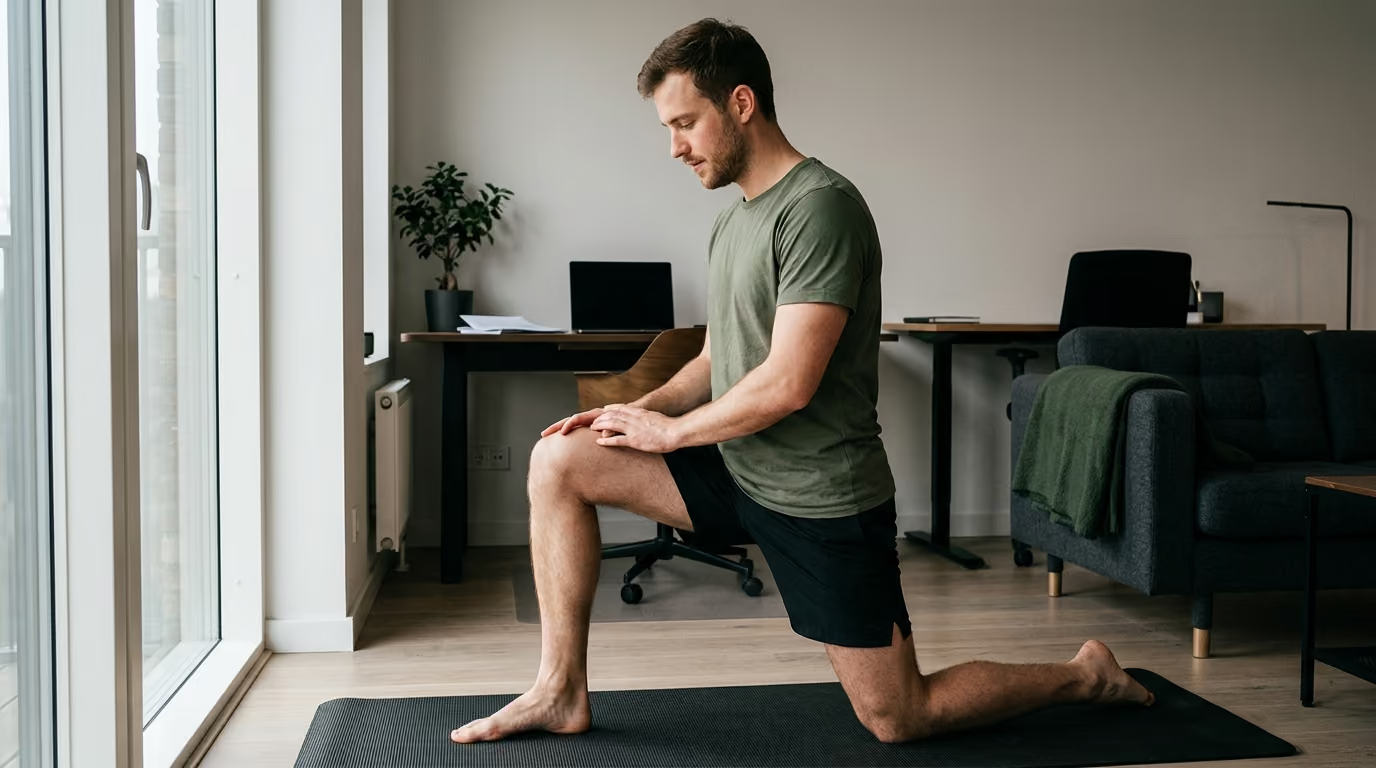
The half-kneeling landmine press provides an effective bridge between horizontal and vertical pressing. Because the barbell travels along an angled arc of roughly 45 degrees, the lifter achieves significant elevation without requiring full end-range glenohumeral flexion or thoracic extension. The half-kneeling position also engages the glutes and core, reinforcing kinetic chain integration during the pressing movement.
Pulling movements must balance pressing volume to maintain posterior shoulder strength and scapular retraction control. The chest-supported row eliminates lumbar shear and isolates the rhomboids, mid-trapezius, and posterior deltoids without requiring balance compensations. When programming vertical pulling, substitute traditional wide-grip pull-downs with neutral-grip attachments. Pulling to the upper chest while maintaining an upright torso prevents the humerus from gliding anteriorly at the bottom of the movement.
Reintroducing vertical pressing should occur in a stepwise fashion once landmine pressing and neutral-grip dumbbell pressing are completely pain-free. Begin with single-arm kettlebell or dumbbell overhead presses from a seated or half-kneeling stance. Single-arm loading allows the torso to side-bend slightly to accommodate natural movement paths, preventing forced subacromial pinching. As load tolerance improves, advance to standing bilateral overhead dumbbell presses before finally returning to strict barbell overhead presses.
Returning to unrestricted military duty, tactical training, or competitive athletics requires objective functional criteria rather than arbitrary calendar timelines. The Bern Consensus on return to sport establishes three distinct phases of recovery: return to participation, return to sport, and return to performance. Navigating these phases requires meeting objective benchmarks in strength, endurance, range of motion, and psychological readiness.
Strength symmetry is a critical baseline requirement. Handheld dynamometry or force plate testing should confirm that external rotation and internal rotation strength on the injured side reach at least 90 percent of the uninjured side. The external-to-internal rotation strength ratio must fall between 66 and 75 percent. A lower ratio indicates posterior rotator cuff weakness, leaving the anterior structures vulnerable during high-velocity deceleration and heavy pressing.
Closed-chain dynamic stability can be quantified using the Upper Quarter Y-Balance Test. This test assesses the athlete's ability to maintain a single-arm push-up plank while reaching the opposite hand in medial, inferomedial, and superomedial directions. A composite reach score within 95 percent of the uninjured side indicates excellent dynamic shoulder and core stability. This level of functional control is essential before resuming heavy loading or high-repetition physical readiness tests.
Following surgical interventions for posterior or anterior shoulder instability, returning to full duty demands rigorous evaluation of apprehension and tissue load tolerance. Systematic reviews show that while overall return-to-sport rates following instability stabilization exceed 85 percent, return to pre-injury performance levels ranges from 60 to 70 percent. Clearing an individual for duty requires verifying zero apprehension in vulnerable positions, such as combined abduction and external rotation. The individual must also demonstrate the ability to rapidly absorb landing forces during upper-body plyometrics.
Occupational task simulation represents the final stage of clearance. Military personnel and first responders must complete load-bearing functional tasks, including overhead ruck lifts, simulated casualty drags, ladder climbing, and push-up testing under fatigue. For comprehensive information on tactical training progression and physical readiness, review our resources on training and performance.
Uncomplicated rotator cuff tendinopathy typically requires 12 to 16 weeks of structured, progressive loading to achieve meaningful recovery. Tendon tissue adapts slowly to mechanical load due to its relatively low metabolic rate and blood supply. Mild improvements in resting comfort often appear within the first four weeks, but rebuilding structural load tolerance requires consistent strengthening over three to four months.
You can often continue pressing by modifying the exercise parameters rather than stopping upper-body training entirely. Switching to a dumbbell floor press with a neutral grip reduces extension stress on the anterior capsule and avoids painful impingement zones. You can also narrow your barbell grip width or switch to a half-kneeling landmine press until tissue irritability resolves.
Differentiating between a partial tear, tendinopathy, and a massive full-thickness tear requires clinical examination and potentially diagnostic imaging. Rotator cuff tendinopathy generally presents with a painful arc of motion and weakness secondary to pain inhibition, but passive range remains intact. Massive full-thickness tears often produce pronounced structural weakness, true lag signs, and an inability to actively elevate the arm against gravity regardless of pain levels.
Ice can provide temporary numbing relief for acute flares or highly irritable tissues, but it does not promote tissue repair or improve long-term tendon healing. Heat increases local blood flow, enhances tissue extensibility, and reduces joint stiffness, making it useful as a pre-training warm-up modality. Long-term recovery depends primarily on progressive exercise and load management rather than thermal modalities.
This article is provided solely for educational and informational purposes and does not constitute personalized medical advice, diagnosis, physical therapy, or healthcare treatment. Shoulder pain can arise from diverse underlying issues, including structural tears, labral disruption, cervical spine pathology, and systemic illness. Always consult a qualified physician, physical therapist, or orthopedic specialist before initiating a rehabilitation program or altering prescribed medical protocols.
Rebuilding overhead capacity requires consistent, structured execution. Use this operational checklist to guide your shoulder recovery over the next week:
Follow BattleVet for practical guidance on military and veteran health, strength, recovery, testosterone, sleep and healthy aging. Stay connected for new articles, research backed insights and clear information to help you stay capable for the years ahead.


Build better habits around strength, recovery, sleep, hormones and healthy aging with practical guidance for active military personnel and veterans.
Explore BattleVet