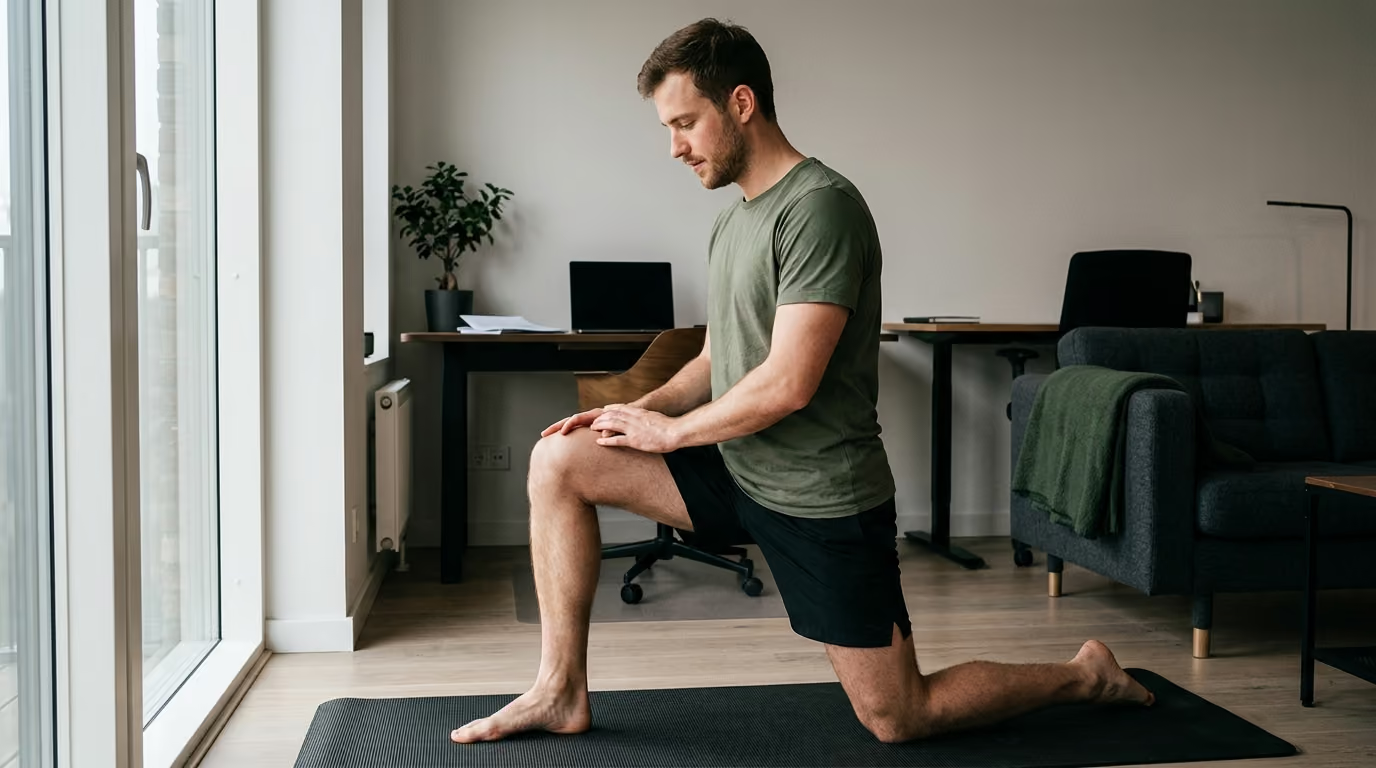

Physical rehabilitation after a cast or brace requires targeted exercises that rebuild joint mobility, neural activation, and muscular strength safely over time.





Many people assume that once a cast, splint, or walking boot comes off, the primary healing is done and normal activity can resume immediately. In reality, tissue healing is only the structural foundation. When you step out of a protective boot onto the clinic floor, your ankle feels foreign, your calf looks noticeably smaller, and your brain hesitates before bearing full body weight. Cast removal does not mark the end of recovery. It marks the shift from structural protection to neuromuscular restoration.
Quick Take: Restoring function after immobilization requires a progressive, multi-stage process that systematically rebuilds neural activation, joint mobility, muscular force, and balance rather than simply resuming pre-injury activity.
To rehabilitate a limb after a period of casting, bracing, or restricted movement, you must progressively restore joint range of motion, clear residual swelling, retrain voluntary muscle recruitment, and rebuild single-limb balance. This rehabilitation must respect biological tissue healing while systematically reintroducing mechanical load. Skipping these developmental phases often leads to chronic joint stiffness, persistent weakness, altered movement mechanics, and an increased risk of secondary injury.
Immobilization is necessary to protect broken bones, torn ligaments, and surgically repaired tendons. However, unloading a limb triggers rapid structural and neurological adaptations across multiple body systems. Understanding these physiological changes prevents the common mistake of treating post-cast weakness as a simple loss of muscle size.
Skeletal muscle begins breaking down almost immediately when movement stops. Research examining human disuse physiology shows that muscle protein synthesis declines significantly within days of limb casting. Five days of strict immobilization can reduce resting myofibrillar protein synthesis by roughly 40 percent and post-meal protein synthesis by up to 50 percent.
A systematic review published in Sports Medicine confirmed that casting rapidly decreases muscle cross-sectional area and force generation. A 2025 meta-analysis on disuse atrophy estimated an average muscle mass loss of approximately 0.16 percent per day, accumulating to roughly 3.44 percent over three weeks. This loss of muscle tissue is accompanied by connective tissue stiffening, reduced capillary density, and altered mitochondrial function within the immobilized muscle fibers.
The loss of strength after immobilization is almost always greater than the visible loss of muscle mass. This discrepancy happens because the central nervous system downregulates its drive to the unloaded muscles. Controlled studies on short-term knee immobilization demonstrate moderate-to-large reductions in maximal voluntary activation within 48 hours.
When a joint is held static, mechanoreceptors provide fewer sensory inputs to the spinal cord and motor cortex. The brain essentially loses its familiar neural map of the limb. Furthermore, joint swelling and pain create arthrogenic muscle inhibition, a natural reflex where the nervous system deliberately restricts muscle recruitment to prevent further joint damage. True rehabilitation must retrain neural recruitment, firing frequency, and motor unit synchronization.
Immobilization does not affect all muscles equally. Anti-gravity muscles that maintain posture and support body weight, such as the quadriceps, soleus, gastrocnemius, and hip abductors, deteriorate faster than their antagonist counterparts. The position in which a limb is cast also dictates the rate of muscle loss.
When a muscle is immobilized in a shortened position, it loses sarcomeres in series and atrophies faster than a muscle fixed in a lengthened state. Upper-limb casting often spares some shoulder musculature while severely compromising grip force, forearm rotation, and scapular stabilization. A thorough physical assessment must test individual muscle actions rather than assuming the entire limb has weakened at an equal rate.
Proprioception is the ability of your nervous system to detect body position, joint angle, and movement through space. This continuous sensory stream relies on receptors in your joints, ligaments, tendons, muscles, and skin. When a joint is held motionless, these receptors experience prolonged sensory deprivation.
Studies in healthy volunteers show that even one week of lower-leg casting significantly impairs single-leg balance and postural stability immediately upon cast removal. Balance is an integrated system combining sensory feedback from the feet, visual orientation, vestibular input from the inner ear, and rapid muscular corrections from the hip and trunk. When sensorimotor processing is degraded, your risk of stumbling, rolling an ankle, or overloading adjacent joints rises substantially.
Before beginning active exercises or increasing daily walking, you must confirm that the underlying injury has healed sufficiently to handle mechanical stress. Cast removal is a change in orthopedic management, not a blanket clearance for unrestricted exercise.
Every injury carries distinct biological constraints. A stable bone fracture, an open reduction with internal fixation, a repaired Achilles tendon, and a reconstructed ligament heal at completely different rates. You must obtain clear guidance from your orthopedic specialist regarding permitted weight-bearing status, allowable active range of motion, and specific movement precautions.
You should establish the following parameters before starting rehabilitation:
Certain post-immobilization symptoms require immediate medical attention rather than physical therapy. Deep vein thrombosis is a critical risk after lower-limb immobilization due to prolonged venous stasis. Orthopedic guidelines consistently emphasize that swelling accompanied by severe calf pain, warmth, or localized redness demands urgent vascular assessment.
Sudden shortness of breath, lightheadedness, or sharp chest pain represents a medical emergency that could indicate a pulmonary embolism. Additionally, if you experience disproportionate burning pain, extreme skin sensitivity to light touch, noticeable temperature asymmetry, or shiny skin changes, you must be screened for complex regional pain syndrome. If you notice persistent numbness, pale or bluish toes or fingers, or severe swelling that worsens despite limb elevation, contact your healthcare provider immediately.
To measure recovery accurately, your clinician should record objective baseline metrics across several domains. This baseline provides a benchmark to guide progressive overload and prevents premature advancement into high-impact activities.
A comprehensive baseline evaluation includes:
The early days following brace or cast removal often bring stiffness, residual swelling, and strange sensory feedback from the skin. Addressing these local symptoms creates a favorable physical environment for progressive exercise.
Post-immobilization swelling is not just a cosmetic issue. Fluid accumulation inside a joint capsule elevates intra-articular pressure, physically blocking full flexion or extension. Edema also worsens arthrogenic muscle inhibition, making it mechanically and neurologically harder to contract surrounding muscles.
Elevating the limb above heart level when resting helps facilitate venous and lymphatic drainage. Applying cold packs wrapped in a thin towel for 15 to 20 minutes several times per day can reduce local tissue warmth and pain. Light, graduated compression sleeves can support fluid management if medically approved, although individuals with peripheral vascular disease or neuropathy must exercise caution.
Early mobility work should focus on gentle, frequent movement rather than forceful stretching. Forcing a stiff joint into painful end-ranges causes muscular guarding, microtrauma, and reflex inflammation. The goal is to perform repeated, low-load movements throughout the day.
National health services recommend moving stiff joints little and often. For an ankle, this includes gentle active ankle circles, pointing and flexing the toes, and writing the alphabet in the air. For a wrist, this involves tendon-gliding exercises, light wrist flexion and extension, and gentle forearm pronation and supination. These non-loaded movements circulate synovial fluid through the joint cartilage and signal to the nervous system that movement is safe.
Monitoring how your body responds over a 24-hour cycle is the most reliable way to calibrate your rehabilitation dose. Mild stiffness or slight muscular ache during or shortly after an exercise session is normal. However, symptoms should settle back to your baseline within a few hours.
If your pain, swelling, or joint stiffness is noticeably worse the morning after an exercise session, your recent physical volume exceeded your current tissue tolerance. Use this feedback constructively. Instead of stopping exercise entirely, modify one variable during your next session: reduce the number of repetitions, decrease the external resistance, shorten the walking duration, or add extra rest intervals.
After weeks covered by fiberglass, plaster, or rigid plastic, the skin is frequently dry, flaky, and hypersensitive to everyday touch. Normal sensations like the friction of a sock, the weight of a bedsheet, or warm water can feel uncomfortably sharp or irritating.
Gradual sensory re-education helps normalize these exaggerated cutaneous signals. Begin by gently rubbing the affected area with soft materials such as silk or cotton. As tolerance improves, progress to rougher textures like a terrycloth towel, light massage, and controlled temperature variations. Normalizing skin tolerance reduces fear of movement and prepares the limb for clothing, footwear, and functional loading.
Once comfortable movement is established and swelling is managed, rehabilitation shifts toward waking up dormant muscle fibers and restoring force output. This phase bridges the gap between passive joint mobility and active, load-bearing functional movement.
Isometric contractions involve generating muscular tension without changing the joint angle. They are ideal for early rehabilitation because they deliver mechanical tension to muscle tissue without stressing healing ligaments, unhealed fractures, or sensitive joint capsules.
Isometrics bypass pain-induced movement fears and safely recruit high-threshold motor units. For lower-limb rehabilitation, performing seated submaximal quadriceps sets, glute squeezes, and gentle calf presses against a solid wall reactivates primary stabilizers. Hold each contraction for 5 to 10 seconds, focusing on deliberate muscle recruitment, and repeat for 8 to 12 repetitions across multiple joint angles as permitted by your clinician.
After establishing isometric control, you can begin moving through an active range of motion against light external resistance. Resistance bands, light free weights, and gravity-eliminated positions allow you to scale load precisely. Explore our rebuilding strength and muscle mass resources for structured approaches to progressive resistance training.
Pay strict attention to the eccentric phase, which is the controlled lowering of the load. Eccentric contractions generate high muscular tension, stimulate connective tissue remodeling, and enhance cortical excitability. Performing seated knee extensions with a controlled three-second lowering phase, or performing assisted heel raises with a slow descent, rebuilds muscle architecture far more effectively than fast, uncontrolled repetitions.
Rebuilding peak strength is only part of the equation. Daily activities, such as catching your balance after a trip or stepping off a curb, require your muscles to produce force rapidly. Immobilization preferentially diminishes rate of force development, which is the speed at which your nervous system can activate muscle fibers.
Once basic strength is established without pain, incorporate exercises that emphasize quick, crisp muscle recruitment. This does not mean jumping into heavy ballistic lifting. Instead, focus on accelerating a light resistance band or lifting body weight upward with intent, followed by a controlled, stable landing or pause. Improving neuromuscular firing rate is essential for fall prevention and joint stabilization.
Loading is the systematic re-exposure of tissues to gravity, ground reaction forces, and external loads. Transitioning from non-weight-bearing exercises to full functional loading must follow a predictable, capacity-based ladder.
Many people develop subtle compensatory movement patterns during early recovery. When performing bilateral exercises like standard bodyweight squats or standing calf raises, the uninjured limb naturally takes on 60 to 70 percent of the work. This compensation shields the recovering limb from the necessary adaptive stress.
To overcome this asymmetry, transition deliberately from bilateral to unilateral tasks:
Immobilization drastically reduces local muscular endurance. A patient may produce enough force for two or three maximal repetitions but fatigue completely after five minutes of continuous walking. When stabilizing muscles fatigue, joint kinematics break down and abnormal sheer forces are transferred into passive joint structures.
To restore endurance, structure training around higher-repetition sets, extended time-under-tension, and interval-based walking or cycling protocols. Stationary cycling with low resistance is an excellent tool for restoring lower-limb cyclic endurance and joint nutrition without impact. For upper-limb injuries, carrying light objects over progressive distances rebuilds scapular and forearm endurance. Integrating dedicated recovery and physical restoration guidance ensures that high-repetition tissue conditioning is matched with adequate rest and metabolic support.
Human movement rarely occurs entirely in a straight line. Daily tasks, occupational duties, and recreational activities require stability in the frontal plane (side-to-side) and transverse plane (rotational). If you only rehabilitate in the sagittal plane (forward and backward), your joint will remain vulnerable to sudden lateral forces.
Incorporate lateral step-overs, side lunges, controlled torso rotations, and diagonal reaching patterns once sagittal-plane movements are well tolerated. For the upper extremity, include internal and external shoulder rotation against light resistance, diagonal lifting patterns, and forearm pronation-supination under light load. Multiplanar training ensures that passive joint capsules, ligaments, and stabilizing muscles adapt to complex real-world forces.
Restoring muscle bulk and flexibility will not protect a joint if the nervous system cannot sense where the limb is in space. Balance retraining must be deliberate, progressive, and tailored to daily functional challenges.
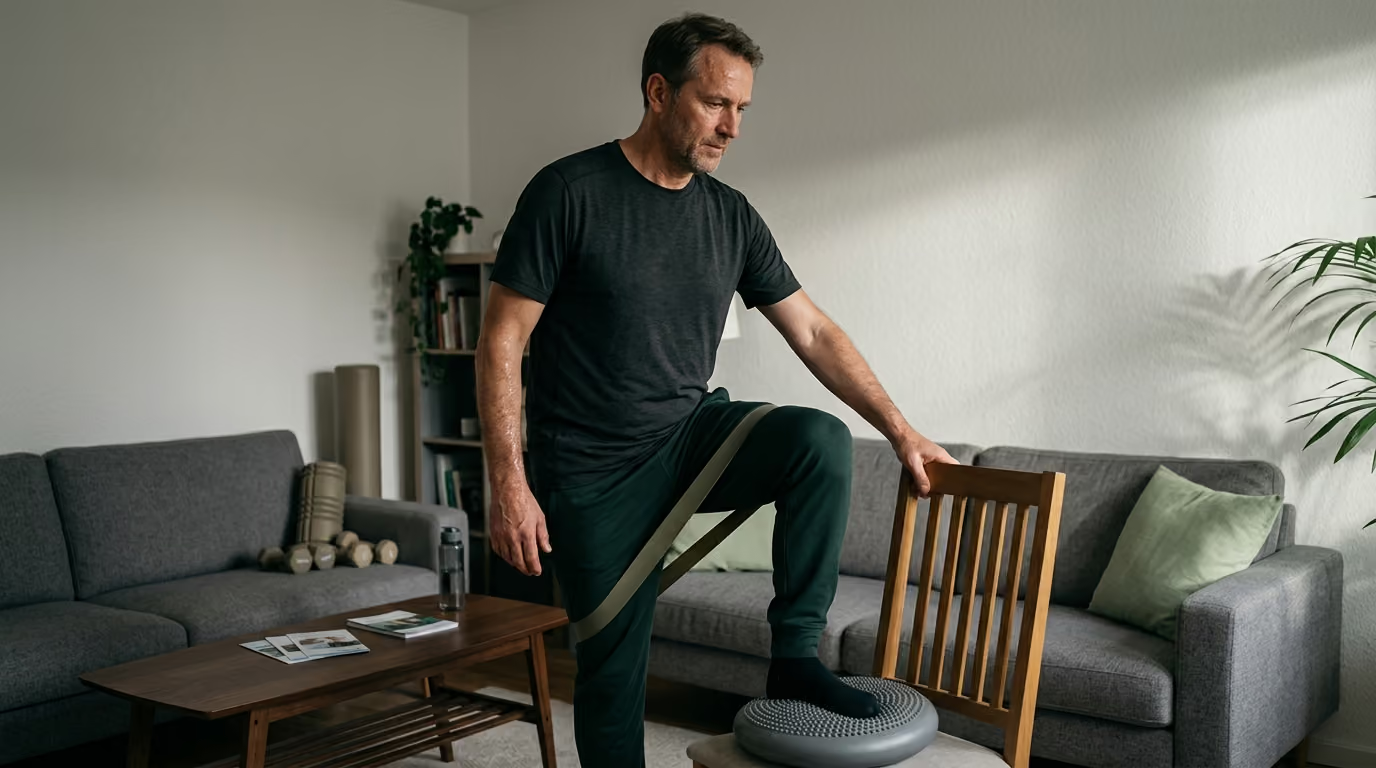
Balance training should start with simple tasks and progress by altering sensory inputs and base of support. Do not immediately step onto an unstable wobble board. Premature use of unstable surfaces can cause severe compensatory movement and heighten joint anxiety.
Follow this systematic balance progression:
Standing still on one leg is static balance. Real life requires dynamic balance, which is the ability to maintain stability while the body is in motion. A 2026 synthesis of ankle instability research confirmed moderate-certainty evidence that targeted balance exercises improve dynamic postural stability far more effectively than general stretching.
Dynamic balance exercises include forward and lateral walking with deliberate pauses on one leg, stepping over low obstacles, and performing controlled step-down drills from a four-inch platform. Pay close attention to your walking mechanics. Eliminate limping by slowing your walking speed, taking equal step lengths, and fully pushing off through your big toe. Use walking aids such as crutches or a trekking pole until you can walk without a limp.
In the real world, you never walk or carry loads in a sensory vacuum. You talk on the phone, navigate uneven sidewalks, scan for traffic, and carry groceries. When your attention is divided, your brain relies on automated sensorimotor pathways.
Once single-leg balance and basic stepping are secure, add cognitive and physical dual tasks to your sessions. Practice balancing on your recovering leg while catching and throwing a tennis ball, counting backward by threes, or tracking an object with your eyes. Dual-task training forces motor control down to subconscious spinal and subcortical pathways, preparing you for real-world environments.
The final phase of rehabilitation bridges clinical recovery with full return to physical work, demanding recreation, and everyday tasks. This stage ensures your repaired tissues can handle high loads, rapid decelerations, and extended physical stress.
Functional testing should evaluate movement quality, joint symmetry, and endurance under fatigue. Being able to perform 15 unloaded repetitions in a quiet room does not prove you are ready for a 10-hour shift on a concrete floor or a five-mile hike. Review our comprehensive training and physical performance strategies to align your functional reloading with long-term athletic development.
Replicate the specific biomechanical demands of your daily routine. If your job involves heavy lifting, progressively train deadlifts, kettlebell carries, and awkward-object transfers from the floor to waist height. If you need to kneel, climb ladders, or work in tight spaces, incorporate loaded lunges, step-ups, and kneeling mobility drills into your late-stage programming.
For individuals returning to running, sports, or demanding field work, jumping and landing tolerance must be evaluated before unrestricted activity resumes. Jumping exposes joints to forces three to five times body weight, while landing and sudden cutting generate even higher peak loads.
Progress impact tolerance systematically:
Ensure the recovering limb demonstrates at least 90 percent of the strength, hop distance, and movement symmetry of the uninjured side before clearing return to unrestricted sport or heavy tactical training.
Rehabilitation is rarely a straight line. Understanding common mistakes and recognizing unique patient factors allows you to adjust your program proactively.
Rehabilitation timelines and load tolerance vary significantly depending on age, systemic health, and surgical history. Addressing these specific factors ensures safe progression.
Older adults experience faster rates of disuse muscle atrophy and slower rates of protein synthesis recovery. Pre-existing balance impairments, lower bone mineral density, and fear of falling increase reinjury risk. Rehabilitation should emphasize lower initial resistance, higher frequency, functional sit-to-stand repetitions, and dedicated balance support. Explore our healthy aging and joint health articles for strategies on preserving mobility and muscle mass across the lifespan.
Diabetic individuals with peripheral neuropathy have diminished sensory feedback from the soles of their feet and skin. They cannot reliably sense excessive pressure points, blister formation, or early tissue overload. Footwear fit must be checked meticulously, skin integrity inspected daily, and loading progressed based on objective volume metrics rather than internal sensation alone.
Surgical repairs require strict adherence to biological healing timelines. A repaired tendon may feel relatively pain-free at six weeks, but the newly synthesized collagen fibers lack full tensile strength. Forceful passive stretching or premature explosive loading can stretch out or rupture the repair site. Always follow your surgeon's specific range of motion and loading restrictions.
When planning a recovery strategy, it is critical to separate well-established scientific findings from areas where research remains preliminary or inconsistent.
To support the metabolic demands of muscle regrowth and systemic recovery, integrate proper sleep and tissue repair strategies. Check our recovery and sleep protocols to optimize hormonal balance and systemic regeneration during your rehabilitation process.
Joint stiffness after immobilization is caused by several structural and biological changes. When a joint is held static, the surrounding joint capsule, ligaments, and tendons lose their natural water content and develop disorganized cross-links between collagen fibers. Additionally, resting fluid within the joint thickens, and surrounding muscles shorten and lose elasticity. Frequent, gentle active movement helps warm the tissues, circulates lubricating synovial fluid, and signals the collagen fibers to realign along natural lines of stress.
As a general clinical rule, regaining muscle size and strength takes roughly two to three times longer than the duration of immobilization. If your leg was cast for six weeks, full functional strength and muscle symmetry typically require 12 to 18 weeks of consistent progressive training. Neural activation improves rapidly within the first two to three weeks, but true structural muscle hypertrophy and tendon remodeling require months of progressive mechanical loading.
Yes, a temporary increase in swelling is common when you begin standing and walking. When your limb was immobilized, it was frequently elevated and protected from gravity. When you resume weight-bearing, gravity pulls fluid downward into the lower extremity, and working muscles generate metabolic waste products that increase local blood flow. As long as the swelling resolves with overnight elevation and does not cause severe pain, it is a normal adaptive response to increased mechanical demand.
No, strength training and balance training target different aspects of the neuromuscular system. Heavy strength training increases peak muscular force and motor unit recruitment, but balance training refines the speed and accuracy of sensory feedback from joint mechanoreceptors, visual cues, and the inner ear. You can have strong quadriceps and calf muscles yet still lack the rapid corrective reflexes needed to prevent an ankle roll on uneven ground.
This article is provided for educational and informational purposes only and does not constitute individual medical advice, physical therapy diagnosis, or personalized treatment planning. Always consult your orthopedic surgeon, physical therapist, or qualified healthcare provider before initiating or progressing any rehabilitation program, modifying weight-bearing status, or discontinuing supportive braces.
True recovery from immobilization is a deliberate process of restoring neuromuscular communication, tissue load tolerance, and movement confidence.
Follow BattleVet for practical guidance on military and veteran health, strength, recovery, testosterone, sleep and healthy aging. Stay connected for new articles, research backed insights and clear information to help you stay capable for the years ahead.


Build better habits around strength, recovery, sleep, hormones and healthy aging with practical guidance for active military personnel and veterans.
Explore BattleVet