
Passive recovery tools feel effective, but prioritizing sleep, smart programming, and nutrition yields far superior results for lasting muscular adaptation.





You wake up at five in the morning, stiff and exhausted after a heavy training session. Your shoulders ache, your lower back feels tight, and you still have a full day of physical duties ahead. You might reach for a massage gun, strap on compression sleeves, or swallow a handful of anti-inflammatory pills to numb the discomfort. Yet treating recovery as a desperate attempt to eliminate soreness often backfires, wasting valuable time while blunting the very physical adaptations you trained to build.
Recovery is not a single biological state, and feeling fresh is not the same thing as being physiologically restored. The most effective recovery strategy matches specific tools to clear performance objectives, placing sleep, nutrition, and workload control above passive gadgets and short-term fixes.
True recovery means restoring functional capacity, repairing damaged tissue, and supporting long-term physical adaptation. An intervention that reduces delayed-onset muscle soreness, known as DOMS, does not automatically restore maximal strength or sprint power. Understanding the scientific distinctions between perceptual relief, functional readiness, and physiological adaptation allows you to invest your time and energy into methods that actually produce results.
Physical training creates two distinct outcomes: acute fatigue and an adaptive stimulus. When you lift weights, run intervals, or carry heavy loads, you cause microscopic tissue breakdown and transient inflammation. This biological stress signals your body to remodel tissue, increase mitochondrial density, and synthesize new contractile proteins. If you aggressively suppress every inflammatory signal immediately after training, you may reduce soreness while unintentionally reducing the training effect.
Recovery interventions fall into two major operational categories based on timeline and objective. The first category is rapid-turnaround recovery. This applies when you must perform at maximum capacity within hours or days, such as during multi-event competitions, field exercises, or back-to-back operational shifts. In this setting, blunting muscle soreness and restoring immediate output takes priority over long-term muscular development.
The second category is adaptation-focused recovery. Here, the primary objective is building strength, muscle mass, or aerobic endurance over weeks and months. For this goal, routine use of aggressive recovery interventions like ice baths immediately after lifting can blunt the signaling pathways required for hypertrophy. Your focus should instead center on foundational recovery habits that support tissue remodeling without neutralizing the adaptive stimulus.
To evaluate any recovery strategy, you must measure the correct outcome rather than relying purely on how your muscles feel. Scientific research divides recovery outcomes into four main tiers:
A method that excels at reducing perceived soreness may show zero measurable benefit for restoring maximal strength. When choosing a tool, always ask what specific outcome you need to restore and what timeline you are working against. Exploring structured training and performance resources can help you align your training intensity with realistic recovery timelines.
Passive modalities cannot compensate for poor sleep, inadequate caloric intake, or irresponsible training volume. The recovery hierarchy begins with biological foundations that provide the actual raw materials and hormonal environment for repair.
Sleep represents the most powerful restorative behavior available to the human body. An expert consensus statement published in the British Journal of Sports Medicine emphasizes that habitual short sleep, defined as less than seven hours per night, substantially impairs athletic performance, cognitive processing, and emotional regulation. While healthy adults generally require between seven and nine hours of sleep per night, highly active individuals frequently require more to accommodate elevated physical stress.
During deep slow-wave sleep, the body increases growth hormone secretion, accelerates protein synthesis, and clears metabolic waste products from neural tissue. A single night of total sleep deprivation measurably reduces endurance, reaction time, and decision-making accuracy. While the impact of partial sleep restriction over consecutive nights varies, accumulated sleep debt consistently degrades physical capacity and increases injury risk.
Buying expensive recovery technology while sleeping five hours per night is a flawed strategy. No compression boot, cold plunge, or massage gun can replicate the cellular repair processes that occur during consolidated sleep. If your schedule is tight, protecting your sleep window delivers a far higher return on investment than adding passive recovery modalities. For practical strategies on improving sleep architecture, review our sleep, stress, and physical resilience materials.
Rest does not mean lying motionless on a couch for days at a time. Within an evidence-informed framework, rest means adjusting training volume, intensity, load carriage, or movement frequency to match current physiological capacity. Complete rest is warranted during acute illness, severe systemic fatigue, or when movement aggravates an acute injury. In most other scenarios, relative rest and intelligent load modification are superior.
Systematic reviews evaluate recovery strategies across endurance and strength disciplines, consistently concluding that no single passive modality can compensate for excessive training volume. If you continuously exceed your tissue tolerance, adding recovery treatments only delays eventual breakdown. Deload weeks, scheduled rest days, and auto-regulated training sessions provide the physiological space necessary for musculoskeletal repair.
Managing training load requires distinguishing between local muscle fatigue and systemic nervous system strain. A structured plan includes planned variations in training intensity so that hard training days are balanced by genuinely easy sessions. When performance declines across multiple consecutive workouts, the correct intervention is a reduction in total volume, not more recovery gadgets.
Nutrition provides the direct substrates required to repair damaged muscle fibers and replenish depleted energy stores. Without sufficient amino acids and carbohydrates, cellular repair stalls regardless of how many passive modalities you employ.
According to the position stand from the International Society of Sports Nutrition, exercising individuals require an overall daily protein intake ranging from 1.4 to 2.0 grams per kilogram of body weight. Distributing this protein intake across multiple meals containing 20 to 40 grams of high-quality protein optimizes muscle protein synthesis throughout the day. Consuming 30 to 40 grams of casein protein prior to sleep can further support overnight muscle protein synthesis and tissue remodeling.
Carbohydrate intake must match the energetic demands of your physical training. High-volume conditioning, endurance sessions, and repeated lifting deplete intramuscular glycogen stores. Consuming adequate carbohydrates post-exercise accelerates glycogen resynthesis, reduces cortisol elevation, and prepares your body for the next physical challenge. To learn more about calculating your daily macronutrient requirements, consult our guide on nutrition and fueling strategies.
Manual therapies and mechanical recovery tools dominate the commercial fitness market. While these tools offer legitimate benefits for comfort and subjective relaxation, their ability to accelerate physical performance restoration is frequently overstated.
Sports massage involves manual manipulation of soft tissue to alter fluid dynamics, decrease muscle tension, and promote relaxation. A comprehensive systematic review and meta-analysis of 29 studies involving over 1,000 participants evaluated the performance and recovery effects of sports massage. The findings revealed that sports massage produced small but statistically significant improvements in delayed-onset muscle soreness and temporary flexibility.
However, the same meta-analysis found no evidence that sports massage improved maximal strength, jump performance, sprint speed, endurance capacity, or objective markers of fatigue. Massage alters how your central nervous system perceives pain and muscle tightness, but it does not clear structural micro-tears or accelerate the replenishment of cellular energy.
Sports massage is best utilized as a comfort and symptom-management tool rather than a direct performance enhancer. It is particularly valuable when intense muscle soreness disrupts sleep quality or makes daily movement uncomfortable. It can also assist in psychological stress reduction following demanding training blocks.
Foam rolling and self-myofascial release utilize body weight and dense rollers to apply mechanical pressure to muscle and fascial tissue. Similar to manual massage, foam rolling creates a transient reduction in perceived pain and a temporary increase in joint range of motion. These acute changes stem primarily from neurological modulation, as sensory receptors in the skin and muscle alter local pain perception.
Foam rolling does not permanently lengthen fascia or break up scar tissue. The pressures required to physically deform human fascia far exceed what can be safely produced by a foam roller. Instead, rolling acts as a safe, low-cost method to temporarily reduce stiffness before a workout or ease post-training discomfort.
Using a foam roller for five to ten minutes post-exercise can improve subjective comfort without compromising subsequent muscle power. However, spending forty minutes rolling every muscle group provides diminishing returns compared to getting to bed on time or preparing a nutrient-dense meal.
Compression garments apply graduated pressure to the limbs, intended to enhance venous return, reduce peripheral swelling, and minimize muscle oscillation during movement. Meta-analyses examining compression garments report small, positive effects on recovery outcomes, with the most noticeable benefits occurring for strength recovery two to eight hours post-exercise and beyond 24 hours.
The primary mechanism appears to be a reduction in muscle swelling and an improvement in perceived soreness, allowing athletes to feel more capable during subsequent sessions. However, the evidence base exhibits substantial variation in garment pressure, fit, and study design. A recent systematic review found very low-certainty evidence for compression garments regarding long-term endurance performance and delayed-onset soreness in endurance athletes.
Pneumatic compression boots, which use motorized pumps to inflate segmented chambers, are marketed as an advanced evolution of compression garments. Narrative reviews categorize pneumatic boots among modalities with mixed or lower certainty compared to basic active recovery or standard compression. While pneumatic boots provide relaxing, passive compression, there is limited evidence proving they outperform inexpensive elastic garments. If you travel frequently or stand for long periods after hard sessions, standard graduated compression socks offer a practical and cost-effective option.
Temperature-based modalities represent some of the most widely researched physical interventions in sports science. Using heat or cold alters local blood flow, tissue metabolism, nerve conduction velocity, and cellular signaling cascades.
Cold water immersion involves submerging the body in water cooled to between 10 and 15 degrees Celsius for roughly 10 to 15 minutes. Systematic reviews and meta-analyses show that post-exercise cold water immersion consistently reduces perceived muscle soreness, lowers ratings of perceived exertion, and reduces circulating creatine kinase concentrations at 24 hours post-exercise.
The physiological mechanisms of cold immersion include intense peripheral vasoconstriction, reduced metabolic activity in cooled tissues, and decreased nerve conduction velocity. These effects combine to dull pain perception and limit post-exercise fluid accumulation. Cold water immersion is highly effective when you need rapid perceptual recovery during multi-day events, intense tournaments, or hot-weather field operations.
However, cold water immersion introduces a clear adaptation trade-off. Multiple peer-reviewed trials demonstrate that regular, immediate cold water immersion following resistance training dampens anabolic signaling cascades, satellite cell activity, and muscle protein synthesis. Over time, this routine cooling attenuates long-term gains in muscular hypertrophy and maximal strength.
Additionally, cooling muscle tissue temporarily impairs explosive power and muscle contraction velocity. If you submerge in cold water immediately before a power-dependent event, countermovement jump height and sprinting ability are significantly reduced. Cold water immersion should be deployed strategically during congested competition schedules, not used as an automatic daily ritual after strength training.
Heat therapy increases local tissue temperature, promotes vasodilation, accelerates cellular metabolism, and improves connective tissue extensibility. Systematic reviews of thermal modalities indicate that applying sustained, low-temperature heat wraps immediately after strenuous exercise significantly reduces delayed-onset muscle soreness.
Network meta-analyses comparing thermal interventions report that hot-pack applications are particularly effective for pain relief within 24 to 48 hours post-exercise. Warming the tissue reduces muscle spasm, stimulates thermal receptors to block pain transmission, and increases local blood flow to support nutrient delivery.
Heat is exceptionally well-suited for addressing joint stiffness, muscular tightness, and low-level aching prior to movement sessions. Applying a hot pack or heating pad for 15 to 20 minutes before performing gentle mobility work can make movement significantly more comfortable. However, heat therapy should be avoided in the acute phase of traumatic soft-tissue injuries where active bleeding or severe swelling is present.
Sauna bathing exposes the body to ambient temperatures ranging from 70 to 100 degrees Celsius, inducing profound sweating and cardiovascular strain similar to light-to-moderate aerobic exercise. Narrative reviews evaluating post-exercise recovery modalities classify sauna use among interventions with lower or mixed evidence for directly accelerating functional muscular recovery.
While sauna use stimulates heat shock proteins, increases cutaneous blood flow, and promotes deep psychological relaxation, it also imposes an additional thermal and cardiovascular load. If you are already dehydrated or depleted from a grueling physical session in hot conditions, entering a sauna increases physiological stress rather than alleviating it.
If you choose to use a sauna for its subjective wellness and cardiovascular benefits, schedule it away from intense lifting sessions and ensure aggressive hydration. Sauna exposure should be treated as a gentle conditioning stressor rather than a passive recovery cure.
Stretching remains one of the most misunderstood components of physical restoration. Many individuals spend hours performing prolonged static stretches under the incorrect assumption that it prevents muscle soreness or speeds up muscle repair.
Static stretching involves lengthening a specific muscle group to its end-range and holding that position for 30 to 60 seconds. High-quality systematic reviews have evaluated the relationship between stretching and exercise recovery, finding that post-exercise static stretching has no meaningful effect on reducing delayed-onset muscle soreness.
Furthermore, comprehensive reviews demonstrate that pre-exercise static stretching does not reliably reduce overall injury rates in active populations. While static stretching temporarily increases joint range of motion by altering stretch tolerance, it does not repair damaged muscle fibers, accelerate glycogen resynthesis, or reduce structural swelling.
Aggressively pulling on severely damaged, sore muscles can cause further mechanical irritation. Static stretching is valuable when you have an identified, specific range-of-motion restriction that limits your movement mechanics, but it should not be prescribed as a universal tool for muscle soreness.
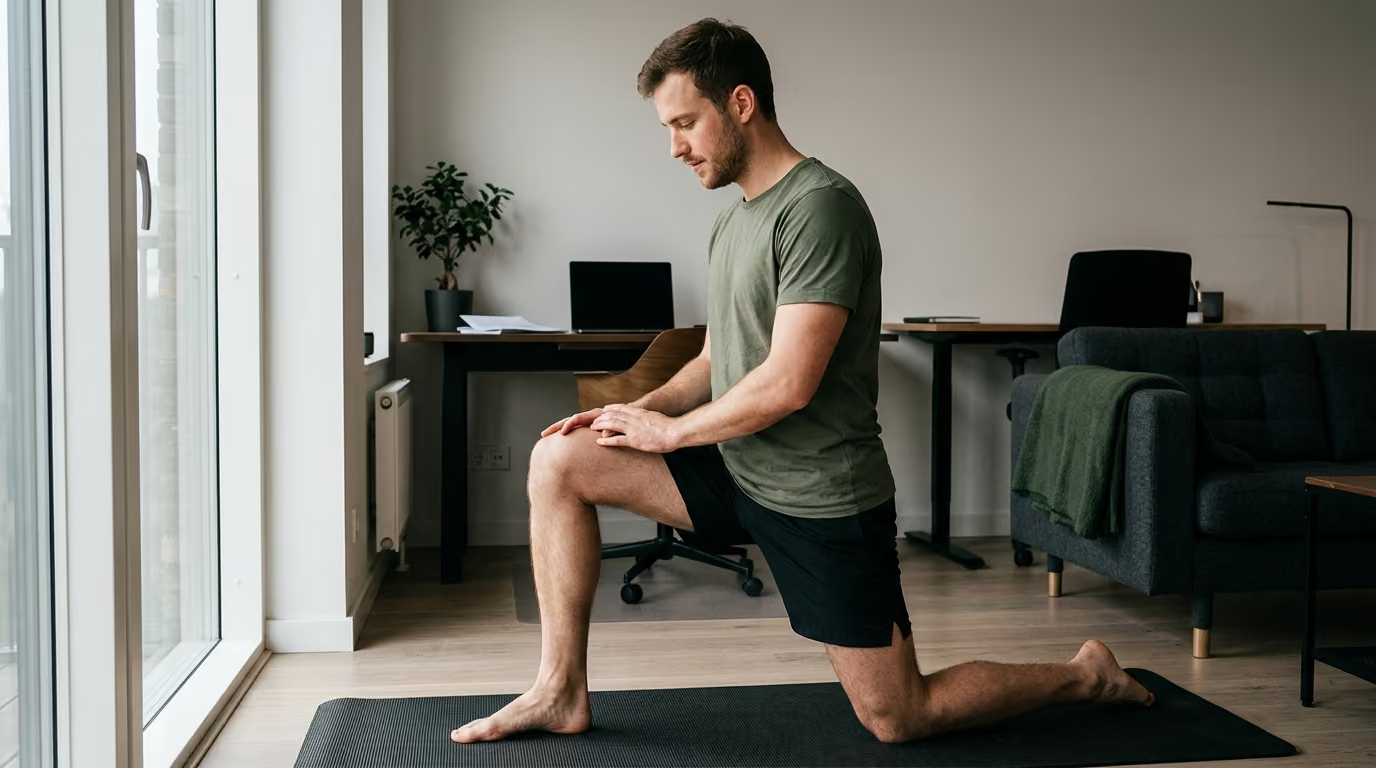
Mobility work focuses on active control through complete joint ranges of motion, integrating muscular contraction with joint articulation. Controlled articular rotations, dynamic lunges, and unloaded movement drills reinforce neuromuscular coordination while promoting joint lubrication.
Mobility drills serve as an exceptional low-load movement practice during active recovery days. Performing dynamic movements through full ranges of motion increases local tissue temperature and restores normal movement patterns without inducing systemic fatigue.
Use mobility work when you feel stiff after prolonged sitting, tactical travel, or heavy load-bearing tasks. Focus on the joints that bear the greatest operational stress, such as the hips, ankles, and thoracic spine. For comprehensive routines designed to maintain joint function over time, examine our strength and fitness programming resources.
Active recovery involves performing low-intensity, non-fatiguing movement following demanding physical exertion or on designated non-training days. Examples include easy stationary cycling, flat walking, swimming, or bodyweight movement circuits.
Systematic reviews analyzing post-exercise recovery strategies report that active recovery protocols lasting between six and ten minutes consistently improve short-term recovery perceptions and subsequent performance when compared to complete passivity. Low-intensity muscular contractions act as a mechanical pump, facilitating venous return, promoting lymphatic drainage, and clearing metabolic byproducts from local tissues.
Active recovery is especially effective when subsequent physical bouts occur approximately 24 hours apart. A short bout of light cycling or walking helps reduce subjective muscle stiffness and elevates mood without placing demands on your central nervous system.
Active movement also stimulates the release of endorphins, dampening pain perception and helping transition your autonomic nervous system from a sympathetic state toward a parasympathetic, restorative state.
The primary pitfall of active recovery is executing the session at an intensity that generates additional fatigue. If an active recovery walk or bike ride causes heavy breathing, significant heart rate elevation, or muscle burning, it transforms into an additional conditioning session that depletes your recovery reserves.
To implement active recovery correctly, follow these operational parameters:
If your legs feel progressively heavier or your resting heart rate remains elevated, stop the session and transition to quiet rest. Active recovery is a tool to facilitate restoration, not an excuse to squeeze in extra aerobic volume.
The dietary supplement industry heavily markets products claiming to eradicate soreness and accelerate muscle repair. A critical review of the scientific literature reveals that only a few compounds provide measurable benefits, while many popular products show weak or inconsistent evidence.
Creatine monohydrate is extensively supported by scientific literature, with position stands from the International Society of Sports Nutrition identifying it as the most effective nutritional supplement for increasing high-intensity exercise capacity and lean body mass. The National Institutes of Health Office of Dietary Supplements notes that creatine supplementation reliably enhances maximal strength, power output, and repeated sprint performance.
However, creatine functions primarily as an adaptation and capacity enhancer rather than an acute soreness remedy. Creatine increases intracellular phosphocreatine stores, enabling greater work capacity during subsequent training sessions. Over time, this enhanced training capacity leads to greater strength gains and improved muscular recovery between high-intensity intervals.
A standard dosing protocol of 3 to 5 grams per day taken consistently maintains saturated muscle creatine stores. There is no need to execute complex loading phases or cycle off the supplement. Creatine is safe, inexpensive, and supported by hundreds of peer-reviewed clinical trials.
Tart cherry juice concentrate has gained popularity as a natural recovery aid due to its high concentration of anthocyanins and anti-inflammatory flavonoids. A systematic review and meta-analysis found small beneficial effects of tart cherry supplementation on reducing perceived muscle soreness and lowering blood markers of inflammation, such as C-reactive protein and interleukin-6.
However, the same review found no significant effect on circulating creatine kinase or tumor necrosis factor-alpha. The NIH Office of Dietary Supplements characterizes clinical findings for tart cherry as variable and conflicting regarding objective strength recovery.
Tart cherry juice may offer modest benefits for athletes enduring intense competition periods where reducing acute inflammation and soreness is advantageous. However, it remains an optional adjunct that should never take precedence over total daily protein and calorie targets.
Branched-chain amino acids, or BCAAs, are heavily marketed for reducing delayed-onset muscle soreness. While BCAAs can stimulate muscle protein synthesis in isolation, research clearly demonstrates that whole protein sources containing all nine essential amino acids are vastly superior for tissue repair. If your total daily protein intake is adequate, supplemental BCAAs provide zero added benefit for recovery.
Curcumin, beta-hydroxy beta-methylbutyrate (HMB), and L-carnitine show moderate-certainty evidence in specific clinical studies for reducing certain inflammatory biomarkers or subjective soreness scores. However, statistical changes in a blood biomarker do not automatically translate into improved lifting capacity, faster sprint times, or lower injury rates.
When evaluating any recovery supplement, consider product quality and third-party testing certifications, such as NSF Certified for Sport or Informed Choice. Supplements should only be introduced after your sleep, nutrition, hydration, and training volume are fully optimized. You can find more comprehensive overviews in our collection of educational articles on recovery and sleep.
Misconceptions regarding muscle damage and recovery waste energy and often impair long-term athletic development. Identifying these common errors helps you focus on what actually works.
Many individuals mistakenly view severe delayed-onset muscle soreness as proof of an effective workout. DOMS is simply a physiological reaction to novel movement patterns, unaccustomed eccentric muscle loading, or sudden spikes in training volume. It is not a reliable indicator of muscle growth, fat loss, or cardiovascular adaptation.
Chasing soreness often leads to excessive tissue damage that impairs subsequent training consistency. If you are so sore that your movement mechanics degrade, your risk of acute injury increases. High levels of fitness and strength are built through sustainable, repeatable training stimuli, not by incapacitating yourself in every session.
A common assumption is that all post-exercise inflammation is harmful and must be extinguished immediately. In reality, the acute inflammatory response following exercise is an essential biological signal that directs cellular repair, clears cellular debris, and initiates muscular adaptation.
Routinely consuming high-dose non-steroidal anti-inflammatory drugs, such as ibuprofen, or taking daily ice baths immediately after lifting can blunt the signaling pathways responsible for muscle hypertrophy and strength gains. Inflammation should be managed when severe pain or acute swelling limits basic function, but it should not be systematically eliminated after every normal workout.
Commercial fitness trackers and smartwatches generate proprietary daily recovery scores based on heart rate variability, resting heart rate, and sleep duration metrics. While these devices provide helpful baseline trends regarding autonomic nervous system stress, their daily scores should not dictate your entire training schedule.
A low recovery score on a wearable device does not mean your muscles are incapable of producing force. Research demonstrates that psychological readiness, local tissue recovery, and actual physical performance often diverge from wearable algorithm outputs. Use your device data as a supplementary data point, but always prioritize your actual physical warm-up, movement quality, and subjective readiness.
The fitness industry frequently promotes high-cost recovery devices as essential tools for serious athletes. Pneumatic compression boots, specialized infrared saunas, and whole-body cryotherapy chambers carry steep price tags while offering modest, transient benefits.
In reality, a twenty-minute easy walk outdoors, eight hours of quality sleep, a balanced meal, and proper hydration deliver far superior physiological restoration. Do not let the marketing of high-tech recovery gadgets distract you from the simple, unglamorous habits that drive true cellular repair.
To maximize the return on your recovery efforts, apply a logical, step-by-step decision framework that matches the intervention to your specific operational constraint.
This article is provided strictly for educational and informational purposes and does not constitute individual medical advice, clinical diagnosis, or physical therapy prescription. Physical symptoms such as severe, localized joint pain, sudden swelling, radiating neurological sensations, dark-colored urine following extreme exertion, or persistent systemic fatigue require direct clinical evaluation by a qualified healthcare professional. Always consult a physician or licensed physical therapist before initiating new recovery protocols, taking dietary supplements, or modifying rehabilitation programs for acute musculoskeletal injuries.
No. Delayed-onset muscle soreness is caused by microscopic damage to muscle fibers and the subsequent localized inflammatory response, particularly following unaccustomed eccentric exercise. Muscle growth can occur with very little soreness, and extreme soreness simply indicates high tissue damage that can impair subsequent training volume.
Yes. Cold water immersion does not appear to impair aerobic conditioning adaptations in the same manner that it impairs muscular hypertrophy and maximal strength gains. Using cold water immersion following hard running in hot environments can assist in lowering core body temperature and reducing perceived fatigue, provided you do not need to perform explosive movements immediately afterward.
If your fatigue is accompanied by systemic illness, elevated resting heart rate, joint pain that worsens with movement, or severe mental exhaustion, complete rest is appropriate. If you are experiencing mild-to-moderate muscular stiffness, feel mentally capable of moving, and your symptoms improve as your body warms up, an active recovery session of light walking or cycling is generally superior.
Current research indicates that percussive massage guns and foam rollers produce very similar outcomes. Both tools provide transient pain relief and temporary increases in joint range of motion by altering nervous system tone. Neither tool permanently alters fascial structure or replaces the systemic benefits of adequate sleep and nutrition.
Recovery is a deliberate, systematic process that rewards consistency in the biological basics rather than reliance on expensive shortcuts.
Follow BattleVet for practical guidance on military and veteran health, strength, recovery, testosterone, sleep and healthy aging. Stay connected for new articles, research backed insights and clear information to help you stay capable for the years ahead.


Build better habits around strength, recovery, sleep, hormones and healthy aging with practical guidance for active military personnel and veterans.
Explore BattleVet