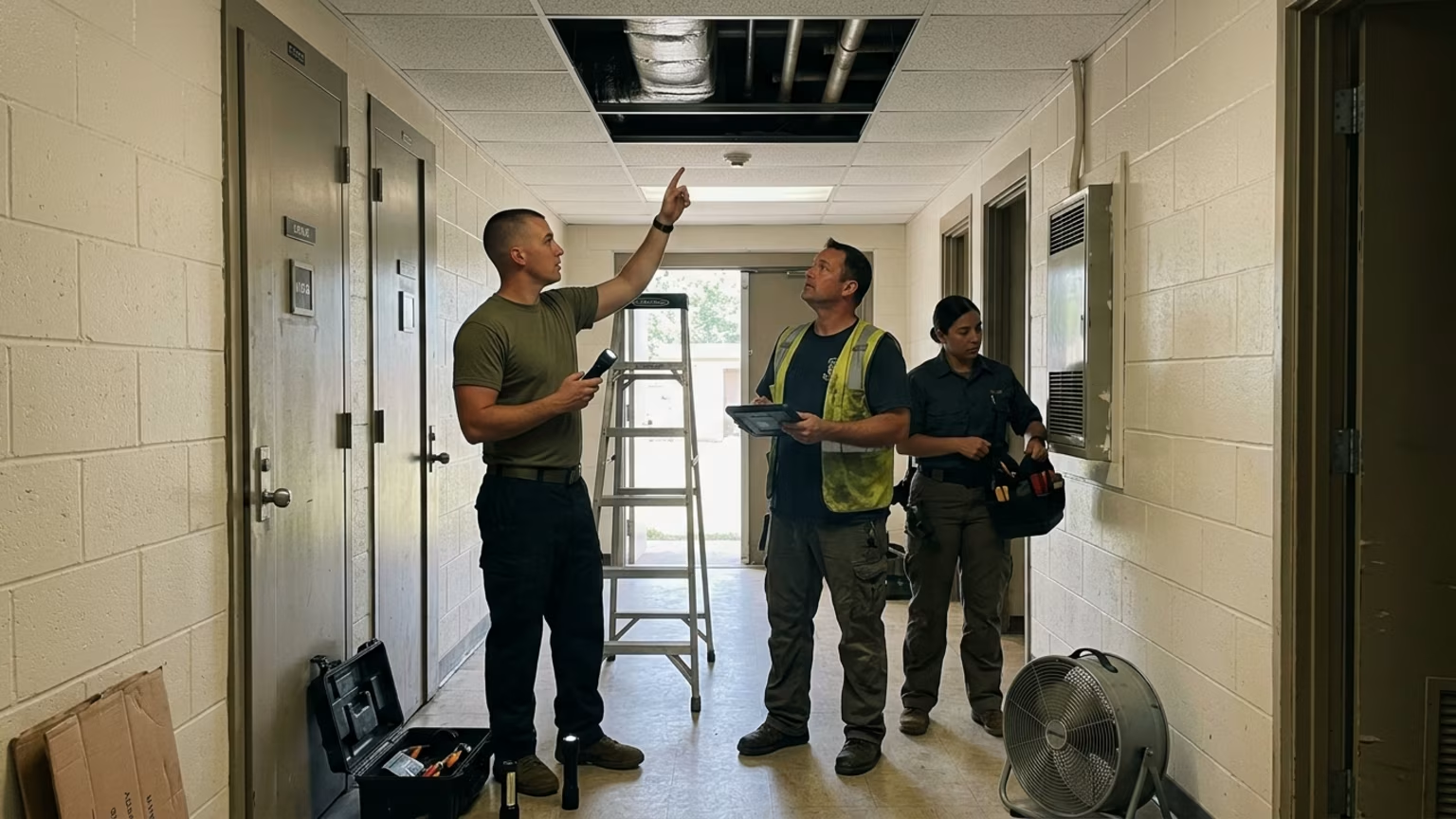

The Army’s HVAC task force targets hot barracks. Here is what its project figures mean and how to assess future housing and sleep-related claims.





On October 15, 2026, Military Times reported that the U.S. Army had announced an enterprise-level Heating, Ventilation and Air Conditioning Task Force. Acting Army Secretary Adam Telle announced the effort at the Association of the U.S. Army’s annual meeting. The Army says it will bring together leaders from facility operations, contracting and military engineering to address soldiers’ quality of life.
The announcement follows reports of soldiers living in excessively hot barracks. It puts climate control within a coordinated Army effort rather than treating it only as an installation-level concern. For personnel watching this development through a sleep and recovery lens, the central issue is how the announced resources translate into conditions inside occupied rooms.
Military Times reported that Fort Carson soldiers had slept in cars to escape hot barracks rooms. That account gives the announcement a concrete quality-of-life context. The concern is not simply whether equipment appears on a maintenance list. It is whether soldiers consider their assigned housing suitable for rest.
The reporting also cited air-conditioning problems at Army installations in Hawaii. At Fort Hood, it described a reported five-to-six-week period of hot rooms before air conditioning was restored. Those accounts show why the discussion extends beyond the experience of a single installation.
Assistant Secretary of the Army for Installations, Energy and Environment Jordan Gillis said HVAC was the leading quality-of-life complaint Army leadership heard from soldiers. His statement places climate control among the housing concerns receiving senior attention. It also helps explain why the Army has created an effort specifically focused on HVAC.
For active personnel, this is a practical housing issue before it is a performance headline. Advice about rest should account for the conditions available to the person expected to follow it. An editorial discussion that focuses only on individual routines would miss the facilities concern soldiers have raised.
That is why this development belongs alongside BattleVet’s coverage of rest and physical recovery. The relevant question is not whether a task force sounds promising. It is whether the work addresses the living conditions behind the complaints.
A separate October 14 report described climate-control and foundational defects in barracks at Fort Sam Houston. Trainees were moved from the affected housing. That example illustrates why an HVAC initiative should remain connected to the broader discussion about barracks condition.
The distinction matters for veterans following military housing policy as well as personnel living in barracks now. A focused repair effort can address a defined problem without representing a complete answer to every building defect. Assessing it fairly means keeping its specific responsibilities in view.
The announcement contains concrete resource figures and a forward-looking project pipeline. Those details deserve attention because they describe different stages of the work.
According to Military Times, the Army said it directed $15 million toward 44 high-priority HVAC projects at multiple installations before the end of fiscal year 2026.
That statement identifies the amount directed and the number of projects receiving priority. It is a useful starting point for tracking the initiative. The next reporting question is how those projects progress through the work needed at their respective installations.
The Army also said it had identified more than $100 million in projects for award in early 2027. The task force is expected to work with garrison commanders to identify projects for 2027 and 2028.
This creates a broader planning horizon than the initial group of high-priority projects. It also gives future reporting a specific subject to follow: which identified projects advance and what happens at the installations involved.
The Army said its approach would include regional contracting, utility energy service contracts and commercial best practices. Telle characterized the effort as a first-time national-level approach intended to deliver results across the country. That is his description of the initiative’s ambition.
Military Times also summarized a Government Accountability Office report released in August. According to that account, the Defense Department was not requesting enough funding to fully meet installation maintenance and major-improvement needs. The shortfall contributed to deferred barracks maintenance.
The article cited the watchdog in reporting that hundreds of thousands of service members live in barracks. That context makes the quality-of-life stakes clear without treating every building as having the same problem. The task force sits within a wider maintenance challenge rather than outside it.
The project figures describe directed resources and identified work, not confirmed contract awards or completed repairs. They do not establish how many soldiers will benefit or provide facility-level temperature readings and medical data. The reporting also does not measure changes in sleep, fatigue, health or readiness resulting from the initiative.
Gillis’s complaint ranking reflects what leadership says it hears rather than an independently quantified survey. The sources do not establish how quickly the contracting methods will produce repairs. They also do not quantify the HVAC share of deferred maintenance.
The practical shift is to separate the national initiative from the local information needed to understand an individual building. The Army has described an organizational approach and project planning. For someone living in affected housing, the most useful follow-up is the status of work connected to that location.
The announced coordination with garrison commanders provides a connection between the task force and installation-level planning. That makes local project information especially relevant when interpreting the national announcement.
Useful questions for evaluating future housing updates include:
These are questions for assessing progress, not a new complaint procedure or a promise of a particular response. They keep attention on the connection between an announced initiative and the conditions soldiers have reported.
A strong local update would make that connection understandable. Readers should be able to distinguish a project being considered from work underway at a named location. That level of clarity would make the task force easier to assess without relying on the size of a funding announcement alone.
This is a facilities announcement rather than a clinical guideline. It does not establish a new sleep-testing recommendation or a change in treatment. It also provides no new physical-training standard.
For personal sleep or fatigue concerns, qualified healthcare remains the appropriate setting for individual assessment. A housing announcement should not substitute for that assessment. Equally, an individual health discussion should not erase a reported problem with the sleeping environment.
For readers thinking about planning for sleep around military demands, the useful principle is to keep responsibilities distinct. Personal routines belong in the discussion of rest. Building maintenance belongs in the discussion of whether the living environment supports those routines.
That framing avoids placing the entire burden on the soldier. It also avoids treating infrastructure work as medical care. Housing conditions and individual health decisions deserve attention on their own terms.
Future coverage should distinguish resources from conditions and conditions from health outcomes. Each answers a different question. A project update explains what the Army is doing. A building-level update explains what residents are experiencing.
If later research examines sleep or fatigue, those findings would add another layer of evidence. Until then, the most useful assessment is a clear account of the work and its effects on the reported housing problem. That is a more practical standard than assuming an organizational change is itself a recovery result.
The Army’s HVAC task force gives barracks climate control a defined place in senior-level planning. Its announced resources and future project pipeline offer concrete points for follow-up. The next valuable update would connect those plans to the buildings and residents involved.
For active personnel and veterans, that would make the policy easier to evaluate. It would also keep the health discussion grounded in evidence rather than expectations. Future research could then address a separate question: how changes in the sleeping environment relate to recovery.
Will the Army’s HVAC effort lead to verified improvements in barracks conditions, and will future reporting show whether those changes support soldiers’ sleep and recovery?
Follow BattleVet for practical guidance on military and veteran health, strength, recovery, testosterone, sleep and healthy aging. Stay connected for new articles, research backed insights and clear information to help you stay capable for the years ahead.


The BRIDGE Act proposes a whole-family military transition pilot. Read who it would serve, what support it includes, and what remains unresolved.


Combat Stress’s workplace guidance emphasizes listening over diagnosis. Recent U.S. veteran insomnia research adds context for sleep and recovery concerns.

ErythroMer's reported storage design could matter for military care. An academic review still lists it as preclinical, with human evidence ahead.
Build better habits around strength, recovery, sleep, hormones and healthy aging with practical guidance for active military personnel and veterans.
Explore BattleVet