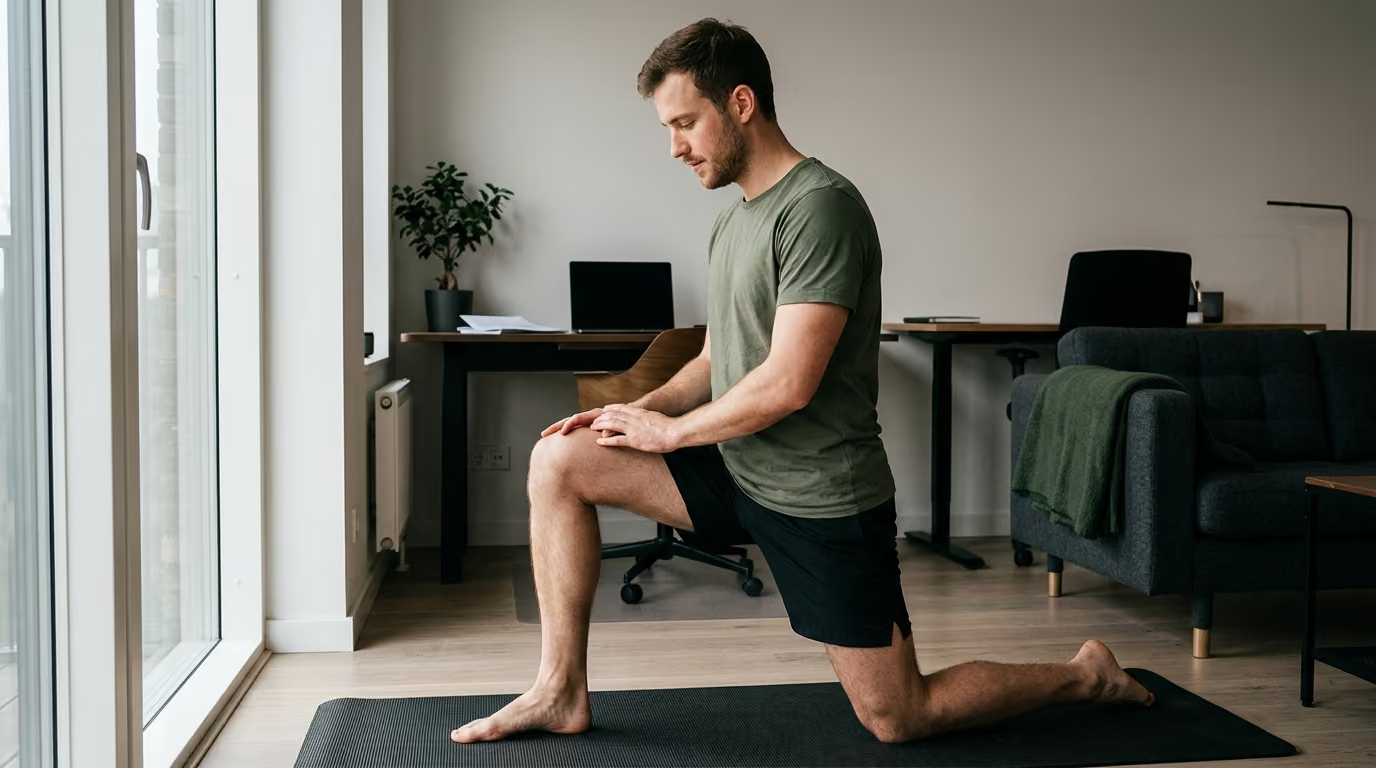

Critical illness can cause quadriceps to lose ten percent of their muscle area within one week, requiring structured pacing and rehabilitation ladders.





You stand at the bottom of the staircase holding a laundry basket, looking up at steps you used to climb without thinking. Your legs feel unsteady, your resting pulse is elevated, and basic chores leave you winded. After days or weeks of bed rest, infection, or medical interventions, your body operates under completely different physical rules. Returning to your previous physical capability requires a structured strategy rather than sheer willpower.
Restoring physical capacity after acute illness requires a symptom-guided progression that rebuilds muscle mass, restores cardiovascular function, and respects metabolic limits without triggering systemic relapses.
The path back to health after hospitalization or severe infection cannot follow a standard fitness template. Bed rest and systemic inflammation cause rapid loss of muscle mass, decreased heart stroke volume, altered autonomic regulation, and reduced mitochondrial efficiency. Rebuilding capacity requires an accurate assessment of your primary physical limitations, careful monitoring of post-exertional symptoms, adequate protein and caloric intake, and a conservative, staged increase in activity.
Recovering from hospitalization involves more than shaking off temporary fatigue. Prolonged physical inactivity combined with systemic inflammation alters multiple physiological systems simultaneously. Recognizing these distinct physiological shifts helps you select the right starting point for your recovery.
Skeletal muscle is an active metabolic tissue that deteriorates quickly when physical load is removed. This breakdown accelerates dramatically when acute infection or surgical trauma triggers a catabolic state. Research shows that during the first week of critical illness, the rectus femoris muscle can lose an average of 1.75 percent of its thickness and 2.10 percent of its cross-sectional area each day. A study of medical intensive care patients found that 53.9 percent lost at least 10 percent of their quadriceps muscle area within seven days of admission.
This rapid muscle wasting is not limited to visible muscle shrinkage. Nerve dysfunction, impaired motor unit recruitment, and cellular energy deficits frequently combine to produce muscle weakness. Systematic reviews show that intensive care unit acquired weakness affects between 43 percent and 48 percent of critically ill patients. A person may retain reasonable limb size due to fluid retention or tissue swelling while lacking the neural drive and functional muscle quality needed to stand safely from a chair.
Cardiovascular fitness declines rapidly during sustained bed rest. Within a few days of horizontal rest, circulating plasma volume drops, which lowers venous return to the heart. This decrease reduces cardiac stroke volume, meaning the heart must beat faster to deliver oxygenated blood to working muscles.
When you attempt to stand or walk, you may experience an exaggerated heart rate increase, lightheadedness, or sudden breathlessness. This autonomic instability is often compounded by prolonged inflammatory signaling and physical deconditioning. For further details on nervous system restoration, review our research on sleep, stress, and physical resilience.
Severe respiratory infections and prolonged recumbency alter normal diaphragm function and chest wall mechanics. Shallow breathing patterns can cause localized alveolar collapse in the lower lobes of the lungs, decreasing oxygen exchange efficiency. Weakness in the intercostal muscles and diaphragm makes breathing feel laborious even during light activities.
These changes explain why routine activities like taking a shower or carrying groceries can feel overwhelming. Total physical capacity is determined by a combination of muscle loss, cardiovascular detraining, respiratory restriction, persistent illness symptoms, and nutritional depletion. Each of these components must be addressed systematically.
Before adding physical exercise to your routine, you must establish an honest baseline of your current capabilities. Trying to resume training at your pre-illness level often leads to setbacks and prolonged exhaustion.
Physical limitation usually stems from one primary physiological system. Identifying your main bottleneck allows you to choose safe and effective initial activities.
Neuromuscular limitations present as difficulty rising from a chair, knee buckling, foot drop, poor balance, or weak grip strength. In these situations, low-load functional strength work should take priority over extended walking.
Cardiovascular limitations present as a rapid heart rate during minimal effort, palpitations, lightheadedness, or prolonged recovery times after short walks. In these cases, recumbent or supported exercises are usually tolerated better than sustained standing.
Respiratory limitations involve breathlessness at rest or during minimal exertion, persistent coughing, chest tightness, or oxygen desaturation. These symptoms require monitored pacing and dedicated breathing retraining before volume is increased.
Autonomic limitations cause dizziness upon standing, sudden heart rate spikes, temperature intolerance, and relief upon lying down. These patterns require gradual positional progressions and adequate hydration strategies.
Formal clinical testing such as a six-minute walk test provides objective baseline data for healthcare providers. You can also track your progress at home using simple, reliable functional benchmarks.
The 30-second sit-to-stand test measures how many times you can rise from a standard chair without using your arms. Recording this number once per week gives a clear picture of lower-body strength restoration.
Walking duration measures how many continuous minutes you can walk at a normal pace without breathlessness or sudden fatigue. Track this duration on a flat, predictable surface.
Recovery time measures how many minutes of seated rest you require before your breathing and heart rate return to resting levels. As your physical tolerance improves, this recovery window should steadily decrease.
One of the most critical decisions in post-illness rehabilitation is determining whether your fatigue is standard deconditioning or a sign of post-exertional symptom exacerbation. Using the wrong approach can significantly delay your recovery.
Standard training fatigue is predictable, localized to the muscles that performed work, and improves after sleep and rest. It responds well to progressive, gradual increases in activity.
Post-exertional symptom exacerbation, or PESE, is a systemic response to physical, cognitive, or emotional effort. It frequently features a delayed onset, appearing 24 to 72 hours after the activity occurred. Instead of ordinary muscle soreness, PESE brings overwhelming exhaustion, cognitive dysfunction, sleep disruption, joint pain, dizziness, or flu-like symptoms.
The World Health Organization emphasizes that traditional graded exercise therapy is unsuitable for individuals experiencing PESE. Pushing through these symptoms can trigger severe functional relapses. If you suspect PESE, your primary goal must be activity stabilization rather than progressive overload.
Pacing is a structured method for balancing activity and rest to keep energy expenditure within your current functional limits.
When you are clear of post-exertional symptom exacerbation, you can begin rebuilding physical capacity. Progress should follow a structured sequence from bed mobility to standing strength and aerobic conditioning. You can review detailed training models in our guide to active recovery principles.
Initial movements should focus on stimulating circulation, engaging stabilizing muscles, and promoting efficient oxygen exchange without placing heavy demands on the heart.
Perform ankle pumps by flexing and extending your feet 15 to 20 times to promote venous blood return from the lower legs. Add gentle heel slides while lying on your back, sliding one heel toward your hips and straightening it smoothly.
Practice seated diaphragmatic breathing. Sit upright with your back supported, place one hand on your belly, inhale slowly through your nose, and exhale gently through pursed lips. Avoid shallow chest breathing and keep your neck and shoulder muscles relaxed.
Transitioning to upright positions challenges your cardiovascular system to maintain blood pressure against gravity.
Begin with supported sitting for 15 to 30 minutes several times per day. Progress to seated leg extensions, straightening one knee at a time, holding the contraction for two seconds, and lowering it with control for 8 to 10 repetitions.
Incorporate seated heel and toe raises to maintain calf muscle pump action. Practice seated torso rotations and gentle shoulder blade retractions to expand your rib cage and improve spinal posture.
Standing strength is necessary for safe, independent movement throughout your home.
Perform counter-supported squats. Stand facing a sturdy kitchen counter, hold the edge lightly, bend your hips and knees to lower yourself a few inches, and press back up to a standing position. Aim for 5 to 8 controlled repetitions.
Practice supported single-leg balance next to a wall or counter, holding the position for 10 to 15 seconds per side. Complete standing calf raises while holding a stable surface, lifting your heels smoothly and lowering them under control.
Rather than attempting one long, exhausting walk each day, divide your walking into several short, manageable sessions.
Begin with two to three minutes of indoor walking three times per day. Use a pace where you can comfortably speak a full sentence without pausing for breath. If your breathing becomes labored, stop and rest immediately.
Gradually increase the duration of each walking bout by one minute every few days, provided your recovery remains predictable. Once you can walk continuously for 10 to 15 minutes indoors without symptoms, you can transition to smooth outdoor surfaces.
Once basic functional movements are comfortable, you can introduce structured resistance training and sustained aerobic exercise. For more information on building functional strength, explore our strength, fitness, and body composition resources.
Resistance exercises can include wall push-ups, light resistance band rows, and step-ups onto a low, stable platform. Perform one to two sets of 8 to 10 repetitions, focusing on movement quality rather than heavy fatigue.
For aerobic conditioning, stationary cycling, rowing machines, or brisk walking are practical options. If standing exercise causes dizziness or a rapid heart rate, use a recumbent stationary bike to build cardiovascular endurance without upright postural stress.
Physical activity provides the stimulus for recovery, but proper nutrition provides the raw materials required to rebuild lost muscle tissue and restore cellular energy reserves. To learn more about effective nutrition, read our recovery and physical restoration resources.
Muscle protein synthesis is blunted during acute illness and recovery. To overcome this resistance and repair lost lean tissue, daily protein intake must be higher than standard baseline recommendations.
Clinical guidelines from the European Society for Clinical Nutrition and Metabolism indicate that hospitalized and recovering medical patients benefit from 1.2 to 1.5 grams of protein per kilogram of body weight each day. A person weighing 70 kilograms (154 pounds) requires approximately 84 to 105 grams of protein daily.
Distributing protein intake evenly across the day improves muscle protein synthesis. Aim for 25 to 35 grams of high-quality protein per meal. Fulfilling these targets through whole foods such as eggs, fish, poultry, Greek yogurt, lentils, and tofu is ideal, though oral nutrition supplements can be helpful if your appetite remains low.
Protein cannot rebuild muscle tissue if your total energy intake is insufficient. When total calories are too low, your body burns dietary protein for immediate energy instead of using it for tissue repair.
Include energy-dense foods if you experience early fullness or reduced appetite. Smoothies, nut butters, olive oil, and fortified soups provide calories and nutrients without requiring large, unmanageable meal portions. A systematic review and meta-analysis confirmed that comprehensive nutritional rehabilitation in older adults recovering from acute illness significantly improved functional status and muscle mass.
Severe illness and medications can deplete essential micronutrients and disrupt normal digestion.
Maintain consistent fluid intake throughout the day to support blood volume and kidney function. If you experience dizziness upon standing, talk with your doctor about your electrolyte and sodium requirements.
Ensure sufficient intake of vitamin D and calcium to support bone density and muscle contraction. If prolonged antibiotic therapy or altered diet has disrupted your digestion, emphasize dietary fiber gradually and choose easily digestible, nutrient-dense foods.
Breathlessness is a common symptom following respiratory infections, cardiovascular events, and extended bed rest. Managing this sensation helps reduce anxiety and allows you to move safely.
When shortness of breath occurs, changing your body position can reduce the work of breathing and help your diaphragm function efficiently.
The forward-lean seated position is highly effective. Sit in a chair, lean your torso slightly forward from the hips, rest your forearms on your thighs or a table, and relax your neck and shoulders.
The forward-lean standing position provides relief when walking. Stand facing a high counter or windowsill, lean forward slightly with your hands or forearms resting on the surface, and let your abdomen relax as you breathe.
Coordinating your breath with movement prevents sudden breathlessness during physical effort.
Use the exhale-on-exertion technique. Inhale quietly through your nose before starting a movement, and exhale gently through pursed lips while performing the effort, such as standing up from a chair or stepping onto a curb.
Avoid holding your breath during any part of a movement. If your breathing becomes rapid and shallow, stop the activity, assume a position of ease, and focus on slow, controlled exhales until your breathing rate normalizes.
Recovery trajectories vary significantly depending on baseline health, age, and the nature of the illness. Certain situations require specific modifications to ensure safety.
Survivors of critical illness often face post-intensive care syndrome, which involves a combination of physical weakness, cognitive impairment, and psychological stress.
Physical weakness in this group is often compounded by critical illness neuropathy and contractures. Cognitive symptoms, such as memory lapses and poor concentration, can make tracking complex exercise routines difficult. Rehabilitation must use simple, written step-by-step routines and frequent, short rest breaks.
Collaboration with physical and occupational therapists is particularly valuable for this population. Therapy should focus on restoring basic independence with bathing, dressing, and household transfers before attempting structured athletic conditioning.
Infections like COVID-19 can lead to persistent autonomic dysregulation, including postural orthostatic tachycardia syndrome. Individuals with this condition experience dramatic heart rate increases and dizziness when moving from lying to standing.
For these individuals, traditional upright cardio training can provoke severe symptom flares. Exercise should begin in recumbent or semi-recumbent positions, such as floor-based resistance exercises, recumbent cycling, or rowing.
Increasing fluid and electrolyte intake under medical supervision, along with wearing graduated compression garments, can help support venous return. Upright exercise duration should only be increased once recumbent work is well tolerated. To understand how age interacts with systemic recovery, explore our healthy aging and longevity articles.
Pre-existing health conditions can complicate your rehabilitation timeline. Individuals with diabetes must monitor blood glucose levels closely, as recovery and altered activity levels can change insulin sensitivity.
Those with pre-existing joint disease or spinal conditions should choose low-impact movements to avoid joint irritation while muscles are still rebuilding. Water-based exercises, stationary cycling, and supported bodyweight exercises provide physical loading while minimizing joint stress.
Understanding the strength of clinical evidence helps you set realistic expectations for your rehabilitation timeline.
Strong, consistent evidence supports the following principles in post-illness rehabilitation:
Several areas of recovery science are actively evolving, with ongoing clinical investigations:
Use this straightforward checklist to guide your daily recovery efforts without overcomplicating your routine.
While gradual fluctuations in energy are normal during recovery, certain symptoms indicate serious underlying complications that require prompt medical evaluation.
Stop exercising and seek immediate medical evaluation if you experience any of the following symptoms:
Schedule a consultation with your primary care provider if you encounter these persistent issues:
This resource provides educational health information based on current scientific literature. It is not a substitute for individual medical evaluation, diagnosis, or treatment. Always consult a qualified healthcare professional before altering your rehabilitation plan or returning to strenuous physical activity.
Recovery timelines depend on the severity of your illness, your prior fitness level, your age, and the duration of bed rest. A brief hospital stay may require four to eight weeks of consistent rehabilitation, whereas recovery from critical illness or mechanical ventilation often takes six to twelve months. Steady, sustainable progress is more important than rushing back to your previous workload.
Leg shakiness is caused by a combination of rapid muscle loss, reduced motor unit recruitment, and decreased blood pressure regulation when standing upright. When you spend days in bed, your nervous system temporarily loses its efficiency in coordinating muscle firing patterns. As you practice supported, low-load standing exercises, your neuromuscular coordination will steadily return.
No. Arbitrary step goals are inappropriate during early recovery from serious illness or hospitalization. Focusing on high step counts can easily cause overexertion and delayed fatigue. Instead, focus on movement quality, short and frequent walking bouts, functional lower-body strength, and your symptom response over the following 24 to 72 hours.
Protein shakes and oral nutritional supplements are useful tools if your appetite is low, but they should not entirely replace balanced meals. Whole foods provide essential micronutrients, healthy fats, complex carbohydrates, and dietary fiber that support gut health and metabolic recovery. Use supplements to bridge nutritional gaps rather than as your sole source of fuel.
When your current daily routine feels comfortable and you can complete your normal daily tasks without delayed fatigue for two full weeks, revisit this resource to select your next phase of strength and aerobic progression. Restoring physical capacity is a steady, deliberate process built on daily consistency, patience, and careful attention to your body's signals.
Follow BattleVet for practical guidance on military and veteran health, strength, recovery, testosterone, sleep and healthy aging. Stay connected for new articles, research backed insights and clear information to help you stay capable for the years ahead.


Build better habits around strength, recovery, sleep, hormones and healthy aging with practical guidance for active military personnel and veterans.
Explore BattleVet