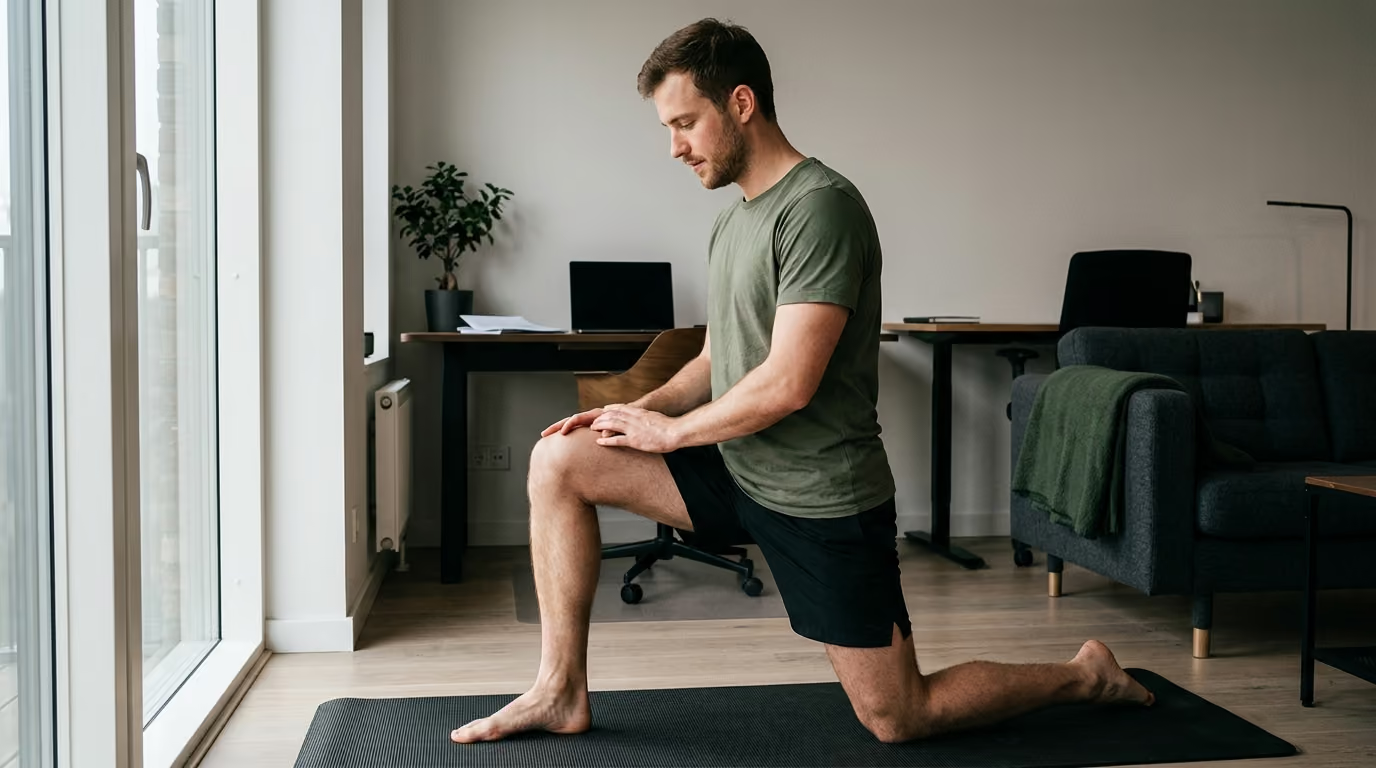

Five core functioning domains provide a proven roadmap for moving from early stabilization into demanding real-world occupational and daily tasks.





You wake up at two in the morning because shifting your shoulder sends a sharp warning through your collarbone. You stare at the ceiling, wondering if you pushed your physical therapy exercises too hard yesterday. Your clinic notes say your surgical repair is stable, yet stepping off a curb or carrying groceries still makes your heart rate spike. If you have searched for how to safely rebuild your body after severe trauma, this guide provides a structured, evidence-backed roadmap for whole-person recovery.
Physical restoration after traumatic injury requires rebuilding functional capacity, psychological confidence, and daily participation while systematically managing pain, sleep disruption, and nervous system fatigue.
True physical restoration is far more than waiting for tissue to knit together on an X-ray. It is an active, criteria-driven process that reconnects biological healing with real-world function. When an injury disrupts your life, whether from a severe motor vehicle crash, a training accident, or combat trauma, recovery must address the entire person. This comprehensive framework bridges the gap between acute medical treatment and a sustainable return to work, family life, and demanding physical activity.
Modern rehabilitation science views recovery through systems rather than isolated body parts. When a major joint, bone, or soft-tissue structure is damaged, the brain, immune system, sleep architecture, and psychological outlook all react simultaneously. Addressing only the injured tissue leaves the rest of the person unprepared for the physical and mental demands of daily life.
The biopsychosocial model is the foundation of modern trauma recovery. It recognizes that biological damage interacts directly with psychological state and social circumstances. Two individuals with identical femoral fractures will often experience completely different recovery timelines based on their sleep quality, stress levels, social support, and financial security.
Biological factors include structural tissue healing, surgical stability, nerve regeneration, local inflammation, and systemic physical deconditioning. Psychological factors encompass movement-related fear, pain catastrophizing, anxiety, depression, post-traumatic stress, and personal self-efficacy. Social factors include workplace accommodations, household responsibilities, access to quality medical providers, and family support.
The American Academy of Orthopaedic Surgeons emphasizes that psychological factors strongly influence long-term functional outcomes after orthopaedic trauma. Evaluating conditions like post-traumatic stress disorder, anxiety, depression, and low self-efficacy is vital for setting realistic recovery benchmarks. Addressing these elements is not a sign that symptoms are imaginary. It simply acknowledges that systemic stress changes how the nervous system processes pain and load.
The World Health Organization uses the International Classification of Functioning, Disability and Health to evaluate recovery. This model prevents clinicians and patients from relying on narrow definitions of success, such as achieving a specific degree of joint flexion on an exam table.
The framework categorizes recovery into five distinct domains:
A person may regain full range of motion in a clinic setting. However, if they cannot safely carry their toddler down the stairs or complete a work shift, their rehabilitation is incomplete. True restoration targets participation and independent activity rather than isolated joint mechanics alone.
Rehabilitation requires a clear distinction between physical capacity and real-world performance. Capacity is what you can produce under controlled, predictable conditions inside a physical therapy clinic. Performance is what you actually do across an unpredictable, tiring week of work and domestic duties.
Exposure represents the cumulative physical, cognitive, and emotional volume you encounter outside the clinic. Tolerance reflects how your body and mind respond during and after that exposure. A successful recovery program systematically bridges the gap between clinic capacity and sustainable daily performance.
Rehabilitation must be organized around clear, measurable functional milestones rather than arbitrary calendar dates. A structured recovery plan uses a progressive hierarchy to direct physical effort and manage expectations over time.
Goals naturally evolve as tissues heal and capacity expands. You might begin with the goal of standing for ten minutes without assistance. Months later, that target shifts toward carrying fifty pounds across uneven terrain or returning to a structured training and performance plan. Regularly revisiting these targets keeps rehabilitation aligned with your values.
Recovering from traumatic injury is a non-linear process that progresses through distinct phases. These phases are defined by tissue healing criteria, functional milestones, and symptom stability rather than rigid calendar weeks.
The initial phase begins immediately after injury or surgery. The primary clinical objectives are protecting healing tissues, managing acute swelling, preventing secondary complications like blood clots or severe muscle atrophy, and stabilizing basic physiological functions.
Education during this stage is vital for reducing anxiety. You need a clear understanding of your surgical precautions, non-weight-bearing restrictions, and expected symptom fluctuations. You also need to know which red-flag signs require immediate emergency evaluation.
Rehabilitation in Stage 1 does not mean complete bed rest. It incorporates gentle range of motion within protected limits, diaphragmatic breathing, circulation drills, and active maintenance of uninjured limbs. Preserving neuromuscular drive in unaffected body segments helps limit whole-body deconditioning and supports overall systemic recovery.
Guidelines from the National Institute for Health and Care Excellence recommend starting tailored exercise as early as clinically safe after traumatic injury. This applies regardless of age or injury complexity. Once tissue stability allows, the focus shifts toward restoring fundamental movement patterns, joint mobility, local muscular endurance, and basic cardiovascular fitness.
During this stage, your program should incorporate:
The exercise dose must be calibrated to your current recovery bandwidth. Sleep disruption, pain levels, and nervous system fatigue must all be accounted for when assigning training volume.
Stage 3 moves beyond isolated movements to compound, real-world tasks. At this point, your bones and soft tissues can handle progressive mechanical loading. The primary objective is building resilience under sustained, multi-planar physical demands.
Exercises in this stage replicate the movements of daily life and work. They include loaded carries, multi-directional lunges, sled pushing, stair climbing under load, and controlled lifting from the floor. Progression should be governed by your body's response to loading rather than calendar benchmarks.
Consensus guidelines for complex musculoskeletal injuries emphasize that advancing load should depend on three factors: symptom stability during exercise, symptom resolution within 24 hours, and objective strength gains. If an exercise creates lingering pain or joint swelling the following morning, the load or volume must be adjusted before advancing further.
The final phase prepares you for an unrestricted return to your career, athletic pursuits, or physically demanding hobbies. Simply completing standard physical therapy exercises does not mean you are ready for a full work shift or competitive sports.
Stage 4 introduces unpredictable environments, rapid changes of direction, fatigue management, and dual-task training. Dual-task training combines physical tasks with cognitive challenges, such as making rapid decisions while carrying a load. This stage ensures that your physical capacity can be deployed safely under conditions of real-world fatigue and stress.
Pain is one of the most significant barriers to physical restoration. Navigating recovery requires understanding what pain represents, how to interpret it accurately, and how to manage it without falling into extremes of avoidance or overexertion.
Not all pain indicates physical damage. Understanding the different categories of pain allows you to make calm, informed decisions about your exercise progression.
Protective pain occurs during the acute phase of injury. It serves as a direct biological warning signal to prevent you from overloading healing fractures, surgical sutures, or torn ligaments. This pain is sharp, immediate, and closely tied to specific anatomical stresses.
Load-related pain occurs when the volume, intensity, or duration of an activity exceeds the current tolerance of your muscles, tendons, or joints. It often feels like a deep ache or stiffness that develops during or hours after activity. Load-related pain indicates that you need to adjust your training volume, not that you have caused new structural damage.
Persistent pain continues beyond the typical timeframe for tissue healing. In these cases, the central nervous system becomes sensitized, amplifying normal sensory signals and interpreting routine movement as threatening. Persistent pain requires graded movement exposure and nervous system down-regulation rather than complete rest.
Neuropathic pain presents with burning, shooting, or electric sensations, often accompanied by numbness or tingling along a nerve pathway. This pattern requires targeted clinical management and should always be evaluated by a healthcare professional.
Relying on a single tool for pain relief is rarely effective after major trauma. Clinical guidelines recommend a multimodal strategy that combines pharmacological, physical, and psychological interventions.
When prescription pain medications are necessary, clinical guidelines advise using the lowest effective dose of immediate-release medications for the shortest necessary duration. Transitioning toward non-opioid medications, such as acetaminophen or anti-inflammatory drugs under medical supervision, supports long-term recovery.
Non-pharmacological tools play a major role in regulating symptoms. These include local ice or heat applications, structured rest periods, transcutaneous electrical nerve stimulation, targeted mobility work, and diaphragmatic breathing routines. Calming the autonomic nervous system through slow, nasal breathing can reduce baseline pain sensitivity and muscle guarding.
Navigating pain requires avoiding two common psychological traps. The first trap is pain catastrophizing, where every sensation is interpreted as a sign of catastrophic reinjury. This mindset leads to extreme inactivity, muscle loss, joint stiffness, and heightened fear.
The second trap is the "no pain, no gain" mentality. Ignoring severe, sharp, or escalating pain can disrupt healing repairs, worsen inflammation, and force the nervous system into a protective spasm. The most effective approach treats pain as neutral biological feedback, allowing you to modify your movement volume with precision.
Traumatic injuries occur suddenly and violently. It is entirely natural for the brain to develop a strong protective fear of the movements, positions, or environments associated with the event.
Kinesiophobia is defined as an irrational, debilitating fear of physical movement resulting from a feeling of vulnerability to painful injury or reinjury. While caution is appropriate during acute healing, persistent fear creates a destructive cycle.
When you avoid moving a limb or loading a joint, surrounding muscles atrophy, connective tissues lose elasticity, and motor control degrades. As a result, when you eventually attempt a basic movement, the deconditioned tissue generates more pain. This confirms the brain's false belief that the movement is dangerous, locking you into an avoidance loop.
Systematic reviews demonstrate that high levels of kinesiophobia are directly linked to poorer functional recovery, greater self-reported disability, reduced muscle strength, and elevated symptoms of anxiety. Addressing movement fear is a critical component of physical rehabilitation.
Passive therapies like massage, ultrasound, or manual joint adjustments do not resolve movement fear. The most effective method for eliminating fear is graded exposure, which systematically proves to your nervous system that movement is safe.
Graded exposure follows a structured progression:
A critical task during rehabilitation is separating what you are physically capable of doing from what you feel afraid to do. Two people with identical tissue healing can demonstrate completely different functional abilities based purely on fear.
Tracking objective physical markers, such as repetitions completed, weight lifted, or distance walked, helps decouple emotion from capacity. Reviewing objective progress logs provides clear evidence that your tissues are growing stronger and more capable.
Physical tissues repair themselves during sleep. Unfortunately, traumatic injury creates an environment that severely disrupts normal sleep architecture, impairing muscle protein synthesis, immune function, and pain tolerance.
Research indicates that sleep disruption affects a significant proportion of trauma survivors. Pain at night makes finding a comfortable position difficult. Medications can alter sleep stages, while heightened nervous system arousal, stress, and nightmares can cause frequent nighttime awakenings.
Sleep deprivation alters pain processing in the central nervous system. A single night of fragmented sleep lowers your pain threshold, amplifies perceived fatigue, and impairs executive function. Recognizing this connection prevents you from assuming that morning stiffness or increased pain reflects structural tissue damage.
Your ability to adapt to physical training depends on your available recovery bandwidth. When you are sleeping well, managing stress, and eating adequately, your capacity to absorb mechanical loading is high. When sleep is compromised, that bandwidth shrinks dramatically.
Rather than forcing your way through an intense workout after a night of severe sleep disruption, adjust your daily volume. Reduce training intensity by twenty to thirty percent, focus on mobility and technical precision, or substitute a heavy lifting session with light aerobic walking. Modulating your volume protects healing tissues while maintaining momentum.
Improving sleep during physical restoration requires proactive, structured habits. Creating an environment that supports restorative rest directly accelerates physical healing.
Practical steps for sleep optimization include:
For additional recovery frameworks, explore our sleep and recovery management resources to support nervous system restoration.
Rehabilitation after major trauma rarely fails because of a single poorly chosen exercise. It most often breaks down during transitions between care settings, such as moving from inpatient care to home, or transitioning from outpatient physical therapy to independent gym training.
Trauma recovery frequently involves multiple clinical specialists, including orthopaedic surgeons, physiatrists, physical therapists, occupational therapists, primary care doctors, and mental health professionals. Gaps in communication between these providers can lead to contradictory instructions and patient confusion.
NICE guidelines emphasize that a successful rehabilitation plan requires a designated key worker or coordinator, clear multidisciplinary goal setting, and documented transition plans. Maintaining your own complete folder of surgical notes, imaging reports, physical therapy progress notes, and current restrictions ensures continuity across different healthcare networks. When managing your rehabilitation journey, learning how to navigate veteran healthcare systems can significantly improve the continuity of your care.
Returning to work is a therapeutic intervention in itself, not simply a final destination. Prolonged absence from work is associated with increased depression, social isolation, and long-term disability. However, returning too quickly without accommodations can cause severe physical setbacks.
A structured return-to-work protocol uses progressive stages:
Research examining chronic pain and occupational rehabilitation shows that using a return-to-work coordinator increases the likelihood of a successful return to work by more than three times.
Returning to demanding physical training, tactical duties, or competitive sports requires meeting objective, criteria-based performance standards. Time elapsed since surgery or injury is not an adequate measure of readiness.
The international Bern consensus on return to sport recommends a criteria-based progression model:
Before resuming high-impact activities like running, jumping, or heavy compound lifting, you should meet objective benchmarks. These include demonstrating at least 90% limb symmetry in strength testing, pain-free completion of sport-specific movement batteries, normal movement mechanics under fatigue, and self-reported psychological readiness. Rushing this continuum without meeting objective criteria significantly increases the risk of secondary injuries.
To support your long-term physical progression, review our progressive strength and conditioning principles for structured loading strategies.
Self-monitoring allows you to track physical progression objectively. It provides actionable feedback, helping you avoid emotional decision-making and symptom flare-ups.
A three-zone traffic light system provides a clear framework for deciding when to advance, hold, or modify your daily physical loading.
Recovery is never a perfectly straight line. Daily symptom fluctuations are normal and expected. Focusing on day-to-day changes can lead to unnecessary frustration and anxiety.
Maintain a simple weekly log that tracks four to five core metrics: average weekly pain, total exercise volume completed, average hours of sleep per night, and a subjective confidence score from one to ten. Evaluating progress over two- to four-week blocks provides an accurate picture of your physical trajectory and keeps minor daily fluctuations in perspective.
Evaluating research on trauma recovery requires separating established clinical consensus from emerging studies and preliminary data.
Extensive clinical trials and major health guidelines support several core recovery principles:
Large-scale longitudinal studies provide valuable context regarding realistic recovery timelines following severe physical trauma:
These data illustrate that "returning to work" and "achieving complete physical restoration" are distinct milestones. Long-term success often involves adapting physical roles, learning new movement strategies, and adjusting expectations rather than expecting an immediate return to an exact pre-injury baseline.
While the broad principles of trauma rehabilitation are well-supported, several areas remain under active investigation:
Applying this recovery framework requires translating clinical principles into practical, daily actions. Use the following structured routines and case models to guide your rehabilitation.
Building a sustainable recovery routine involves balancing physical loading, joint mobility, cardiovascular conditioning, and dedicated systemic rest across the week.
Prioritize consistency over excessive intensity. If life stress, poor sleep, or occupational demands increase during a specific week, temporarily lower the resistance or volume of your Monday, Wednesday, and Friday sessions while keeping your active recovery and mobility work constant. You can also explore our stress management and resilience resources for additional tools to balance your daily physical stress.
Examining how other individuals navigate complex recovery challenges can provide valuable practical guidance for your own journey.
A 34-year-old individual recovering from complex ankle reconstruction completes their physical therapy exercises every evening. However, post-exercise throbbing disrupts their sleep, causing frequent nighttime awakenings. By morning, they experience severe joint stiffness, high fatigue, and elevated pain sensitivity, making their next workout painful and frustrating.
Intervention Strategy:
A 42-year-old service member who sustained a severe lumbar spine injury has achieved solid core strength in clinic testing. However, they completely avoid bending over to pick up objects at home, fearing a recurrence of acute disc herniation.
Intervention Strategy:
Safe pain typically presents as a mild, tolerable ache (rated 0 to 3 out of 10) that remains stable during exercise and resolves completely within 24 hours. It does not cause you to limp or alter your movement mechanics. Dangerous pain is sharp, rapidly escalating (rated 6 out of 10 or higher), accompanied by joint swelling, clicking with pain, or sensations of the joint giving way. If pain persists past 24 hours, disrupts sleep, or is accompanied by numbness, tingling, or fever, pause the activity and consult your physician.
Physical restoration is a multi-month, often multi-year process that depends on injury severity, tissue types involved, surgical interventions, age, and baseline health. While initial bone and soft-tissue healing typically occurs within 6 to 12 weeks, rebuilding neuromuscular strength, bone density, tendon resilience, and psychological confidence often takes 12 to 24 months. Focusing on meeting progressive functional milestones rather than watching the calendar provides the most reliable path to recovery.
Plateaus are a normal part of the rehabilitation process. When progress stalls, evaluate your recovery foundations: audit your average nightly sleep duration, protein and caloric intake, overall daily stress levels, and exercise consistency. If these foundations are solid, consult your physical therapist to modify your physical stimulus. Adjusting exercise selection, altering rep ranges, changing movement speeds, or introducing novel motor challenges can break through functional plateaus.
Yes. Modern orthopaedic hardware, such as titanium plates, intramedullary rods, and surgical screws, is engineered to withstand substantial mechanical loads once surrounding bone has fully united. Having retained hardware does not prevent you from engaging in heavy resistance training, high-impact running, or demanding physical occupations, provided your physician has confirmed solid union and your movement mechanics are properly restored. Hardware only requires removal if it creates localized soft-tissue irritation or restricts joint range of motion.
This article is provided for educational and informational purposes only. It is not a substitute for professional medical advice, diagnosis, or treatment. Traumatic injuries, surgical procedures, and musculoskeletal conditions require individualized medical evaluation. Always consult your orthopaedic surgeon, physiatrist, physical therapist, or qualified healthcare provider before initiating, modifying, or advancing any exercise, rehabilitation protocol, or medication regimen. Do not disregard professional medical advice or delay seeking care because of information contained in this guide.
To put this whole-person recovery framework into practice this week, follow this checklist:
Follow BattleVet for practical guidance on military and veteran health, strength, recovery, testosterone, sleep and healthy aging. Stay connected for new articles, research backed insights and clear information to help you stay capable for the years ahead.


Build better habits around strength, recovery, sleep, hormones and healthy aging with practical guidance for active military personnel and veterans.
Explore BattleVet