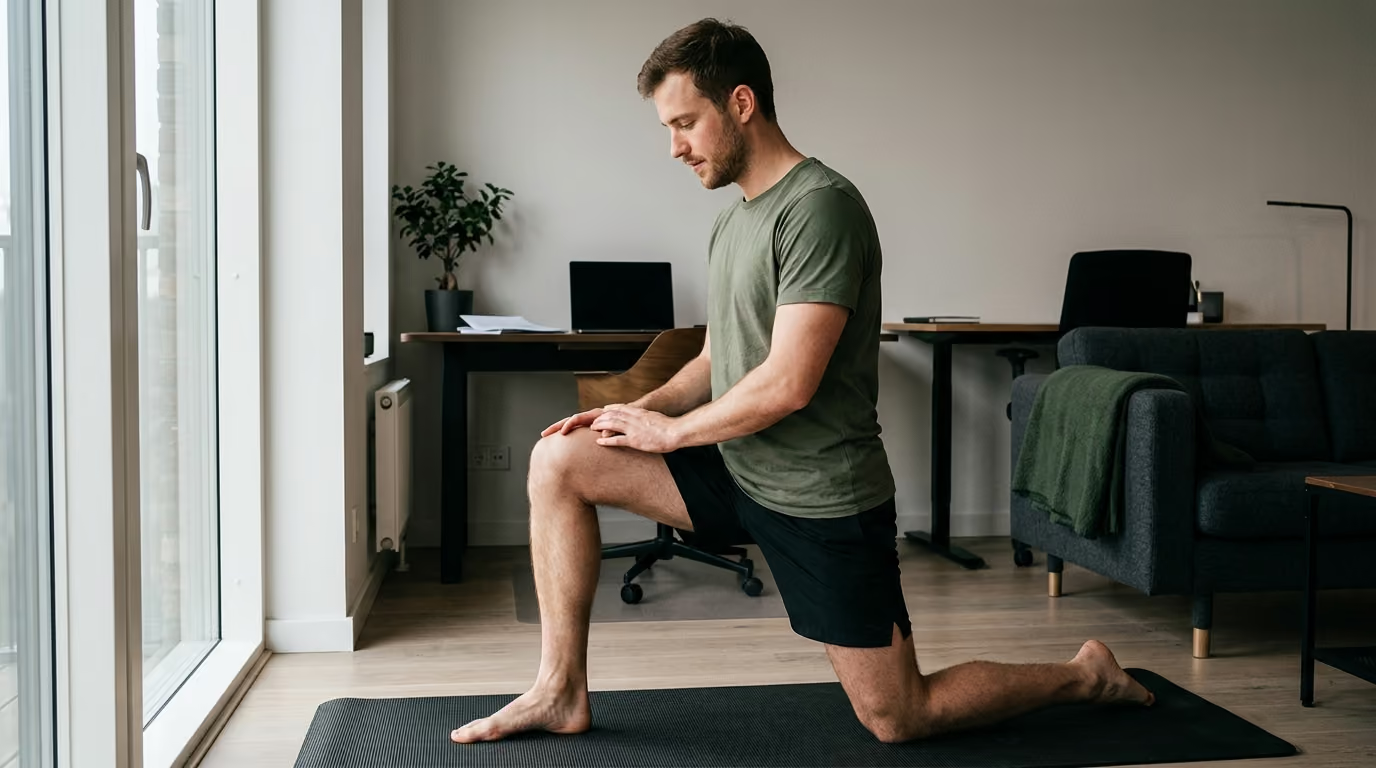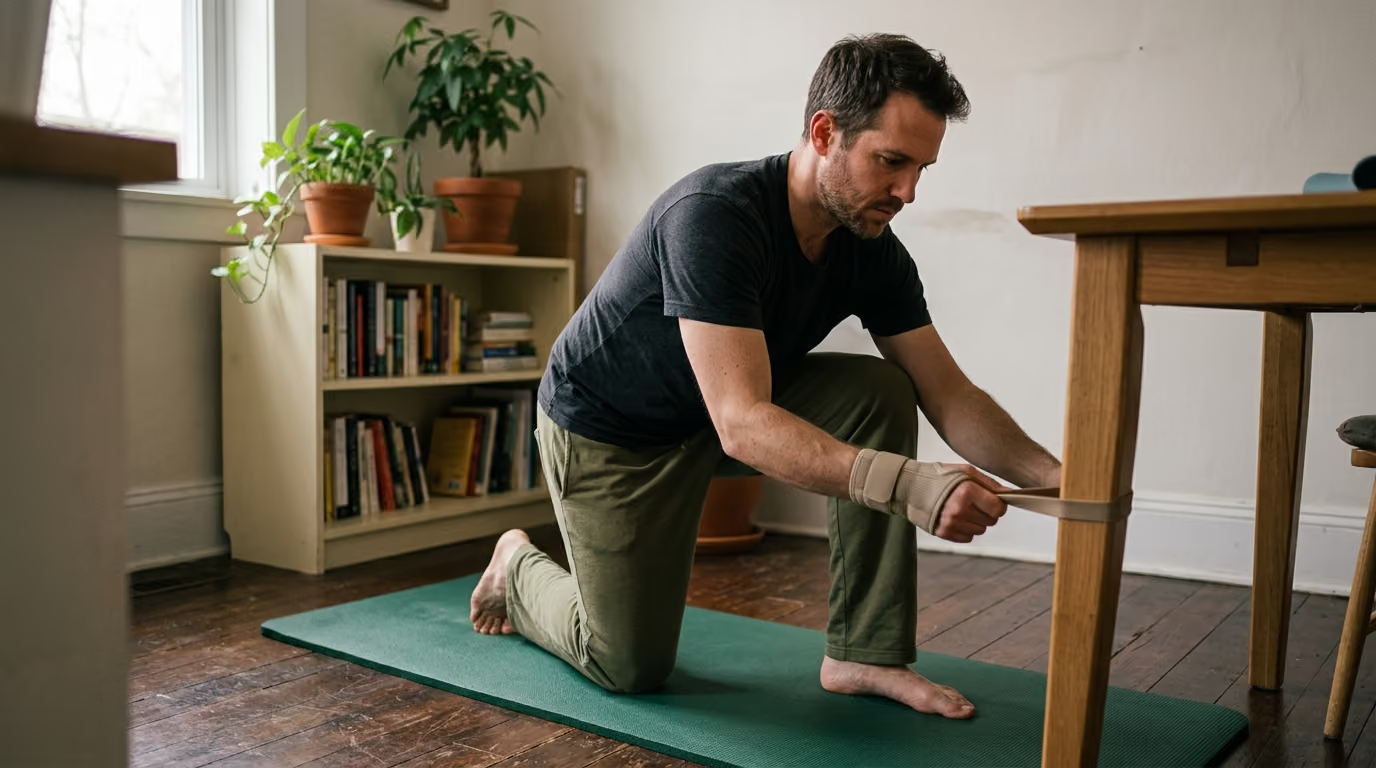

Daily physical function returns as you apply science-backed movement strategies that calm overactive pain signals and steadily rebuild long-term strength and endurance.





You wake up after six hours of restless sleep with the same deep ache in your lower back or shoulder. The initial injury occurred eight months ago, physical therapy ended months ago, and your latest scan came back completely clear. You wonder why your body still hurts if the tissue has supposedly healed, and you search online for answers. This guide provides a clear, evidence-informed framework to help you understand persistent symptoms and rebuild your physical capacity safely.
Restoring physical function after pain persists past normal healing times requires shifting your focus from avoiding all discomfort to systematically rebuilding capacity through graded exercise, consistent pacing, sleep regulation, and stress management.
Persistent pain is rarely a sign of ongoing structural damage. Instead, it typically reflects a sensitized nervous system that continues to produce protective signals long after initial tissue healing has finished. By using a structured rehabilitation approach, you can expand what your body can tolerate without triggering severe flare-ups.
The International Association for the Study of Pain defines pain as an unpleasant sensory and emotional experience associated with, or resembling that associated with, actual or potential tissue damage. This definition makes two critical realities clear. First, pain always involves both sensory inputs and emotional processing. Second, pain can exist even when there is no active, ongoing tissue damage.
Most soft tissue injuries, including muscle strains, ligament sprains, and minor disc herniations, heal within six to twelve weeks. When pain lasts longer than three months, clinicians classify it as chronic or persistent pain. This three-month mark is an agreed clinical threshold rather than an exact biological switch. The biological reality is that tissue repair and nervous system sensitivity follow different timelines.
The National Institute for Health and Care Excellence distinguishes between chronic primary pain and chronic secondary pain. Chronic primary pain occurs when pain is the principal problem, showing no clear underlying structural disease or showing symptoms disproportionate to tissue changes. Chronic secondary pain stems from an identified underlying condition, such as inflammatory arthritis or persistent nerve compression. These two classifications can overlap. Having an identifiable joint change does not mean your central nervous system is not also sensitized.
Pain serves as an alarm system designed to protect you from perceived threat. In acute injury, the alarm sounds because tissues are damaged. In persistent pain, the alarm system becomes overly sensitive, ringing loudly during routine movements that carry no real danger. The pain you feel is real, physical, and valid. However, the volume of the alarm no longer matches the condition of the tissues.
Rehabilitation science has evolved away from strict rest protocols toward active restoration. Strong evidence supports physical activity as a core intervention for persistent musculoskeletal conditions.
A comprehensive Cochrane systematic review examining exercise therapy for chronic low back pain demonstrated that structured exercise reduces pain and improves functional capacity compared to usual care or passive therapies. On average, participants in structured exercise programs experienced a 15-point reduction in pain and a 7-point improvement in disability on standard 100-point scales. The researchers evaluated resistance training, aerobic conditioning, motor control exercises, and general movement. The evidence showed that no single exercise type was universally superior to all others. The most effective program is one that matches your current tolerance, preferences, and long-term movement goals.
While exercise therapy is supported by high-certainty evidence, other modalities show more variable results. Pain neuroscience education helps patients understand central sensitization, reduce movement-related fear, and improve rehabilitation engagement. However, systematic reviews show that education alone produces modest or inconsistent outcomes when delivered without physical training. Education functions best as a tool to support movement rather than as a standalone cure.
Emerging research into central sensitization also highlights the role of the brain's danger evaluation network. When you perform a movement that previously caused injury, your nervous system references past memories, current stress levels, and contextual cues. If your nervous system perceives threat, it generates pain to force you to stop. Physical rehabilitation works by providing repeatable, non-threatening movement experiences that recalibrate this protective threshold over time. For more on developing sustainable physical capacity, explore our resources on strength and fitness progressions.
Before beginning any physical restoration program, you must establish an accurate baseline of your physical capacity. Many people make the mistake of measuring their baseline on their best days or using their maximum single-effort performance.
A true baseline reflects the amount of activity you can complete consistently without triggering a severe, multi-day symptom flare. If you can walk for 45 minutes on Saturday but spend Sunday and Monday resting in bed, your baseline is not 45 minutes. A sustainable starting point for that individual might be 15 to 20 minutes of daily walking.
To establish your baseline, track your daily activities over five to seven consecutive days. Record the specific movements you perform, the duration or load, your symptom levels during the task, and your symptoms 24 hours later. You can use these two clinical questions to guide your evaluation:
Tracking functional milestones is far more productive than tracking pain scores alone. Measure your walking distance, continuous sitting time, lifting capacity, and sleep duration. As your nervous system desensitizes and your tissues adapt, your capacity to perform these tasks will expand. Often, your functional capacity improves weeks before your resting pain levels begin to decline.
One of the most common obstacles in persistent pain recovery is the boom-and-bust cycle. On days when symptoms are low, people frequently attempt to complete every delayed chore, workout, or work project. This sudden spike in physical load overwhelms their sensitized nervous system, leading to an intense flare-up and days of complete rest.
Pacing is a structured method of distributing physical activity and rest to prevent these extreme fluctuations. Pacing does not mean avoiding physical effort or stopping the moment you feel mild discomfort. Instead, it provides a stable platform from which you can gradually increase your total workload.
Effective pacing breaks demanding tasks into scheduled segments separated by brief, planned pauses. Instead of working in the yard for four continuous hours, you work for 30 minutes, rest for five minutes, and repeat the cycle. Changing body positions regularly also prevents static postural fatigue from irritating sensitive tissues.
You should stop or modify an activity based on predetermined quotas rather than waiting for severe pain to force a halt. This approach is known as time-contingent activity. In a time-contingent model, you walk for a planned 15 minutes regardless of whether you feel great or slightly stiff. This prevents you from overdoing it on good days and underdoing it on challenging days.
Learning to interpret bodily sensations accurately is a vital skill during recovery. You must learn to distinguish between three categories of physical feedback:
If you encounter expected discomfort, continue your plan without panic. If you encounter an excessive load response, reduce the volume or intensity of that specific exercise during your next session rather than abandoning training entirely.
Graded exposure and progressive resistance training are the primary tools used to rebuild physical capability. Graded activity increases overall physical capacity step by step. Graded exposure focuses specifically on reintroducing movements that you have come to fear or avoid.
When an individual avoids bending forward because their back previously gave out, their nervous system treats spinal flexion as dangerous. Graded exposure gradually introduces the movement in low-threat environments. A person might start by rounding their back while sitting supported in a chair, progress to standing forward folds toward a raised bench, and finally advance to lifting objects from the floor.
Progressive resistance training builds muscular strength, improves tendon resilience, and increases bone mineral density. It also builds neurological tolerance to load. You can adjust several variables to ensure your strength training remains productive and tolerable:
Begin with fundamental compound movement patterns: a squat variation, a hip hinge, an upper-body push, and an upper-body pull. Use moderate resistance that allows you to complete each set with solid technique and two to three repetitions left in reserve. To see how these principles apply to athletic longevity, read our detailed overview of long-term training frameworks.
Physical recovery cannot occur in a state of chronic nervous system hyperarousal. Sleep disturbance and psychological stress amplify pain processing in the brain and spinal cord, making physical restoration much harder to achieve.
A 2024 systematic review and meta-analysis published in the journal Sleep Medicine Reviews analyzed data from 16 prospective studies encompassing 116,746 participants. The researchers found that baseline sleep problems increased the risk of developing chronic musculoskeletal pain by 64 percent in the short term (odds ratio 1.64) and 39 percent in the long term (odds ratio 1.39). The relationship is bidirectional. Persistent musculoskeletal pain also increased the risk of developing subsequent sleep problems by 56 percent (odds ratio 1.56).
When you get poor sleep, your brain downregulates its natural descending pain-inhibition pathways. This means the central nervous system filters out fewer pain signals, making your joints and muscles feel significantly more sensitive the following day.
To support tissue recovery and lower central sensitivity, establish consistent sleep habits:
For additional strategies on managing nervous system recovery, review our dedicated guide to sleep and stress resilience.
Psychological stress activates the sympathetic nervous system and triggers systemic low-grade inflammation. This physiological state amplifies sensory signals from the body. Guidelines from the American College of Physicians strongly recommend non-pharmacological therapies, including cognitive behavioral therapy (CBT), acceptance and commitment therapy (ACT), and mindfulness-based stress reduction for persistent musculoskeletal symptoms.
These psychological approaches do not imply that your pain is imaginary. Instead, they teach practical tools to reduce catastrophic thinking, eliminate movement hypervigilance, and improve emotional regulation. Learning to view pain as a sensitized alarm rather than structural failure reduces the threat value of physical activity, allowing your body to move with less tension.
A flare-up is a temporary surge in symptom intensity. It is a normal, predictable part of the rehabilitation process, not a sign that your condition has worsened or that your rehabilitation plan has failed. Having a pre-planned, written flare response protocol prevents panic and keeps you from falling back into prolonged bed rest.
Follow these steps when you experience a temporary increase in symptoms:
While most symptom fluctuations are benign flares, certain signs require prompt medical evaluation. Guidelines from NICE and the American College of Physicians emphasize screening for serious underlying spinal or systemic pathologies.
Seek immediate clinical evaluation if you experience:
In the absence of these red flag symptoms, routine spinal imaging (X-rays and MRIs) is often unhelpful. Studies show that disc bulges, degenerative changes, and facet joint arthrosis are extremely common in pain-free individuals. Imaging results can increase anxiety without altering the appropriate course of active conservative rehabilitation.
Navigating healthcare systems while managing persistent symptoms requires active communication and a clear understanding of each provider's role. Clinical guidelines from the Centers for Disease Control and Prevention (CDC) emphasize prioritizing non-pharmacological therapies and non-opioid medications for chronic musculoskeletal conditions.
Rehabilitation works best when you, your primary care clinician, physical therapists, and other specialists share the same treatment objectives. The primary focus of medical care should be to support functional restoration and self-management rather than relying solely on passive, short-term relief.
When discussing treatments, procedures, or prescriptions with your healthcare team, ask specific questions:
Medications, injections, or manual therapy can provide a temporary window of symptom relief. Use that window to engage in active exercise, rebuild movement patterns, and improve sleep habits rather than remaining inactive. To learn more about navigating healthcare systems and optimizing recovery, explore our resources on veteran lifestyle and healthcare navigation.
The following real-world case patterns illustrate how to apply this framework across different functional profiles.
Background: A 42-year-old individual sits at a desk for 50 hours a week with minimal activity. On Saturdays, they engage in intense four-hour home improvement projects or demanding physical workouts. By Sunday evening, their lower back pain flares severely, forcing them to spend Monday and Tuesday resting.
Framework Solution: Break the boom-and-bust cycle. Distribute physical workload evenly across the week by scheduling 20-minute daily training blocks on weekdays. Limit weekend tasks to 45-minute blocks separated by planned breaks. Establish a consistent baseline and increase weekend workload by no more than 10 percent per week.
Background: A 35-year-old individual experienced an acute disc herniation two years ago. Although the nerve has healed, they strictly avoid bending their spine, picking up objects from the floor, or squatting. They move with extreme spinal rigidity and report constant muscular fatigue and aching in the lower back.
Framework Solution: Use graded exposure to normalize spinal movement. Begin with non-threatening lumbar flexion drills, such as cat-cow mobility on hands and knees. Progress to seated Jefferson curls using light bodyweight, then advance to picking light kettlebells off an elevated platform. Educate the individual on spinal resilience to reduce movement-related hypervigilance.
Background: A 48-year-old individual reports diffuse, migrating joint and muscle aches. They sleep four to five broken hours per night and consume large quantities of caffeine to get through the day. Exercise attempts routinely trigger prolonged fatigue and full-body soreness.
Framework Solution: Shift primary focus to sleep architecture and circadian regulation. Implement a fixed wake-up time, eliminate afternoon caffeine, and introduce a 15-minute evening breathwork routine. Keep physical activity limited to low-intensity daily walking (15 to 20 minutes) and gentle mobility work until sleep duration reaches a consistent six to seven hours per night. Gradually introduce resistance training once systemic recovery improves.
Background: A 50-year-old individual has participated in a progressive strength program for 12 weeks. When asked about their pain, they state it remains at a 5 out of 10. However, objective tracking shows they have doubled their walking tolerance, resumed lifting heavy household items, and reduced sick days from work.
Framework Solution: Validate their functional progress. Reframe the definition of successful rehabilitation from immediate pain elimination to capacity expansion. Remind the individual that tissue strength, cardiovascular fitness, and functional independence often improve significantly before central nervous system sensitivity recalibrates.
Rebuilding physical capacity requires consistent, small actions rather than aggressive, sporadic efforts. Use this checklist to establish your restoration framework this week:
Medical imaging captures static structural anatomy, not how your nervous system processes sensory signals. When pain persists beyond normal healing timelines, the central nervous system often becomes hypersensitive. This means your nerves send danger signals to the brain during routine movements even though the tissues have healed. A clear scan confirms that you do not have structural breakdown, which means it is safe to begin gradual physical restoration.
No. Mild, familiar discomfort during rehabilitation is common and does not indicate ongoing tissue damage. As a general rule, movement is acceptable if the discomfort remains at a tolerable level, does not cause muscle guarding, and settles back to your baseline within 24 hours. If your symptoms spike sharply, cause swelling, or create progressive weakness, you should reduce the intensity or seek clinical advice.
Recalibrating a sensitized nervous system is a gradual biological process that typically takes several months of consistent pacing, graded exercise, quality sleep, and stress reduction. Many people notice improvements in their strength, stamina, and daily function within four to eight weeks, while overall pain sensitivity often takes longer to decrease. Consistency and sustainable pacing are the most critical factors for long-term recovery.
Complete rest involves lying in bed or avoiding all physical movement, which quickly leads to muscle deconditioning, joint stiffness, and increased pain sensitivity. Active recovery involves performing low-intensity, non-threatening movements, such as walking, gentle swimming, or bodyweight mobility drills. Active recovery maintains blood circulation, delivers nutrients to tissues, and provides safe sensory input to your nervous system without triggering a flare-up.
This article is for educational purposes only and does not constitute individual medical advice, diagnosis, or treatment. Persistent pain can result from a wide range of underlying medical conditions. Always consult a qualified healthcare provider before starting any new exercise program, changing medications, or modifying your existing treatment plan. If you experience progressive muscle weakness, loss of bowel or bladder control, numbness in your pelvic region, fever, or severe night pain, seek immediate medical evaluation.
Follow BattleVet for practical guidance on military and veteran health, strength, recovery, testosterone, sleep and healthy aging. Stay connected for new articles, research backed insights and clear information to help you stay capable for the years ahead.


Build better habits around strength, recovery, sleep, hormones and healthy aging with practical guidance for active military personnel and veterans.
Explore BattleVet