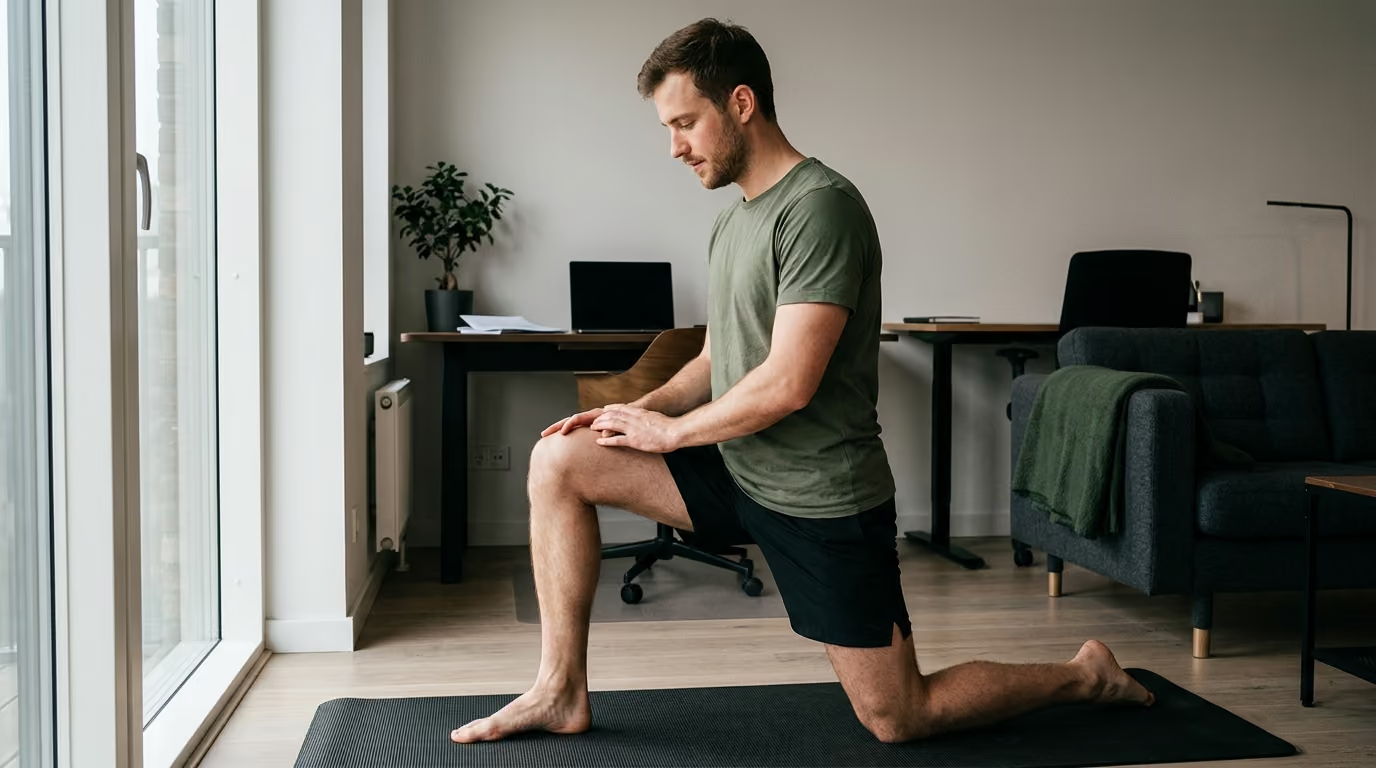

Full physical resilience and lasting pelvic strength allow dedicated athletes to lift, run, and jump without discomfort or unwanted pressure symptoms.





You are five miles into a morning run or pulling your third repetition on a heavy barbell deadlift when you notice sudden leakage, uncomfortable pelvic pressure, or sharp cramping. You have spent years building a solid physical foundation through consistent exercise, clean nutrition, and structured conditioning. Experiencing a sudden loss of pelvic control feels confusing and frustrating when the rest of your body feels completely capable.
Pelvic floor recovery requires matching muscular capacity and neuromuscular coordination to the physical demands of your training, rather than simply performing isolated squeezes.
Pelvic floor dysfunction in active adults is a mechanical load-management and coordination issue, not a simple lack of strength. Recovery requires identifying whether your symptoms stem from low muscular force, poor endurance, delayed recruitment, or excessive resting muscle tone. Once you determine your specific presentation, you can rebuild function using structured pelvic floor training, breathing coordination, and progressive loading protocols.
The pelvic floor is a specialized network of muscles, ligaments, and connective tissues situated at the base of the pelvis. It spans the area between the pubic bone at the front, the tailbone at the back, and the ischial tuberosities on either side. These tissues work alongside the diaphragm, deep abdominal muscles, and spinal stabilizers to maintain internal pressure and structural integrity. Rather than acting as a static bowl, the pelvic floor is a dynamic muscular system that constantly adjusts its tension based on movement and breathing.
In an active individual, the pelvic floor must execute five distinct mechanical roles to keep you functioning properly during training.
The pelvic floor provides resting baseline support for the bladder, bowel, and reproductive organs during everyday activities. In standing positions, gravity and the weight of internal organs place a continuous downward load on the pelvic basin. The muscles maintain low-level, involuntary tension throughout the day to prevent organ descent and maintain continental control. Without adequate tonic support, daily activities like standing, walking, and light work can lead to a sensation of heaviness or instability in the lower abdomen.
When your foot strikes the ground during a sprint or when you land from a jump, intra-abdominal pressure spikes within milliseconds. The pelvic floor must contract rapidly and reflexively before or during that pressure surge to support the urethra and rectum. This rapid recruitment requires neuromuscular power and high-velocity motor unit firing rather than just sustained static strength. If recruitment timing is delayed by even a fraction of a second, mechanical pressure forces fluid through the urethral or anal sphincters before the tissue can close.
Athletic performance often requires hundreds of repeated contractions over an extended training session. During a long-distance run, a ruck march, or a prolonged lifting workout, the pelvic floor must resist fatigue. As fatigue sets in, the muscles lose their ability to contract at full capacity or react quickly to unexpected ground strikes. A person might demonstrate perfect continental control for the first twenty minutes of a workout, only to experience symptoms toward the end as muscular endurance fails.
Muscular function depends equally on the ability to fully lengthen and release resting tension. The pelvic floor must relax completely during normal urination, bowel movements, and periods of physical rest. Full lengthening is also necessary to allow complete hip range of motion during deep squats, lunges, and trunk rotations. When muscles remain chronically contracted, they become stiff, weak, and painful, reducing their capacity to produce force when called upon.
The pelvic floor acts in direct synergy with the respiratory diaphragm. When you inhale, the diaphragm descends, expanding the abdominal cavity and requiring the pelvic floor to yield downward slightly to accommodate the increased volume. When you exhale, the diaphragm ascends, and the pelvic floor recoils upward naturally. Maintaining seamless coordination between breathing patterns, abdominal bracing, and pelvic floor motion is critical for managing pressure during heavy compound resistance training.
Pelvic floor dysfunction manifests in several distinct ways depending on the underlying mechanical issue. Active adults frequently dismiss early warning signs or assume that all pelvic symptoms stem from a single cause. Distinguishing between these presentations ensures that you apply the correct rehabilitation strategy instead of making symptoms worse.
Stress urinary incontinence is the involuntary loss of urine during physical exertion, coughing, sneezing, jumping, or heavy lifting. It occurs when mechanical pressure inside the abdomen exceeds the closure pressure of the urethral sphincter. For an athlete, this often happens at the bottom turnaround of a heavy squat, during the initial pull of a deadlift, or upon landing during plyometric drills. Stress incontinence indicates an imbalance between the pressure load generated by the movement and the reactive support generated by the pelvic floor.
To better understand your stress symptoms, evaluate these common training factors:
Urgency urinary incontinence involves a sudden, intense need to urinate that is difficult to delay, frequently followed by involuntary leakage. Overactive bladder symptoms also include daytime urinary frequency and nocturia, which is waking multiple times per night to void. Unlike stress incontinence, urgency symptoms are driven by neurological signaling and bladder muscle irritability rather than direct mechanical impact. Mixed urinary incontinence occurs when an individual experiences both stress-related leakage and sudden urgency symptoms simultaneously.
Anal incontinence involves the involuntary loss of gas, liquid stool, or solid fecal matter. It can also manifest as incomplete bowel evacuation, persistent constipation, or excessive straining during bowel movements. In active populations, anal incontinence may appear during high-intensity interval training, heavy resistance training, or long-distance endurance events. Because of social hesitation, bowel symptoms are frequently underreported, yet they represent a significant functional breakdown that requires targeted rehabilitation.
Pelvic organ prolapse occurs when one or more of the pelvic organs descend from their normal anatomical positions into the vaginal canal. Common symptoms include a sensation of vaginal fullness, heaviness, pelvic pressure, a palpable bulge, or difficulty fully emptying the bladder or bowels. Lower back ache and discomfort during prolonged standing are also frequent complaints. Symptoms are often activity-dependent, meaning an individual may feel entirely normal while lying down in the morning but experience pronounced pressure after a heavy lifting session or a long run.
High-tone pelvic floor dysfunction occurs when the pelvic floor muscles remain in a state of continuous, non-relaxing hyper-tonicity. When muscles cannot relax, blood flow decreases, metabolic waste products accumulate, and trigger points form within the muscle tissue. This state often generates persistent pelvic pain, hip discomfort, tailbone aching, genital pain, or discomfort during and after sexual activity. Individuals with high-tone dysfunction frequently experience urinary hesitancy, a slow urinary stream, and chronic constipation.
A hypertonic pelvic floor is fundamentally stiff and exhausted rather than strong. Prescribing aggressive strengthening exercises to an overactive pelvic floor increases muscle tension, deepens tissue fatigue, and worsens pain. Recognizing non-relaxing pelvic dysfunction is critical so that down-training, manual therapy, and mobility work are prioritized over traditional contraction drills.
Pelvic health in sports and fitness is best understood through the relationship between tissue capacity, mechanical demand, and neuromuscular coordination. When the physical demand of a movement exceeds your current muscular capacity, or when your neuromuscular timing is uncoordinated, symptoms emerge.
Symptoms appear through several distinct breakdowns within this system:
Running imposes meaningful transient mechanical demands on pelvic structures. Research tracking runners during a 37-minute treadmill bout revealed temporary strain in passive connective tissues and a measurable, temporary loss of pelvic organ support in runners with and without stress incontinence. This transient fatigue demonstrates how sustained impact challenges tissue capacity over time. It reinforces the need for progressive mileage increases and structured recovery rather than immediate, permanent cessation of the activity.
Pelvic floor dysfunction is widespread across active populations, from recreational gym members to elite strength and endurance athletes. Understanding the clinical data helps contextualize these symptoms as common mechanical challenges rather than permanent athletic barriers.
Systematic reviews evaluate urinary incontinence across different sports, reporting prevalence rates ranging from 5.7% in low-impact activities to 80% in high-impact disciplines. The highest rates are consistently documented among trampolinists, gymnasts, volleyball players, and track athletes. An extensive meta-analysis reported a weighted mean urinary incontinence prevalence of 36.1% among female athletes, while a broader umbrella review found a pooled prevalence of 39%.
These wide ranges reflect differences in sport mechanics, training frequency, age, parity, and symptom definitions across studies. Clinical sports medicine data indicates stress incontinence rates of roughly 40% across high-impact sports, affecting roughly 48% of parous runners and 24% of nulliparous runners. High rates of reported symptoms demonstrate that regular participation in athletic training does not automatically protect someone from pelvic floor dysfunction.
Postpartum athletes face unique mechanical demands as tissues heal from pregnancy and delivery. Published studies report urinary incontinence frequencies between 8% and 57% among postpartum runners. The same clinical literature notes anal incontinence in up to 39% of postpartum runners and pelvic organ support symptoms in roughly 19%.
Current scientific evidence does not support a rigid, calendar-based clearance model for returning to running. Research has not established specific strength, endurance, or muscle thickness thresholds that definitively guarantee symptom-free running. Return-to-running decisions must be based on individual symptom presentations, connective tissue healing, progressive movement testing, and objective functional capacity rather than an arbitrary six-week timeline.
Urinary leakage is particularly prevalent during high-load resistance training. Clinical investigations reviewing competitive weightlifters and powerlifters report urinary incontinence prevalence rates between 41.0% and 48.8% in powerlifters and between 36.6% and 54.1% in Olympic weightlifters. An International Continence Society survey revealed that 90.2% of female strength athletes who reported stress or mixed incontinence experienced leakage directly during their lifting sessions.
Deadlifts are the most common exercise associated with leakage, followed closely by heavy back squats. Symptoms correlate strongly with maximal attempts, high-repetition sets under fatigue, and competitive platform conditions. These findings do not indicate that heavy lifting inherently destroys the pelvic floor. They demonstrate that lifting near maximal capacity creates massive intra-abdominal pressure that requires meticulous technical execution and dedicated pressure management.
Pelvic floor dysfunction is not limited to female athletes. Research evaluating elite athletic cohorts reported an overall pelvic symptom prevalence of 33%, which included 45.1% of female athletes and 14.7% of male athletes. In a dedicated study of male sports participants, researchers documented urinary incontinence in 9.3% of participants and anal incontinence symptoms in 61.8% of participants.
Male athletes frequently experience symptoms related to high pelvic floor muscle tone, chronic pelvic pain syndrome, pudendal nerve irritation, and post-void dribbling. Male pelvic health requires greater clinical attention, and training education should address male pelvic anatomy with the same rigor applied to female athletes.
Resolving pelvic floor dysfunction requires an accurate assessment of muscular performance, breathing mechanics, and total-body movement patterns. Attempting to rehabilitate the pelvic floor based purely on internal sensation often leads to incorrect exercises and stalled progress.
A complete evaluation starts with an in-depth review of your specific symptoms and athletic routine. A qualified clinician gathers data on:
When urgency or urinary frequency is a primary complaint, maintaining a three-to-five-day bladder diary provides objective data. The diary tracks fluid intake volume, fluid type, voiding frequency, voided volumes, and the precise circumstances surrounding any leakage episode.
Pelvic floor function must be evaluated during dynamic, whole-body movement. A physical therapist specializing in pelvic health assesses your breathing mechanics, watching how your rib cage and abdominal wall expand under load. They look for excessive chest-only breathing, paradoxical abdominal drawing-in, or habitual breath-holding during submaximal tasks.
The external movement screen evaluates:
A specialized internal pelvic floor examination performed by a licensed pelvic health physical therapist provides objective information about muscle function. Internal assessment can differentiate between muscle weakness, asymmetrical recruitment, muscular spasticity, and connective tissue laxity.
Guidelines from pelvic health physical therapy associations emphasize that muscle contraction quality should always be confirmed before prescribing intensive pelvic floor muscle training programs. Many active individuals inadvertently push downward (valsalva) when trying to squeeze or substitute heavily with their deep gluteal and adductor muscles.
Certain pelvic symptoms require medical intervention rather than physical rehabilitation. Pelvic symptoms can be driven by urinary tract infections, hormonal deficiencies, neurological conditions, bladder pathology, or structural connective tissue tears.
Seek immediate evaluation from a physician or medical specialist if you experience any of the following clinical red flags:
Effective pelvic floor rehabilitation applies established exercise science principles to the pelvic musculature. The training protocol must target the specific functional deficit identified during your assessment.
For stress urinary incontinence, supervised pelvic floor muscle training (PFMT) is established in clinical practice guidelines as the primary first-line conservative intervention. Strength-focused training aims to increase muscle cross-sectional area, elevate resting structural support, and enhance maximum voluntary recruitment.
A standard evidence-based strengthening template consists of performing three sets of 8 to 12 near-maximal contractions, holding each squeeze for 8 to 10 seconds, followed by an equal or double duration of rest. This routine is performed once to three times daily, three to five days per week, for a minimum duration of 15 to 20 weeks. Training begins in supported positions like lying on your back or side, progressing to seated, standing, and loaded functional positions as neuromuscular control improves.
Endurance programming is essential for athletes whose symptoms appear late in running sessions or toward the final sets of a training session. Pelvic endurance training utilizes submaximal contractions held for 15 to 30 seconds, or series of repeated moderate contractions with minimal rest.
Endurance training must emphasize complete muscle relaxation during the designated rest intervals. Simply holding continuous maximal tension across an entire workout does not build endurance; it causes early tissue exhaustion, compromises local blood circulation, and triggers high-tone dysfunction.
High-velocity activities like sprinting, Olympic lifting, and change-of-direction drills demand rapid motor unit recruitment. Power training incorporates quick-flick contractions, where you recruit the pelvic floor to maximum contraction in less than one second and immediately release it fully.
A practical coordination tool used in clinical rehabilitation is known as "The Knack." This technique involves executing a conscious, well-timed pelvic floor pre-contraction immediately before a predictable intra-abdominal pressure spike, such as coughing, sneezing, or initiating the upward drive of a lift. Learning to time this pre-contraction stabilizes the bladder neck and urethra against sudden downward forces.
When an assessment identifies high-tone pelvic floor dysfunction, progressive strengthening must be paused in favor of down-training and relaxation protocols. Down-training restores resting muscle length and improves local tissue circulation.
Effective down-training strategies include:
For athletes looking to balance their hard training with adequate tissue restoration, exploring broader principles of systematic physical recovery can support overall neuromuscular healing.
Returning to unrestricted running, jumping, and lifting should follow a structured, criteria-based progression. Progressing based on functional tissue capacity rather than arbitrary time frames ensures steady athletic development while protecting the pelvic floor.
Every exercise modification should manipulate one variable at a time:
Running imposes repeated ground reaction forces that must be absorbed continuously by the lower limbs and pelvic floor. The following multi-stage protocol provides a framework for reintroducing running mileage safely.
Move to the next stage only when you can complete your current running session with zero leakage, no sensation of pelvic heaviness, and no post-run pelvic or lower back ache. If symptoms appear mid-run, slow your pace to a walk until symptoms resolve. If symptoms persist into the following day, drop back one stage in volume or speed for your next session.
Resistance training creates substantial intra-abdominal pressure during heavy compound lifts. Applying structured load progressions allows you to rebuild strength while maintaining pelvic stability.
During Phases 1 and 2, focus on matching your exhalation to the concentric (lifting) portion of each repetition. Avoid holding your breath against a closed airway (valsalva) during moderate training sets. As you advance to Phase 3 and Phase 4, you can reintroduce structured abdominal bracing, ensuring that your pelvic floor is engaged synchronously with your abdominal wall rather than being pushed downward.
Athletes who need detailed templates for balancing loading parameters and exercise selection can review comprehensive guides on strength and conditioning programming for long-term health.
Misunderstandings regarding pelvic health frequently cause active individuals to adopt ineffective or counterproductive habits. Clearing up these common misconceptions helps maintain consistent training progress.
Many athletes believe that minor leakage is simply the price of lifting heavy weights or running long distances. While urinary leakage is statistically common across high-impact sports, it is a sign of an unmanaged mechanical load mismatch. Stress incontinence responds exceptionally well to structured pelvic floor rehabilitation and technique adjustments. Accepting leakage without intervention often leads to progressive symptom worsening over time.
The common reflex to any pelvic symptom is to start performing dozens of daily Kegel exercises. However, pelvic floor symptoms frequently stem from muscles that are overly tight, non-relaxing, and fatigued. Squeezing a hypertonic pelvic floor increases resting stiffness and exacerbates pelvic pain, urinary hesitancy, and bowel issues. Proper management requires identifying whether you need more strength, better recruitment timing, improved endurance, or targeted muscle lengthening.
Performing isolated contractions while lying quietly on a mat is only the initial step of pelvic rehabilitation. An athlete does not train the quadriceps solely by performing seated leg extensions; they progress to squats, lunges, and plyometrics. The pelvic floor must be trained within dynamic, upright movement patterns that reflect the real-world demands of your sport.
Lifting belts are frequently blamed for causing pelvic floor injuries by artificially increasing intra-abdominal pressure. Current sports biomechanics literature does not support the claim that belts universally cause pelvic floor harm. A belt provides tactile feedback that helps an athlete brace their trunk musculature effectively. How you manage that intra-abdominal pressure against your pelvic floor determines whether your mechanics are safe and sustainable.
When pelvic symptoms arise, some athletes stop running, lifting, and training altogether out of fear of causing structural damage. Prolonged rest leads to systemic deconditioning, decreases connective tissue resilience, and degrades mental well-being. A superior strategy is to reduce training volume or intensity to a symptom-free baseline while actively rehabilitating the pelvic floor and progressively reloading the tissues.
Reviewing real-world clinical presentations helps illustrate how pelvic floor rehabilitation is customized to specific sports, symptoms, and movement mechanics.
A 34-year-old endurance runner experiences urinary leakage exclusively after 30 minutes of continuous running. She has no symptoms during fast walking, short interval sprints, or daily activities.
Her assessment reveals good peak pelvic floor strength, but her muscular endurance drops significantly after repeated contractions. Her training history shows that she increased her weekly running mileage by forty percent over the preceding month without adequate recovery days.
Her recovery plan focuses on:
A 28-year-old competitive lifter experiences stress urinary incontinence exclusively during maximal deadlift attempts exceeding 85% of her one-rep maximum. She has no symptoms during lighter training sets, warm-ups, or daily life.
Her movement screen reveals that she initiates her deadlift setup by aggressively drawing her breath inward, forcefully bearing down against her pelvic floor before the barbell breaks the floor. Her pelvic floor is strong, but her recruitment timing is disconnected from her trunk bracing strategy.
Her recovery plan focuses on:
A 42-year-old recreational athlete began performing 100 maximal Kegel contractions daily after reading that pelvic exercises prevent aging-related weakness. Within six weeks, he developed deep pelvic aching, difficulty initiating urination, and persistent hip stiffness.
His clinical examination reveals severe pelvic floor hypertonicity, multiple painful muscular trigger points, and an inability to voluntarily relax his levator ani muscles. His symptoms are driven by continuous muscle shortening and fatigue rather than true weakness.
His recovery plan focuses on:
For athletes looking to optimize overall physical resilience and recovery capacity, reviewing principles of managing physical stress and tissue resilience provides valuable context.
Rebuilding pelvic floor function requires a systematic, structured approach across your weekly training schedule. Use this practical checklist to guide your recovery over the coming weeks:
To continue expanding your knowledge on maintaining long-term physical capability, consult our broader library of evidence-based health resources and comprehensive training guides covering athletic training and performance.
Neuromuscular coordination improvements frequently appear within three to six weeks of consistent, targeted training. Meaningful structural changes in muscle strength and connective tissue support generally require 12 to 20 weeks of progressive loading. Chronic presentations involving high-tone dysfunction or complex postpartum recovery may take six months or longer of structured rehabilitation.
Yes. Male athletes frequently develop pelvic floor dysfunction, particularly high-tone pelvic floor conditions, chronic pelvic pain, and anal incontinence. Heavy lifting with excessive bearing down places immense pressure on the male pelvic base. When male lifters fail to balance heavy bracing with adequate muscle down-training, they can experience pelvic aching, urinary hesitancy, and tailbone pain.
You do not necessarily need to eliminate a weightlifting belt. A belt is a training tool that provides sensory feedback for your core and trunk musculature. If using a belt causes you to bear down aggressively against your pelvic floor, temporarily remove it to retrain your breathing mechanics. Once you learn to coordinate your pelvic floor recruitment with your abdominal brace, you can safely reintroduce the belt.
Running is often safe with mild pelvic organ support symptoms, provided you manage your training volume and intensity carefully. If you experience no worsening of heaviness, bulging, or pain during or after your run, you can continue running using a structured interval progression. If symptoms increase or linger into the next day, reduce your running volume, decrease your pace, and consult a pelvic health physical therapist.
This article is provided strictly for educational and informational purposes and does not constitute formal medical advice, clinical diagnosis, or individualized physical therapy prescriptions. Pelvic floor symptoms can stem from complex urological, gynecological, colorectal, or neurological conditions that require specialized evaluation. Always consult a qualified healthcare provider, such as a pelvic health physical therapist, urologist, or gynecologist, before beginning any new rehabilitation protocol or returning to high-impact athletic training.
Follow BattleVet for practical guidance on military and veteran health, strength, recovery, testosterone, sleep and healthy aging. Stay connected for new articles, research backed insights and clear information to help you stay capable for the years ahead.


Build better habits around strength, recovery, sleep, hormones and healthy aging with practical guidance for active military personnel and veterans.
Explore BattleVet