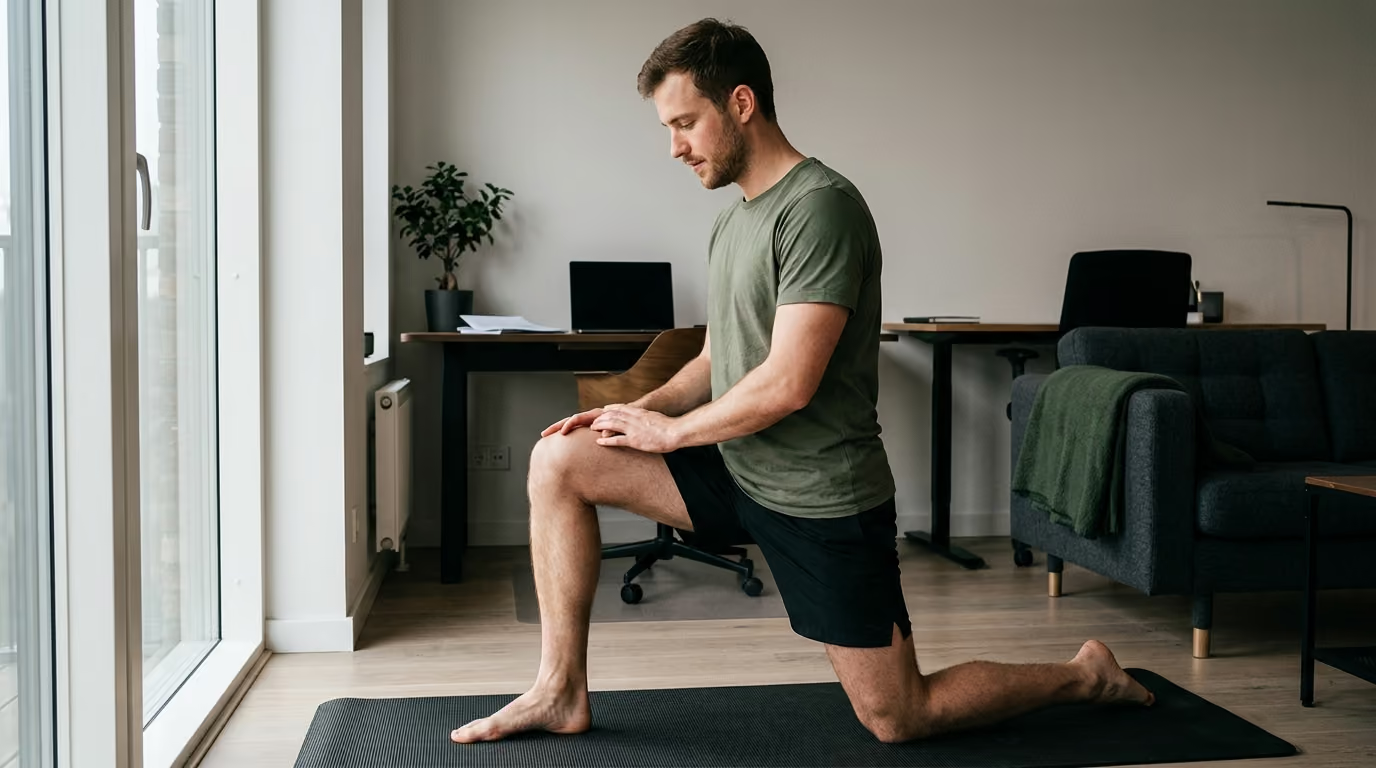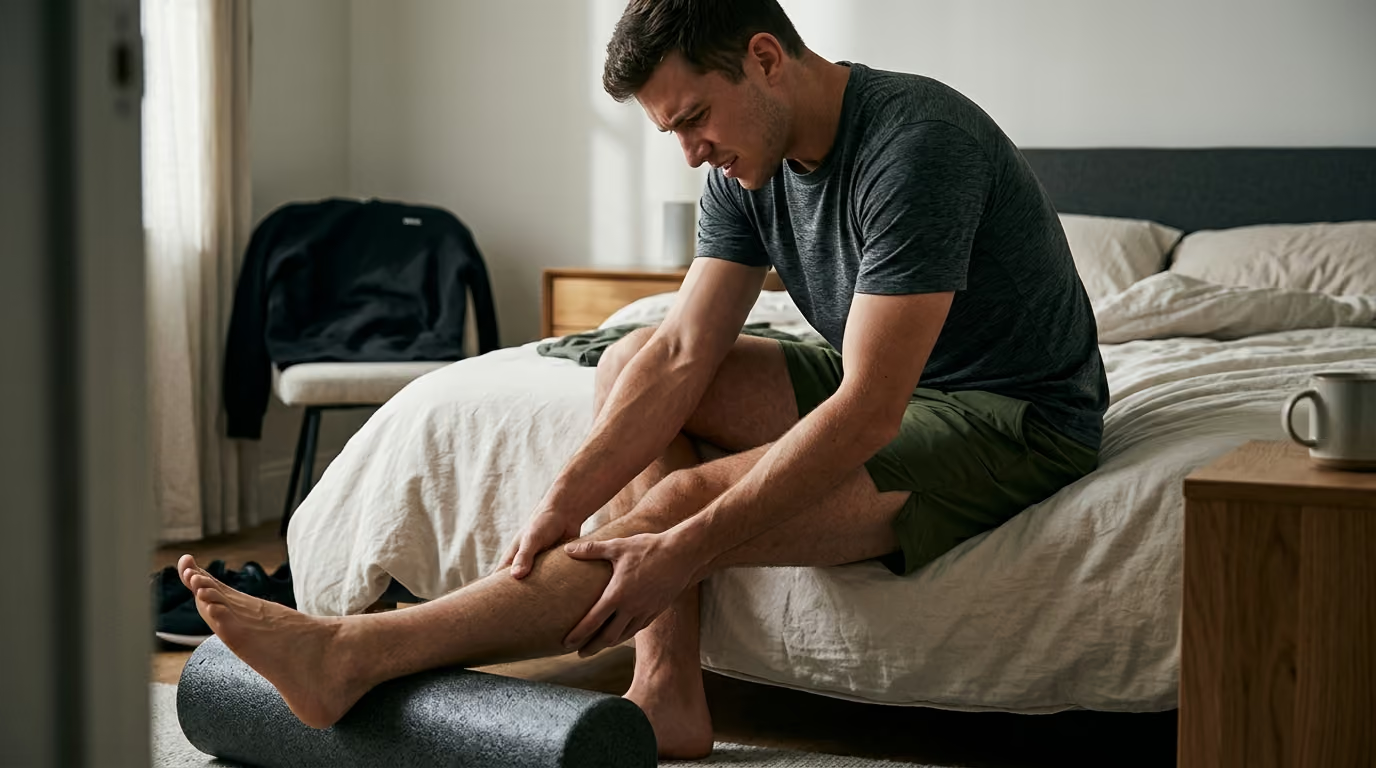

Three structured traffic light zones clarify how athletes should adjust exercise intensity when evaluating persistent aches versus sudden acute tissue trauma.





You wake up forty-eight hours after a demanding training session feeling stiff, heavy, and unusually tight. Stepping out of bed, your quadriceps ache, and bending down to tie your boots requires deliberate effort. You wonder whether this discomfort is normal post-exercise soreness or the early warning sign of a muscle tear. Understanding how to interpret these physical signals is the foundation of durable physical capability.
Muscle soreness is a temporary, biological response to unaccustomed physical stress, whereas an injury involves structural tissue damage or load-intolerance that requires specific modification or medical evaluation.
The practical difference between normal soreness and an injury comes down to four primary factors. These factors are when the discomfort began, where it is located, how it behaves under load, and whether your basic physical function is declining. Delayed-onset muscle soreness develops slowly, peaks one to three days after training, and feels diffuse across the worked muscle group. Acute injuries typically start during a specific repetition or movement, produce pinpoint or sharp pain, and frequently involve sudden weakness, swelling, or loss of mobility.
Physical training places stress on muscular and connective tissues. To respond appropriately, you must know what distinct categories of post-exercise sensation actually represent. Muscle soreness is a broad symptom rather than a clinical diagnosis. It describes the diffuse aching, stiffness, and tenderness that follow hard physical work. Post-exercise soreness is not a disease, nor is it a guaranteed sign of tissue destruction.
Delayed-onset muscle soreness, commonly abbreviated as DOMS, is a specific subtype of soreness. It appears after a distinct delay rather than during the workout itself. Symptoms usually emerge within 12 to 24 hours, reach their peak between 24 and 72 hours, and resolve over several days. DOMS is particularly common after unfamiliar movements or exercises with heavy eccentric loading, where muscles lengthen under tension.
An acute muscle strain represents structural disruption of muscle fibers. Strains range from microscopic fiber tears to complete muscle ruptures. Unlike delayed soreness, acute strains generally stem from an identifiable event such as a sprint, a heavy lift, or an unexpected change in direction. Symptoms include immediate sharp pain, local tenderness, muscle spasms, swelling, bruising, and a clear loss of strength.
An overuse injury develops progressively over time when tissue loading outpaces recovery capacity. Overuse problems do not require a single memorable trauma. Instead, they present as a persistent, localized ache that flares up every time a specific movement or volume threshold is reached. While generalized soreness fades with regular training adaptations, overuse issues return predictably until loading parameters and mechanics are corrected.
Normal training discomfort also includes the transient burn felt during high-repetition sets or sustained cardiovascular intervals. This acute burn occurs during metabolic exertion and clears rapidly once work stops. It should never be confused with delayed soreness or acute structural injury. For those managing a demanding physical routine, learning to differentiate these states is essential to training and performance over the long term.
For decades, popular fitness culture claimed that post-exercise muscle soreness was caused by lactic acid buildup. Scientific research has disproven this idea. Lactate is a metabolic fuel produced during intense anaerobic effort, and blood lactate levels return to baseline within an hour after exercise. Delayed soreness emerges much later, pointing to different biological mechanisms.
Current exercise science demonstrates that delayed soreness results from mechanical stress placed on muscle fibers and surrounding connective tissues. When a muscle performs eccentric work, such as lowering a barbell or absorbing impact during downhill running, high mechanical tension is applied to a relatively small cross-sectional area. This tension causes micro-disruptions in the structural proteins of the muscle sarcomeres and the extracellular matrix.
These structural micro-disruptions initiate a cascade of biological responses. The body activates local inflammatory pathways to clear damaged cellular components and begin remodeling. Fluid shifts occur within the tissue spaces, increasing localized pressure. Nociceptors, which are pain-sensing nerve endings within the muscle and fascia, become sensitized to mechanical stimuli, light pressure, and movement.
Scientific consensus supports the roles of eccentric loading, micro-trauma, and secondary inflammatory signaling in DOMS. However, the exact sequence of cellular events remains an area of ongoing study. Researchers continue to examine how free radicals, nitric oxide, temperature variations, and connective tissue sheath remodeling interact to create the sensation of soreness. Understanding these mechanisms helps athletes focus on genuine recovery and sleep strategies instead of chasing unproven fixes.
When discomfort arises after physical activity, you need a systematic method to evaluate the situation. You do not need clinical equipment to perform an initial risk assessment. By evaluating five specific characteristics, you can determine whether your discomfort reflects normal adaptation or requires medical attention.
The timing of symptom onset provides your first clue. Delayed-onset muscle soreness follows a predictable timeline. It rarely appears immediately after your final set. Instead, it develops gradually overnight, becoming noticeable the next morning and peaking between 24 and 72 hours later.
Acute injuries happen at a specific point in time. If you feel a sudden twinge, a sharp grab, or a distinct popping sensation during a lift, you are likely dealing with an acute injury. While some mild strains become more noticeable once the body cools down, the presence of a single, identifiable moment of mechanical failure strongly points away from ordinary DOMS.
The physical location and distribution of pain offer critical diagnostic information. Ordinary soreness is diffuse. It spreads across the broad muscle belly and frequently affects both sides of the body equally if you performed a symmetrical exercise like squats or push-ups.
Injury-related pain is usually localized and asymmetrical. If you can point to the exact source of pain with the tip of a single finger, caution is warranted. Pain located directly over a joint line, deep within a tendon insertion, or along a bone should not be classified as ordinary muscle soreness. Bone-specific tenderness and joint swelling require careful observation and possible medical imaging.
Functional capacity is the most reliable practical test for separating soreness from injury. A person with severe muscle soreness may feel stiff, uncoordinated, or reluctant to move, but their fundamental neuromuscular control remains intact. If you warm up gently, you can generally perform standard, unloaded movement patterns.
An injury produces an immediate drop in baseline function. Warning signs include an inability to bear weight on a limb, a noticeable limp, joint instability, or a muscle that gives way under light isometric resistance. If you cannot complete a standard bodyweight squat, raise your arm above your head, or walk across a room without compensating, your movement system is signaling structural compromise rather than simple soreness.
The descriptive quality of pain provides valuable context. DOMS is typically characterized by a dull, broad ache, muscular stiffness, and tenderness when the muscle is pressed or lengthened. It is primarily movement-evoked, meaning the muscle aches when contracted or stretched but remains quiet at rest.
In contrast, sharp, stabbing, catching, burning, or tearing sensations suggest structural injury. Sensations that include numbness, tingling, or electric shocks down an extremity point toward neurological involvement or nerve root irritation. Pain that throbs constantly even when you are lying completely motionless in bed is atypical for ordinary post-training soreness.
Visible physical changes are significant markers of tissue trauma. DOMS can occasionally produce slight, diffuse fluid retention in heavily worked limbs, but it does not cause visible bruising or anatomical deformities.
If you observe dark bruising, pronounced local swelling, redness that spreads rapidly, or a visible indentation in a muscle contour, you are looking at structural damage. Systemic warning signs demand immediate medical care. These include high fever, dizziness, shortness of breath, profound systemic weakness, or dark, tea-colored urine following extreme physical exertion.
Deciding whether to train when sore should not be an all-or-nothing choice. Complete bed rest often delays recovery, while blindly pushing through genuine structural failure can worsen a minor strain. Using a traffic light decision framework allows you to adjust your daily workload based on measurable symptoms.
You have a green light when your symptoms match typical delayed-onset muscle soreness. The discomfort is broad, symmetrical, and located squarely in the muscle belly. You have no swelling, bruising, or joint pain, and your walking gait is entirely normal.
In the green category, you can proceed with your scheduled workout. However, you should invest five to ten additional minutes in a progressive warm-up. Start with light cardiovascular work to raise core body temperature, followed by unloaded mobility drills. If severe soreness temporarily reduces your force output, reduce your top-end training loads by ten to fifteen percent to maintain sound technique.
A yellow light indicates that your physical capacity is altered, but you do not show obvious red-flag symptoms. You may have localized tightness, moderate discomfort at the end range of motion, or movement compensations caused by fatigue. You are capable of moving, but loaded training requires thoughtful adjustments.
When in the yellow category, do not attempt maximal lifting, explosive sprinting, or complex ballistic exercises. Instead, implement clear modifications:
Monitoring your physiological recovery through structured sleep, stress and resilience habits helps keep your daily readiness in the green zone.
A red light means you must stop the provocative exercise immediately. This status applies whenever you experience sudden, sharp pain, an audible pop, joint instability, numbness, or visible structural changes like swelling or bruising.
Continuing to train through a red-light state increases the risk of turning a minor micro-tear into a full-thickness rupture. Remove external load, avoid aggressive stretching of the painful tissue, and do not attempt to test your maximum strength. If you cannot bear weight, or if pain worsens steadily over 24 hours, schedule an evaluation with a physical therapist or qualified physician.
When dealing with post-exercise soreness, athletes often turn to various recovery tools. It is critical to separate methods that actively support recovery from those that merely alter your perception of pain. Relieving muscle soreness is not the same as accelerating structural tissue repair.
Research consistently identifies low-intensity active recovery as an effective way to manage DOMS symptoms. Light aerobic exercise, such as cycling, rowing, or brisk walking at an easy pace, increases systemic and local blood flow. This elevated circulation aids in clearing metabolic waste products and delivers nutrients to recovering tissues.
A comprehensive systematic review of active recovery protocols found modest improvements in muscle soreness, short-term flexibility, and perceived recovery. These benefits are primarily driven by temporary reductions in muscle stiffness and mild exercise-induced analgesia. Active recovery keeps you moving without adding structural fatigue.
Massage therapy and targeted soft tissue mobilization have strong empirical backing for temporary symptom relief. A large meta-analysis examining post-exercise recovery modalities identified massage as an effective intervention for reducing perceived soreness and subjective fatigue.
Manual therapy reduces muscle tone, increases local blood circulation, and stimulates cutaneous sensory receptors that help down-regulate pain signaling in the central nervous system. A 2026 network meta-analysis noted that massage provides its greatest soreness-relief benefits within the first 24 hours following strenuous exercise. While massage does not rebuild damaged myofibrils, it significantly improves comfort during the initial recovery window.
Water immersion techniques, including cold-water immersion and contrast water therapy, are widely used in athletic settings. Cold-water immersion causes peripheral vasoconstriction, which can reduce acute fluid accumulation, down-regulate cellular metabolism, and numb sensitized nerve endings. Contrast water therapy alternates between warm and cold water to stimulate cyclical vascular pumping.
Graduated compression garments offer another low-risk option. Systematic reviews indicate that wearing medical-grade compression garments during and after heavy training reduces perceived soreness and limits the sensation of muscle swelling. Like hydrotherapy, compression garments primarily manage symptoms rather than dramatically accelerating muscle protein synthesis.
Understanding how to balance training stress with smart physical restoration is a core component of sustainable strength, fitness and body composition programming.
Examining real-world examples helps clarify how to apply these concepts in daily life.
A lifter returns to barbell training after a three-week layoff and completes five sets of ten squats. The next morning, their quadriceps and glutes feel tight. By the second morning, sitting down onto a low chair causes significant discomfort across the entire front of their thighs.
Assessment: This presentation is classic delayed-onset muscle soreness. The discomfort is bilateral, diffuse across the muscle bellies, developed over 24 to 48 hours, and followed an unaccustomed volume of eccentric loading.
Action: The lifter should remain active. A twenty-minute brisk walk or easy stationary bike ride, combined with bodyweight lunges and mobility work, will help alleviate stiffness. Heavy squatting should be delayed until basic movement speed and range of motion normalize.
During an interval conditioning session, a runner accelerates into a sprint. At the thirty-meter mark, they feel a sudden, sharp pinch in the back of their right thigh, followed by a sensation like a rubber band snapping. They immediately limp to a stop.
Assessment: This is an acute hamstring strain. The sudden onset during a high-velocity movement, the localized pain, and the immediate loss of running mechanics point to structural fiber damage rather than DOMS.
Action: The runner must stop sprinting immediately. They should avoid aggressive stretching of the hamstring, apply comfortable compression, and monitor the area for bruising over the next 48 hours. A medical professional should evaluate the grade of the strain.
An active military member experiences an aching sensation in the front of their right shoulder whenever they perform overhead presses or push-ups. The discomfort settles during rest days, but returns every time pressing volume increases.
Assessment: This pattern suggests an overuse issue or tendinopathy. The absence of a single traumatic event, combined with predictable recurrence tied to a specific exercise, indicates that the tissue's load tolerance is being exceeded.
Action: The individual should temporarily replace overhead pressing with pain-free alternatives, such as landmine presses or neutral-grip dumbbell work. Total upper-body pushing volume should be adjusted, and rotator cuff and scapular mechanics should be evaluated.
A veteran begins a walking and jogging program. Within ten minutes of continuous movement, a deep, cramping ache develops in both calves, making it difficult to push off the toes. When they sit on a bench, the pain completely disappears within five minutes.
Assessment: Pain that consistently appears during exercise and resolves promptly with rest is atypical for both DOMS and acute strains. This pattern warrants medical screening for exertional compartment syndrome or peripheral vascular limitations.
Action: The individual should stop pushing through the pain and arrange a formal medical evaluation with a healthcare provider.
Following a strenuous, high-repetition workout in hot weather, a trainee experiences extreme muscle swelling, an inability to straighten their arms, and profound systemic fatigue. Later that evening, their urine appears dark brown, resembling iced tea.
Assessment: This is a medical emergency known as rhabdomyolysis, where damaged muscle tissue breaks down rapidly and releases myoglobin into the bloodstream, threatening kidney function.
Action: The person must go directly to an emergency department for intravenous fluids and medical monitoring. They should not attempt self-treatment or take over-the-counter pain medications, which can place additional stress on the kidneys. Maintaining awareness of such risks is vital for lifelong healthy aging and longevity.
Returning to full physical capacity after an injury or a severe episode of tissue overload requires a graded exposure model. Rushing directly back to pre-injury loads often leads to re-injury, while avoiding all movement causes deconditioning. Progression should be step-by-step, moving to higher demands only when baseline criteria are met.
The foundation of physical recovery is the restoration of basic daily movement. You must be able to walk with a normal gait, climb stairs, sit, and stand without pain or visible compensations. If simple daily tasks provoke sharp pain, your tissue is not ready for external resistance.
Before adding weight, you must regain comfortable joint and muscle range of motion. Perform unloaded mobility drills and active stretching within a pain-free boundary. For example, following a calf or hamstring issue, confirm that you can move the limb through its complete arc without muscle guarding or sharp pulling sensations.
Isometric contractions allow you to produce muscular tension without joint movement or muscle lengthening. This makes them a safe way to introduce load to recovering tissue. Start with submaximal static holds against an immovable object, holding for ten to twenty seconds. If isometric holds at various joint angles are pain-free, you can safely progress to dynamic resistance.
Begin reintroducing dynamic lifts using slow, controlled tempos. Focus on the concentric phase while keeping the eccentric lowering phase moderate and controlled. Use light dumbbells, resistance bands, or machines to isolate the target movement pattern. Maintain a resistance level where discomfort does not exceed a mild, stable level during or after the set.
The final phase involves restoring tissue tolerance for high velocity, impact, and unpredictable forces. Gradually integrate light plyometrics, acceleration drills, directional changes, and sport-specific training. Only return to unrestricted training when you can complete high-velocity work without swelling, limping, or next-day symptom flare-ups.
Misinterpreting physical feedback can stall progress and increase injury risks. Avoiding several widespread misconceptions will help keep your training productive.
This guide is designed for educational purposes and should help you make informed decisions about your daily training. It does not replace individualized clinical diagnosis, physical therapy, or medical care. If you experience severe, persistent, or worsening symptoms, consult a qualified healthcare provider or physical therapist for a comprehensive evaluation. If you have questions about how these principles apply to your service background, you can learn more about our evidence-led mission or contact our team directly.
Severe delayed-onset muscle soreness can cause mild, diffuse fluid retention in heavily worked muscles due to local inflammatory signaling. However, DOMS does not cause visible surface bruising or subcutaneous bleeding. If you notice purple or dark discoloration, you are dealing with a torn muscle fiber, ruptured blood vessel, or direct contusion that warrants clinical evaluation.
The delayed peak of muscle soreness occurs because DOMS is driven by a complex cascade of secondary cellular processes rather than immediate mechanical trauma alone. Following micro-stress to muscle fibers, inflammatory signaling, fluid shifts, and nociceptor sensitization accumulate gradually over 24 to 48 hours. This progressive biological response explains why stiffness often peaks two days after a hard training session.
Gentle, active mobility work through a comfortable range of motion is safe and can temporarily reduce the sensation of stiffness. However, aggressive, forceful static stretching on severely sore muscles can place excessive tensile stress on sensitized muscle fibers and connective tissues. Stretching should remain gentle and pain-free rather than forced.
Tendon issues, known as tendinopathies, present differently from ordinary muscle soreness in their location and behavior under load. Tendon pain is localized directly at the joint attachment site rather than the thick muscle belly. Tendinopathy often feels stiff and painful during the first few minutes of a workout, appears to warm up during exercise, and then aches intensely several hours later or the following morning.
Follow BattleVet for practical guidance on military and veteran health, strength, recovery, testosterone, sleep and healthy aging. Stay connected for new articles, research backed insights and clear information to help you stay capable for the years ahead.


Build better habits around strength, recovery, sleep, hormones and healthy aging with practical guidance for active military personnel and veterans.
Explore BattleVet