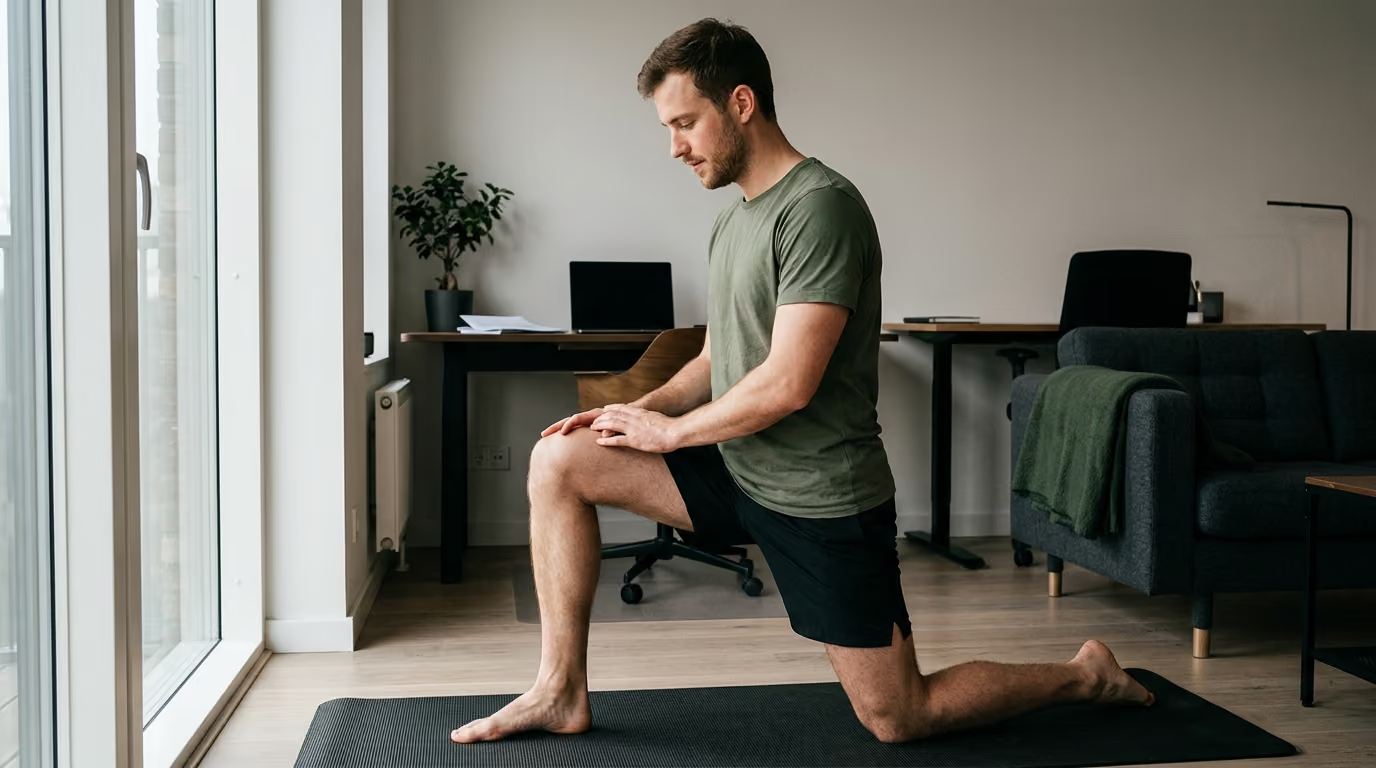

Post-injury training demands clear medical guidelines, gradual volume increases, and continuous symptom monitoring to ensure long-term physical health and safe recovery.





Most people assume that receiving medical clearance means their body is ready to pick up right where it left off. In practice, clearance only indicates that the acute medical danger has passed, not that your tissues, cardiovascular system, and central nervous system are conditioned for hard training. Resuming physical activity after an injury, surgery, infection, or prolonged illness requires a systematic, evidence-informed approach rather than guesswork or stubborn enthusiasm.
You step into your training space after six weeks of forced rest. Your heart rate is slightly elevated just from walking up the stairs, and the empty barbell suddenly looks heavier than it used to. You want to test your strength, but lingering fatigue and muscle stiffness make you question your readiness. That hesitation is normal, and navigating this transition safely requires a structured plan rather than blind determination.
A safe return to exercise after medical restriction requires treating physical activity as a staged clinical progression rather than a test of willpower.
To return safely, you must establish what your clearance allows, identify a clear baseline of current function, reintroduce low-level movement, progress only one training variable at a time, and track both immediate and delayed symptoms over a 24-hour window.
Medical clearance from a physician or specialist is a legal and clinical permission slip, not an assessment of your maximum athletic capacity. A standard clearance note often says little more than "cleared for activity as tolerated." This vague phrase creates confusion for dedicated lifters, runners, and active individuals who often interpret "tolerated" as anything short of physical collapse. Understanding what clearance actually means is the foundation of a safe return.
According to preparticipation health screening models from the American College of Sports Medicine, referral and clearance decisions depend on three specific variables. These variables include your current physical activity habits, the presence of known cardiovascular, metabolic, or renal disease, and your desired exercise intensity. Clearance is therefore context-dependent. A clinician clearing you for light walking is not giving you permission to perform heavy compound lifts, high-intensity intervals, or contact sports.
Clearance is frequently conditional rather than absolute. A cardiologist might clear a patient for low-intensity cycling while strictly prohibiting the Valsalva maneuver, heavy straining, and maximal lifting. An orthopedic surgeon might approve swimming and upper-body training while restricting axial spinal loading and high-impact running. If you treat conditional clearance as an unrestricted pass, you risk reinjury, prolonged systemic inflammation, or medical relapse.
To make your clearance meaningful, ensure your healthcare provider addresses specific operational boundaries before you leave the clinic. A thorough clearance discussion should answer six core questions:
When you treat clearance as a set of guardrails rather than an all-or-nothing green light, you protect your long-term health. You can review detailed recovery and sleep strategies to support tissue healing during this delicate transition phase.
Before you pick up a weight or lace up your running shoes, you must know which physiological responses indicate a medical issue rather than simple deconditioning. Being out of shape causes heavy breathing, localized muscle burn, and general lethargy. However, cardiovascular, pulmonary, and neurological red flags require immediate cessation of exercise and prompt medical review.
The American College of Sports Medicine emphasizes that any individual who experiences symptomatic distress during exertion should undergo clinical evaluation, regardless of their past fitness level or training history. You should never attempt to push through symptoms that involve the heart, lungs, vascular system, or central nervous system. These signals indicate underlying physiological distress that cannot be resolved through grit.
Key warning signs that require you to stop exercising immediately include:
Cardiopulmonary monitoring is especially important after viral or systemic respiratory infections. Guidance from the American College of Cardiology regarding post-viral recovery highlights that persistent cardiopulmonary symptoms require formal clinical testing before training resumes. This testing often involves a 12-lead electrocardiogram, cardiac troponin blood tests, and an echocardiogram to rule out myocardial injury.
A diagnosis of clinical myocarditis represents a strict contraindication to regular exercise progression. Clinical protocols from the American College of Cardiology advise complete exercise restriction for three to six months following myocarditis diagnosis. Training resumes only after follow-up testing confirms normal cardiac function, normal biomarkers, and an absence of exercise-induced arrhythmias. Ignoring these protocols in an attempt to maintain conditioning can lead to life-threatening complications.
Once you have medical clearance and know the red-flag symptoms, you must establish an honest baseline of your current physical capacity. Returning athletes often make the mistake of attempting a maximal strength test or an all-out timed run to see where they stand. This approach places extreme mechanical and metabolic stress on deconditioned tissues, sharply raising your risk of acute injury or symptom relapse.
Baseline testing should provide a starting point for safe progression, not serve as a pass-or-fail test of your athletic ego. According to research on exercise preparticipation screening, baseline testing should be tailored to the specific medical condition and current functional limitations of the individual. You do not need complex laboratory equipment to gather useful baseline data.
A practical baseline evaluation is divided into three distinct categories:
Record your baseline resting status for several consecutive days before introducing structured workouts. Document your resting fatigue on a 1-to-10 scale, your breathing comfort during normal household tasks, and any baseline joint or surgical pain. Note your resting sleep quality, morning resting heart rate, and cognitive clarity. Having this baseline written down allows you to detect subtle flare-ups or delayed fatigue once training begins.
Use low-load, repeatable movements that reflect basic human function and match your clinician-approved limits. Excellent low-risk baseline functional tasks include:
Stop the baseline test immediately if you exceed the intensity boundaries set by your clinician or if you experience warning symptoms. A baseline test is only helpful if it is safe, repeatable, and completely painless.
When managing chronic conditions or recovering from major medical events, incorporate objective tracking tools into your baseline. Depending on your medical history, your clinician may recommend monitoring resting blood pressure, blood glucose levels, or pulse oximetry. For structured guidance on tracking physical parameters over time, check our educational guides on strength and fitness restoration.
Rebuilding physical capacity after medical restriction requires an organized, progressive loading structure. Adjusting too many training variables at once makes it impossible to know which factor caused a setback if symptoms reappear. The core variables of any training program include frequency, duration, intensity, exercise complexity, mechanical load, and environmental stress.
A safe framework changes only one variable at a time while maintaining adequate recovery between sessions. The general progression sequence starts with restoring basic daily movement, progresses to longer durations, adds low-intensity continuous work, introduces resistance, and finally incorporates high-intensity or sport-specific demands.
Below is a structured six-stage model designed to guide your progression from post-restriction rest to full activity.
This initial stage begins while your medical restriction is being lifted. You must confirm that systemic illness, surgical wounds, or acute tissue damage are fully stabilized. During Stage 0, you resolve all questions regarding prohibited movements, medication timing, and clinical warning signs with your physician. No structured exercise takes place during this stage; the goal is total clarity on your medical limitations.
Begin by rebuilding your tolerance for ordinary daily life. Focus on light walking around your home or neighborhood, gentle mobility drills, and basic household tasks. The objective of Stage 1 is to evaluate your biological response to simple movement without creating a true training stimulus. If you experience lingering fatigue or symptom flare-ups from simple walking, your body is not ready for structured exercise.
Introduce dedicated, low-impact aerobic sessions using a conversational pace. Options include flat outdoor walking, a stationary recumbent bike, or water aerobics, depending on your physical restrictions. Keep your intensity low enough that you can easily speak in complete sentences without gasping for air. Keep these initial sessions short, finishing each workout feeling as though you could have done twice as much work.
Once low-intensity movement is tolerated without symptoms, increase your session duration before adding intensity. For example, extend a 15-minute walk to 25 minutes, or add brief periods of slightly faster walking interspersed with easy recovery intervals. Research in sports medicine frequently highlights the 10% rule as a conservative guideline, suggesting that weekly increases in training volume or duration should not exceed roughly 10%. While not an absolute biological law, this guideline helps prevent excessive loading spikes.
After establishing an aerobic base, reintroduce structured resistance exercise to rebuild lost muscle mass, bone density, and connective tissue integrity. Start with bodyweight exercises, resistance bands, or supported gym machines before using heavy free weights. Clinical rehabilitation protocols suggest starting resistance work at roughly 40% of your estimated one-repetition maximum, focusing entirely on controlled movement quality and stopping well short of muscular failure. Gradually increase resistance toward 70% of your maximum over several weeks as tolerance improves.
Reintroduce the specific movement patterns required for your daily work, recreational sports, or personal goals. This stage may include:
Separate movement complexity from movement speed during Stage 5. Master the slow, controlled version of a movement before adding velocity, impact, or heavy external loads.
This final stage is the ultimate destination, not the starting point. It involves high-intensity interval training, maximal strength work, heavy impact, and contact sports. Transitioning into Stage 6 often requires formal clearance from your specialist or completing standardized return-to-sport testing protocols.
You can review our full library of BattleVet health resources to find additional educational material on long-term physical performance.
Monitoring your body during an exercise session provides only half of the clinical picture. Many adverse responses, including systemic inflammation, joint effusion, autonomic fatigue, and post-exertional symptom exacerbation, do not appear until hours after you finish training. A session is only successful if you tolerate the work both during the workout and over the following 24 hours.
A practical way to manage this progression is the 24-hour response rule. After completing any new exercise dose, wait a full day before deciding whether to repeat the dose, increase the load, or pull back. If your resting heart rate spikes, your sleep is disrupted, or your baseline joint pain increases the next morning, your body did not tolerate the training session.
To make objective decisions during your return, use a simple traffic-light tracking model:
You experience no concerning symptoms during training, your recovery over the next 24 hours is normal, and your daily energy remains stable. You are cleared to repeat the current training dose or make a small, conservative increase in duration or resistance.
You notice mild joint achiness, unusual post-workout lethargy, slight sleep disruption, or higher-than-normal perceived exertion for a routine task. You should hold your training volume at the current level or reduce it by 20% to 50% until your baseline status returns to green.
You experience chest pain, dizziness, severe breathlessness, new neurological symptoms, joint swelling, or an acute return of medical symptoms. You must stop training immediately, rest, and contact your healthcare provider for clinical evaluation.
Protocols for graduated return to activity following post-viral illness emphasize that any symptom flare requires dropping back to the previous tolerated stage. You must then maintain at least 24 hours of completely symptom-free rest before attempting to progress again. Keeping a detailed written training log of your exercises, perceived exertion, and next-day symptoms turns guesswork into actionable clinical data.
Returning to physical activity is often complicated by prescription medications and underlying chronic conditions. Medications can alter your resting heart rate, blunt your blood pressure response to exertion, increase dehydration risk, or affect blood sugar regulation. You should never alter your medication dosage to accommodate an exercise routine without explicit instructions from your prescribing clinician.
Beta blockers, commonly prescribed for high blood pressure and cardiac conditions, significantly blunt your resting and exercise heart rates. If you take a beta blocker, standard target heart-rate zones based on age formulas will be inaccurate and potentially unsafe. You must rely on ratings of perceived exertion, the talk test, and specific blood pressure guidelines provided by your doctor rather than a fitness watch.
Medications for metabolic management also require careful coordination with your training routine. People using insulin or insulin secretagogues face an increased risk of hypoglycemia during and after physical activity. The table below outlines common medication classes and their primary exercise considerations:
If you manage ongoing metabolic or hormonal conditions, explore our educational articles on training and athletic performance to understand how hormones influence physical work capacity.
Navigating a return to fitness after medical restriction is full of psychological and physiological pitfalls. Many capable individuals struggle with the patience required for a graded return, leading to avoidable injuries or medical setbacks. Recognizing these common errors helps you stay disciplined and consistent over the long haul.
Public health organizations like the Centers for Disease Control and Prevention recommend that adults achieve at least 150 minutes of moderate-intensity aerobic exercise per week plus two days of strength training. While these targets represent great long-term health goals, they are not Day 1 starting requirements for someone recovering from medical restriction. Trying to hit 150 minutes in your first week back places an unsustainable recovery burden on a deconditioned system.
Musculoskeletal pain is only one indicator of biological stress. Internal medical conditions, cardiovascular strain, and systemic metabolic fatigue often present without any joint or muscle discomfort. Assuming that a workout was safe simply because nothing hurts can cause you to overlook severe post-exertional malaise, elevated resting blood pressure, or dangerous cardiac symptoms.
You cannot compress eight weeks of missed workouts into two weeks of intense training. Physical adaptations such as tendon remodeling, capillary density expansion, and mitochondrial biogenesis take weeks of consistent, low-grade exposure. Trying to train harder to make up for lost time simply increases systemic fatigue and spikes your injury risk.
While heuristics like the 10% rule provide helpful guidance, they should never override your daily symptom tracking. If you feel exhausted, poorly recovered, or notice joint irritation, increasing your volume by 10% simply because your calendar says so is counterproductive. Listen to your physiological response rather than following a rigid spreadsheet.
Rebuilding physical capacity requires adequate nutritional substrates and cellular recovery. If you jump back into training while under-eating or sleeping poorly, your tissues cannot repair the damage created by exercise. Review our nutrition and physical restoration guides to ensure your diet supports your physical progression.
Returning to exercise safely requires separating established scientific principles from experimental protocols and commercial fitness trends. Grounding your return plan in validated medical consensus protects your health while ensuring steady physical improvement.
Scientific evidence strongly supports the following established principles:
Areas where scientific evidence remains early, mixed, or evolving include:
This resource is designed solely for educational purposes and does not constitute individual medical advice, clinical diagnosis, or personalized exercise prescription. Every medical restriction, surgery, illness, and recovery timeline involves unique physiological variables that require professional evaluation. Always consult your physician, physical therapist, or qualified healthcare provider before resuming physical activity or making changes to your training regimen.
The most common signs of progressing too quickly include worsening morning fatigue, lingering joint stiffness, poor sleep quality, an elevated resting heart rate, and reduced physical performance during routine tasks. If you notice any of these yellow-flag symptoms, pause your progression and reduce your total training volume by 20% to 50% for several days until your baseline status stabilizes.
If you take beta blockers or certain other blood pressure medications, standard heart-rate targets will be inaccurate because these drugs blunt your natural cardiovascular response to exertion. Instead of relying solely on heart-rate monitors, use the rating of perceived exertion scale, ensure you can maintain a comfortable conversation during aerobic work, and follow specific blood pressure guidelines provided by your doctor.
If you experience mild symptoms such as general muscle soreness or slight fatigue, take a full 24 hours of symptom-free rest and drop back to the previous successfully tolerated stage of your progression. However, if you experience red-flag symptoms such as chest pain, dizziness, severe shortness of breath, or joint swelling, stop exercising entirely and seek an evaluation from your healthcare provider.
There is no fixed calendar timeline for moving through the stages. As a general clinical guideline, you should complete at least two to three consecutive sessions at a specific stage without any acute or delayed symptoms before considering advancing to the next stage. Moving through the framework based on biological tolerance rather than a rigid calendar ensures long-term safety and success.
Rebuilding your physical capacity after medical restriction requires patience, discipline, and objective tracking, but following a structured progression will return you to full physical capability safely and sustainably.
Follow BattleVet for practical guidance on military and veteran health, strength, recovery, testosterone, sleep and healthy aging. Stay connected for new articles, research backed insights and clear information to help you stay capable for the years ahead.


Build better habits around strength, recovery, sleep, hormones and healthy aging with practical guidance for active military personnel and veterans.
Explore BattleVet