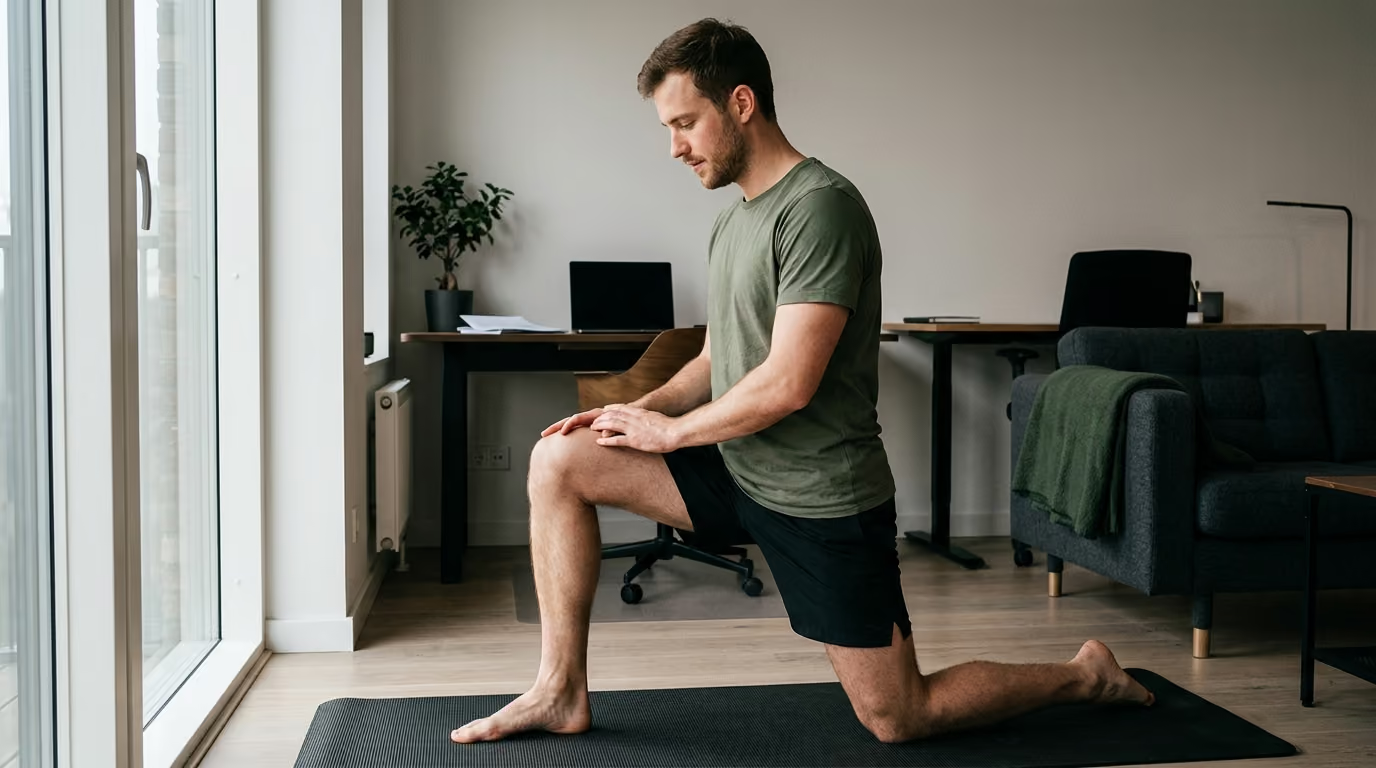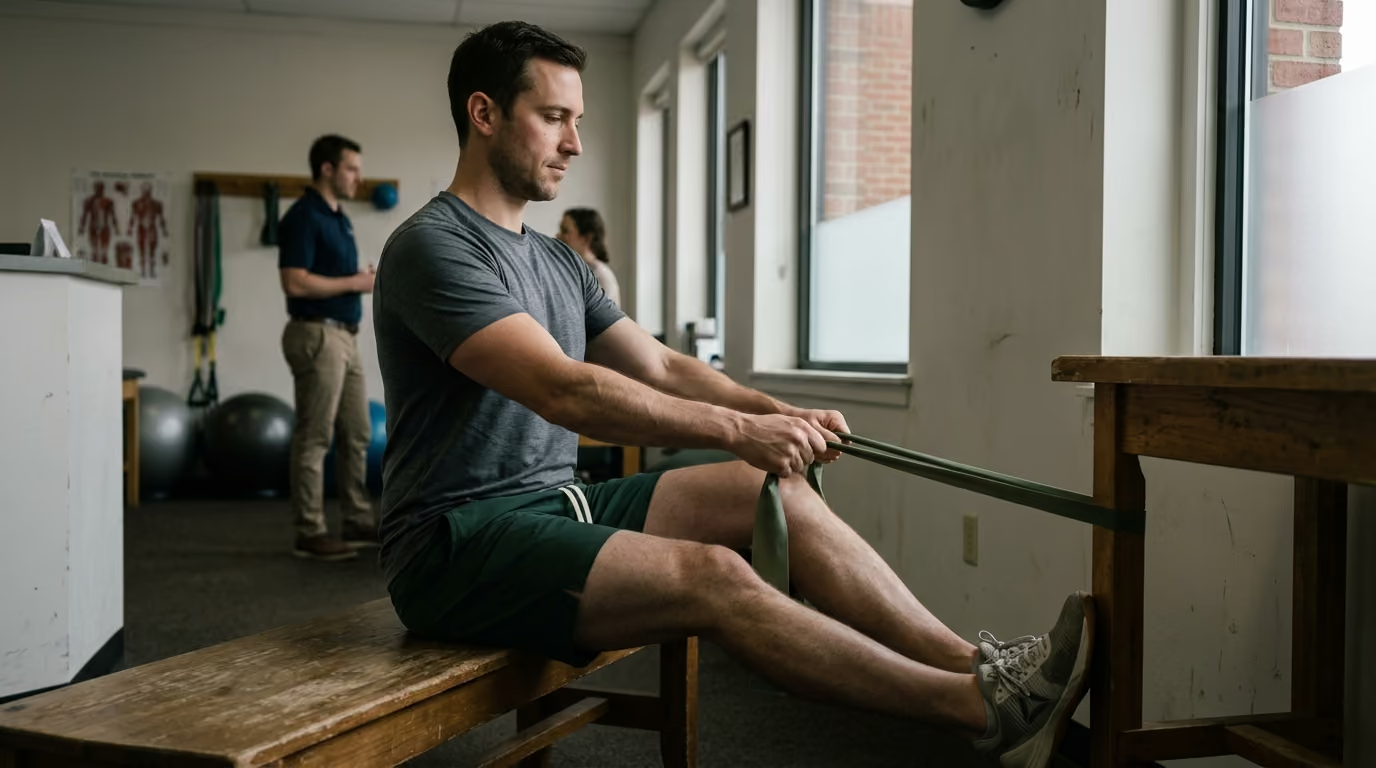

Stepping back into exercise after a prolonged illness demands a conservative, phased strength program to rebuild lost muscle mass and functional mobility.





Rebuilding muscle after significant illness, injury, surgery, or prolonged bed rest is not a standard muscle-building cycle. It is a systematic process of restoring joint mobility, neuromuscular coordination, force production, and daily functional capacity. True recovery requires rebuilding metabolic health alongside physical tissue.
Getting out of bed after ten days of respiratory illness feels unexpectedly heavy. Walking down the hallway leaves your quadriceps trembling, and standing up from a low couch requires pushing hard with both arms. Routine daily tasks suddenly demand deliberate physical effort. Blood work might show normal markers, yet your body feels fundamentally depleted of strength and stamina.
Rebuilding muscle after extended inactivity requires a progressive, phased approach that prioritizes restored movement quality and adequate nutrition before advancing to heavy resistance loads.
The fastest and safest way to rebuild muscle is to progress through distinct physical stages. You start with basic motor activation, advance to fundamental bodyweight movements, and gradually introduce progressive resistance training. This physical stimulus must be paired with sufficient caloric intake and personalized protein distribution.
Skeletal muscle tissue is metabolically expensive for the human body to maintain. When mechanical tension decreases during periods of bed rest or sedentary recovery, muscle protein synthesis drops sharply. At the same time, muscle protein breakdown continues or accelerates, resulting in rapid net muscle loss.
Research evaluating healthy adults during bed rest shows measurable declines in muscle mass after only a few days of immobility. Data demonstrates an approximate muscle loss of 1.2 percent after five days of bed rest. This loss climbs to 5.0 percent after 10 days, 11.8 percent after 35 days, and nearly 18.6 percent after 120 days.
In healthy older adults, 10 days of bed rest can produce a loss of nearly one kilogram of lean leg mass. That same 10-day period of immobility can reduce lower-extremity muscle strength and maximal oxygen uptake by 12 to 14 percent. The loss of strength consistently outpaces the loss of actual muscle volume.
Critical illness accelerates this catabolic process far beyond standard disuse. When immobility is combined with systemic inflammation, infection, organ stress, or mechanical ventilation, skeletal muscle breaks down at an alarming rate. Systematic reviews published in the British Medical Journal show that patients in intensive care can lose roughly two percent of skeletal muscle per day during their first week of admission.
Between 25 and 75 percent of mechanically ventilated patients develop intensive care unit-acquired weakness. For many survivors, muscle weakness, reduced physical endurance, and functional limitations can persist for months or even years after discharge. This reality highlights why post-illness rehabilitation requires a fundamentally different strategy than standard fitness programming.
When individuals notice they have lost physical capability, they often assume they simply need to gain body weight. Physical capacity, however, consists of several distinct physiological components that do not recover at identical rates.
Muscle mass refers specifically to the physical volume of lean skeletal tissue. Muscle strength represents the maximal amount of force that a specific muscle or muscle group can produce during a contraction.
Following a period of hospitalization or severe illness, neural drive and motor unit recruitment decline faster than muscle size. When you begin training again, strength often improves before visible muscle hypertrophy occurs. This initial progress is driven by neurological adaptations, as your brain and spinal cord learn to activate existing muscle fibers efficiently.
Muscle power is the ability to produce muscular force rapidly. Power is critical for real-world tasks such as catching yourself during a stumble, stepping off a curb, or standing up quickly from a seated position. Power often declines more steeply during periods of inactivity than basic isometric strength.
Exercise tolerance describes your physiological capacity to sustain physical activity without experiencing extreme breathlessness, joint pain, or overwhelming physical exhaustion. A recovering individual might have the raw strength to perform five bodyweight squats, yet lack the cardiovascular and metabolic stamina to walk around a grocery store for 20 minutes.
Physical performance measures how well you execute coordinated movement patterns like walking, climbing stairs, or carrying objects. Daily function represents your independence in managing real-life activities, including cooking, working, getting up from the floor, and bathing.
Clinical research published in geriatric medicine shows that hospitalized patients frequently regain basic physical performance scores while their muscle mass and absolute strength remain depressed. Relying solely on scale weight or the ability to finish basic daily chores can create a false sense of full recovery. The ultimate goal is rebuilding true functional reserves so future physical challenges do not cause another setback.
Recovering from deconditioning requires a structured, multi-phase roadmap. Rushing into high-intensity workouts too quickly often leads to excessive joint inflammation, extreme muscle soreness, or systemic exhaustion that derails consistency.
Before starting a structured exercise plan, your primary medical team must evaluate your recovery status. This step clarifies whether the underlying illness is fully resolved or requires ongoing management.
Your assessment should identify:
Medical clearance does not mean your body is ready for high-intensity gym sessions. It simply indicates that your physiological systems are stable enough to tolerate progressive physical activity adapted to your current capacity.
The primary objective in the earliest stage is not building muscle size. The goal is restoring regular, low-fatigue physical movement to re-establish neuromuscular pathways and improve local circulation.
Useful early activities include:
Passive rehabilitation techniques alone cannot rebuild lost physical capacity. Active, voluntary movement is essential for restoring functional independence.
Once brief daily movements are tolerated without abnormal fatigue, training shifts toward foundational movement patterns. At this stage, your own body weight, sturdy furniture, resistance bands, and light household objects provide sufficient resistance.
Focus on mastering these foundational movements:
Success during Phase 2 is measured by improved balance, cleaner technique, smoother movement transitions, and greater confidence during daily tasks.
When movement quality is consistent and your baseline energy levels are stable, you can introduce structured resistance training targeting all major muscle groups.
Global public health guidance from the World Health Organization recommends muscle-strengthening activities involving all major muscle groups on at least two days per week. For individuals recovering from severe deconditioning, starting with one or two brief sessions per week is often appropriate. Low-intensity walking on non-training days can support cardiovascular recovery.
Once foundational strength, sleep quality, and daily appetite have normalized, the training stimulus can focus more directly on muscle hypertrophy. You can increase total weekly sets, use heavier resistance, expand your exercise range of motion, and introduce single-leg exercises.
This phase bridges the gap between basic daily function and demanding physical performance. While regaining the strength to walk comfortably is a major milestone, returning to running, heavy manual labor, or recreational sports requires dedicated conditioning, balance, and power training. You can study these concepts further by exploring strength training and body composition principles.
Designing an exercise program for someone recovering from an illness or injury requires careful management of training volume and intensity. Using previous personal records or historical training weights to set starting loads is a common mistake that frequently causes injury.
The appropriate starting resistance is the load you can manage with controlled technique, pain-free joint movement, and minimal next-day exhaustion.
The American College of Sports Medicine suggests resistance loads matching an 8 to 12 repetition maximum for novice lifters. However, someone recovering from illness or deconditioning often needs to start with lighter resistance, lower repetition targets, and longer rest intervals.
Progressive overload involves systematically increasing the physical demands placed on your muscular and skeletal systems. When recovering from illness or injury, overload can be applied through multiple training variables:
Standard exercise science guidelines recommend increasing resistance by 2 to 10 percent when an individual can perform one or two repetitions beyond their target number across two consecutive workouts. For deconditioned individuals, progression should begin by reducing external support and improving movement control before adding heavier external resistance.
A balanced full-body rebuilding program should incorporate seven foundational movement categories:
You can adapt specific exercises around existing joint limitations, surgical precautions, and available equipment. Following a comprehensive structured physical training guidance framework ensures balanced progression without overloading vulnerable structures.
Rather than training to muscular failure, monitor your training intensity using the Rate of Perceived Exertion (RPE) scale, rated from 1 to 10.
A rating of 1 represents sitting comfortably in a chair, while 10 represents absolute maximal physical effort. In early recovery, keep your working sets between an RPE of 5 and 7. You should finish every set feeling as though you could have completed three to four more clean repetitions.
A practical rule for post-illness training is to progress only one variable at a time. If you increase the resistance on an exercise, keep the number of sets and repetitions identical. Observe how your body responds over the next 48 hours before introducing another challenge.
Training provides the mechanical stimulus for muscle growth, but nutritional intake supplies the raw energy and amino acids required to repair and build tissue. Attempting to regain lost muscle while remaining in an energy deficit is ineffective and prolongs recovery.
When recovering from involuntary weight loss, major surgery, or critical illness, your total caloric intake must support daily metabolic needs and tissue rebuilding. Appetite is frequently suppressed after illness due to lingering inflammation, medication side effects, or changes in taste and digestion.
If your appetite remains low:
Clinical nutrition guidelines from the European Society for Clinical Nutrition and Metabolism emphasize that energy targets must be tailored to disease severity, ongoing inflammation, and current physical activity levels.
Protein provides the essential amino acids required to stimulate muscle protein synthesis. Healthy sedentary adults require roughly 0.8 grams of protein per kilogram of body weight per day to prevent deficiency. However, this baseline is inadequate for rebuilding lost tissue after illness, injury, or age-related muscle loss.
The PROT-AGE Study Group recommends that older adults consume 1.0 to 1.2 grams of protein per kilogram of body weight daily to maintain and regain lean mass. For older adults who are actively exercising, the recommendation increases to at least 1.2 grams per kilogram daily.
Clinical guidelines from ESPEN recommend:
For a 75-kilogram (165-pound) individual recovering from illness, a target of 1.2 to 1.5 grams per kilogram translates to roughly 90 to 112 grams of dietary protein per day.
These high-protein targets should not be applied without direct medical supervision if you have diagnosed chronic kidney disease or severe liver impairment. In those conditions, protein metabolism requires careful clinical management.
Muscle protein synthesis responds more efficiently when protein intake is distributed evenly across the day rather than consumed in a single large evening meal.
Aim to consume 25 to 40 grams of high-quality protein across three or four meals throughout the day. Each meal should supply sufficient amounts of the essential amino acid leucine, which triggers the intracellular signaling pathways responsible for muscle protein synthesis.
Rich sources of dietary protein include:
Dietary supplements like protein powders are convenient tools for hitting daily targets when appetite is low or meal preparation is tiring. However, they should complement a varied diet based on whole foods whenever possible. Reviewing evidence-based nutrition strategies can help you construct balanced, easy-to-digest daily meal plans.
Muscle tissue is composed of roughly 75 percent water. Mild dehydration impairs muscular endurance, reduces blood volume, and exacerbates fatigue and dizziness during rehabilitation. Drink water consistently throughout the day, aiming for pale-colored urine as a general marker of hydration.
Certain micronutrients support tissue rebuilding and bone health:
Speak with your doctor to review your blood work before introducing high-dose vitamin or mineral supplements. Addressing documented nutritional deficiencies directly supports your physical recovery.
Exercise creates the biological signal for physical adaptation, but actual tissue growth and nervous system recovery occur while resting. Pushing through severe fatigue without adequate recovery increases injury risk and can compromise immune function.
During deep slow-wave sleep, your body releases human growth hormone and accelerates tissue repair, cellular protein synthesis, and immune system recovery. Chronic sleep restriction reduces anabolic hormone production and elevates circulating cortisol, which promotes muscle protein breakdown.
Aim for seven to nine hours of quality sleep each night. To optimize sleep hygiene:
Building consistent routines around restorative sleep and recovery protocols protects your nervous system as physical training demands increase.
Recovering individuals often worry that any physical discomfort indicates a serious problem. Learning to interpret physical symptoms helps you train safely and avoid setbacks.
If you experience sharp joint pain or severe post-exertional fatigue, reduce your exercise volume immediately and consult your healthcare provider.
Every recovery journey presents unique physiological challenges. A rehabilitation approach that works for a young adult recovering from a broken bone is not appropriate for an older adult recovering from pneumonia or an ICU survivor.
Age-related loss of muscle mass, strength, and function is termed sarcopenia. The European Working Group on Sarcopenia in Older People (EWGSOP2) consensus identifies low muscle strength as the primary indicator of sarcopenia. When low muscle strength is accompanied by low muscle quantity or poor physical performance, sarcopenia is classified as severe.
Older adults experience anabolic resistance, meaning their muscle tissue requires a stronger amino acid and mechanical stimulus to trigger protein synthesis. They are also more vulnerable to rapid muscle loss during short periods of bed rest.
Rebuilding muscle in older adults requires:
Patients recovering from critical illness often face ICU-acquired weakness, respiratory muscle atrophy, peripheral neuropathy, and cognitive fatigue.
Rehabilitation for ICU survivors must prioritize functional independence over physical aesthetics:
When a limb has been immobilized in a cast, brace, or sling, the surrounding musculature atrophies rapidly, and the joint capsule loses flexibility.
Rehabilitation principles for orthopedic recovery include:
Certain viral infections and chronic systemic illnesses can cause autonomic dysfunction and post-exertional symptom exacerbation. For these individuals, standard exercise models that encourage pushing through fatigue can trigger severe relapses.
Rehabilitation for post-viral conditions requires:
Recovering individuals often encounter setbacks not from a lack of effort, but from common misconceptions about how the body repairs tissue.
It is helpful to separate well-established rehabilitation principles from speculative wellness trends and early research findings.
Established Scientific Facts:
Early or Uncertain Findings:
Scale weight can be misleading during recovery. Regaining five pounds of scale weight does not necessarily mean you have rebuilt five pounds of functional muscle. That weight gain may reflect fluid retention, glycogen storage, or fat accumulation.
Track physical measurements, photograph your posture, and monitor performance markers like your walking speed and chair-stand capacity to assess true recovery.
Enthusiasm often leads people to train too long, lift too heavy, or exercise every day without rest. This approach frequently results in tendonitis, joint flare-ups, and systemic exhaustion that halts training consistency.
Start with minimal effective training doses. Completing two brief, high-quality strength sessions per week is far more effective over six months than training five days in one week and quitting due to joint pain.
Consuming high-protein meals and taking nutritional supplements without an accompanying mechanical stimulus will not rebuild lost muscle tissue. Protein provides the building blocks for repair, but progressive resistance exercise provides the biological signal telling your body to use those building blocks to construct new muscle tissue.
Tracking objective performance metrics provides clear feedback on your recovery progress and helps your medical team adjust your exercise and nutrition plans.
Clinical physical therapy utilizes simple, validated functional assessments to track muscle strength and mobility:
In your personal training log, record simple markers of progressive overload:
Meaningful recovery is ultimately demonstrated by your ability to navigate daily life with confidence. Celebrate milestones like carrying bags of groceries, climbing a flight of stairs without stopping, working in the garden, and playing with your children or grandchildren without physical fear.
Reviewing real-world recovery scenarios helps illustrate how to apply these training, nutritional, and progression principles across different starting points.
Initial Presentation: A 71-year-old individual loses four kilograms of body weight during a 10-day hospital stay for a severe respiratory infection. Upon discharge, they walk slowly with a shuffling gait, require arm support to stand from a couch, and report poor appetite.
Phase 1 Interventions (Weeks 1 to 2):
Phase 2 Interventions (Weeks 3 to 6):
Phase 3 Interventions (Weeks 7 to 12):
Initial Presentation: A 42-year-old individual completes six weeks of non-weight-bearing immobilization following knee ligament and meniscus surgery. The operative quadriceps exhibits noticeable muscle atrophy, joint stiffness, and poor motor activation.
Early Rehabilitation (Weeks 1 to 4 Post-Clearance):
Mid-Stage Progression (Weeks 5 to 10):
Late-Stage Performance (Weeks 11 to 16):
Individual health assessments require professional guidance. If you are recovering from a major medical event, schedule regular follow-ups with your physician, physical therapist, or registered dietitian.
Stop exercising and seek immediate medical evaluation if you experience:
Rebuilding muscle after significant illness or inactivity requires patience, consistent nutrition, and progressive physical loading. By honoring your current physical capacity and systematically progressing through each recovery phase, you can safely rebuild your strength, restore your mobility, and maintain your long-term physical independence.
Rebuilding lost muscle tissue generally takes two to three times longer than the time spent immobilized. While neural strength adaptations begin within the first two to three weeks of progressive resistance training, structural muscle hypertrophy and tendon remodeling typically require 8 to 12 weeks of consistent training and adequate nutrition.
Walking is an excellent activity for restoring cardiovascular fitness, joint mobility, and daily work capacity. However, walking does not provide sufficient mechanical tension to stimulate significant muscle hypertrophy in major muscle groups. You must pair daily walking with progressive resistance training to rebuild lost muscle mass and strength.
Creatine monohydrate is one of the most thoroughly researched supplements for supporting cellular energy production and muscle strength. While research shows it can aid muscle recovery and rehabilitation, you should always consult your primary physician before starting creatine, particularly if your illness affected kidney function or fluid balance.
Yes. Your nervous system and immune system require significant energy to repair microtrauma, adapt to exercise stress, and restore baseline metabolic balance. Experiencing mild fatigue on rest days is common during early recovery, provided it does not progress into debilitating, multi-day exhaustion.
Follow BattleVet for practical guidance on military and veteran health, strength, recovery, testosterone, sleep and healthy aging. Stay connected for new articles, research backed insights and clear information to help you stay capable for the years ahead.


Build better habits around strength, recovery, sleep, hormones and healthy aging with practical guidance for active military personnel and veterans.
Explore BattleVet