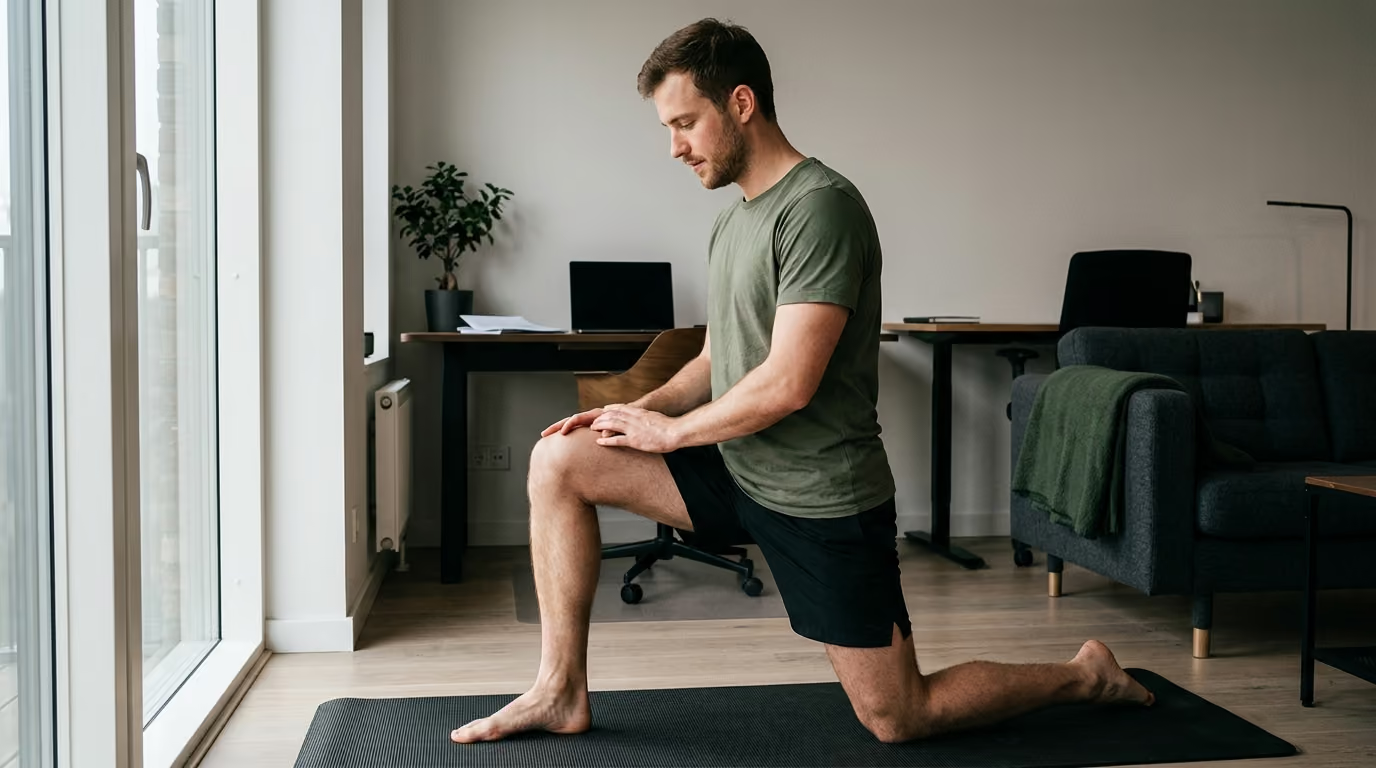

Proper recovery requires structured load assessment and targeted rest rather than total inactivity to restore biological capacity and prevent injury.





An effective recovery day is not a full day spent motionless on a couch, nor is it a disguised conditioning workout. It is an intentional, structured process that lowers systemic stress while restoring physical and cognitive capacity. You wake up early after a demanding week of physical training and occupational duty, feeling heavy, stiff, and short on sleep. Deciding between staying completely inactive or grinding through another gym session often feels like a guessing game. This resource provides a comprehensive framework to assess your physical state, categorize your fatigue, and build a repeatable recovery routine that matches your daily demands.
An effective recovery day matches the lowest dose of useful movement, nutritional restoration, and rest to your accumulated physical and psychological load.
To build an effective recovery day, you must remove the primary physical stressor from the previous days, preserve basic circulation through light activity, restore baseline joint mobility, and replenish energy through sufficient nutrition and sleep. A recovery day should leave you feeling physically prepared for your next operational or athletic demand rather than drained from unnecessary effort.
Recovery is not simply the absence of exercise. According to a consensus statement from the American College of Sports Medicine, recovery is the physiological and psychological process by which the body adapts to stress. Physical training and occupational labor cause temporary tissue disruption, glycogen depletion, and nervous system fatigue. When recovery is managed properly, these stressors trigger positive biological adaptations that build strength, endurance, and physical capability.
When recovery is inadequate, repeated physical demands lead to maladaptation. This state increases the risk of overuse injuries, systemic illness, and chronic physical exhaustion. Training load and daily duty break down tissues and use up metabolic resources. The recovery period is when protein synthesis repairs muscle fibers, connective tissues remodel, and the nervous system resets its baseline autonomic tone.
Understanding recovery requires understanding the balance between training load and recovery capacity. Load is everything you ask your body and mind to absorb. Recovery capacity is your current biological ability to handle and adapt to that load. Recovery capacity is not a fixed number. It shifts daily based on your sleep quality, nutritional intake, hydration, illness, and emotional stress.
A productive recovery day does not require complete stillness unless you are sick or acutely injured. Instead, it asks what specific inputs your body needs to return to a high level of function. By viewing recovery as an active biological process, you can select activities that accelerate restoration rather than add to your total fatigue.
Assessing your total stress requires looking far beyond the exercises listed in a training log. The International Olympic Committee consensus on athletic load emphasizes that total load includes physical training, occupational work, competition, travel, and psychological stress. Evaluating your recovery needs requires examining your activities over the previous 24 to 72 hours alongside the upcoming demands of the next two days.
External load represents the measurable work you performed. This includes the miles run, the tonnage lifted in the gym, the hours spent carrying equipment, and the duration of continuous movement. Mechanical load refers specifically to the tissue stress caused by high-impact ground strikes, heavy eccentric contractions, or repetitive lifting. If your previous days included heavy rucking or high-volume squats, your mechanical load is elevated regardless of how your lungs feel.
Internal load measures how demanding that external work was on your physiological systems. It accounts for heart rate responses, perceived exertion, thermal strain from heat or cold, and breathlessness. A standard three-mile run performed in high heat after poor sleep creates a much higher internal load than the exact same run completed in cool weather while well-rested.
Occupational and duty demands must be counted directly alongside formal workouts. Active military personnel, law enforcement officers, industrial workers, and healthcare providers often spend eight to twelve hours on their feet wearing weighted gear. That physical time constitutes real mechanical and physiological load. You can read more about balancing physical readiness with work obligations in our resources on military health and operational demands.
Psychological stress from family responsibilities, demanding shifts, and high-stakes decision-making drains central nervous system reserves. The brain and body share the same recovery resources. When cognitive stress is exceptionally high, your muscular and metabolic recovery will naturally take longer.
Many athletes attempt to track workload through the acute-to-chronic workload ratio, which compares the work done over the last seven days against the rolling average of the prior month. While this mathematical model offers a general concept of workload spikes, published research reviews caution against using it as an absolute predictor of injury. Wearable device scores and algorithmic recovery percentages should provide context, but they should never replace practical self-assessment of your joints, movement quality, and daily energy.
Load can be organized into four practical working categories:
This state occurs following normal daily activities or light, routine exercise that produces no lingering soreness or exhaustion. Your joints feel smooth, your baseline energy is steady, and your resting heart rate is within normal ranges.
This state reflects a standard training session combined with regular daily work. You may feel minor, manageable muscular tightness, but your movement mechanics remain normal and your concentration is intact.
This level follows intense sprint intervals, heavy lower-body lifting, multi-hour endurance events, or back-to-back night shifts. You experience noticeable muscle heaviness, reduced movement fluidity, and elevated baseline physical fatigue.
This level is created by sudden surges in physical demand, such as field exercises, multi-day physical testing, selection events, or long manual shifts under harsh environmental conditions. Your body requires a highly conservative recovery protocol focused primarily on passive rest, tissue offloading, and caloric replenishment.
One of the most important decisions on a recovery day is determining whether physical discomfort is routine soreness or a genuine musculoskeletal injury. Delayed-onset muscle soreness, commonly known as DOMS, develops within 12 to 48 hours following unfamiliar or high-volume physical activity. DOMS presents as diffuse, dull, and symmetrical tenderness across the bellies of the muscles that were trained.
Normal muscle soreness typically improves when the tissue is gently warmed up through walking or light dynamic movement. It does not alter your natural gait, lock a joint, or produce sharp sensations during unweighted movement. While DOMS can be uncomfortable, it represents a temporary structural response to exercise rather than an acute injury that demands complete immobilization.
True clinical pain behaves differently from ordinary soreness. Sharp, stabbing, or highly localized pain centered over a specific tendon insertion, joint capsule, or bone surface indicates potential tissue distress. Pain accompanied by visible swelling, joint instability, numbness, tingling, or radiating heat requires immediate modification. You should avoid loading that specific area and consult a qualified healthcare provider for a thorough physical assessment.
If you find yourself limping, changing your spinal mechanics when picking up light objects, or struggling to walk down stairs normally, you are dealing with functional limitation rather than routine soreness. Masking this limitation with intense stretching, deep tissue work, or pain medications to force yourself through a workout increases the likelihood of a long-term injury.
Spinal stiffness and low-back discomfort require a nuanced approach. The National Institute for Health and Care Excellence, known as NICE, recommends that individuals with non-specific, uncomplicated low-back pain stay gently active rather than resort to prolonged bed rest. Light walking and comfortable pelvic movement help maintain blood flow and prevent secondary muscle spasms. However, if back pain radiates down the leg, causes numbness, or impairs bladder control, you must seek urgent medical evaluation.
You can categorize your physical symptoms using four basic states:
Symmetrical muscle ache across large muscle groups. Movement is initially stiff but improves after several minutes of easy walking. Daily functions remain normal.
Discomfort localized to a specific point, such as the patellar tendon, Achilles tendon, or shoulder capsule. Symptoms worsen under direct mechanical load and do not resolve with light warming.
Numbness, tingling, sharp electric sensations, or noticeable muscular weakness that shoots into an extremity. This pattern requires clinical evaluation and total avoidance of aggravating movements.
Pain that forces a limp, prevents full joint extension, or causes compensatory movement during basic daily tasks. This pattern requires targeted rest for the affected structure and medical assessment if it persists.
The debate between resting completely and performing active recovery often leads to confusion. Many people believe that sitting on the couch all day is the best way to heal, while others think they must sweat every single day to flush out waste products. Scientific evidence paints a much more balanced picture.
The World Health Organization explicitly defines sedentary behavior as any waking behavior characterized by an energy expenditure of 1.5 metabolic equivalents or lower while sitting, reclining, or lying down. The WHO guidelines strongly recommend reducing prolonged sedentary time and replacing it with physical activity of any intensity, including light walking. Complete immobility can contribute to joint stiffness, sluggish venous circulation, and reduced psychological well-being.
Active recovery involves low-intensity movement that raises your heart rate slightly without generating mechanical damage or metabolic waste. Activities like walking, light stationary cycling, or gentle swimming increase systemic blood flow, delivering oxygen and nutrients to recovering tissues. To learn more about structuring these movement sessions, review our practical guide on active recovery methods and programming.
Systematic reviews examining popular recovery modalities show mixed results regarding their ability to accelerate biological healing. A comprehensive 2021 review evaluated active recovery, massage, compression garments, cold-water immersion, and contrast therapy for treating exercise-induced muscle damage. The researchers found that while these modalities often produce small to moderate reductions in perceived muscle soreness and subjective fatigue, their effects on actual physical performance recovery are modest.
Earlier systematic reviews on delayed-onset muscle soreness revealed that interventions like low-intensity exercise and passive stretching had minimal to no clinically significant effect on repairing muscle microtrauma. Massage provided small reductions in perceived muscle soreness, but it did not directly accelerate structural tissue regeneration.
The physiological lesson is clear: recovery modalities and light movement are valuable tools for improving comfort, reducing muscle stiffness, and lowering subjective stress. However, they are not magical accelerators that bypass biological repair timelines. You should use active recovery to feel better and stay mobile, not under the false assumption that it eliminates the need for proper sleep, nutrition, and sensible training and performance planning.
Complete rest remains the correct choice under specific physiological conditions:
When your body is fighting a bacterial or viral illness, physical movement diverts valuable immune resources. Exercising with a fever or systemic symptoms increases physiological strain and prolongs recovery.
Fresh ligament sprains, muscle tears, or suspected bone stress fractures require mechanical offloading. Attempting active recovery through an acutely injured structure disrupts early tissue remodeling.
When accumulated lack of sleep, heavy duty demands, and extreme physical output cause deep cognitive fog and profound physical weakness, passive sleep and stillness must take precedence over any form of intentional exercise.
Physical movement is only one side of the recovery equation. Your metabolic and hormonal environments dictate how quickly tissues repair and glycogen stores replenish. Without sufficient calories, micronutrients, and sleep, active recovery sessions simply become an extra source of physical depletion.
The International Olympic Committee published a detailed consensus on Relative Energy Deficiency in Sport, known as REDs. Low energy availability occurs when your dietary caloric intake is insufficient to support the energy needed for your exercise and occupational work while still maintaining basic health functions. When the body experiences low energy availability, it downregulates metabolic rate, bone health, immune function, protein synthesis, and hormone production.
A common pitfall on recovery days is intentional under-fueling. Trainees often drastically reduce their carbohydrate and protein intake on non-training days because they are not burning as many active calories in the gym. This practice starves the body of the exact raw materials required to rebuild damaged muscle fibers and restore liver and muscle glycogen.
To maintain healthy tissue adaptation, recovery days require adequate protein distribution, consistent hydration, and balanced complex carbohydrates. You can explore foundational strategies for nutritional replenishment in our comprehensive resources on recovery, fueling, and physical restoration. Maintaining consistent energy intake ensures that your endocrine system maintains optimal levels of anabolic hormones, including testosterone and growth factors.
Sleep is the ultimate physiological restoration tool. Research examining athletic recovery practices highlights that habitual sleep of adequate duration and quality is the primary driver of physical regeneration. During slow-wave, deep sleep, the pituitary gland releases pulses of human growth hormone, which facilitates tissue repair and cellular rebuilding. Rapid eye movement sleep supports neural plasticity, motor skill consolidation, and emotional regulation.
Shift work, night duties, and early alarms frequently disrupt natural circadian rhythms. When total sleep duration is restricted, your body exhibits elevated levels of baseline cortisol, decreased insulin sensitivity, and impaired muscular power output. While sleep needs vary slightly between individuals, most physically active adults require between seven and nine hours of quality sleep to maintain physical durability.
If you are chronically sleep-deprived, spending an hour in the gym foam rolling or stretching is far less effective than using that hour for a high-quality nap or going to bed early. You can read deeper analysis on managing sleep disruption in our guide to sleep, stress, and nervous system resilience.
An effective recovery day is built on five practical, repeatable steps. Following these steps removes the guesswork and ensures that your routine directly addresses accumulated physical stress.
The first rule of a recovery day is to eliminate the specific physical stressor that created the greatest fatigue over the previous 48 hours. If you completed a high-impact interval workout yesterday, your recovery day must exclude sprinting, jumping, and high-impact running. If you completed a heavy deadlift and squat session, you must avoid heavy spinal loading and intense eccentric leg work. If you worked a twelve-hour standing shift, you must avoid prolonged standing exercises.
Removing the main stressor gives localized tissues the necessary window to complete initial inflammatory and remodeling cascades without interruption.
Low-cost movement refers to physical activity that promotes blood flow and joint articulation without causing elevated heart rates, heavy sweating, or muscular exhaustion. The target for this movement is an exertion level where you can easily speak in complete sentences without losing your breath.
Examples include:
The objective metric for this step is simple: you should finish the movement session feeling more energetic and mobile than when you started. If you feel tired or depleted afterward, you worked too hard.
Intense physical training and long occupational hours often lead to adaptive muscle shortening and joint stiffness. A recovery day should include 10 to 15 minutes of gentle, active mobility work designed to take your major joints through comfortable ranges of motion.
Focus on multi-joint patterns that address:
Avoid painful, aggressive stretching. Forcing an already inflamed or micro-traumatized muscle into extreme end ranges can cause defensive muscle guarding and worsen tissue sensitivity.
Use your recovery day to correct any nutritional or hydration deficits that developed during your hard training days. Drink sufficient water to restore normal urine color, and ensure adequate electrolyte intake if you experienced heavy sweating.
Eat regular, balanced meals containing complete protein sources, complex carbohydrates, healthy dietary fats, and micronutrient-dense vegetables and fruits. Do not skip meals or severely restrict calories as a method to offset lack of gym activity. Treat every meal as an active investment in tissue repair and endocrine stability.
A recovery day is incomplete if it ends in logistical chaos that creates morning stress. Take practical steps to reduce friction before your next training session or operational shift.
Lay out your uniform or athletic gear, prepare your meals for the following day, verify your training schedule, and establish a firm, distraction-free bedtime routine. Turning off digital screens 60 minutes before sleep and keeping your sleeping environment dark, cool, and quiet will maximize your deep restorative sleep phases.
Recovery days should not follow a rigid, one-size-fits-all formula. The right protocol depends on your specific training history, occupational load, and physical symptoms. Choose the template below that best reflects your current state.
When to use: Your recent training load was low to moderate, you have no joint or tendon pain, your sleep was adequate, and your baseline energy is normal.
When to use: You recently completed an exhaustive workout, a heavy lower-body lifting session, a long ruck march, or an athletic competition.
When to use: You have a scheduled day off from the gym, but you are working an eight to twelve-hour physical shift, wearing body armor, standing continuously, or handling physical manual labor.
When to use: You are experiencing localized tendon pain, joint swelling, back spasms, or movement-altering discomfort.
When to use: You wake up feeling physically heavy, mentally exhausted, irritable, and unmotivated, following several days of poor sleep, heavy stress, or under-eating.
Applying these recovery principles becomes clear when looking at common, real-world scenarios. The following six case patterns demonstrate how to adjust recovery protocols based on individual circumstances.
A lifter completes a heavy lower-body session consisting of squats, Romanian deadlifts, and loaded carries. The next morning, they report moderate, symmetrical soreness in their quadriceps, glutes, and hamstrings. Their baseline energy is strong, they slept seven and a half hours, and their joints feel stable.
Action Plan: The trainee follows Template B. They perform 25 minutes of easy stationary cycling to promote circulation without impact. They complete ten minutes of hip and ankle mobility work using bodyweight movements. They consume normal, balanced meals with ample protein and carbohydrates, and they avoid all heavy spinal loading until their scheduled training day.
A service member runs an easy, slow three miles in the morning. However, they subsequently work a stressful twelve-hour night shift on poor-quality food and achieve only four hours of broken sleep. The physical training volume was low, but their total physiological and cognitive load is exceptionally high.
Action Plan: The service member uses Template E. They skip all additional gym exercises and active recovery sessions. They consume a high-protein, nutrient-dense meal, hydrate thoroughly, and dedicate their off hours entirely to passive sleep and mental decompression.
A runner incorporates a new strength circuit into their routine and wakes up with noticeable chest, upper-back, and hamstring tightness. When assessing their movement, they can squat smoothly to parallel, walk with a normal stride, and reach overhead without discomfort.
Action Plan: The runner uses Template A. They take a 40-minute walk through their neighborhood and spend ten minutes performing comfortable floor-based mobility. They recognize that their soreness is simply routine DOMS and does not require medical intervention or complete bed rest.
An individual completes a strenuous interval running session on Monday. On Tuesday morning, they experience sharp, focal discomfort under their left patella. When attempting to walk down stairs, they limp and shift their body weight entirely onto their right side to avoid bending the left knee.
Action Plan: The individual immediately switches to Template D. They stop all running, jumping, and deep knee-bending movements. They perform gentle, flat-ground walking if it remains entirely pain-free, or switch to an upper-body rowing ergometer. They monitor the joint over 48 hours and arrange a medical evaluation if the localized pain and functional limitation persist.
A trainee reports feeling completely exhausted for three consecutive weeks. Their gym performance is declining, their sleep is fragmented, their morning resting heart rate is consistently elevated, and they have lost their normal appetite.
Action Plan: The trainee must recognize this state as potential chronic overreaching or low energy availability. They initiate a multi-day deload phase using Template E. They review their total caloric intake, increase daily food portions, remove high-intensity conditioning, and schedule an evaluation with a healthcare provider to check baseline blood biomarkers and hormonal health.
A firefighter has a day off from structured gym workouts but spends the day responding to multiple emergency calls, carrying heavy hoses, climbing stairs in full protective gear, and managing high-stress scenarios.
Action Plan: The firefighter applies Template C. They recognize that their occupational shift provided substantial physical volume. They avoid adding any formal conditioning sessions on their scheduled gym rest day, focus on consuming consistent meals between emergency calls, and prioritize aggressive sleep hygiene upon returning home.
Even well-intentioned individuals frequently make basic errors that undermine their recovery. Avoiding these common pitfalls will ensure that your rest days support your long-term physical capability.
Spending twelve consecutive waking hours lying in bed or sitting motionless on a couch slows down venous blood flow and increases joint stiffness. Unless you are acutely ill, replacing prolonged sitting with brief, light walks supports general health without introducing physical fatigue.
Active recovery fails when you allow intensity, heart rate, or volume to creep upward. If your easy 20-minute walk turns into an aggressive five-mile ruck with a heavy backpack, you have added significant mechanical stress rather than facilitating recovery. Keep your recovery activities strictly non-demanding.
Delayed-onset muscle soreness is an imperfect marker of physical fatigue. You can be severely drained from a hard nervous system workout without having any sore muscles. Conversely, you can have mild muscle soreness while your central nervous system and cardiovascular system are completely recovered. Always evaluate your total state, including sleep, mood, resting heart rate, and movement quality.
Many marketing claims suggest that specialized boots, deep tissue massages, or extreme recovery gadgets are required to flush toxins or lactic acid from your muscles. Lactic acid clears naturally from your bloodstream within 30 to 60 minutes after exercise on its own. Use recovery modalities for comfort and relaxation, but do not rely on them as mandatory biological cleansers.
When a muscle feels tight, the natural impulse is often to stretch it as hard as possible. However, muscle tightness is frequently a neurological protective response to underlying instability, fatigue, or microtrauma. Forcing a sensitive muscle into aggressive end-range static stretching can trigger muscle guarding or aggravate connective tissue. Use gentle, active movement rather than forceful stretching.
Cutting your caloric intake drastically on rest days starves your tissues of the amino acids and carbohydrates required to repair structural damage and restore energy stores. Keep your nutrition consistent, balanced, and sufficient to fuel recovery across the entire week.
Failing to account for the physical toll of your job, family obligations, and emotional stress leads to miscalculated recovery needs. If your life outside the gym is highly demanding, your formal training volume must be adjusted downward, and your recovery protocols must be adjusted upward to maintain long-term physical readiness. You can review foundational strategies for sustainable capability in our guide to long-term fitness and strength development.
Use this quick checklist every morning to select your recovery strategy for the day:
This article is published for educational and informational purposes only and is not intended as individual medical advice, physical therapy prescription, diagnosis, or treatment. Active duty personnel, veterans, and civilian trainees should consult a qualified physician, physical therapist, or healthcare professional before making substantial changes to their exercise programming, particularly when managing persistent pain, chronic joint symptoms, suspected overtraining syndrome, or unexplained systemic fatigue.
Most active adults and trainees benefit from one to three recovery days per week, depending on their total training intensity, weekly volume, age, and occupational demands. A consensus review on athlete recovery practices recommends at least one full day off from structured, high-intensity training each week. Beginners and individuals with physically demanding jobs often require two to three recovery days to avoid chronic overtraining.
For most healthy individuals, light walking is far superior to complete immobility. The World Health Organization emphasizes that replacing sedentary time with light-intensity physical activity provides systemic cardiovascular, metabolic, and psychological benefits. Walking promotes circulation, eases joint stiffness, and aids mental decompression without adding meaningful physical fatigue. Reserve complete bed rest for instances of acute illness, fever, or severe systemic exhaustion.
You should generally maintain a balanced intake of complex carbohydrates and protein on recovery days. Carbohydrates are essential for replenishing liver and muscle glycogen stores that were depleted during previous workouts. Severely restricting carbohydrates on rest days can impair glycogen resynthesis, elevate baseline cortisol levels, and hinder tissue repair, leaving you under-fueled for your next demanding session.
Muscle soreness that persists beyond 72 hours is typically a sign that your previous workout exceeded your current physical capacity through excessive volume, heavy eccentric loading, or unfamiliar exercises. Continue using gentle, non-impact active recovery, prioritize hydration and sleep, and reduce the intensity of your upcoming training sessions. If the discomfort is localized to a joint, tendon, or bone, or if it causes swelling or functional impairment, seek a clinical evaluation.
Follow BattleVet for practical guidance on military and veteran health, strength, recovery, testosterone, sleep and healthy aging. Stay connected for new articles, research backed insights and clear information to help you stay capable for the years ahead.


Build better habits around strength, recovery, sleep, hormones and healthy aging with practical guidance for active military personnel and veterans.
Explore BattleVet