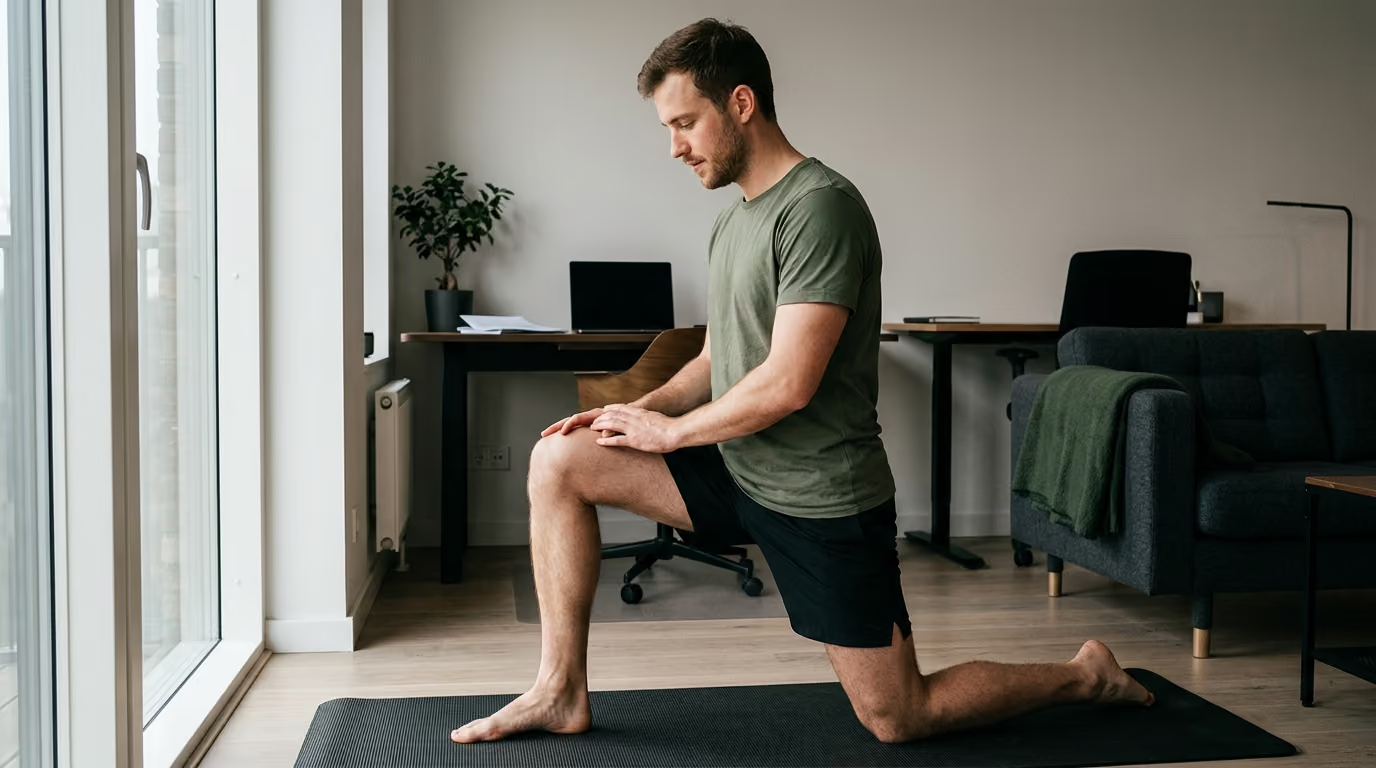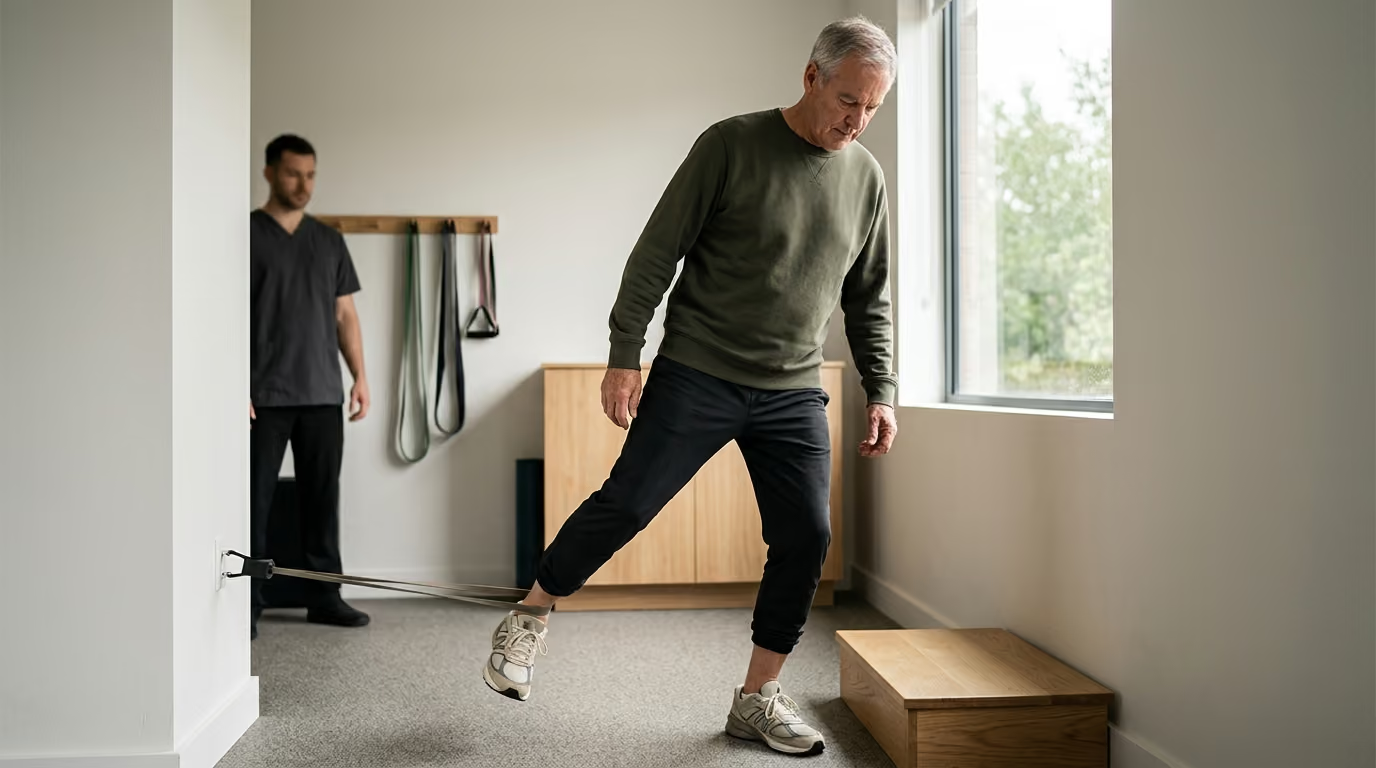

Hip restoration rebuilds essential joint strength and active mobility through progressive tissue loading to ensure a safe return to daily physical movement.





You swing your legs out of bed in the morning and immediately feel a sharp, restrictive pinch in the front of your hip. Walking down the stairs requires holding the handrail while your joint warms up and finds a rhythm. By the time you sit in your car or at your desk, the deep ache settles back into the joint, making your first standing steps feel stiff, guarded, and weak.
Hip recovery is the systematic restoration of load tolerance, usable mobility, multi-directional strength, and movement capacity across daily tasks rather than simple pain relief.
Restoring hip function requires a progressive progression from symptom regulation to tissue loading. The hip connects your trunk to your lower limbs, absorbs ground reaction forces, and powers locomotion. True restoration requires building capacity across all movement planes so you can walk, run, squat, lift, and carry weight without recurring setbacks.
Hip recovery often fails when individuals treat the joint as an isolated ball and socket. They focus entirely on stretching muscles that feel tight. The hip joint is a primary load-bearing structure surrounded by deep capsular ligaments, multi-layered musculature, and extensive neural pathways.
Restoring the hip means building capacity. Capacity is the total work volume, force, and range the joint complex can tolerate before breaking down or triggering protective symptoms.
Mobility is the usable, active movement available during a physical task. It differs fundamentally from passive flexibility. Passive flexibility occurs when an outside force moves your leg into a position. Active mobility requires your nervous system and muscles to control that position under load.
A clinical assessment evaluates several distinct aspects of hip range:
The hip moves in three primary planes and six distinct directions. These include flexion, extension, abduction, adduction, internal rotation, and external rotation. A restriction or weakness in any single direction disrupts the entire system.
For instance, limited internal rotation alters how your pelvis rotates during walking. This limitation can overload the lower back or the knee.
Strength is equally multi-dimensional. You cannot reduce hip strength to a single muscle group like the gluteus maximus. Functional hip capacity requires three distinct qualities:
Research demonstrates that hip abduction strength plays a central role in whole-body function. A systematic review published in Archives of Physical Medicine and Rehabilitation found that greater hip abductor torque strongly correlates with better balance, faster walking speeds, and superior stair-climbing capacity in younger and older adults. When your abductors lack capacity, your pelvis drops during single-leg stance, compromising efficiency and increasing stress on surrounding joints.
The hip serves as the mechanical bridge between your upper body and the ground. It transmits forces upward from the feet and downward from the spine. When you improve hip function, you directly improve your ability to execute basic, highly demanding movement patterns.
Walking appears simple, but it places complex, cyclical demands on single-limb stability. Every step requires you to support your entire body weight on one leg while controlling pelvic tilt and generating forward propulsion.
A healthy gait requires adequate hip extension at push-off, stable hip abduction during mid-stance, and smooth hip flexion during the swing phase. If hip extension is restricted, your body compensates by hyperextending the lumbar spine.
Building durable gait capacity through targeted training allows you to handle longer daily distances without developing lower back or knee discomfort. You can explore structured protocols for joint conditioning in our library of strength and fitness resources.
Running amplifies the mechanical load on the hip joint to several times your body weight. It requires rapid force production, quick eccentric absorption, elastic energy storage, and sustained single-leg control.
Returning to running after hip irritation or surgery demands a systematic approach. You must first demonstrate pain-free walking, stable single-leg squat mechanics, and symmetrical balance.
According to return-to-sport reviews after hip procedures, athletes must achieve pain-free performance during hopping, lateral agility, and single-leg deceleration before resuming continuous running. Rushing back into running without adequate force absorption capacity often triggers deep groin pain or reactive tendon irritation.
Squatting is a fundamental pattern for rising from low surfaces, lifting gear, and physical training. It requires simultaneous hip flexion, knee flexion, ankle dorsiflexion, and robust trunk stiffness.
Hip anatomy varies widely among individuals. The angle of the femoral neck, the depth of the acetabulum, and pelvic structure dictate your optimal squat stance.
Forcing an arbitrary, narrow, toes-forward squat stance can cause bony or soft-tissue abutment in hips with deep sockets. Progressive restoration prioritizes finding a comfortable, pain-free stance width and foot angle that matches your anatomy. Depth should be earned through active control rather than forced through passive stretching.
Deadlifts, kettlebell swings, and ground-to-waist lifting require a hip hinge pattern. The hip hinge maximizes force production from the gluteal and hamstring complex while minimizing unnecessary shear forces on the lumbar spine.
Restoring lifting mechanics begins with unloaded, supported hinge drills against a wall. It progresses to elevated rack pulls, trap bar deadlifts, and floor-based pulling.
The primary rehabilitation rule is to alter only one variable at a time. Adjust external weight, movement range, repetition volume, or lifting speed independently. This systematic approach allows you to accurately assess how your hip tolerates mechanical tension.
Carrying external loads, whether a weighted backpack, a child, or heavy field gear, places sustained demands on hip endurance and joint stability. Weighted carriage magnifies joint compressive forces and challenges your pelvic stabilizers over thousands of continuous steps.
Restoration must treat load carriage as an advanced, separate phase of training. You should master unloaded walking distance before introducing a light, symmetrical weighted pack.
Once light loads are tolerated, you can gradually increase pack weight, alter terrain, and introduce inclines. Monitoring your hip response over the subsequent 24 hours ensures you do not exceed tissue capacity.
Different hip issues require distinct management strategies. Applying the wrong exercise protocol to an irritated hip can delay healing.
Hip osteoarthritis involves structural changes in joint cartilage, subchondral bone, and local soft tissues. A 2023 systematic review and meta-analysis published in Osteoarthritis and Cartilage estimated the pooled worldwide radiographic hip osteoarthritis prevalence at 8.55%. Data from the Institute for Health Metrics and Evaluation indicates that global osteoarthritis affected roughly 595 million people in 2020.
Imaging results do not directly dictate your functional capacity or pain level. Many people with significant radiographic changes experience minimal discomfort, while others with mild imaging findings report noticeable stiffness.
The 2017 American Physical Therapy Association (APTA) clinical practice guideline recommends individualized exercise programs combining flexibility, strengthening, and endurance. These protocols are typically performed one to five times weekly over six to twelve weeks.
An evidence review from the Ottawa Panel confirmed that progressive strength training yields the greatest improvements in pain, stiffness, physical function, and range of motion. Exercise maintains joint lubrication, builds shock-absorbing muscle tissue, and preserves long-term independence. For more information on preserving joint health over time, review our healthy aging resources.
Total hip arthroplasty (THA) replaces damaged joint surfaces with prosthetic components. Postoperative rehabilitation focuses on early safety, restoring gait symmetry, rebuilding muscle activation, and regaining functional independence.
According to postoperative THA clinical reviews, progression must follow functional milestones rather than arbitrary calendar dates:
Patients must strictly follow their surgeon's specific precautions regarding dislocation risks, which vary based on whether an anterior, lateral, or posterior surgical approach was used.
Femoroacetabular impingement syndrome (FAIS) occurs when anatomical variations cause abnormal contact between the femoral head and acetabular rim. Hip arthroscopy repairs labral tears and reshapes bony contours.
The 2024 International Society for Hip Preservation physiotherapy agreement outlines a six-phase rehabilitation model. It emphasizes criterion-based progression from initial joint protection to high-level athletic performance.
Data from high-volume hip arthroscopy centers shows that 70% of surgical teams recommend returning to sports between 12 and 20 weeks post-surgery. Furthermore, 85% require all sport-specific movements to be pain-free before granting clearance.
Rushing back before mastering single-leg stability and lateral force absorption significantly increases the risk of secondary flare-ups.
Rehabilitation after a hip fracture is a comprehensive restoration process. It targets profound muscle deconditioning, balance deficits, and fear of falling.
A Cochrane systematic review on post-fracture mobility highlights key recovery metrics. These include four-meter gait speed, assistive-device independence, functional ambulation scores, and activities of daily living.
Recovery requires rebuilding lower-limb strength, practicing balance on diverse surfaces, optimizing dietary protein intake, and addressing fall hazards in the home.
Many desk workers attribute stiff or aching hips to prolonged sitting, often claiming their hip flexors have permanently shortened. The scientific literature presents a more nuanced reality.
A comprehensive systematic-review overview published in the International Journal of Behavioral Nutrition and Physical Activity found no direct studies demonstrating that sedentary behavior causes true flexibility or mobility loss.
Similarly, a systematic review in Applied Physiology, Nutrition, and Metabolism found insufficient evidence to prove that sitting directly causes hip pain, although observational studies link long sitting durations with transient discomfort.
Prolonged sitting does not permanently deform muscle architecture. Instead, it temporarily reduces blood flow, downregulates neuromuscular excitability, and limits daily movement variety.
The solution is not aggressive, painful stretching. The best approach involves regular postural shifts, brief walking intervals, and progressive resistance training.
Understanding the strength of clinical evidence helps you avoid ineffective trends and focus on validated training methods.
Solid scientific research confirms several core principles:
Other common beliefs rest on limited or inconclusive data:
Restoring hip function requires a logical, phased plan that matches exercise demands to tissue capacity. Never advance to the next phase until you achieve the objective milestones of your current stage.
The opening phase calms irritated tissue, unloads sensitive structures, and establishes baseline movement.
This phase transitions you from passive protection to active movement and light loading.
Phase 3 introduces progressive resistance to build load capacity in surrounding muscle groups.
This phase shifts focus from isolated gym strength to movement efficiency and tissue stamina.
Phase 5 prepares the hip joint for dynamic forces, rapid changes of direction, and running.
The final phase solidifies your physical capacity for occupational tasks, heavy lifting, rucking, or competitive sport.
For dedicated strategies on managing sleep, recovery schedules, and physical renewal throughout these demanding phases, explore our recovery and sleep articles.
Designing a durable hip recovery program requires managing training variables. Blindly adding exercises often overloads healing tissues and triggers recurring flare-ups.
You must carefully manipulate Frequency, Intensity, Time, and Type (FITT) to stimulate positive tissue adaptation:
Evaluate the appropriateness of an exercise session by tracking your symptoms across three distinct time windows:
If your hip fails any part of this 24-hour check, reduce the training volume, resistance, or range of motion in your next session.
Integrate these foundational movements into your rehabilitation plan based on your current phase:
This drill builds deep hip abductor activation without irritating the joint capsule. Stand parallel to a wall, lift your inside knee to 90 degrees, and press your knee laterally into the wall.
Hold the contraction for 10 to 15 seconds while maintaining a tall, upright posture on the standing leg. Perform four to five repetitions per side.
Hold onto a sturdy surface with one hand while standing on your target leg. Hinge your hips backward toward the wall behind you while keeping your spine straight and allowing a soft bend in your knee.
Lower until you feel tension in your hamstrings and glutes, then drive your hips forward to return to standing. Complete three sets of 8 to 10 controlled repetitions.
Stand on a low platform or four-inch step. Slowly bend your stance knee, lowering your opposite heel toward the floor over a three-second count without resting your weight at the bottom.
Drive through your entire foot on the platform to return to the top. Complete three sets of 8 repetitions, focusing on preventing your knee from collapsing inward.
Pick up a dumbbell or kettlebell in one hand while standing tall. Walk forward along a straight path for 30 to 40 paces while keeping your shoulders level and preventing your torso from leaning toward or away from the weight.
Switch hands and repeat for three sets per side to build anti-lateral flexion trunk strength and hip stability.
Avoiding common rehabilitation errors will keep your recovery on track.
Tracking objective physical benchmarks provides an accurate picture of your recovery and confirms when it is safe to progress.
Evaluate your baseline range of motion and static balance weekly:
Measure your capacity during practical movement patterns:
For additional evidence-informed guides on physical conditioning and recovery strategies, browse our complete collection of performance and wellness resources.
While structured exercise restores function in most cases, certain symptoms require formal medical evaluation.
Consult a qualified healthcare provider immediately if you experience any of the following red flag symptoms:
Always consult an orthopedic physician or physical therapist to establish an accurate diagnosis and confirm surgical precautions before starting a new rehabilitation framework.
Perceived tightness is often a protective neural response rather than true physical shortening of the muscle tissue. When the hip joint lacks stability, strength, or adequate load tolerance, the nervous system increases resting muscle tone to guard the area.
Aggressive stretching pulls on these guarded tissues, triggering further protective tension. Replacing static stretching with progressive strengthening and active mobility exercises usually resolves chronic stiffness much more effectively.
Hip osteoarthritis typically presents as deep groin or anterior hip stiffness that is most noticeable during your first morning steps or after prolonged sitting. The discomfort tends to ease after several minutes of light movement before returning with excessive fatigue.
A muscular strain usually presents with sharp, localized tenderness along a specific muscle belly or tendon, such as the adductor or rectus femoris. Strains often trace back to a specific explosive movement or sudden overload event. A physical examination and imaging review provide a definitive diagnosis.
Yes, provided you adjust the exercise parameters to respect your individual joint anatomy. Individuals with femoroacetabular impingement should avoid forcing deep hip flexion combined with internal rotation, as this position pinches the labrum.
Adjusting your squat stance to be slightly wider, elevating your heels, performing box squats, and prioritizing hip hinges like trap bar deadlifts allows you to build substantial strength without irritating the joint.
Recovery timelines vary based on your starting point, tissue health, and the underlying condition. Mild soft-tissue irritation or deconditioning often improves within six to eight weeks of consistent loading.
Recovering from hip arthroscopy, joint replacement, or severe osteoarthritis typically requires four to six months of structured rehabilitation. Achieving high-level athletic function or heavy load carriage capacity may take up to a year of progressive training.
Revisit this framework whenever you plateau in your rehabilitation, prepare to advance your training intensity, or experience a mild flare-up following a sudden increase in daily activity.
Building durable hip capacity is a deliberate, step-by-step process that rewards consistent, intelligent loading over quick fixes.
Follow BattleVet for practical guidance on military and veteran health, strength, recovery, testosterone, sleep and healthy aging. Stay connected for new articles, research backed insights and clear information to help you stay capable for the years ahead.


Build better habits around strength, recovery, sleep, hormones and healthy aging with practical guidance for active military personnel and veterans.
Explore BattleVet