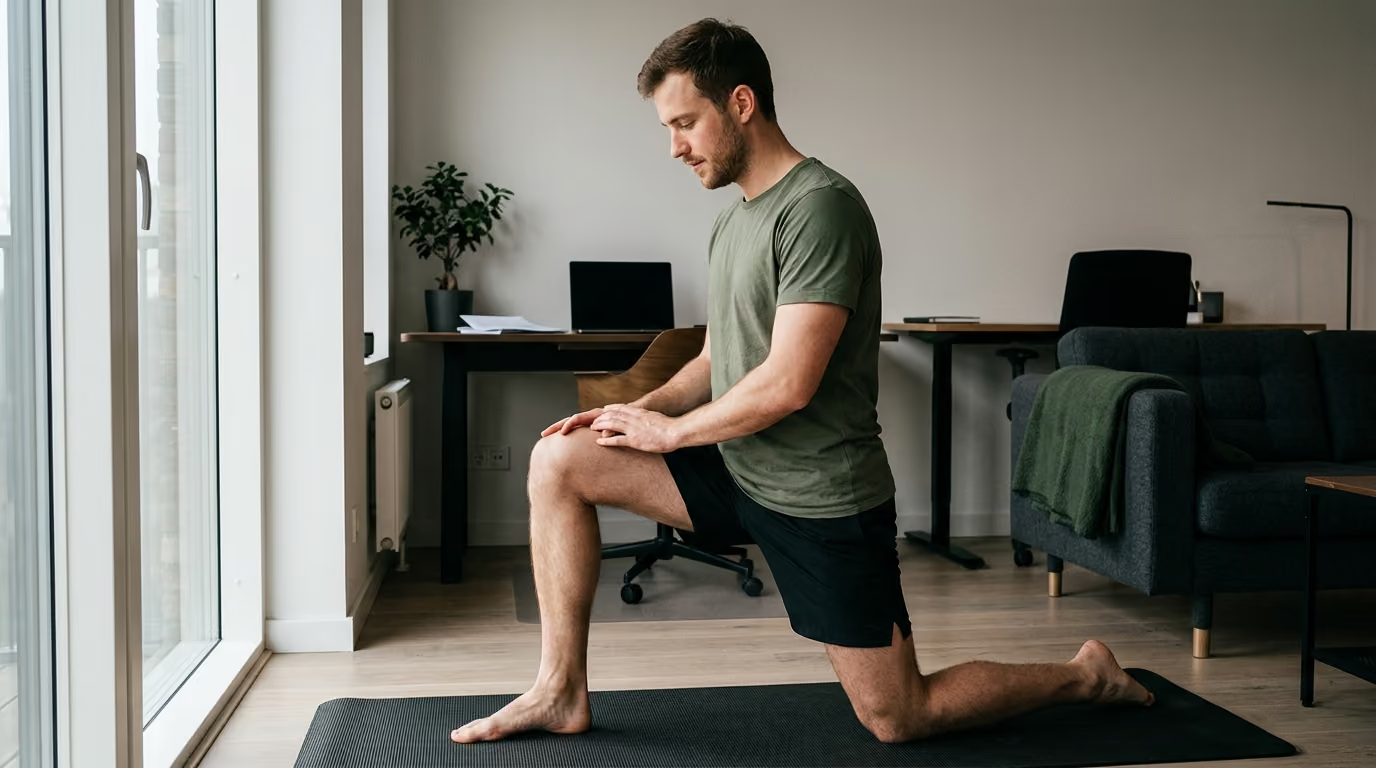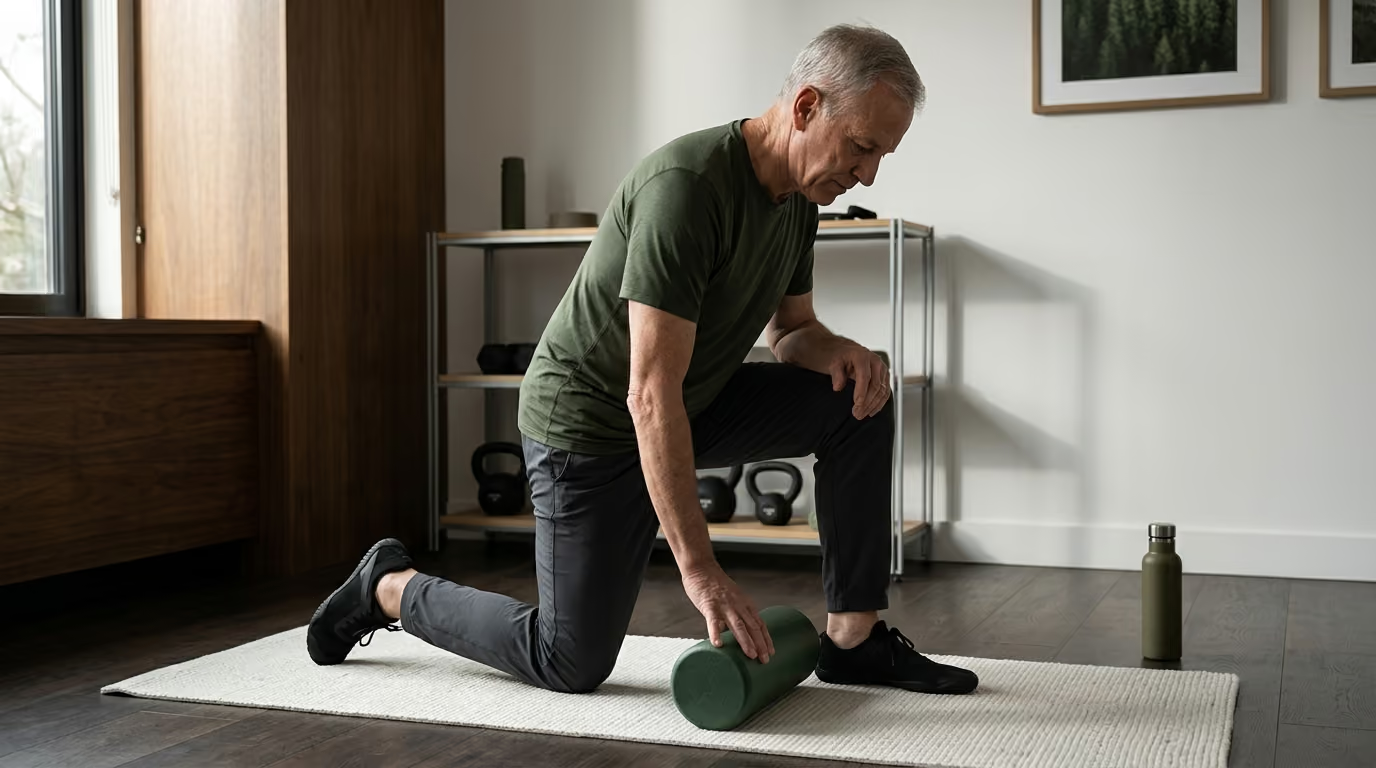

Catching yourself stumbling on uneven ground highlights how targeted power and strength training helps older adults rebuild physical readiness and resilience.





Physical readiness in midlife and later adulthood is not about chasing past personal records or surviving extreme physical punishment. It is the practical capacity to lift, carry, climb, react, and recover without crippling fatigue or injury. When waking up with stiff joints, struggling with poor sleep, or looking over routine blood work, many people assume decline is mandatory. True physical longevity focuses on functional capability, systemic resilience, and tissue restoration rather than passive deterioration.
Healthy aging requires a structured, multicomponent approach that preserves strength, muscular power, cardiovascular capacity, mobility, balance, and recovery.
To maintain physical readiness across the lifespan, individuals must combine progressive resistance training with rapid force development, aerobic base building, lateral hip stability, and targeted nutritional support. This approach preserves neuromuscular function, offsets sarcopenia, protects bone mineral density, and maintains occupational and recreational independence well into later life.
The physical decline often attributed to biological aging is frequently driven by disuse, accumulated orthopedic injuries, and inadequate recovery systems. Aging does alter physiological processes, but structured training alters the rate of that change. Understanding these biological shifts allows for targeted, intelligent programming that preserves real-world capability.
A primary driver of functional decline is sarcopenia, defined as the age-associated loss of muscle mass, quality, and function. Muscle mass alone does not tell the full story. An individual can retain relatively stable limb circumference while experiencing a dramatic loss in force production, contraction speed, motor unit recruitment, and coordination. Research indicates that physical activity significantly lowers the odds of developing sarcopenia, with meta-analytic data reporting an odds ratio of 0.45 compared to sedentary peers.
Muscle power, which represents the ability to produce force quickly, declines at nearly twice the rate of maximal strength. This rapid loss of power impairs safety-critical actions. Catching oneself during a stumble, stepping over an obstacle, rising rapidly from a low seat, or navigating uneven ground all depend on rapid motor unit firing. When power deteriorates, fall risk and perceived physical vulnerability increase.
Cardiorespiratory fitness also undergoes predictable shifts. Maximal oxygen consumption declines over time because of reductions in maximal heart rate, stroke volume, and peripheral oxygen extraction. Research demonstrates that structured aerobic exercise substantially improves peak cardiorespiratory fitness in older adults, showing a standardized mean difference of 0.51 and an average increase of roughly 36 meters in six-minute walk tests.
Bone mineral density and connective tissue tolerance also diminish over time. Tendons become stiffer and less compliant, while cartilage responds more slowly to mechanical loading. Bone adapts positively to mechanical stress, but fracture risk is a complex outcome involving balance, reaction time, environmental hazards, and bone structural quality.
Recovery capacity changes across the lifespan. The nervous system, endocrine pathways, and muscular tissues take longer to return to baseline following high-volume or high-intensity workloads. In our experience working with aging service members, attempting to train with the volume of a twenty-year-old on an aging musculoskeletal frame leads directly to chronic inflammation, joint breakdown, and extended setbacks. Sustainable progress requires respecting the narrower margin between productive stimulus and excessive wear.
Before initiating or updating a training regimen, a thorough baseline assessment helps identify structural limitations, movement compensations, and fall risks. Subjective history and objective physical testing provide a clear picture of current capability.
An accurate assessment begins with a review of medical history, past injuries, and occupational exposures. Service members and veterans often present with high joint mileage, repetitive blast exposures, spinal disc herniations, ligament reconstructions, or chronic nerve compression.
Medication usage must also be audited. Blood pressure medications, diuretics, sedatives, and glucose-lowering agents can influence hydration status, balance, orthostatic blood pressure, and exercise tolerance. Identifying these factors prevents avoidable exercise-induced complications.
Field tests serve as trend measures over time rather than diagnostic labels. A single poor score can stem from temporary fatigue, joint flare-ups, or unfamiliarity with the movement.
The following field measures offer practical data on physical status:
Consistent tracking across these metrics provides objective feedback on whether a training intervention is building usable capacity or accumulating excessive fatigue.
Resistance training forms the foundation of physical preservation. Research demonstrates that resistance exercise produces significant strength improvements even in individuals aged 80 and older. Study findings show strength increases ranging between 9.8 and 31.6 kilograms across various exercises in older cohorts, with higher training intensities generally yielding greater adaptations.
Strength training for longevity focuses on movement patterns rather than isolated muscle groups. Training fundamental movement patterns preserves the neuromuscular pathways necessary for lifting objects, navigating terrain, and rising from the floor.
The squat pattern trains the quadriceps, gluteal musculature, and core to manage vertical displacement. For individuals with knee discomfort or limited mobility, the pattern begins with a box squat or supported sit-to-stand. As motor control and joint tolerance improve, progress to goblet squats with a kettlebell or dumbbell held at the chest.
Controlling the eccentric, or lowering, phase builds tendon strength and muscle mass. The individual should lower under control for two to three seconds, pause briefly without collapsing onto the seat, and stand smoothly.
The hinge pattern targets the posterior chain, including the hamstrings, gluteus maximus, and spinal erectors. This movement teaches proper mechanics for lifting heavy objects from the floor while protecting the lumbar spine.
Starting with a cable pull-through or Romanian deadlift with light dumbbells allows the trainee to focus on pushing the hips backward while maintaining a neutral spine. Trap bar deadlifts provide an accessible loaded progression because the neutral grip and centered weight reduce shear stress on the lower back.
Bilateral exercises like traditional barbell squats can mask strength asymmetries between limbs. Unilateral training through step-ups, split squats, and lunges corrects these imbalances while demanding substantial hip stabilization.
Step-ups onto a low, stable platform allow for precise height adjustments to match knee tolerance. The movement should emphasize driving through the lead foot without bouncing off the trailing leg. Split squats with hands supported on a rail provide a stable entry point for rebuilding single-leg strength and hip mobility.
Upper-body training maintains the ability to push open heavy doors, carry gear, and prevent shoulder dysfunction. Pushing movements should include elevated push-ups, dumbbell floor presses, and standing cable presses that allow the scapulae to move naturally.
Pulling movements should take priority over pressing to counteract forward-head postures and thoracic kyphosis. Chest-supported rows, single-arm cable rows, and lat pulldowns strengthen the rhomboids, latissimus dorsi, and posterior deltoids without putting unnecessary strain on the lower back.
A minimum effective dose strategy is ideal for aging adults. A systematic review revealed that low-volume resistance training substantially improves physical function, lean mass, and muscle cross-sectional area. While higher volumes can drive greater absolute strength, lower volumes minimize joint irritation and systemic fatigue.
Effort should be regulated using Repetitions in Reserve (RIR) or the Rating of Perceived Exertion (RPE). Training within two to three repetitions of technical failure delivers a strong stimulus for hypertrophy and strength without causing the severe tissue damage associated with training to absolute failure. To explore structured routines that balance volume and longevity, check out our strength and body composition resources.
While maximal strength represents the absolute force a muscle can generate, muscle power reflects how quickly that force can be produced. In everyday environments, most balance threats happen in fractions of a second. If an individual trips on a sidewalk curb, the window of time to plant a foot and catch their body weight is roughly 200 to 300 milliseconds.
Scientific reviews comparing power training to traditional strength training show that moving loads with high velocity yields a functional advantage for physical tasks in older adults. A review of 20 randomized controlled trials found that power training improved objective physical function across 13 trials, particularly in tasks like stair climbing, rapid chair rising, and obstacle clearance.
Power training does not require high-impact plyometrics, heavy Olympic lifting, or risky ballistic drills. It is defined by the intent to move quickly during the concentric phase, paired with a slow, controlled eccentric phase.
Trainees can build power safely through several low-impact variations:
Power exercises should be performed at the beginning of a workout when the central nervous system is fresh. Sets should remain short, typically three to five repetitions, with full rest periods between sets to ensure movement velocity does not drop.
A robust aerobic system supports more than just cardiovascular health. It dictates how quickly an individual recovers between sets of strength work, clears metabolic byproducts, manages systemic inflammation, and sustains daily occupational tasks.
Public health agencies, including the Centers for Disease Control and Prevention (CDC), recommend that older adults achieve at least 150 minutes of moderate-intensity aerobic activity weekly, or 75 minutes of vigorous activity, or an equivalent combination. Meeting these thresholds is associated with reduced all-cause mortality, improved metabolic profile, and preserved cognitive function.
The bulk of aerobic training should occur in Zone 2, an intensity where an individual can maintain a conversation without gasping for air (the "talk test"). This intensity develops mitochondrial density, increases capillary network perfusion in skeletal muscle, and improves cardiac stroke volume without imposing severe autonomic stress.
Zone 2 modalities should be selected based on joint health:
While base aerobic work forms the foundation, brief exposures to higher intensities preserve peak oxygen uptake (VO2max). Once a consistent Zone 2 base is established over eight to twelve weeks, short intervals can be introduced once per week.
A practical model is the 1:2 or 1:3 work-to-rest ratio using low-impact equipment. For example, cycling with high effort for 30 seconds, followed by 60 to 90 seconds of easy pedaling, repeated for four to six rounds. This stimulus recruits higher-threshold motor units and challenges stroke volume without subjecting compromised joints to ballistic pounding. Review our training and performance articles for more strategies on building a balanced conditioning engine.
Balance and mobility are active physical qualities that require consistent, progressive challenge. Balance is not simply standing still on a flat surface. It is the ability to regulate the body's center of mass over a changing base of support in dynamic, unpredictable environments.
The World Health Organization (WHO) specifically recommends that older adults perform multicomponent physical activity that emphasizes functional balance and strength training on three or more days per week to enhance functional capacity and prevent falls.
Veterans Affairs (VA) research on fall prevention has highlighted the hip abductors (primarily the gluteus medius and minimus) as uniquely impaired in older adults who experience falls compared to non-fallers. The hip abductors stabilize the pelvis during the single-leg stance phase of walking. When these muscles are weak, the pelvis drops, leading to lateral instability, compensatory trunk sway, scuffing of the swing foot, and severe balance loss.
Targeted lateral hip strengthening should be incorporated into every training week:
Static balance drills must progress toward dynamic, multi-directional tasks. Training should follow a systematic hierarchy:
Mobility refers to usable active range of motion under muscular control, distinct from passive flexibility. Tight hamstrings or stiff ankles cannot be resolved by passive stretching alone. They require active movement through full, controlled ranges.
Key mobility targets include:
Exercise provides the mechanical and metabolic stimulus, but actual functional improvements occur during the recovery period. Aging physiology is marked by anabolic resistance, a state where skeletal muscle requires a larger relative protein and amino acid stimulus to initiate muscle protein synthesis.
Standard recommended dietary allowances are often inadequate to maintain muscle mass in active older individuals or those facing sarcopenia. Guidelines from the European Society for Clinical Nutrition and Metabolism (ESPEN) recommend protein intakes of 1.0 to 1.2 grams per kilogram of body weight daily for healthy older adults, increasing to 1.2 to 1.5 grams per kilogram daily for those with acute or chronic illness or established sarcopenia.
Research demonstrates that meeting optimal protein intake targets significantly improves the odds of maintaining muscle mass and strength, showing odds ratios of 2.16 for muscle mass and 2.31 for strength compared to lower intakes.
However, nutrition alone cannot replace mechanical loading. A review comparing interventions showed that exercise alone improved handgrip strength, gait speed, and skeletal muscle index. Protein supplementation alone improved handgrip strength and gait speed, but failed to drive significant increases in appendicular muscle mass without resistance training.
Practical protein strategies include:
Older adults frequently under-eat because of blunted thirst and hunger cues, medication side effects, or changes in taste and smell. Insufficient caloric intake accelerates muscle wasting, impairs immune defense, and stalls tissue repair. Aggressive calorie-restricted dieting should be avoided when preserving muscle and functional capacity is the goal.
Key micronutrients must be monitored:
To dive deeper into nutritional planning for long-term health, explore our nutrition and fueling guides.
Sleep architecture changes with age, frequently resulting in decreased slow-wave sleep and more nighttime awakenings. Because growth hormone release and neural repair occur primarily during deep sleep, poor sleep directly impairs adaptation.
Maintaining consistent wake times, limiting alcohol and caffeine intake late in the day, optimizing bedroom temperature, and obtaining natural morning sunlight help stabilize circadian rhythms. Recovery should be tracked through performance trends, resting heart rate, and subjective soreness rather than rigid schedules. For comprehensive sleep strategies, visit our recovery and sleep articles.
Veterans and former service members often transition into midlife with orthopedic damage, chronic back pain, joint replacements, blast-related neurological issues, or post-traumatic stress. In our experience, trying to maintain physical capability years after leaving service requires shifting away from short-term tactical readiness toward sustainable health and longevity. Staying capable over decades means prioritizing joint longevity, mobility, and cardiovascular health rather than pushing through structural damage.
A national cohort study on older veterans highlighted the protective nature of exercise: while each five-year increase in age was associated with higher odds of noninjurious falls (odds ratio 1.05), veterans who engaged in regular physical activity showed significantly lower odds of falling compared to inactive peers (odds ratio 0.89).
Training with service-connected injuries requires moving through a structured continuum:
Attempting readiness-level loading before restoring tissue capacity is the most common cause of recurrent injury.
Training around chronic conditions requires specific modifications:
Veterans can explore specialized programming and support through our veteran lifestyle and healthcare resources.
A sustainable weekly plan combines strength, power, aerobic conditioning, mobility, and balance into a balanced schedule. The program must be flexible enough to accommodate poor sleep, travel, joint flare-ups, and life stress.
This template is designed for an individual returning to activity after a period of deconditioning:
This template is designed for an active individual aiming to build both strength and rapid power:
Every four to six weeks, introduce a planned deload week. Reduce total training volume by 40 to 50 percent while keeping the intensity (weight on the bar) moderate. This allows connective tissues, the hormonal system, and the central nervous system to recover fully, preventing overtraining and burnout.
If an unexpected joint flare-up occurs, modify the exercise rather than abandoning the session entirely. Swap bilateral squats for supported box step-ups, change an overhead press to a neutral-grip incline dumbbell press, or substitute a run with a stationary bike ride.
Walking is an outstanding baseline exercise for cardiovascular health, mental clarity, and metabolic function. However, walking alone does not provide sufficient mechanical tension to build maximal strength, bone mineral density, or upper-body capacity. It also fails to train rapid muscle power or multidirectional stability. A complete program must combine walking with resistance training, power drills, and dynamic balance work.
Signs of poor recovery include persistent joint soreness that lasts longer than 48 hours, deteriorating performance across consecutive workouts, elevated resting morning heart rate, worsening sleep quality, and chronic irritability. If multiple symptoms appear, reduce training volume, emphasize protein and hydration, and add an extra rest day.
Yes. Muscle hypertrophy is driven by mechanical tension within the muscle fibers, which does not require heavy, painful joint loading. You can use isometric contractions, slow tempo repetitions, blood flow restriction training, and machine-supported exercises through a pain-tolerant range of motion. Building the surrounding musculature reduces joint stress and improves overall function.
Neurological adaptations occur quickly. Most individuals experience noticeable improvements in motor coordination, balance confidence, and movement efficiency within three to four weeks of consistent training. Measurable increases in muscle cross-sectional area, bone mineral density, and tendon stiffness typically require eight to twelve weeks of progressive training.
This guide is intended strictly for educational and informational purposes and does not constitute personalized medical, physical therapy, or healthcare advice. Aging individuals, particularly those with pre-existing cardiovascular conditions, orthopedic injuries, osteoporosis, or chronic medical diagnoses, should undergo a comprehensive evaluation by a qualified physician or physical therapist before beginning any new exercise or nutritional regimen. Regular monitoring ensures that training stimuli remain safe, appropriate, and aligned with individual health needs.
Follow BattleVet for practical guidance on military and veteran health, strength, recovery, testosterone, sleep and healthy aging. Stay connected for new articles, research backed insights and clear information to help you stay capable for the years ahead.


Build better habits around strength, recovery, sleep, hormones and healthy aging with practical guidance for active military personnel and veterans.
Explore BattleVet