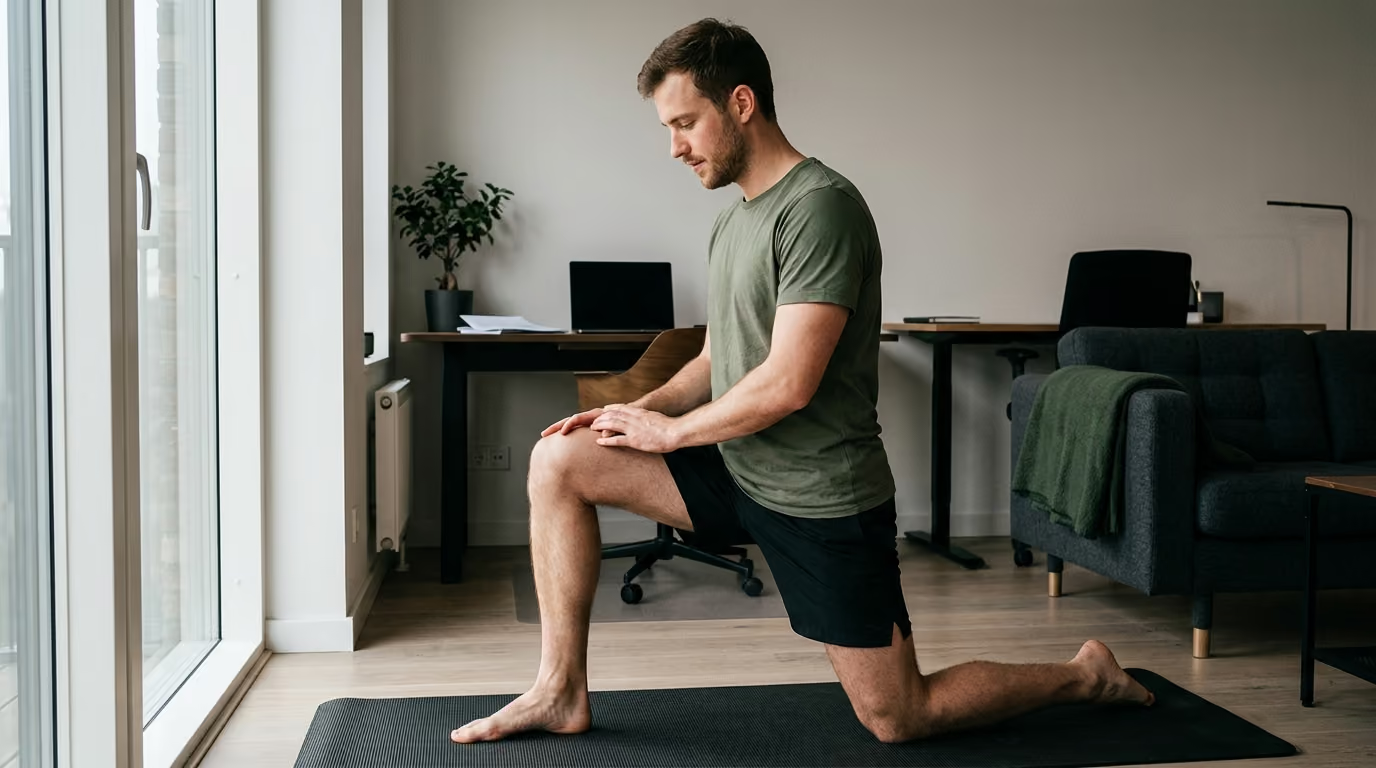

Post-concussion activity protocols use symptom-guided aerobic exertion, cervical rehabilitation, and vestibular therapy to ensure a safe return to sports.





You step onto the treadmill a few days after a hard impact, expecting a light workout to clear your head. Within five minutes, a dull pressure builds behind your eyes, the overhead gym lights feel glaring, and a wave of nausea forces you to step off. Many active individuals and service members search for how to safely resume training after a head injury without setting their recovery back. This guide provides an evidence-based roadmap for returning to physical exertion, rebuilding exercise tolerance, and addressing lingering symptoms safely.
A structured, subsymptom-threshold return to activity supports concussion recovery far better than indefinite rest in a dark room.
Modern clinical evidence shows that exercise recovery should begin with 24 to 48 hours of relative rest, followed by a gradual progression through light aerobic movement, sport-specific drills, resistance training, and full physical activity. The process requires monitoring symptoms over a 24-hour window, addressing distinct impairments in the neck, visual, and vestibular systems, and securing medical clearance before returning to contact or high-risk environments.
A concussion is a traumatic brain injury caused by biomechanical forces transmitted to the head, neck, or body. The injury triggers a complex neurometabolic cascade characterized by ionic shifts, altered cellular metabolism, reduced cerebral blood flow, and temporary autonomic nervous system dysregulation. A concussion does not require a loss of consciousness to cause meaningful physical, cognitive, and sensory disruption.
Recovery was historically managed with complete physical and cognitive rest until every symptom vanished. Patients were told to stay in dark rooms without screens, reading, or exercise, an approach often called cocoon therapy. Research highlighted in the 6th International Conference on Concussion in Sport consensus statement, known as the Amsterdam consensus, demonstrates that prolonged strict rest can actually delay recovery, worsen deconditioning, and heighten anxiety.
Current clinical guidance recommends relative rest for the first 24 to 48 hours following injury. Relative rest allows for ordinary activities of daily living and gentle movement, such as easy walking, provided these tasks do not cause more than a mild and brief increase in symptoms. After this initial window, individuals are encouraged to begin symptom-limited physical activity to support autonomic recovery and maintain conditioning.
Active rehabilitation relies on subsymptom-threshold aerobic exercise. This approach uses cardiovascular training performed below the specific heart rate or exertion level that triggers a meaningful flare-up in symptoms. Graded aerobic exercise helps restore normal cerebral blood flow regulation, balances autonomic function, and prevents the physical deconditioning that makes post-concussive fatigue worse.
Large systematic reviews and consensus data provide clear benchmarks for what typical recovery looks like. In approximately 80% to 90% of cases, acute concussion symptoms resolve within 10 to 14 days. A 2023 systematic review and meta-analysis confirmed a mean time to becoming symptom-free of 14.0 days, although returning to unrestricted athletic activity generally took longer than returning to work or school.
Approximately 10% to 20% of individuals experience symptoms that persist for weeks or months. The Amsterdam consensus defines persisting symptoms as those lasting longer than four weeks. Slower recovery is strongly associated with higher initial symptom severity, acute cognitive difficulties, sleep disruption, history of migraines, and pre-existing anxiety or mood disorders.
Clinical trials have demonstrated the benefits of initiating controlled aerobic exercise early in the recovery process. A landmark randomized trial conducted in adolescents found that individualized subsymptom-threshold aerobic training started early reduced the likelihood of delayed recovery compared to a basic stretching protocol. Another study evaluating patients at elevated risk for prolonged symptoms observed persisting post-concussion symptoms in 44% of the early aerobic exercise group compared to 86% in standard care, although the wide confidence interval indicates the need for continued study. A 2021 University at Buffalo report similarly documented a 48% reduction in the risk of persistent symptoms when subsymptom aerobic exercise began within 10 days of injury.
Managing the return-to-activity timeline properly is vital for preventing repeat injuries. Historical collegiate sports data indicated that 92% of repeat concussions occurred within 10 days of the initial impact. In contrast, modern cohorts managed under graduated protocols through the NCAA and Department of Defense CARE Consortium showed only 3.7% of repeat concussions occurring within that same early window. Athletes who return to competition prematurely also face broader physical risks, with research showing a 60% higher risk of subsequent time-loss musculoskeletal injuries during the same season.
Returning to physical conditioning requires a structured, multi-step progression. The Centers for Disease Control and Prevention (CDC) outlines a staged protocol designed to safely advance an individual from complete rest to unrestricted activity. Each stage must take at least 24 hours, and advancement occurs only when the current stage is completed without provoking new or worsening symptoms.
The first 24 to 48 hours following a suspected concussion focus on avoiding further trauma and allowing the acute metabolic crisis in the brain to stabilize. The individual must be removed from any activity carrying a risk of head impact, collision, or falling.
Light daily tasks, basic self-care, and short periods of easy walking around the home are appropriate if they do not cause noticeable distress. Screen exposure should be minimized during this initial window, but strict dark-room isolation is neither necessary nor helpful.
Once the initial 48-hour period passes, the goal is introducing light movement that increases circulation without straining the nervous system. The session should consist of 5 to 10 minutes of slow walking or easy stationary cycling at a conversational pace.
Weightlifting, inverted movements, and activities involving rapid head turning or visual tracking should be completely avoided. The person should check their symptoms during the exercise and over the subsequent 24 hours to confirm good tolerance.
Stage 2 increases cardiovascular demand to assess how the autonomic nervous system manages higher heart rates. Appropriate activities include brisk walking, light jogging, or moderate stationary cycling for 15 to 20 minutes.
The focus remains on steady-state, linear movements that keep the head upright and stable. If the heart rate climbs without triggering dizziness, headache, or visual disturbances, the individual demonstrates growing physiological tolerance.
Stage 3 introduces dynamic movement patterns, acceleration, deceleration, and mild changes of direction. Depending on the individual's sport or physical training background, activities may include agility ladder footwork, running turf drills, or stationary ball handling.
No contact, scrimmaging, or high-risk movement is permitted during this phase. This stage helps identify lingering vestibular or visual motion sensitivity that may not appear during straight-line walking or cycling.
Stage 4 reintroduces progressive resistance training, sprint intervals, and complex movement drills. Individuals can resume structured lifting routines, bodyweight circuits, and higher-intensity conditioning.
Resistance training should begin with stable, supported exercises before advancing to heavy compound lifts that create significant intra-abdominal and intracranial pressure. Service members and athletes can incorporate this work into their broader structured training and performance principles once baseline stability is confirmed.
Stage 5 allows participation in full practice drills, tactical simulations, and controlled contact drills after formal medical clearance. The individual executes normal operational or sporting tasks under direct supervision.
This stage evaluates how the brain responds to unpredictable environments, physical collisions, and high cognitive loads simultaneously. It serves as the final clinical checkpoint before full release.
Stage 6 represents complete recovery and unrestricted clearance for competitive sports, high-risk physical activities, or full military duties. The individual has completed the entire progression without symptom recurrence and demonstrates normal physical, cognitive, and balance capabilities.
Accurate recovery tracking requires distinguishing between normal training fatigue and post-concussive neurological provocation. Individuals should systematically log symptom intensity before, during, and after every physical session.
A common pitfall is evaluating an exercise bout solely by how the body feels during the workout. Post-concussion symptoms often experience a delayed onset, appearing several hours later or the following morning. Applying a 24-hour evaluation window ensures that the physical volume did not exceed the brain's current metabolic capacity.
Clinicians frequently use the two-point rule when dosing subsymptom exercise. If symptoms increase by more than two points on a 0-to-10 severity scale during exercise, the session must stop immediately. The individual rests, hydrates, and monitors recovery.
When a session triggers an unacceptable symptom flare, the individual should not attempt to push through the discomfort. They should take a 24-hour rest period or drop back to light walking. Once symptoms return to baseline, they resume exercise at the previous well-tolerated stage rather than forcing advancement.
Tracking heart rate and perceived exertion provides objective control over workout intensity. While formal protocols like the Buffalo Concussion Treadmill Test identify exact heart rate thresholds in a clinic, athletes can use a rate of perceived exertion (RPE) scale of 1 to 10 at home. Keeping early aerobic work at a perceived exertion of 3 to 4 out of 10 keeps the stimulus therapeutic rather than aggravating.
A concussion rarely affects the brain in complete isolation. The biomechanical forces that produce a brain injury frequently disrupt the cervical spine, the vestibular apparatus, and the ocular-motor systems. Understanding these separate clinical profiles allows for targeted rehabilitation instead of treating every symptom as an undifferentiated brain issue.
The human neck requires significantly less force to sustain a sprain or strain than the brain requires to suffer a concussion. Consequently, nearly every concussive event involves some degree of whiplash or cervical spine trauma. Dysfunction in the upper cervical joints (C1 to C3) and surrounding suboccipital muscles frequently refers pain directly over the scalp, behind the eyes, and across the forehead.
Cervicogenic headaches often mimic post-concussion headaches but are provoked by sustained posture, neck movement, or physical carrying rather than pure cardiovascular effort. When dizziness and neck pain persist beyond 10 days, targeted physical therapy is strongly indicated. A randomized clinical trial by Schneider and colleagues showed that youth and young adults receiving combined cervical and vestibular physiotherapy were 3.91 times more likely to achieve medical clearance within eight weeks compared to standard care.
Rehabilitation should focus on restoring pain-free cervical range of motion, improving deep neck flexor endurance, and releasing hypertonic suboccipital musculature. Isometric neck strengthening and postural endurance drills should be integrated gradually to restore stability without triggering muscle spasms.
The vestibular system in the inner ear coordinates balance, spatial orientation, and head-eye coordination through the vestibulo-ocular reflex. When this system is disrupted, individuals experience dizziness, unsteadiness on uneven terrain, and disorientation in visually busy spaces like gyms or stores.
Vestibular rehabilitation uses specific, progressive exercises to recalibrate inner ear signaling and central processing. Gaze stabilization drills, such as maintaining visual focus on a fixed target while slowly turning the head side to side, retrain the vestibulo-ocular reflex. Dynamic balance tasks on foam pads or single-leg stances challenge proprioception in a controlled manner.
These balance drills must be performed in safe environments away from equipment edges or fall hazards. Service members managing concurrent operational stress can pair balance work with sleep, stress, and resilience management to optimize central nervous system recovery.
Concussions frequently alter how the eyes track objects, focus across distances, and work together as a coordinated pair. Common ocular-motor problems include convergence insufficiency, saccadic dysfunction, and extreme sensitivity to bright artificial lighting or moving visual environments.
Visual symptoms often emerge when an individual attempts to read, use computer screens, or navigate complex gym settings with multiple moving people. Cardiovascular conditioning should be separated from high visual demands in early recovery. For instance, an athlete can ride a stationary bike facing a plain wall to build aerobic capacity without overtaxing their visual system.
Targeted eye exercises, including smooth pursuits, pencil push-ups for convergence, and saccadic switching between distant targets, should be guided by a qualified physical therapist or neuro-optometrist. Pacing screen exposure and taking scheduled visual breaks prevent unnecessary symptom flare-ups during the workday.
Autonomic dysfunction after a concussion impairs the balance between the sympathetic and parasympathetic nervous systems. This disruption can cause abnormal heart rate variability, elevated resting pulse, and an inappropriate constriction or dilation of cerebral blood vessels during physical effort.
This physiological mismatch creates exertional headaches, throbbing head pressure, and lightheadedness when the heart rate rises. Subsymptom aerobic training directly addresses this issue by safely challenging the autonomic nervous system without triggering a vascular flare-up. Over several weeks of graded stationary cycling or walking, cerebral autoregulation normalizes, allowing the individual to tolerate higher workloads and heavy lifting.
Post-concussion recovery varies significantly based on injury mechanics, medical history, and individual physiological resilience. Reviewing realistic recovery patterns illustrates how to adapt the graded framework to different clinical situations.
An individual sustains a mild head impact during a sporting event, presenting with a light headache and mild fatigue but no red flag signs, neck pain, or vestibular issues. After 36 hours of relative rest, their resting headache clears.
They begin daily 15-minute walks on day three, advance to light stationary cycling on day four, and initiate jogging drills on day five. By day seven, they complete a heavy resistance training session without symptoms. Following a supervised practice drill and formal medical clearance, they resume full activity on day nine.
An individual feels entirely normal while sitting at a desk but develops a throbbing headache and head pressure within eight minutes of moderate running. Their cervical range of motion is full, and balance tests are completely normal.
This presentation indicates pure autonomic exercise intolerance. A clinician establishes their symptom-free heart rate threshold at 135 beats per minute using a graded treadmill test. The individual trains on a stationary bike at 115 to 120 beats per minute for 20 minutes daily. Over three weeks, their threshold steadily climbs, eventually allowing them to perform high-intensity interval training without headache provocation.
A veteran experiences a blast wave or vehicle collision impact, resulting in lingering suboccipital headaches, neck tightness, and mild dizziness when turning their head quickly. Standard rest protocols fail to provide relief over a three-week span.
A physical therapist identifies joint stiffness in the C2-C3 segments and weakness in the deep neck flexors. The treatment plan pairs manual therapy and cervical stabilization exercises with gentle vestibular habituation drills. As cervical mobility and neck strength improve, the radiating headaches diminish, enabling the veteran to safely resume safe progression in strength and fitness.
An athlete tolerates high-intensity stationary cycling without any symptoms but becomes intensely nauseated and dizzy when performing agility ladder drills, sprinting outdoors, or shopping in a crowded grocery store.
The cardiovascular system is fully recovered, but the visual-vestibular integration pathways remain compromised. The rehabilitation plan maintains aerobic fitness through stationary equipment while introducing gradual gaze stabilization and head-turn walking drills. Complex environmental agility is introduced in quiet, open spaces before progressing to crowded, visually stimulating team settings.
An individual with a history of three prior concussions sustains a new impact and experiences severe brain fog, sleep disruption, emotional irritability, and exercise intolerance lasting past six weeks.
Prolonged cases require a comprehensive multimodal evaluation rather than repeated cycles of unguided rest. The individual works with a multidisciplinary team combining subthreshold aerobic exercise, targeted vestibular therapy, sleep regulation protocols, and occupational accommodations. Recovery takes several months, but structured intervention steadily restores physical capability and cognitive clarity.
Misunderstandings regarding concussion recovery often lead individuals to adopt extreme approaches that delay their return to physical activity. Avoiding these common errors ensures a smoother progression.
A frequent misconception is that any mild increase in symptoms during exercise causes permanent brain damage. A temporary, mild symptom rise is merely a sign that the metabolic or autonomic capacity of the nervous system was briefly exceeded. It serves as a dosing signal to adjust intensity, not proof of structural reinjury.
Another error is ignoring the profound impact of sleep disruption on recovery. Concussions frequently alter circadian rhythms and sleep architecture, leading to insomnia, daytime fatigue, and heightened pain sensitivity. Establishing strict sleep hygiene, minimizing nighttime blue light, and utilizing systematic protocols for recovery and sleep provide the neurological foundation required for physical restoration.
Many individuals also attempt to skip intermediate progression stages once they have a single symptom-free day. Feeling good at rest does not guarantee that the brain can handle the rapid shifts in blood pressure, visual tracking demands, and dynamic balance required during heavy lifting or tactical training. Skipping steps significantly elevates the risk of symptom relapse and secondary musculoskeletal injury.
While mild headaches and light sensitivity are common during recovery, certain clinical signs indicate serious intracranial pathology requiring immediate emergency medical evaluation. Anyone recovering from a head impact must be aware of these critical warning signs.
Emergency symptoms indicate potential intracranial hemorrhage, severe brain swelling, or structural cervical fractures. If any of these signs appear, all physical activity must cease immediately, and the person must be transported to an emergency department.
For ongoing post-concussion management, self-directed exercise must remain strictly non-contact. Unrestricted return to high-risk environments, contact sports, or tactical military duties requires formal clinical evaluation and written clearance from a licensed healthcare provider trained in concussion management. Service members can consult evidence-based military health guides to understand military-specific medical profiling and return-to-duty standards.
This educational guide is provided for informational purposes only and does not constitute individualized medical advice, clinical diagnosis, or treatment prescriptions. Concussions and traumatic brain injuries are complex neurological conditions that require professional oversight. Always consult with a qualified healthcare professional, sports medicine physician, or physical therapist before initiating any physical exercise program or return-to-activity protocol following a head injury. Never ignore emergency red flag symptoms or delay seeking professional medical care based on the contents of this article.
Current medical guidelines recommend 24 to 48 hours of relative rest immediately following the injury. After this initial window, you can begin light physical activity, such as easy walking or gentle stationary cycling, provided your symptoms do not increase by more than two points on a 10-point scale.
If your headache or other symptoms increase by more than two points during physical effort, stop your workout immediately. Rest in a quiet environment, hydrate, and monitor your symptoms over the next 24 hours. Once your symptoms return to their pre-exercise baseline, you can resume training at a lower intensity or shorter duration that does not trigger a flare-up.
Running outside requires continuous visual tracking, head movement, and dynamic balance adjustments on uneven ground, which heavily challenges your vestibular and ocular-motor systems. In contrast, seated or supported weightlifting involves fixed visual focus and minimal head movement. This difference suggests you may have lingering vestibular or visual motion sensitivity that requires targeted rehabilitation.
A history of multiple concussions does not automatically mean you must permanently stop cardiovascular training or resistance exercise. However, repeated head injuries require a thorough multimodal medical evaluation to identify specific functional deficits and guide an individualized recovery plan. With appropriate subsymptom pacing and targeted rehabilitation, most individuals can safely return to high levels of physical fitness.
You can apply the principles of graded concussion recovery systematically starting this week by following this clear, step-by-step checklist:
Follow BattleVet for practical guidance on military and veteran health, strength, recovery, testosterone, sleep and healthy aging. Stay connected for new articles, research backed insights and clear information to help you stay capable for the years ahead.


Build better habits around strength, recovery, sleep, hormones and healthy aging with practical guidance for active military personnel and veterans.
Explore BattleVet