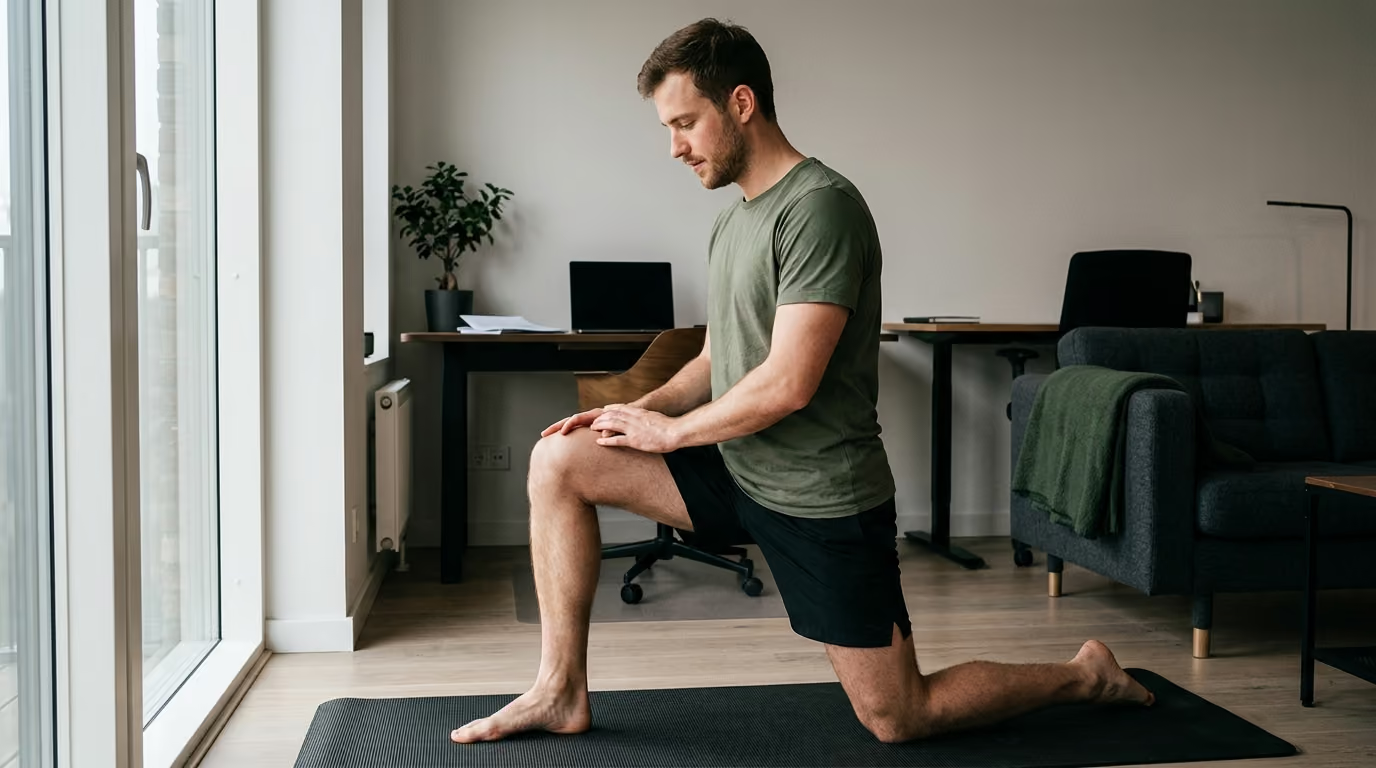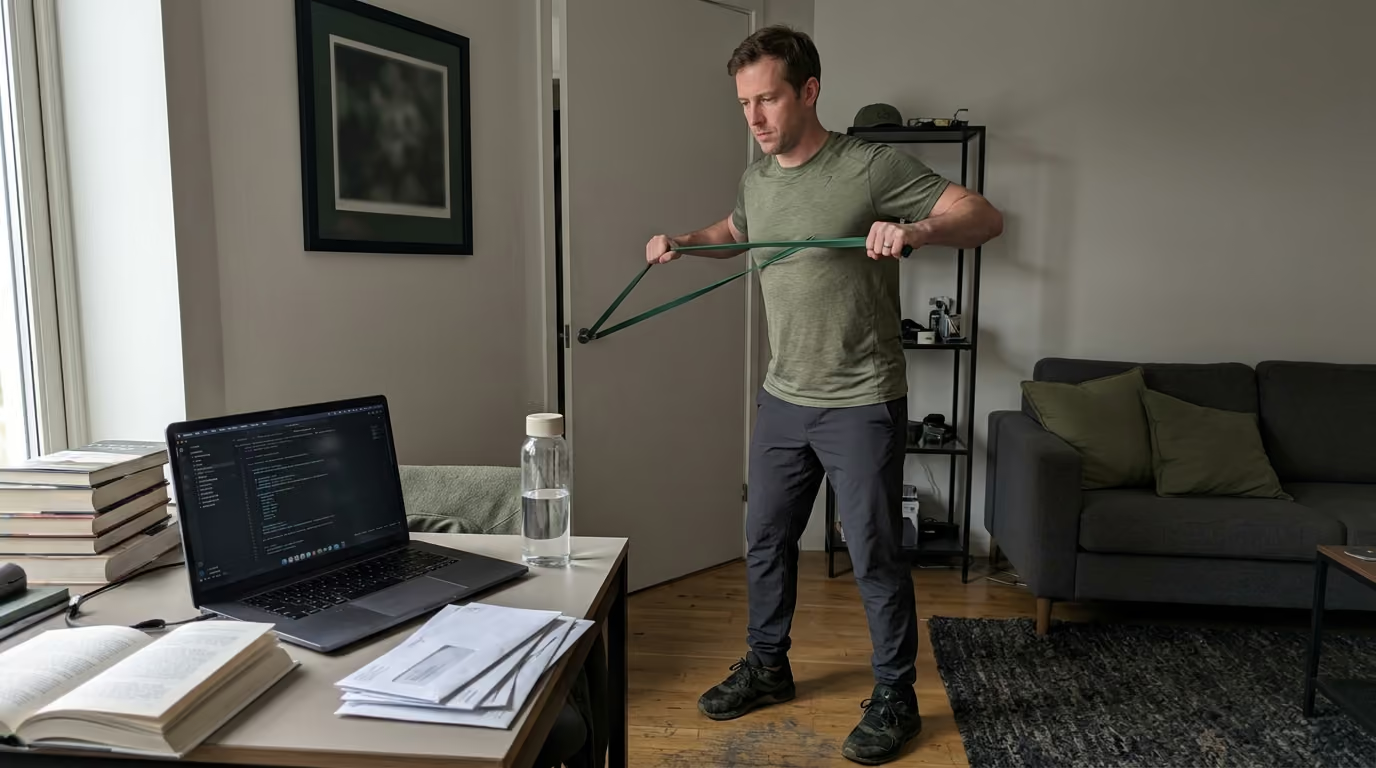

Physical deconditioning alters muscle strength and cardiovascular health, requiring a methodical, staged approach to restore daily stamina and functional movement safely.





Most recovery advice tells you that getting back on your feet after illness or injury is purely a test of willpower. You push through the dizziness, force yourself to take longer walks, and expect your pre-illness strength to return naturally. That approach fails because prolonged physical unloading does not simply shrink muscle tissue. It fundamentally alters your cardiovascular regulation, autonomic nervous system balance, and postural control mechanisms. Rebuilding physical capacity requires a staged, clinical rebuilding of functional reserve rather than a rushed return to standard training.
Deconditioning recovery is the structured, multisystem restoration of force production, aerobic endurance, orthostatic tolerance, balance, and movement coordination following significant inactivity.
Physical deconditioning occurs when the physiological demands of daily life exceed the body's current functional capacity. Recovering from prolonged bed rest, extended hospitalization, sedentary recovery periods, or operational deployment transitions requires progressive exposure across distinct physiological systems. The recovery process moves through structured stages: stabilizing underlying medical risks, restoring upright autonomic tolerance, regaining basic functional strength, expanding work capacity, and finally re-establishing occupational or real-world resilience.
Deconditioning is often misunderstood as simple muscular atrophy. When a person is confined to bed or remains largely sedentary for days or weeks, every organ system adapts rapidly to the lack of mechanical demand. These adaptations occur in days rather than months.
The cardiovascular system experiences some of the most immediate disruptions. Without the regular challenge of gravity, blood volume shifts from the lower extremities toward the central circulation. The body senses this central fluid increase as excess volume and eliminates fluids through the kidneys. This process leads to hypovolemia, which is a significant drop in total circulating blood volume.
At the same time, the heart muscle undergoes subtle morphological changes. Studies show that two weeks of continuous head-down bed rest can reduce left ventricular volume and decrease myocardial distensibility. When a person attempts to stand upright after this period, the heart struggles to maintain adequate stroke volume. The blood vessels in the legs fail to constrict rapidly enough. The result is orthostatic intolerance, which causes dizziness, sudden heart rate spikes, visual changes, and extreme fatigue.
Skeletal muscle tissue deteriorates with equal speed. When muscles stop bearing load, the balance between muscle protein synthesis and muscle protein breakdown shifts downward. The rate of muscle protein synthesis can fall by roughly 30 percent during sustained bed rest. Muscle fiber diameter shrinks, motor unit recruitment becomes uncoordinated, and capillary density around muscle fibers declines.
These multisystem losses create three distinct functional bottlenecks that restrict recovery.
The force bottleneck occurs when skeletal muscles cannot generate enough raw force or power to complete essential tasks. A person facing this bottleneck cannot stand up from a deep chair without pushing off with their arms. They cannot climb a standard flight of stairs without relying heavily on a handrail.
Muscular power, which is the ability to generate force quickly, declines even faster than maximal static strength. Power is essential for catching yourself during a trip, accelerating out of a seated position, or stepping onto a curb safely.
The energy bottleneck appears when a person possesses adequate strength for a single movement but lacks the aerobic stamina to repeat it. The heart rate accelerates rapidly during minimal exertion, such as walking down a hallway or taking a shower.
This bottleneck is driven by a lower maximal oxygen uptake, reduced cardiac output, and diminished muscular capillary networks. The person feels wiped out for hours or days after performing basic daily tasks.
The regulation bottleneck represents a breakdown in the body's internal control and sensing systems. Even if muscular strength is partially intact, the person cannot function safely because their blood pressure drops upon standing. Their balance reflexes are blunted, or they experience significant spatial disorientation.
Proprioception, which is the body's internal sense of joint position, becomes dull after extended non-weight-bearing periods. The nervous system requires deliberate, repeated upright exposure to recalibrate these automatic balance and vascular reflexes.
Before initiating any reconditioning program, you must establish an accurate baseline of both physical capacity and physiological recovery cost. Measuring physical capacity alone can be misleading. A person might force themselves to complete a physical test, only to suffer severe autonomic crashes, extreme muscle soreness, or cognitive brain fog over the following 48 hours.
Functional reserve is the safety margin between the maximum capacity of your body and the physical demands of an activity. If your maximum walking tolerance is 100 meters, walking 90 meters pushes you to the brink of complete exhaustion. A sudden obstacle or uneven surface can cause a fall. Recovery protocols must build functional reserve so that standard daily tasks consume only a small fraction of your total capacity.
A comprehensive assessment focuses on several foundational domains:
Standardized tests provide clear, objective numbers that eliminate guesswork from the recovery trajectory.
The Five-Times Sit-to-Stand test measures lower-body functional strength and power. The individual sits in a standard, armless chair with their arms crossed over their chest. They stand up fully and sit down five times as quickly as possible while being timed. This test directly reflects the force bottleneck.
The Timed Up and Go test evaluates balance, gait speed, and transfer ability. The person stands up from a chair, walks three meters at a safe and comfortable pace, turns around, walks back, and sits down. Taking longer than 12 seconds indicates an increased risk of falling, requiring targeted balance and stability work before advancing to heavy loads.
The Six-Minute Walk Test measures total submaximal aerobic capacity. The individual walks along a flat, measured corridor for six minutes, resting as needed. The total distance covered reflects cardiorespiratory reserve and functional endurance.
Tracking subjective recovery cost is just as important as objective testing. Maintaining a daily movement log helps prevent overexertion cycles.
If next-morning fatigue or dizziness increases significantly, the volume or intensity of the previous session exceeded the body's current regulatory capacity. The next session must be reduced in volume.
Navigating physical recovery requires distinguishing established clinical research from common training assumptions. Many individuals assume that general fitness advice applies directly to deconditioned states. Research demonstrates that acute deconditioning involves distinct physiological processes that standard gym routines fail to address.
Substantial clinical research confirms that physical inactivity causes rapid, measurable declines across multiple bodily systems:
Certain common assumptions remain unsupported by rigorous clinical evidence:
Orthostatic intolerance is often the primary bottleneck that halts early recovery. When an individual stands up, gravity pulls roughly 500 to 1,000 milliliters of blood into the lower limbs and splanchnic circulation. In a healthy state, the autonomic nervous system senses this shift, increases sympathetic tone, constricts peripheral blood vessels, and elevates heart rate slightly to maintain cerebral blood flow.
During and after prolonged bed rest, these automatic mechanisms become blunted. The heart's stroke volume is already reduced due to lower circulating blood volume. When standing, venous return drops sharply. The brain experiences transient hypoperfusion, resulting in light-headedness, blurred vision, sudden sweating, palpitations, and near-syncope.
To safely manage orthostatic intolerance, follow a structured, step-by-step postural progression protocol. Never transition abruptly from a lying position to active walking.
Begin by elevating the head of the bed or using a wedge pillow to rest at a 45-degree angle. This simple positional change signals the vascular system to begin managing gravitational fluid shifts. Once this position is tolerated without dizziness, transition to sitting upright with the legs supported on the bed.
The next progression is sitting on the edge of the bed with feet flat on the floor. Before standing, perform physical counter-maneuvers. Pump the ankles up and down 20 times, squeeze the calf muscles, and tighten the quadriceps and glutes. These contractions act as a skeletal muscle pump, forcing pooled venous blood out of the legs and back toward the central circulation.
When moving to a standing position, pause for at least 30 to 60 seconds while holding onto a stable surface or walking aid. Do not immediately walk away. Allow the arterial baroreceptors to adjust blood pressure. If dizziness or visual tunneling occurs, immediately sit back down, elevate the legs if possible, and rehydrate.
Clinicians often recommend supportive strategies such as graduated compression socks (20 to 30 mmHg) or abdominal binders to reduce peripheral pooling. Adequate hydration and dietary electrolyte management, guided by a physician, are critical elements for restoring blood volume.
Rebuilding physical capacity requires a progressive system that respects physiological adaptation rates. Rather than following a rigid weekly calendar, advance through stages based on objective physical milestones and symptom stability. Integrating evidence-based training and performance strategies ensures progress remains steady and safe.
The primary focus of Stage 0 is managing clinical risks, preventing contractures, and eliminating continuous bed rest. This stage applies to individuals who are currently bed-bound or severely restricted following surgery, critical illness, or major injury.
Key actions include:
Stage 1 re-establishes upright tolerance and activates major muscle groups through low-load, frequent movement intervals. The primary principle is frequent, low-dose exposure rather than fatiguing workouts.
Sample exercises include:
Advancement criteria: The individual can sit upright for 45 minutes continuously and complete three supported standing intervals without dizziness.
Stage 2 focuses on developing independent transfer ability, increasing dynamic standing tolerance, and building baseline muscular endurance.
Key movements include:
Advancement criteria: Complete 10 unassisted chair rises from a standard chair and walk for 5 continuous minutes without balance loss.
Stage 3 introduces progressive resistance, longer aerobic intervals, and multi-directional balance challenges to expand functional reserve. Learn more about structured strength and body composition protocols for long-term progression.
Core programming elements:
Progression variables must be adjusted systematically. Only change one variable at a time:
Stage 4 transitions from controlled exercise movements to unpredictable, real-world physical demands. This stage is vital for individuals preparing for full community mobility, physical work requirements, or military field duties.
Key targets include:
Advancement criteria: The individual can walk 20 to 30 minutes on outdoor terrain, carry 15 percent of their body weight for 100 meters, and easily get up from the floor.
Stage 5 represents the long-term maintenance of strength, power, cardiorespiratory health, and balance. The individual transitions from active rehabilitation into sustainable, lifetime fitness habits.
At this stage, individuals can safely align with established public health guidelines:
A comprehensive reconditioning protocol must address five distinct physiological training domains. Over-focusing on one domain while ignoring others leaves significant gaps in functional capability.
Muscle strength provides the foundation for all functional movement, but muscle power ensures safety during sudden balance disturbances.
Begin with closed-kinetic-chain functional exercises such as box squats, glute bridges, step-downs, and wall push-ups. As strength improves, introduce controlled movement speed during the concentric (lifting) phase of the movement. For example, stand up from a chair with a brisk, powerful contraction, pause at the top, and lower down under a slow, three-second count. This tempo specifically targets fast-twitch motor units that atrophy quickly during periods of disuse.
Aerobic conditioning restores blood volume, enhances cardiac stroke volume, and expands capillary networks in skeletal muscle.
Continuous aerobic training may initially be too demanding for individuals with low exercise tolerance. Interval conditioning provides a powerful, highly tolerable alternative. Perform 1 to 2 minutes of low-intensity cycling on a stationary recumbent bike, followed by 2 minutes of seated rest. Repeat this sequence 4 to 5 times. Recumbent cycling minimizes orthostatic stress while delivering an effective cardiovascular and muscular stimulus. As stamina improves, transition to upright stationary cycling, treadmill walking, and outdoor locomotion.
Balance is not an inherent trait; it is a complex motor skill requiring continuous sensory integration from the eyes, inner ear, and proprioceptive joint receptors.
Effective balance programming must systematically challenge the base of support:
Prolonged sitting or lying down causes adaptive shortening in connective tissues, leading to joint stiffness and restricted gait mechanics.
Priority mobility targets include:
Respiratory muscles undergo disuse atrophy just like peripheral skeletal muscles, particularly after prolonged illness or critical care hospitalization.
Shallow, upper-chest breathing increases sympathetic nervous system stress and leads to early exercise fatigue. Practice diaphragmatic breathing while lying down or sitting comfortably. Place one hand on the upper chest and the other on the lower abdomen. Inhale slowly through the nose, ensuring the abdomen rises while the chest remains relatively quiet. Exhale slowly through pursed lips. Incorporating this breathing pattern during movement intervals prevents hyperventilation and stabilizes heart rate.
Not all deconditioning follows a simple trajectory. Specific clinical situations require unique adjustments, specialized precautions, and distinct progression rates. You can find more context in these resources on transition to veteran life and long-term recovery.
Survivors of critical illness frequently experience post-intensive care syndrome. This condition involves a combination of profound muscle weakness, severe cognitive dysfunction, memory lapses, sleep disruption, and psychological stress.
Physical therapy should begin with longitudinal, iterative assessments starting two to four weeks post-discharge. In this population, cognitive load significantly impacts physical stamina. Keep exercise instructions clear, simple, and written down. Avoid chaotic, highly stimulating environments during early workouts. Multidisciplinary coordination involving physical therapy, occupational therapy, speech therapy, and psychological support is essential for sustainable progress.
Older adults lose muscle mass and strength at an accelerated rate during bed rest. For an older individual, losing 14 percent of lower-limb strength can push them below the threshold of independent mobility, transforming an independent person into someone who requires full-time caregiving assistance.
Prioritize fall prevention, home safety modifications, and task-specific functional movements. High-protein nutritional intake, distributed evenly across meals, is necessary to overcome age-related anabolic resistance. Involve family members or caregivers in the movement plan to ensure exercises are performed safely and consistently. Explore dedicated strategies for healthy aging and functional longevity to maintain independent living.
Active service members and tactical personnel often face a deceptive form of deconditioning. Following deployment-related injuries, prolonged operational dwell times in sedentary roles, or extended recovery from illness, an individual may appear visually fit and maintain acceptable body composition. However, they may lack the specific physical capacity required for tactical field duties.
General gym workouts do not prepare a service member for tactical readiness. The reconditioning program must progress toward specific operational simulations:
When an individual experiences disproportionate fatigue, flu-like malaise, dizziness, or cognitive worsening 24 to 48 hours after minor exertion, standard progressive overload must stop immediately. This phenomenon, known as post-exertional symptom exacerbation, indicates that the physical demand severely exceeded the cellular energy supply.
For individuals facing post-exertional crashes, standard progressive resistance must be replaced by energy pacing. Establish an energy baseline where daily tasks can be completed without triggering a delayed crash. Break activities into tiny, manageable segments. Introduce heart-rate-monitored movement, keeping exertion well below the anaerobic threshold. Only consider increasing activity volume after maintaining symptom stability for several consecutive weeks. Prioritize dedicated sleep and recovery resources to support nervous system regulation.
Navigating recovery requires avoiding standard pitfalls that stall rehabilitation and increase injury risks.
Another widespread mistake is treating a successful workout as an immediate green light to double the training volume. Physiological adaptations take time to consolidate. A person might tolerate a moderate walking session on Tuesday, but adding double the distance on Wednesday can cause severe tendon irritation or profound autonomic exhaustion by Thursday. Progress volume gradually, allowing at least 48 hours to assess the body's total systemic response before making another progression.
Recovery timelines vary based on the duration of inactivity, age, and baseline health. As a general clinical rule, regaining lost functional capacity takes at least two to three times as long as the period of immobility. Ten days of complete bed rest may require three to six weeks of structured, progressive reconditioning to restore baseline strength, power, and cardiovascular endurance.
Leg heaviness is caused by a combination of reduced blood volume, altered autonomic vascular tone, and skeletal muscle atrophy. When you stand and walk, gravity pools blood in the lower limbs. Decreased capillary density and reduced muscle enzyme activity force the remaining muscle fibers to work under sub-optimal oxygen conditions, producing rapid muscular fatigue and heavy sensations.
Yes. In the early and intermediate stages of reconditioning, your body weight provides substantial mechanical resistance. Exercises such as chair squats, wall push-ups, step-ups, and resistance band routines create sufficient mechanical tension to stimulate muscle protein synthesis. As you advance, you can gradually introduce external resistance such as dumbbells, kettlebells, or weighted backpacks.
If you experience dizziness upon standing, do not immediately attempt to walk. Sit down safely and pause. Review your fluid and electrolyte intake, and discuss your current medications with your healthcare provider. Practice physical counter-maneuvers, such as clenching your calves and thighs before rising. Transition through intermediate postures, such as sitting on the edge of the bed for one minute before standing up completely.
This article is designed strictly for educational and informational purposes. It does not constitute medical advice, physical therapy prescription, diagnosis, or personalized healthcare treatment. Individuals recovering from surgery, prolonged hospitalization, critical illness, cardiovascular events, or major neurological conditions must consult with a qualified healthcare professional or physical therapist before beginning any new exercise or rehabilitation protocol. Discontinue any activity immediately and seek professional medical evaluation if you experience acute chest discomfort, irregular heartbeats, severe shortness of breath, unexplained fainting, sudden neurological changes, or sharp, worsening pain.
Rebuilding functional physical capacity takes time, precision, and respect for physiological adaptation.
Follow BattleVet for practical guidance on military and veteran health, strength, recovery, testosterone, sleep and healthy aging. Stay connected for new articles, research backed insights and clear information to help you stay capable for the years ahead.


Build better habits around strength, recovery, sleep, hormones and healthy aging with practical guidance for active military personnel and veterans.
Explore BattleVet