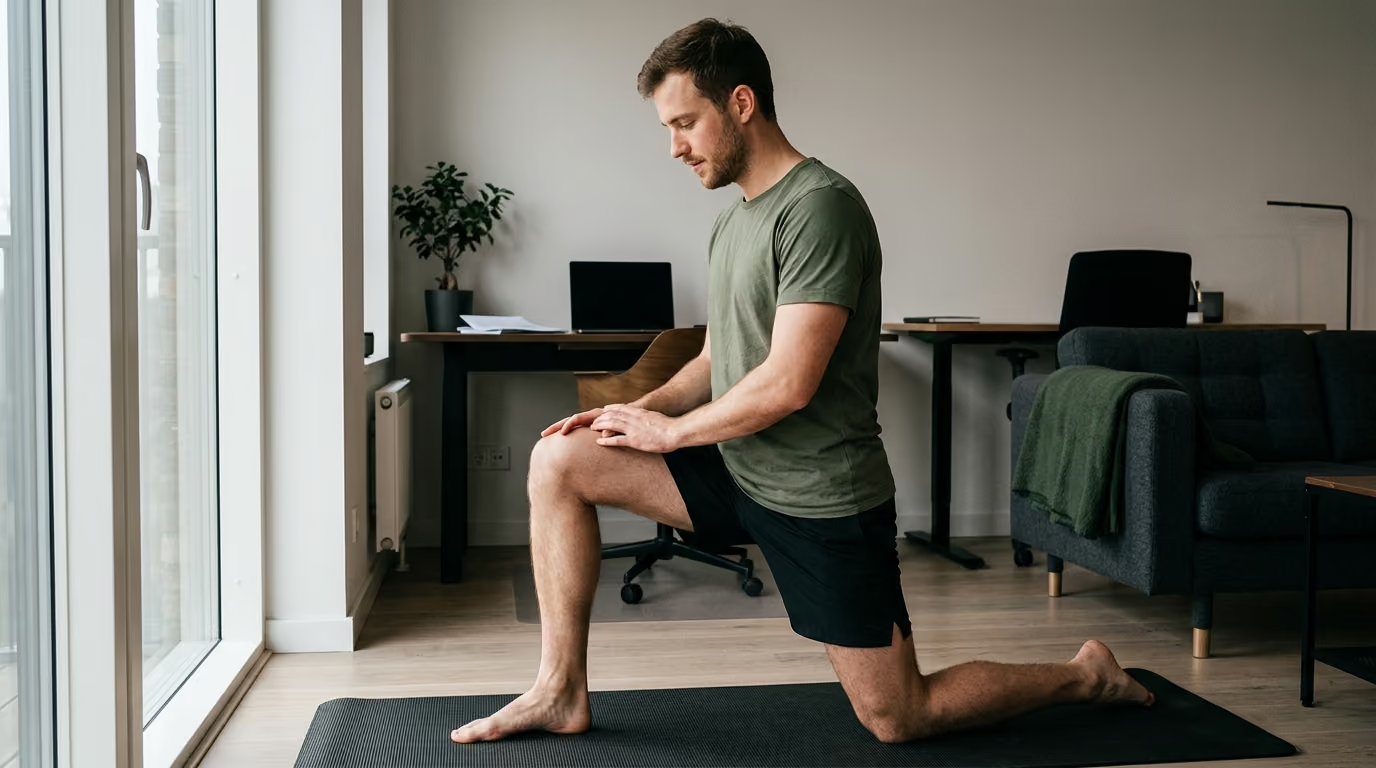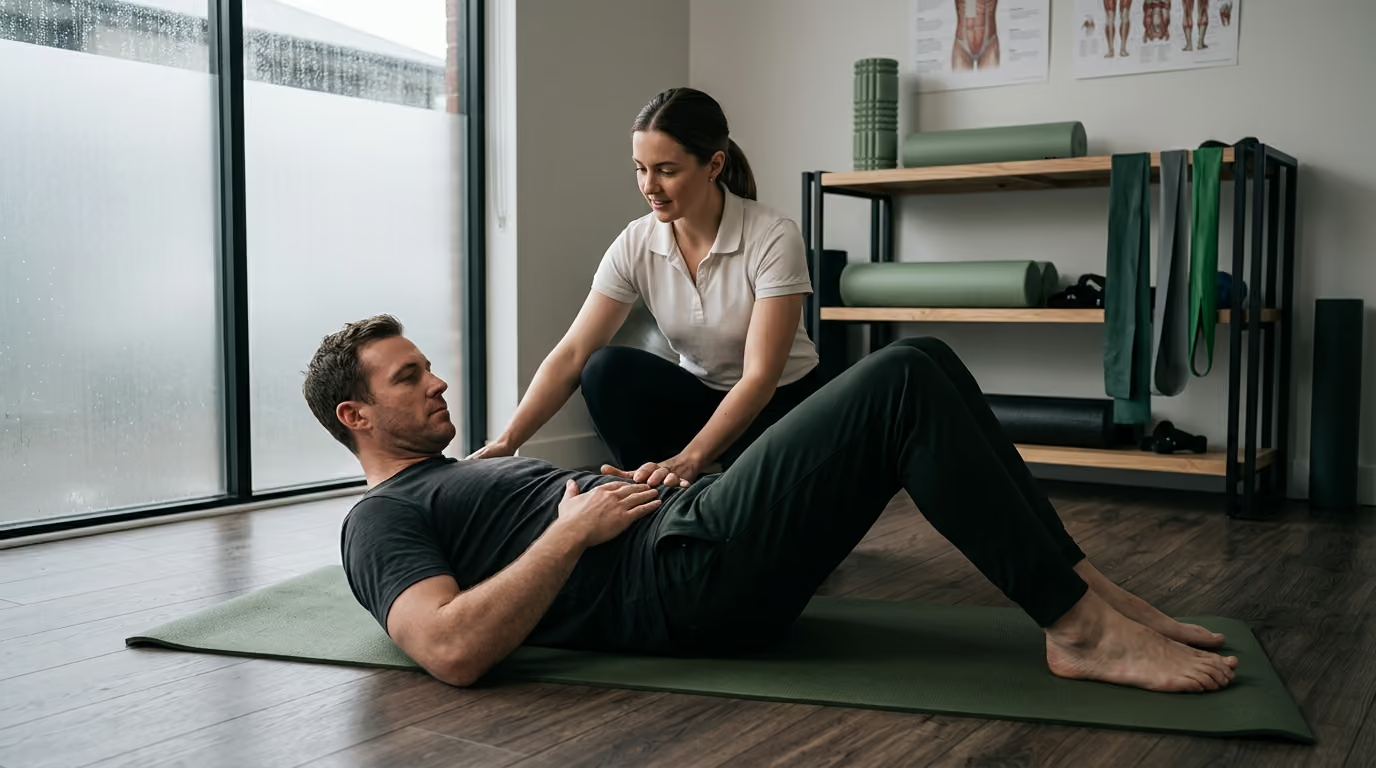

Lifting groceries or getting out of bed safely requires progressive core training that restores dynamic pressure management throughout your midsection.





Most conventional advice treats the abdominal wall like a rigid corset that must be pulled tight at all times. True trunk recovery requires the exact opposite approach. When you get out of bed in the morning, carry heavy gear, or recover from surgery, your midsection must expand, brace, and relax in response to changing demands. Restoring abdominal function is not about shrinking your waistline or holding a plank until your muscles shake. It requires rebuilding a dynamic pressure system that connects your breathing, spinal control, and movement capacity.
Restoring trunk function requires a progressive progression from gentle breathing and tissue healing to loaded, whole-body strength and impact tolerance.
Core recovery is the systematic restoration of trunk capacity after pregnancy, surgery, significant weight change, or extended inactivity. True recovery involves retraining how the diaphragm, abdominal wall, spine, and pelvic floor regulate pressure and transfer force. A visible gap, temporary muscle bulging, or a surgical timeline does not define your functional limits. Instead, your recovery depends on progressive loading, symptom monitoring, and restoring the strength needed for daily tasks and physical training.
The midsection is often described as a flat sheet of muscles designed for aesthetic appearance. In human movement, the trunk operates as an integrated, three-dimensional force transfer system. It connects the upper and lower extremities, protects internal organs, and stabilizes the spine during physical exertion.
The system relies on four primary anatomical boundaries:
These structures do not work in isolation. When you inhale, your diaphragm descends, expanding the abdominal cavity and increasing tension across the abdominal wall and pelvic floor. When you lift an object, your trunk muscles coordinate to manage internal pressure and prevent spinal buckling.
Treating core recovery as isolated abdominal crunches fails to address how these muscles work in real life. Trunk control is entirely task-dependent. Rolling over in bed, carrying a heavy pack, picking up a child, and running each demand different combinations of stiffness, mobility, and breathing rhythm. An effective rehabilitation program teaches the trunk to adapt to varied loads rather than locking it into a permanent, rigid brace.
For those focusing on physical restoration and health, understanding this muscular coordination forms the foundation for safe, long-term training.
A common mistake in abdominal rehabilitation is confusing tissue healing with physical conditioning. These are two distinct biological processes that follow completely different timelines.
Tissue healing refers to the structural repair of incisions, fascial layers, and connective tissue. After surgery or childbirth, the body initiates inflammatory, proliferative, and remodeling phases to close wounds and restore tensile strength. During this early period, medical constraints protect the surgical repair from excessive strain or wound separation.
Conditioning refers to the strength, muscular endurance, coordination, and work capacity of the trunk muscles. A surgical incision may be fully closed after six weeks, but the surrounding muscles and nervous system may remain deconditioned after weeks of reduced activity. Conversely, an individual may possess high baseline fitness but still require protection while deep fascial repairs remodel.
Abdominal and trunk dysfunction typically falls into four distinct categories:
This category includes individuals recovering from cesarean birth, hernia repair, laparotomy, or minimally invasive procedures. The primary focus is protecting the wound, preventing infection, and allowing connective tissues to remodel without premature loading.
Extended periods of bed rest, severe illness, or major weight loss can lead to muscle atrophy and reduced tissue tolerance. The trunk has not experienced direct surgical cutting, but it has lost the strength and endurance required to handle daily loads.
Pain, surgical trauma, or postural shifts can disrupt natural movement patterns. Many people develop habits of continuous abdominal gripping, shallow chest breathing, or excessive breath-holding during light tasks. These strategies increase muscular fatigue and reduce movement efficiency.
Conditions such as diastasis recti abdominis, incisional hernias, pelvic-floor dysfunction, or persistent nerve irritation require targeted strategies. These presentations require careful symptom monitoring and tailored exercise selection rather than generic abdominal routines.
Progressing your recovery requires recognizing which category applies to your situation. Medical clearance addresses tissue healing, while structured exercise restores physical conditioning.
Navigating core recovery requires separating established clinical facts from outdated rehabilitation dogma. High-quality evidence provides clear parameters for some aspects of recovery, while other areas rely on clinical consensus.
The World Health Organization establishes that adults should complete 150 to 300 minutes of moderate-intensity aerobic physical activity weekly, or 75 to 150 minutes of vigorous-intensity activity, alongside full-body muscle-strengthening exercises at least two days per week. These guidelines demonstrate significant benefits for cardiovascular health, mental well-being, sleep quality, and all-cause mortality. While these targets represent long-term goals rather than immediate postoperative rules, they highlight the necessity of returning to structured exercise.
For postpartum recovery, the American College of Obstetricians and Gynecologists notes that individuals with uncomplicated pregnancies and normal vaginal deliveries can often resume light exercise within days of birth. Those who underwent cesarean delivery or experienced medical complications require individualized medical guidance before resuming vigorous exercise. The American College of Obstetricians and Gynecologists recommends gradually working toward 150 minutes of moderate aerobic activity per week while rebuilding core and back strength.
Strong clinical evidence also supports pelvic-floor muscle training. Guidance from the National Institute for Health and Care Excellence recommends pelvic-floor muscle training during pregnancy and after birth to prevent and manage pelvic-floor dysfunction. For individuals experiencing symptoms who wish to stay active, supervised exercise can provide meaningful symptomatic relief.
Diastasis recti abdominis involves an increased separation between the two rectus abdominis muscle bellies along the connective tissue of the linea alba. Longitudinal research demonstrates that postpartum diastasis is extremely common. One prospective study found diastasis present in 33.1 percent of women at 21 weeks of gestation, 60.0 percent at six weeks postpartum, 45.4 percent at six months postpartum, and 32.6 percent at 12 months postpartum.
The relationship between exercise and closing the inter-recti distance is frequently misunderstood:
The scientific literature indicates that an abdominal gap does not automatically cause disability. A person can have a measurable separation and possess excellent strength, pain-free movement, and high functional capacity. Conversely, an individual with a narrow gap may experience significant pain or pelvic symptoms. Exercise improves how the tissue transfers force, even if the physical gap remains partially unchanged.
Postoperative lifting limits are often presented as precise medical rules, but the underlying science is surprisingly limited. A systematic review evaluating activity restrictions after abdominal and hernia surgery found no high-quality clinical trials establishing specific weight limits or mandatory periods of inactivity.
Surgeon practices reflect this lack of consensus. In a survey of practicing general surgeons, 53.1 percent recommended avoiding heavy lifting for six weeks after an open laparotomy. Following minimally invasive laparoscopic procedures, recommendations ranged from two weeks to six weeks, while some surgeons imposed no restrictions at all. Crucially, only 23.8 percent of surveyed surgeons reported that their postoperative activity guidance was based on published scientific literature.
Another systematic review noted that common daily actions like coughing, sneezing, and rising from a chair can generate higher intra-abdominal pressure than lifting moderate hand weights. For uncomplicated laparoscopic cases, early mobilization is safe, and activity restrictions may only be necessary for up to two weeks. For uncomplicated open abdominal surgery, a restriction period of up to four weeks is frequently suggested, though individual patient factors must always take precedence.
An incisional hernia occurs when abdominal contents protrude through a previous surgical incision or fascial defect. Research documents that incisional hernias occur in roughly 2 to 20 percent of patients following open abdominal surgery.
A comprehensive meta-regression involving 14,618 patients revealed a pooled midline-incisional hernia rate of 12.8 percent at a mean follow-up of 23.7 months. Systematic reviews show that midline incisions carry higher risk than transverse incisions, with pooled hernia rates of 18.7 percent for midline incisions compared to 7.4 percent for transverse incisions.
Between 54 and 80 percent of these hernias appear within the first year after surgery, though new cases can develop for up to ten years. These findings reinforce the importance of monitoring for new, localized bulges near an incision, especially when coughing or bearing down. However, staying completely inactive does not prevent hernias, as connective tissue requires progressive, manageable tension to remodel and gain strength.
For more information on balancing fitness and tissue preservation, explore our training and performance articles.
Intra-abdominal pressure is the pressure maintained within the abdominal cavity. Every time you breathe, laugh, cough, squat, or carry an object, this internal pressure shifts.
A major myth in rehabilitation is that intra-abdominal pressure is inherently dangerous. Pressure is necessary to stabilize the spine and transfer loads across the pelvis. The goal of rehabilitation is not to eliminate pressure, but to manage and distribute it effectively across the entire abdominal cylinder.
Problems arise when individuals rely on uncoordinated pressure strategies. Excessive breath-holding during minor exertion or bracing the abdominal wall with maximum force creates disproportionate stress. In susceptible individuals, this uncontrolled pressure can strain a healing surgical incision, exacerbate an abdominal separation, or place excessive downward force on the pelvic floor.
Breathing serves as the baseline entry point for trunk rehabilitation because it applies low-load, rhythmic tension across the abdominal wall without requiring heavy external resistance.
Many people develop compensatory breathing habits after pain or abdominal surgery. Some breathe exclusively into their upper chest, keeping the abdominal wall braced and rigid. Others push their belly outward with excessive force, ignoring 360-degree rib expansion. Optimal breathing allows the lower rib cage and midsection to expand gently in all directions during inhalation, followed by an effortless recoil during exhalation.
Practice this low-load breathing progression:
Once you establish comfortable rib expansion at rest, connect your breathing mechanics to functional movement patterns.
The standard rule for early-stage rehabilitation is to exhale during the exertion phase of a movement. Exhaling during effort encourages the natural inward tensioning of the deep abdominal muscles and prevents excessive downward pressure on the pelvic floor.
Follow these practical steps to coordinate breathing during daily tasks:
As your strength improves, you will naturally tolerate brief breath-holding during heavier strength training. However, mastering smooth, coordinated exhalation during early recovery prevents unnecessary strain on healing tissues.
Restoring complete trunk function requires a phased approach that matches exercise demand to your current tissue tolerance. Progress through these phases based on your symptoms, control, and functional capacity rather than arbitrary calendar dates.
Before initiating any structured rehabilitation program, evaluate your medical baseline and identify any symptoms requiring professional clinical care.
Do not begin self-directed exercise if you experience:
If these red flags are absent and you have received appropriate postoperative or postpartum medical clearance, you may begin active recovery.
The primary objectives of Phase 1 are reducing muscular guarding, improving circulation, restoring natural breathing mechanics, and building confidence with basic daily movements.
Key exercises and activities:
Monitor your recovery response over the following 24 hours. If your pain increases significantly or you feel severe fatigue the next day, reduce the duration or frequency of your activity.
Phase 2 introduces targeted muscle activation, teaching the abdominal wall, hips, and spine to work together during multi-joint movements.
Key exercises:
During these exercises, monitor for visible abdominal "doming" or "coning", which appears as a ridge along the midline of the abdomen. Doming indicates that the linea alba is struggling to manage the current internal pressure or load.
Doming is not an emergency, but it serves as useful feedback. If doming occurs, adjust your breathing, exhale through the effort, or decrease the leverage of the exercise until you maintain smooth muscular tension.
Trunk recovery requires moving beyond floor-based rehabilitation. Phase 3 integrates the abdominal wall into multi-joint, functional strength patterns.
Key exercises:
To learn more about structuring resistance work, consult our strength and fitness resources.
Phase 4 bridges the gap between basic fitness and demanding physical tasks, such as lifting heavy tools, shifting furniture, or handling barbell strength training.
Criteria for entering Phase 4:
Progress your lifting through a structured sequence:
Impact activities like running, jumping, and aggressive direction changes place unique demands on the abdominal wall and pelvic floor. Running requires your body to absorb forces equal to several times your body weight with every stride.
Follow this progressive impact ladder:
If you experience pelvic pressure, urinary leakage, or abdominal pain during any step, step back to the previous level for two weeks before retesting impact.
Every recovery journey is shaped by unique medical histories, surgical techniques, and individual constraints. Generic programs must be adjusted for specific medical situations.
A cesarean birth involves cutting through multiple tissue layers, including the skin, fascia, and uterus, while separating the rectus abdominis muscles. Recovery requires balancing uterine and wound healing with postpartum physical deconditioning.
Begin with walking and diaphragmatic breathing in the initial weeks. Avoid rushing into high-load planks, sit-ups, or heavy lifting until your obstetric provider confirms healing at your postpartum review.
Deliveries involving high-grade perineal tears, forceps assistance, or prolonged pushing can stretch or injure the pelvic floor muscles and local nerves. These injuries can manifest as pelvic pain, heaviness, or urinary leakage during exercise.
Rather than pushing through symptoms, seek guidance from a specialized pelvic-health physical therapist. NICE guidelines emphasize targeted pelvic-floor muscle training to restore strength, coordination, and tissue support.
Rehabilitation following hernia surgery depends heavily on the size of the original defect, whether synthetic or biological mesh was placed, and the surgical approach used.
Laparoscopic repairs generally permit earlier mobilization than large open reconstructions. While evidence does not support permanent physical inactivity, your progression must respect the healing timeline of the mesh and fascial fixation. Avoid sudden, explosive abdominal straining in the early weeks, and obtain clear clearance parameters from your general surgeon.
Laparoscopic surgery uses small incisions that cause minimal disruption to the abdominal wall, allowing for faster returns to daily activity. Open laparotomy involves a large midline or transverse incision that cuts through substantial fascial layers.
Following an open laparotomy, expect a longer period of local tenderness and abdominal weakness. Early walking and breathing exercises are essential, but heavy resistance training and direct abdominal flexion must be reintroduced gradually to safeguard the healing midline fascia.
Major weight loss alters posture, center of mass, and movement mechanics. Individuals may struggle with loose abdominal skin, altered pelvic alignment, and reduced overall muscle mass.
Focus on total-body strength training, protein intake, and balance exercises rather than isolated abdominal crunches. Strengthening the glutes, spinal extensors, and latissimus dorsi helps support the trunk and improves posture across all daily activities. For nutritional context on supporting recovery, review our recovery and fueling guides.
Following surgery or injury, some individuals develop chronic abdominal wall guarding, holding their midsection in a continuous, rigid state of tension. This excessive bracing can lead to localized muscle spasms, back stiffness, and fear of movement.
Rehabilitation for chronic guarding focuses on desensitizing the nervous system. Emphasize relaxed diaphragmatic breathing, gentle spinal mobility, and graded exposure to movement. Learning to fully relax the abdominal wall is just as important as learning to brace it.
Misinformation about abdominal recovery can lead to unnecessary fear, excessive physical restrictions, or counterproductive training habits. Clear up these common misconceptions:
Holding your abdominal muscles as tightly as possible during every movement restricts breathing, increases systemic fatigue, and prevents fluid motion. Your trunk should function like an adaptable suspension system, providing light tension during easy tasks and firm stiffness only when moving heavy loads.
Many people believe they cannot return to heavy lifting or running until their diastasis recti is completely closed. The scientific evidence shows that exercise rarely closes a separated linea alba entirely, yet it reliably restores strength, functional capacity, and confidence. Track how your trunk performs rather than measuring millimeters of separation.
Noticing a ridge or bulge along your midline during an exercise is a sign of unmanaged pressure, not an immediate tissue tear. Treat doming as useful biomechanical feedback. Modify your body position, exhale smoothly, or reduce the load to restore control.
The traditional six-week postoperative waiting period is an arbitrary medical convention rather than a scientifically validated rule. While deep tissue healing takes months, complete physical rest is counterproductive. Gentle walking, breathing practice, and basic mobility should begin in the initial days following uncomplicated procedures.
Pelvic-floor symptoms are not always caused by weak, underactive muscles. In many individuals, the pelvic floor is overly tight, hypertonic, and unable to relax. Performing high volumes of maximal contractions can worsen symptoms like pelvic pain and urinary urgency. Proper assessment determines whether you need muscle strengthening, coordination work, or down-training and relaxation.
Walking is the premier exercise for early recovery, but it does not apply enough resistance to restore full functional strength. Walking does not sufficiently challenge the trunk muscles to prepare you for heavy lifting, carrying loads, or absorbing running impacts. Progress beyond walking by incorporating structured resistance training.
Effective recovery relies on objective tracking rather than arbitrary guesswork. Monitor these three domains to determine when it is safe to progress your training:
Keep a simple log of symptom responses during and after exercise:
Track real-world physical performance metrics to measure your progress:
The golden rule of physical rehabilitation is the 24-hour response rule. How your body feels the morning after an exercise session tells you whether the workload was appropriate.
Follow these progression guidelines:
To understand how structured recovery connects to broader health across your lifespan, read our guidance on healthy aging and longevity.
This guide provides research-backed educational information on restoring trunk and abdominal function. It is not a substitute for individual medical advice, clinical diagnosis, or individualized physical therapy.
Always consult your surgeon, obstetrician, primary healthcare provider, or a qualified pelvic-health physical therapist before resuming exercise after surgery, childbirth, or severe illness. If you experience persistent pain, abnormal swelling, fever, or signs of hernia strangulation, seek immediate medical evaluation.
A diastasis recti is a diffuse, soft widening along the midline connective tissue that typically becomes visible when you sit up or tense your abdomen. An incisional or ventral hernia is usually a localized, distinct bulge that may feel firm or tender and can protrude through a specific fascial defect.
While a diastasis is generally painless and reducible, a hernia can sometimes become trapped or painful. Any new, localized, or painful bulge near a surgical scar warrants an in-person physical examination by a healthcare provider.
Return-to-running timelines vary based on the surgical approach, delivery details, and individual conditioning. Most clinical frameworks suggest waiting a minimum of 12 weeks after childbirth or major abdominal surgery before initiating high-impact running drills.
Before running, you should be able to walk briskly for 30 minutes, perform single-leg balance and calf raises without discomfort, and complete Phase 3 strength exercises without pelvic heaviness, urinary leakage, or abdominal pain. Progress gradually using walk-to-run intervals.
Traditional sit-ups and standard floor planks are high-demand exercises that generate substantial intra-abdominal pressure. While they are not permanently off-limits, they are rarely appropriate during the early phases of recovery.
Begin with modified variations, such as incline planks against a bench or wall and supine heel slides. Reintroduce floor planks and flexion movements only after you have mastered breathing mechanics, rebuilt baseline strength, and confirmed that you can perform the movements without doming, pain, or breath-holding.
When the abdominal wall is weakened or inhibited by surgical incisions and inactivity, the surrounding muscles of the lower back, hips, and pelvis frequently compensate by overworking. This increased demand can cause localized muscle tightness and joint stiffness.
Restoring natural breathing, strengthening the gluteal muscles, and gradually rebuilding anterior abdominal endurance helps distribute forces evenly across the pelvis, relieving compensatory stress on your lower back.
Restoring your trunk function is an active, progressive process that builds the physical capacity required for a lifetime of movement.
Follow BattleVet for practical guidance on military and veteran health, strength, recovery, testosterone, sleep and healthy aging. Stay connected for new articles, research backed insights and clear information to help you stay capable for the years ahead.


Build better habits around strength, recovery, sleep, hormones and healthy aging with practical guidance for active military personnel and veterans.
Explore BattleVet