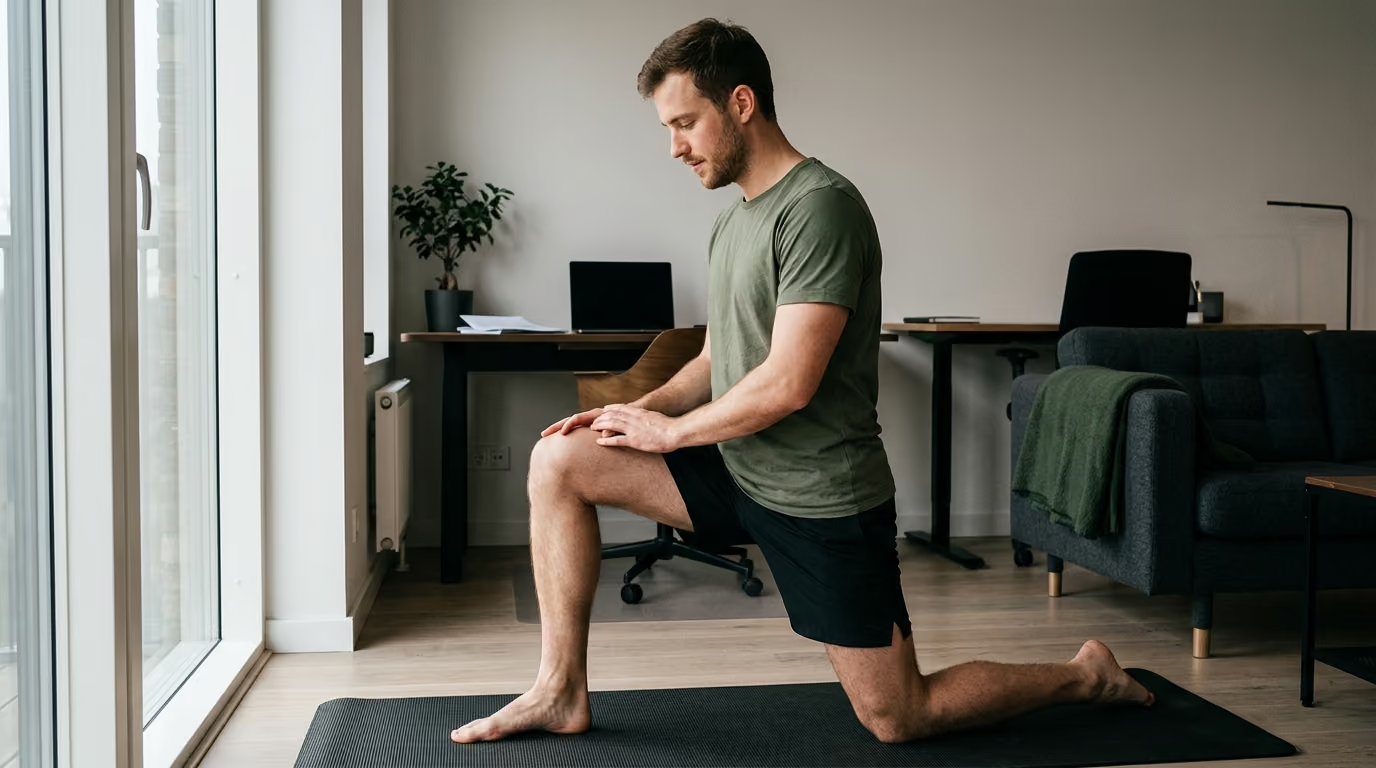

Lying on the couch seems ideal for recovery, yet strategic light exercise optimizes blood flow and reduces stiffness far more effectively.





A common training belief suggests that more movement always speeds up physical repair. You wake up with stiff legs, aching shoulders, and high fatigue, yet you push through a brisk morning run because you believe complete rest is wasted time. That assumption often backfires by adding more training stress to an already depleted body. Active recovery is a precise physiological tool, and using it correctly requires understanding its true biological cost.
Active recovery works when low-demand movement lowers perceived stiffness and supports daily physical habits without adding muscular damage or systemic fatigue.
Active recovery refers to low-intensity exercise performed after hard training sessions or on dedicated rest days. When programmed properly, methods like walking, easy cycling, swimming, joint mobility, and low-load calisthenics keep you moving without draining the energy reserves your body needs to rebuild tissue. It provides a light stimulus that supports blood flow and joint motion, but it is never a substitute for full rest, adequate nutrition, or deep sleep.
Active recovery takes place in three distinct training situations. Using the same intensity in all three contexts is a frequent mistake. Each setting has a different physiological goal and requires a different duration and effort level.
During high-intensity intervals or repeated sprint work, staying stationary can cause blood to pool in working limbs. Low-intensity pedaling or walking between work bouts keeps the skeletal muscle pump active. This assists venous return to the heart and helps maintain cardiac output. Research shows that active intervals lasting several minutes can sustain higher power outputs across repeated bouts compared to sitting down.
The intensity during these intervals must remain very low. If you pedal or jog too fast between sprints, you deplete phosphocreatine stores and accumulate additional hydrogen ions. The goal between sets is restoration, not extra conditioning. Keep your movement relaxed and your breathing steady before the next work interval begins.
The immediate cool-down occurs right after you finish the main training session. Shifting directly from maximum effort to sitting in a car or lying on a bench can cause lightheadedness. A five to ten minute period of low-intensity walking or easy spinning allows your cardiovascular system to return to baseline gradually.
This transition period helps normalize core body temperature and blood pressure. A systematic review published in the Journal of Strength and Conditioning Research noted that short active recovery periods lasting six to ten minutes reliably support acute physical performance. This short duration is long enough to support circulation without draining glycogen stores.
Rest-day movement sessions happen 24 to 48 hours after your last demanding workout. On these days, the primary goal is easing muscle stiffness, practicing basic movement patterns, and supporting daily energy expenditure. The training volume must remain low enough that your body continues its structural rebuilding processes.
A rest-day session should leave you feeling refreshed rather than depleted. If your planned 30-minute walk turns into an intense, sweat-drenched power walk up steep hills, you have turned a recovery day into an aerobic workout. You can read more about planning balanced weekly workloads in our training and performance guide.
Fitness culture frequently misinterprets how active recovery works in human muscle tissue. Marketing claims often promise that light exercise cleanses waste products or speeds up muscle rebuilding overnight. Examining the actual physiology clarifies what low-intensity movement can and cannot accomplish.
The most direct physical effect of light movement is increased local circulation. When skeletal muscles contract gently, they compress nearby veins and accelerate blood flow through capillary beds. This delivers oxygen and nutrients to tissues while aiding the redistribution of cellular metabolites.
This increased blood flow raises muscle temperature and lowers passive joint stiffness. As tissues warm up, the viscous resistance within muscles and tendons declines. This explains why an easy walk makes tight hips and sore calves feel looser within ten minutes.
A widespread belief is that light movement cures delayed-onset muscle soreness by flushing lactic acid out of muscle fibers. This explanation is physiologically incorrect. Lactate is an energy source produced during high-intensity anaerobic glycolysis, not a waste toxin.
Blood lactate levels naturally return to baseline concentrations within thirty to sixty minutes after exercise, even with complete rest. Delayed-onset muscle soreness, which peaks 24 to 72 hours later, is caused by micro-tears in muscle fibers, local inflammation, and immune cell responses. Active recovery does speed up acute lactate clearance right after a hard interval, but that clearance has no direct connection to the soreness you feel two days later.
The primary benefit of active recovery on rest days is psychological and sensory. A comprehensive systematic review and meta-analysis led by Dupuy and colleagues found that active recovery meaningfully reduced perceptions of delayed soreness. However, it did not consistently lower systemic markers of muscle damage or improve long-term functional recovery compared to passive rest.
Light movement temporarily stimulates sensory nerve fibers, which can reduce the pain signals sent to your brain. This sensory relief makes normal daily tasks easier. You should not mistake this temporary reduction in soreness for complete tissue repair. The underlying muscle micro-damage still requires time, protein, and rest to remodel.
Gentle, rhythmic physical activity promotes parasympathetic nervous system tone once the session ends. High-intensity training keeps the sympathetic branch activated, elevating heart rate and stress hormones. A calm, conversational walk signals to the brain that the immediate physical demand has passed.
Additionally, non-impact movement circulates synovial fluid within joint capsules. Synovial fluid nourishes articular cartilage and lubricates joint surfaces. For individuals with joint wear or older training injuries, this gentle lubrication eases morning stiffness without irritating sensitive joint linings.
To program active recovery effectively, you must separate established findings from preliminary research. Different recovery tools provide varying degrees of support, and the scientific literature reflects clear differences among them.
The scientific consensus supports several clear applications of low-intensity movement:
Several popular claims surrounding active recovery lack strong or consistent empirical support:
A comparative trial examining active recovery, foam rolling, and neuromuscular electrical stimulation found that all three methods produced similar short-term reductions in soreness. None of these modalities functioned as a cure for muscular damage. They serve as supportive management tools while the biological timeline of adaptation unfolds.
Selecting the right activity depends on your training history, current joint health, and recent workout demands. An activity that provides restorative movement for one person may cause excessive strain for another.
Walking is the most practical form of active recovery. It requires no specialized equipment, has minimal technical requirements, and generates low ground impact forces when performed on flat terrain.
The Centers for Disease Control and Prevention classifies brisk walking at three miles per hour or faster as moderate-intensity exercise. For recovery purposes, your pace should often be slower and more relaxed. Keep your stride natural, choose flat surfaces, and avoid carrying heavy loads. A 20 to 30 minute walk outdoors also provides daylight exposure, which supports circadian rhythm regulation and nighttime sleep quality.
Stationary cycling provides smooth, circular movement without eccentric loading or ground impact. This makes it an effective option for the day after heavy squats, loaded carries, or long runs.
Keep the resistance very low and maintain a smooth cadence between 70 and 85 revolutions per minute. The CDC notes that leisurely cycling below ten miles per hour represents light to moderate activity. If you increase the resistance or pedal aggressively out of the saddle, you turn the ride into a resistance workout that damages recovering quadriceps fibers.
Water provides buoyancy that unloads body weight from the spine, hips, knees, and ankles. Aquatics research reviewed in the Strength and Conditioning Journal highlights water-based exercise as an effective method for reducing perceived muscle soreness.
Keep your water workouts relaxed. Swim with easy strokes, take frequent pauses at the wall, or perform gentle water walking in the shallow end. If you lack swimming efficiency, thrashing through the water with poor technique creates substantial shoulder strain and spikes your heart rate, eliminating any recovery benefit.
Targeted mobility work involves moving joints through active ranges of motion using controlled muscular effort. Unlike prolonged static stretching, dynamic mobility maintains tissue temperature and reinforces stable motor control.
Combine slow joint rotations with diaphragmatic breathing drills. Spend two to three minutes working through spinal segmentation, hip openers, and ankle circles. Deep, controlled exhalations help down-regulate sympathetic tone, shifting your nervous system toward physical restoration.
Low-load calisthenics can include bodyweight squats onto a box, elevated push-ups, bird-dogs, and glute bridges. Research indicates that low-intensity isolated contractions can reduce soreness and preserve muscle activation patterns.
The critical variable is volume control. Perform sets of five to eight repetitions, stopping at least five repetitions short of muscular failure. If you feel a distinct burn in your muscles or struggle to complete a repetition, the intensity is too high for a recovery day.
The dividing line between active recovery and additional training comes down to intensity. If an active recovery session costs more energy than your body can spare, it impairs your upcoming workouts. You can monitor your effort using several practical field tests.
The talk test is a reliable, research-validated method for regulating cardiovascular intensity. Guidelines from the American College of Sports Medicine show a clear link between speech comfort and blood lactate thresholds.
During a true active recovery session, you should be able to speak in complete, multi-sentence paragraphs without pausing for air. If you can only speak in short phrases before needing a breath, your pace has crossed into a moderate conditioning zone. Slow down immediately until your breathing returns to an effortless rhythm.
On a standard zero to ten Rating of Perceived Exertion scale, active recovery should sit between levels two and three. Level two feels like an easy stroll, while level three represents light, comfortable physical activity.
Do not confuse recovery sessions with the CDC definition of moderate-intensity exercise, which often sits at levels five to six. A rest-day movement session must remain noticeably easier than normal training. It should require virtually no mental grit to complete.
Restricting your breathing exclusively to your nose provides a built-in intensity limiter. Nasal breathing increases airway resistance, naturally slowing your pace and preventing you from working too hard.
If you feel an urge to open your mouth to inhale, you are moving too fast for a recovery protocol. Back off your speed or resistance until nasal breathing feels natural and steady again.
Pay close attention to how your body responds during and after the session:
If you finish a recovery session feeling like you need a nap, you worked too hard. The session should add energy to your day, not take it away.
Structured recovery programming prevents common training errors. Use these evidence-based templates to match your recovery work to your recent physical demands.
Use this protocol immediately after heavy lifting or resistance training:
Program this session the day after a high-volume lower-body workout:
Use this protocol 24 hours after a long endurance run, ruck march, or conditioning session:
When managing continuous physical demands over multiple consecutive days, structure recovery around short, frequent movement breaks:
For deeper insights into managing cumulative systemic fatigue, review our resources on sleep, stress and resilience.
Active recovery is an optional tool, not a mandatory requirement. Treating every non-lifting day as an active recovery day can lead to overtraining, especially if you are already managing work stress, poor sleep, or calorie deficits.
Complete rest days involve zero programmed exercise. Guidelines from the American College of Sports Medicine suggest scheduling one to two full rest days per week during heavy training cycles.
Passive rest allows central nervous system recovery, glycogen replenishment, and immune system normalization. When you sit quietly, read, or sleep, metabolic resources shift directly toward cellular repair. If your training volume is high, substituting passive rest with active recovery can slowly deplete your energy reserves over time.
Use this step-by-step checklist to decide whether to move or rest completely:
Recovery requires raw materials. You can read more about nutrient timing and energy balance in our guide to nutrition and physical restoration.
Certain populations and physical conditions require specific modifications to standard active recovery protocols.
Personnel working rotating shifts or irregular hours carry high levels of baseline fatigue. When sleep is restricted to five or six hours, programmed active recovery often does more harm than good.
In these situations, replace active recovery sessions with dedicated sleep, naps, or quiet relaxation. If you choose to move, keep it limited to a casual ten-minute outdoor walk to help realign your circadian clock.
Veterans and older athletes frequently deal with chronic knee, lower-back, or shoulder discomfort. For these individuals, walking on hard concrete can aggravate joint pain.
Choose non-impact options such as recumbent cycling, water walking, or light rowing. Adjust the equipment so that all moving joints operate through a comfortable, pain-free range. Never push through joint pain under the assumption that you are loosening the area up.
When initiating a new training block or returning from a layoff, severe muscle soreness can make normal movement difficult. While a very light walk can temporarily dull the ache, it does not mean your muscles are ready for real work.
Keep your movement very brief, under fifteen minutes. Do not perform aggressive stretching or deep tissue massage on acutely tender muscles, as this can worsen local tissue trauma and prolong your recovery timeline.
A true active recovery session uses very little energy. A relaxed twenty-minute walk burns roughly 80 to 120 calories, which will not compromise muscle hypertrophy if you eat adequate daily calories and protein. However, if your recovery sessions last an hour or include high-intensity intervals, the added energy expenditure can interfere with muscle building.
Gentle mobility work that stays within normal, comfortable ranges of motion can be performed daily. However, aggressive stretching that pulls tissues to painful end-ranges creates mechanical stress that requires its own recovery period. Keep daily mobility work smooth, light, and comfortable.
Neither method is universally superior. Active recovery is helpful for easing muscle stiffness and maintaining physical habits when you feel reasonably well. Complete rest is better when you are managing joint irritation, high life stress, or significant central fatigue. Most balanced programs use a mix of both approaches across the training week.
An elevated resting heart rate upon waking often indicates incomplete recovery, dehydration, high life stress, or an oncoming illness. If your morning pulse is noticeably higher than your normal average, choose passive rest, focus on hydration, and prioritize an early bedtime rather than scheduling extra movement.
Active recovery is a practical way to manage daily stiffness and support consistent physical habits, provided you keep the training cost lower than your body's current readiness.
This article is for educational purposes only and does not constitute personalized medical advice. If you are experiencing sharp joint pain, unusual swelling, numbness, or chronic exhaustion, consult a qualified healthcare provider or physical therapist before continuing your training program.
Follow BattleVet for practical guidance on military and veteran health, strength, recovery, testosterone, sleep and healthy aging. Stay connected for new articles, research backed insights and clear information to help you stay capable for the years ahead.


Build better habits around strength, recovery, sleep, hormones and healthy aging with practical guidance for active military personnel and veterans.
Explore BattleVet