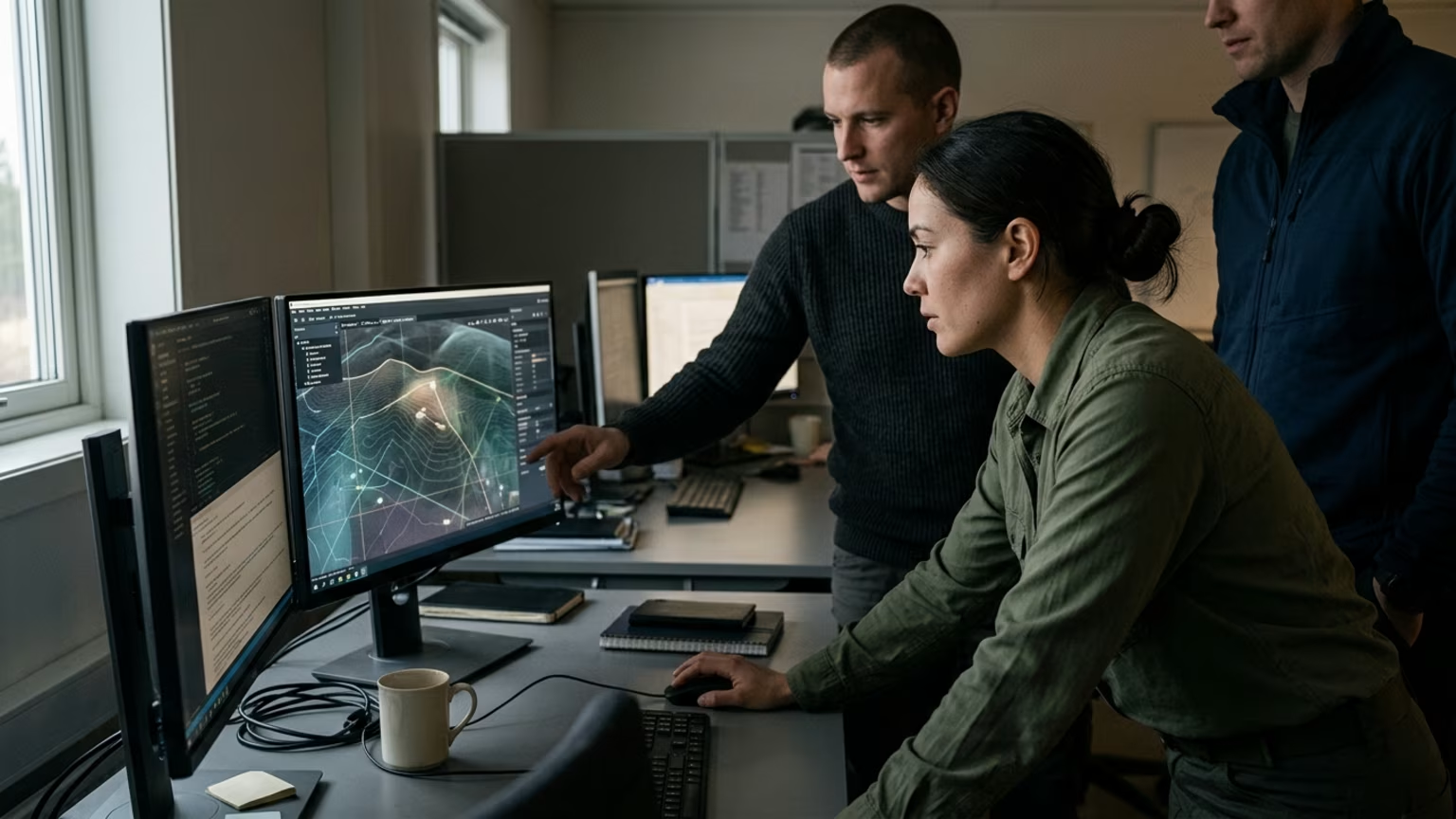

The 2026 Ulchi Freedom Shield was reduced from 11 days to five. Learn how to maintain your physical readiness when simulations replace live field training.





Military readiness is not defined strictly by time spent in the dirt. However, recent changes to the 2026 Ulchi Freedom Shield exercise highlight a major shift in how physical readiness is built. The exercise was originally scheduled for August 17 through August 27, but it was revised to end on August 21, reducing the planned duration from 11 days to five.
This rapid adjustment alters the physical reality for participating service members. Field operations naturally impose a unique metabolic demand on the human body. A reduction in continuous field time fundamentally shifts the balance of physical stress. When joint exercises are shortened, the expected volume of physical conditioning changes.
The modifications to this specific military exercise reflect a broader tension in modern tactical preparation. Research confirms Ulchi Freedom Shield operates largely as a command-post and computer-simulated exercise, with field-training activities conducted alongside it. When officials adjusted the timeline, the balance between digital simulation and physical execution shifted. South Korean officials confirmed that planned live drills were reduced from 14 to seven.
The remaining or rescheduled live drills were carefully designed to remain combat-realistic. However, the officials did not publish a detailed public accounting of the exact changes. It remains unclear which specific activities were canceled, converted to simulation, postponed, or conducted separately. This lack of public accounting makes it difficult to measure the exact drop in physical workload.
Institutional leaders view these adjustments through a strategic lens rather than a physiological one. The Pentagon stated that the adjustments were intended to preserve essential readiness and training objectives. Military officials also stated that there would be no degradation to U.S. training objectives. This official position focuses on overall unit capability rather than the specific physical endurance built during extended maneuvers.
These institutional decisions directly impact the daily routines of service members. A reduction in live exercises alters the total volume of load bearing and environmental exposure. When multinational field integration is reduced, individual units must shoulder the responsibility for physical preparation. Less time in the field means fewer opportunities to practice sustained movement under physical fatigue.
The shift toward simulation creates a clear divide between mental preparation and physical execution. Command-post exercises successfully test operational planning, communications, and logistical coordination. These digital simulations are highly effective at testing leadership decisions during complex security scenarios. However, a computer simulation cannot replicate the physical toll of sustained ground movement.
The reduction in planned duration from 11 days to five removes significant physical stress from the participants. Six days of canceled field exposure equates to a substantial decrease in continuous walking, carrying, and manual labor. Service members adapt to the specific demands they face in their training environments. When a training environment becomes stationary, physical adaptations can begin to stagnate.
This reality highlights the importance of proactive military health management. Soldiers cannot rely entirely on scheduled deployments to maintain their combat conditioning. The transition from 14 planned live drills down to seven represents a specific loss of physical repetition. Each canceled drill is a missed opportunity to test physical capability in a stressful environment.
Extended military exercises force the human body to adapt to continuous low-intensity stress. When service members spend 11 days in a field environment, their bodies adjust to constant motion and disrupted rest. This type of training builds a specific form of physical durability that gym workouts struggle to replicate. A sudden reduction to five days cuts this unique physiological adaptation period short.
Live drills naturally incorporate uneven terrain, unpredictable weather, and heavy equipment loads. Moving over rough ground with a loaded pack strengthens the stabilizing muscles in the ankles, knees, and hips. When live drills are reduced from 14 to seven, personnel miss crucial opportunities to reinforce these vital stabilizing muscles. This physical deficit must be addressed through targeted physical training in a controlled environment.
The absence of prolonged field exposure also impacts physical fatigue tolerance and daily caloric management. Operating in a simulated command-post environment removes the harsh physical friction of outdoor tactical movements. A bunker presents entirely different physical challenges than a remote outdoor training area. Personnel must understand that maintaining unit readiness on paper does not automatically guarantee individual physical durability.
Changes in high-level training schedules require active personnel to rethink their own fitness routines. When large-scale field rotations are scaled back, service members lose built-in opportunities to practice sustained endurance. You cannot control the duration or scale of multinational command exercises. You can control how you maintain your physical baseline during standard garrison routines.
Service members should always treat unit guidance and official training requirements as the primary standard. Personal programming can supplement, but should never replace, command-directed collective training. A structured approach to fitness is necessary to fill the gaps left by reduced field time. This intentional approach must target the specific physical qualities that extended field operations normally test.
Aerobic endurance requires consistent attention when prolonged field movements are canceled or shortened. Steady-state running, heavy rucking, and cycling can help preserve your baseline cardiovascular capacity. Load tolerance is another critical factor that degrades rapidly without regular practice. You must implement gradual, supervised load progression using the exact equipment required for your operational duties.
Lower-body and trunk strength form the absolute foundation for injury prevention during physical deployments. Squats, step-ups, and heavy carries are essential for maintaining basic training and performance standards. Short cardiovascular intervals can help replicate the repeated-effort capacity needed for dynamic combat tasks. These specific movements build the physical resilience required to handle sudden bursts of intense activity.
Veterans face a very similar physical transition when leaving active service. The intense physical demands of military duty are eventually replaced by the more static nature of civilian life. Without forced marches or collective physical training, you must deliberately program movement into your daily routine. Prioritizing strength and aerobic capacity supports healthy aging long after your military service ends.
Mobility and stability work for the feet, ankles, knees, and back remain vital for longevity. Routine joint maintenance helps offset the wear and tear accumulated during years of load bearing. Recovery discipline is equally important for both active duty personnel and retired veterans. Adequate sleep, hydration, and nutrition are the core components of sleep, stress and resilience.
Reporting persistent joint pain early prevents minor physical issues from becoming chronic injuries. Active duty members often push through pain during mandatory field operations. However, a garrison environment or civilian life allows for a more measured approach to physical health. Taking the time to properly rehab a strained knee pays massive dividends over time.
You must treat physical restoration with the same seriousness as tactical execution. Physical capability requires constant investment, regardless of the current international training schedule. The responsibility for maintaining functional strength ultimately falls entirely on the individual. Proper physical restoration is the only way to ensure long-term physical independence.
While the transition from 11 planned training days to five alters the landscape of collective readiness, the daily physical capability required of individual personnel remains unchanged.
Follow BattleVet for practical guidance on military and veteran health, strength, recovery, testosterone, sleep and healthy aging. Stay connected for new articles, research backed insights and clear information to help you stay capable for the years ahead.


Combat Stress’s workplace guidance emphasizes listening over diagnosis. Recent U.S. veteran insomnia research adds context for sleep and recovery concerns.


ErythroMer's reported storage design could matter for military care. An academic review still lists it as preclinical, with human evidence ahead.
A large veteran study links PTSD and documented social needs to later cognitive impairment, reinforcing the value of connected care planning.
Build better habits around strength, recovery, sleep, hormones and healthy aging with practical guidance for active military personnel and veterans.
Explore BattleVet