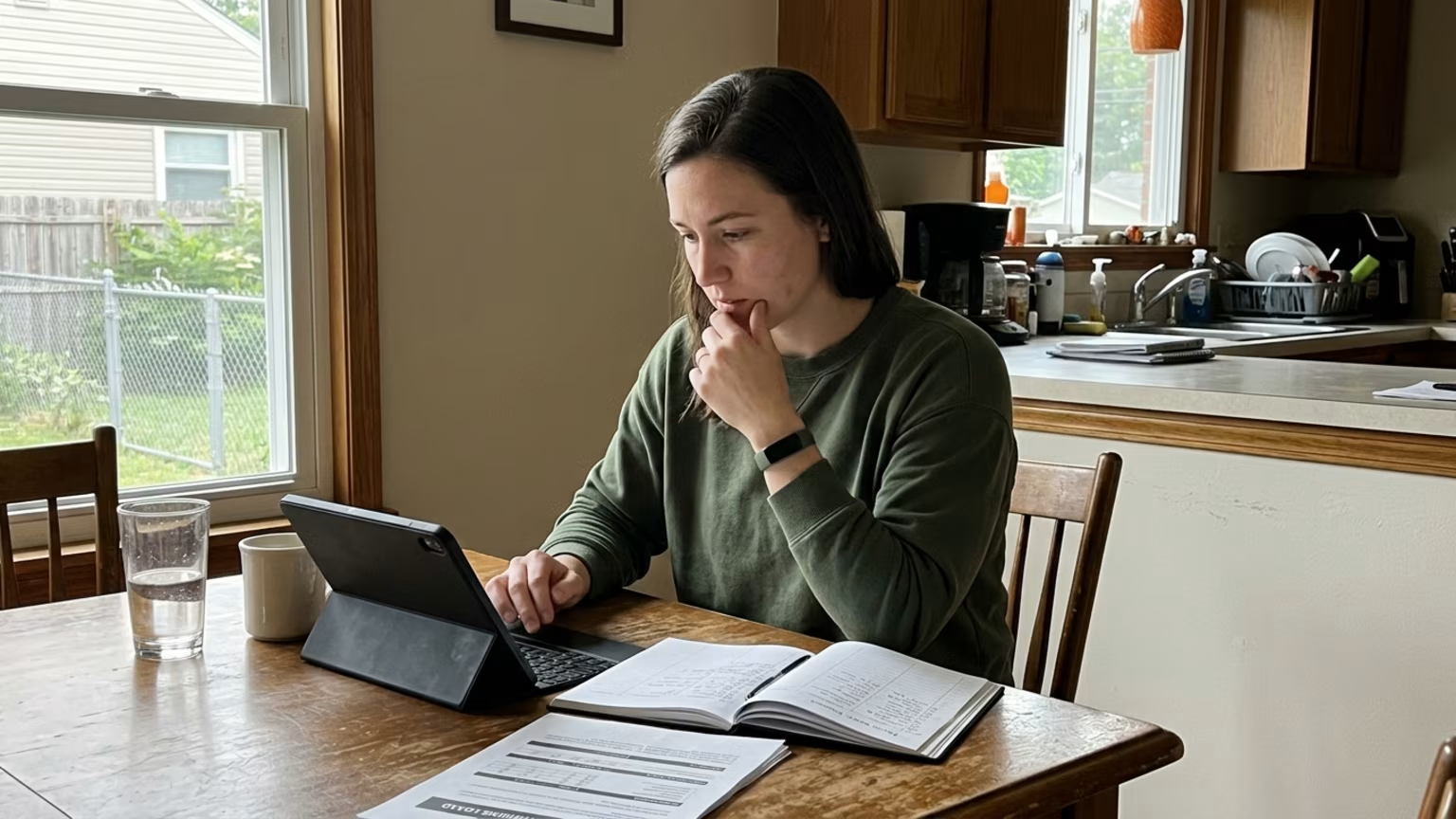

A 2026 University of Oklahoma study demonstrates how unusually heavy training loads impact next-day recovery, wellness, and speed in elite soccer athletes.





In 2026, the International Journal of Sports Physiology and Performance published new research on training volume, reported under DOI 10.1123/ijspp.2026-0076. A University of Oklahoma-led study examined how unusually heavy training loads affected next-day recovery. The research was led by Sam R. Moore, Ph.D. Moore serves as an OU assistant professor of sports data analytics and director of the ATHENA Lab.
The study tracked wellness and performance in an elite collegiate women's soccer team. This research provides clear data on how high workloads impact immediate physical readiness. It offers a valuable look into the relationship between prior-day workload and next-day performance outcomes. The findings have direct applications for anyone managing demanding physical schedules.
This update matters for active personnel and veterans because physical conditioning is a core operational requirement. Service members routinely push through demanding physical schedules to meet strict fitness standards. However, this study reinforces that tracking workload is only half of the equation. Measuring subjective recovery is critical for sustaining capability over long periods.
I remember waking up after a poor night of sleep and realizing that my training recovery was taking much longer than it used to. I realized that readiness is more than just pushing through the fatigue. It requires a dedicated approach to sleep and hormonal health, which completely shifted how I view long term capability. Recognizing how my body responds to intense training days helps me structure my routines more effectively.
The military is increasingly adopting this comprehensive view of human performance. The Army's human-performance framework treats recovery, sleep, nutrition, and training load as connected readiness factors. Programs are shifting away from rigid conditioning standards toward a focus on individualized workload management. Veterans can apply these exact principles to their own physical regimens.
The military has already started seeing the benefits of dedicated recovery interventions. The Army reports that brigades with H2F Performance Teams experienced lower odds of musculoskeletal-injury referrals. They also saw improvements in selected readiness measures across the formation. These figures come from Army-reported program data, highlighting the value of a structured approach to physical restoration.
The transition from active duty to veteran life often requires a shift in how you approach physical stress. During service, the mission dictates the schedule, often leaving little room for optimal rest. Veterans, however, have the opportunity to take full control of their recovery protocols. Applying an individualized approach to workload can help maintain mobility and strength well into the future.
Understanding the relationship between effort and recovery helps prevent overtraining. When athletes or service members ignore fatigue, they risk slower recovery times and potential injury. Monitoring daily readiness offers a clear window into how the body handles stress. This data allows individuals to make smarter decisions about their training and performance routines.
The researchers followed the athletes across a season and measured their exact training loads. They tracked total distance traveled and high-speed running distance during both practices and matches. The athletes wore GPS units during training and competition to gather objective movement data. They also wore smart rings during sleep to monitor their physical recovery overnight.
Alongside the wearable data, the athletes completed comprehensive daily wellness surveys. These surveys covered perceived fatigue, soreness, and sleep quality. They also tracked daily stress levels and overall mood. The central finding was that athletes generally showed poorer next-day outcomes when their workload spiked.
A previous day's training load that was substantially higher than normal caused noticeable physical declines. These negative outcomes included worse sleep recovery, lower wellness scores, and slower maximum-speed performance. The specific metric from the study highlights the immediate cost of extra workload. Every additional 100 meters of high-speed running was associated with a 1-kilometer-per-hour decrease in next-day maximum speed.
This is an average association from the study rather than a universal physiological rule. Still, it clearly demonstrates how pushing past a normal baseline can carry next-day physical costs. Moore emphasized that higher workloads are not automatically harmful in every context. Increased training volume can be useful during phases of the season when building fitness is the primary goal.
Pushing past a baseline is often necessary when long term conditioning matters more than maximizing speed for an imminent competition. The key is understanding the purpose behind the physical stress. The researchers also highlighted the importance of women-specific sports science in this field. Male and female athletes can report different subjective responses to training load.
Co-authors for the study included Elena Cantu of the University of North Carolina at Chapel Hill and Abbie Smith-Ryan, Ph.D. Their work points toward a growing need for diverse physiological data. Wearable technology has made it easier to gather objective movement data during physical training. By pairing smart ring data with subjective surveys, researchers created a more complete picture of daily wellness.
The combined approach of objective tracking and daily check-ins prevents athletes from relying on a single performance measure. A high GPS distance reading might look impressive on paper, but it means little if the athlete is severely fatigued. Conversely, a subjective feeling of soreness might not completely derail performance if the underlying workload has been well managed. The OU-led study highlights why both types of data are necessary for a complete evaluation.
The practical model proposed by Moore centers entirely on individualized load management. Coaches and athletes should identify how far above a normal workload performance begins to deteriorate. Once they map that threshold, they can use that information to plan practices before important events. This shifts the focus from universal volume limits to highly personal recovery profiles.
For veterans and active personnel, this means comparing your current workload with your personal history. You should not rely solely on a generic workout plan. Tracking your physical output alongside your subjective recovery provides a more accurate picture of your health. A practical log could combine running intensity, sleep quality, soreness, and overall mood.
If your sleep quality or readiness worsens after an unusually hard session, treat the next day as a decision point. You might consider reducing volume, choosing lower-impact conditioning, or delaying another demanding session. The study does not say that hard training is always harmful. It simply supports matching your training intensity to your current goal and recovery state.
Using a simple notebook or a digital tracker can help you identify patterns over a training cycle. You might notice that your maximum speed or lifting power consistently drops after consecutive days of high-volume running. Identifying these personal trends allows you to adjust your schedule before you hit a wall. Small changes to your weekly layout can yield significant improvements in your overall physical capability.
Adjusting your workload based on these metrics does not mean abandoning hard training entirely. The study does not support the absolute claim that heavy training is always counterproductive. It suggests that an unusually large workload relative to an individual's recent baseline requires strategic management. Strategically increased training still has a vital role in long term fitness development.
Recovery must be treated as an active process rather than just time spent away from the gym. The Army's human-performance framework emphasizes that nutrition and sleep are active contributors to physical readiness. When you spike your training load, your body requires a corresponding spike in recovery resources to adapt properly. Failing to provide those resources usually results in the negative next-day outcomes observed in the soccer study.
Army sleep-readiness guidance clearly aligns with these modern performance principles. The Army describes sleep as a performance factor rather than a luxury. This guidance links compromised sleep directly with slower recovery between demanding physical tasks. Protecting your sleep opportunities is a critical component of managing sleep, stress, and resilience.
The same Army guidance outlines protocols for maintaining physical readiness in challenging environments. It recommends using available sleep windows and keeping sleep timing steady where possible. It also supports using short strategic naps as a recovery tool and applying controlled breathing before bed. These habits create a foundation for consistent daily performance.
It is also important to account for military-specific stressors that athletes do not face. Service members routinely deal with load carriage, heat, terrain, and operational stress. They also manage difficult shift work schedules and restricted sleep windows. These variables can drastically alter how a training session affects your recovery timeline.
The soccer findings offer a helpful framework for individualized decision-making rather than a direct military prescription. Monitoring tools should be used to start conversations about your routine. They should not be used to self-diagnose medical issues or ignore persistent pain. If you experience persistent fatigue or repeated drops in readiness, you should consult a professional.
Wearable scores are useful guides, but they do not replace qualified medical or athletic guidance. Incorporating these habits will support your recovery and sleep outcomes over time. You can build recovery directly into your weekly training plan just like any other exercise. Treating rest as a required physical adaptation leads to stronger results.
As sports science refines how we measure fatigue, military performance applications will likely follow similar paths. The integration of wearable technology and daily wellness tracking is already changing elite athletics. Will the military eventually adopt universal, individualized workload monitoring to optimize service member readiness across all branches?
Follow BattleVet for practical guidance on military and veteran health, strength, recovery, testosterone, sleep and healthy aging. Stay connected for new articles, research backed insights and clear information to help you stay capable for the years ahead.


The VA reported record high annual suicide screening and 24-hour follow-up rates for VHA patients in early 2026. Learn how this impacts routine veteran care.

Stanford Medicine cautions against using biological age tests as definitive health markers. Learn why veterans should focus on functional capability instead.

A 2026 review shows combining protein supplements and exercise offers modest strength benefits for older adults. Learn why progressive training is the priority.
Build better habits around strength, recovery, sleep, hormones and healthy aging with practical guidance for active military personnel and veterans.
Explore BattleVet