

A 2026 review shows combining protein supplements and exercise offers modest strength benefits for older adults. Learn why progressive training is the priority.





In August 2026, Frontiers in Nutrition published a systematic review and network meta-analysis on age-related muscle preservation. Researchers examined whether adding protein supplements to resistance or functional exercise benefits older adults with sarcopenia or elevated risk. The review evaluated 18 randomized controlled trials involving 1,341 adults aged 60 or older. The interventions paired structured exercise programs with supplements like whey, milk protein, soy protein, or essential amino acids.
This update matters deeply for veterans and former service members navigating the physical realities of aging. Maintaining baseline strength directly supports operational capability, household independence, and general physical resilience. Everyday physical tasks like climbing stairs, carrying groceries, and recovering from illness require a foundation of adequate muscle mass. Without this foundation, the risk of losing independence increases as the years pass.
BattleVet provides research-backed guidance on military and veteran health, covering strength, recovery, hormones, and healthy aging. Maintaining capability requires navigating healthcare information with better context and separating credible evidence from marketing trends. We focus on connecting physical performance with long-term health rather than treating them as separate subjects. For aging veterans, this means understanding how physical health priorities may change during active service, transition, and veteran life.
I remember waking up after a poor night of sleep and realizing that my training recovery was taking much longer than it used to. I realized that readiness is more than just pushing through the fatigue. It requires a dedicated approach to sleep and hormonal health, which completely shifted how I view long-term capability. We apply that same standard of capability to nutrition and structural resilience as we age.
A focused approach to healthy aging and longevity requires treating daily nutrition as a crucial support system. The findings from this new review show that adequate nutrition must be paired with regular strength-building activity. Protein supplementation alone is not a replacement for doing the physical work required to maintain muscle. For older adults, protein acts as a complement to progressive exercise rather than a standalone treatment.
Maintaining this physical foundation requires more than just adding protein to a poor diet. Rest and restoration are equally vital components for preserving muscle tissue. Inadequate rest can severely limit how well the body utilizes nutrients and responds to physical training. Readers can review our recovery and sleep articles to understand how physical readiness relies on comprehensive daily habits.
The research provides specific metrics on how protein supplementation interacts with structured exercise routines. Across 16 studies involving 1,149 participants, adding supplementation to exercise was associated with better grip strength. The pooled standardized mean difference for grip strength was 0.39 compared to exercise alone. This indicates a measurable benefit when targeted nutrition and physical effort are combined.
Changes in muscle size were also documented across the analyzed clinical trials. Across 10 studies involving 625 participants, the combination of supplementation and exercise showed a small improvement in appendicular skeletal muscle mass index. The standardized mean difference for this specific muscle mass measurement was 0.18. While these numbers are statistically significant, the overall effect sizes are relatively modest.
The review's network analysis found positive estimates for resistance training combined with whey-enriched or leucine-enriched protein. This analysis showed a grip-strength standardized mean difference of 0.76 and a muscle mass standardized mean difference of 1.08. However, these specific network rankings were based on sparse comparisons, small studies, or limited direct evidence. Consequently, the authors advised that these findings should not be interpreted as proof that whey is superior to every other supplement.
The results for practical mobility were less conclusive than the raw strength metrics. The overall pooled result for the Timed Up-and-Go test was not statistically significant across four studies involving 457 participants. Because lower times indicate better performance, the negative direction favored supplementation, but the confidence interval crossed zero. The researchers rated the overall certainty of evidence as very low for grip strength, muscle mass, and Timed Up-and-Go performance.
This low certainty rating was due to a risk of bias, inconsistency, sparse comparisons, and small study sizes. The reviewed health interventions lasted anywhere between four and 48 weeks. The review could not adequately determine precise dose-response relationships because protein dose, timing, and total daily intake were inconsistently reported. While the numbers favor supplementation alongside exercise, they do not prove that whey protein prevents physical decline on its own.
Other recent evidence points to similar modest benefits for aging adults. A separate September 2026 systematic review summarized by LTC News examined seven randomized controlled trials involving 472 people. It reported improvements in fat-free mass and selected physical-performance measures when strength training was combined with whey protein or HMB. The article characterized those findings as promising but limited by the small participant numbers.
A 2025 whey-supplementation review cited by LTC News looked at 25 studies involving 1,454 adults aged 64 to 84. It found a modest overall improvement in lower-body muscle strength for the participants. The subgroup analysis reported increased lean body mass when whey was paired specifically with resistance training. However, many other body-composition and cardiometabolic outcomes did not improve significantly in that same review.
This recent evidence reinforces the need to combine proper fueling with structured physical demands. The LTC News article reports that a 2025 review supported approximately 1.0 to 1.2 grams of protein per kilogram of body weight daily for healthy older adults. This represents a notable increase from the longstanding adult Recommended Dietary Allowance of 0.8 grams per kilogram daily. These figures serve as general reference points rather than individualized medical prescriptions.
Veterans who want to stay strong, capable, healthy, and informed must prioritize progressive loading and consistency. The cited evidence included resistance training, elastic-band workouts, and body-weight routines. Other studied formats involved chair-based movements, balance work, and functional programs. Since the research did not establish one universally superior format, individuals should focus on adherence to a practical routine.
The primary guidance shift is treating protein as a supporting element for a deliberate training plan. The review did not find that one specific exercise format was definitively superior to all others. However, it cautioned that mobility improvements likely depend more heavily on balance, gait, and task-specific functional exercise. If your objective is safer stair climbing or rising from the floor, you need to practice task-specific movements.
Greater muscle mass alone does not automatically produce better practical mobility or household balance. For advice on movement quality, veterans can consult our strength, fitness and body composition resources. Whey is a complete milk protein containing all nine essential amino acids. This includes leucine, which is directly involved in stimulating muscle-protein synthesis.
Despite this biochemical profile, whey is not strictly necessary if you already consume adequate protein from whole foods. Whole-food sources also provide necessary calcium, fiber, omega-3 fatty acids, and healthy fats. Whey simply offers a convenient option when meal preparation is difficult or an individual struggles to eat enough protein. Our recovery and physical restoration resources emphasize that protein is only one part of the equation.
Consumers should approach specialty protein products and aggressive advertising claims with realistic expectations. The LTC News article cautions that "grass-fed" and "cold-processed" labels do not establish superior muscle-building results. The reviewed studies did not show that grass-fed whey produces greater muscle or strength gains than a nutritionally comparable conventional product. Quality whole foods and consistent training remain the most critical factors for preserving muscle capability over time.
Our primary mission is delivering clear, research-backed guidance for stronger military and veteran health. Navigating healthcare information requires context that separates practical utility from fitness industry hype. The focus must always remain on what the clinical evidence actually supports. By understanding the limits in current research, veterans can make health decisions that genuinely support long-term capability.
A sudden decline in baseline strength or mobility should be treated as a medical signal. It is not merely a reason to purchase a new protein powder. New difficulty standing from a chair or walking normally warrants proper evaluation by a healthcare professional. Veterans with kidney disease, lactose intolerance, or other medical conditions should seek individualized dietary advice before increasing protein intake.
The available research focuses primarily on older adults with elevated muscle loss risk rather than active military personnel or veterans specifically. As the clinical evidence base grows, how will future studies address the specific functional demands and injury profiles of aging veterans who need to preserve long-term operational resilience?
Follow BattleVet for practical guidance on military and veteran health, strength, recovery, testosterone, sleep and healthy aging. Stay connected for new articles, research backed insights and clear information to help you stay capable for the years ahead.



A September 2026 analysis examines how occupational trauma, chronic stress, and sleep disruption impact military readiness and long term veteran health.


The 2026 VA/DoD clinical guideline recommends varenicline and combination NRT as preferred tobacco cessation treatments, shifting focus to medical care.
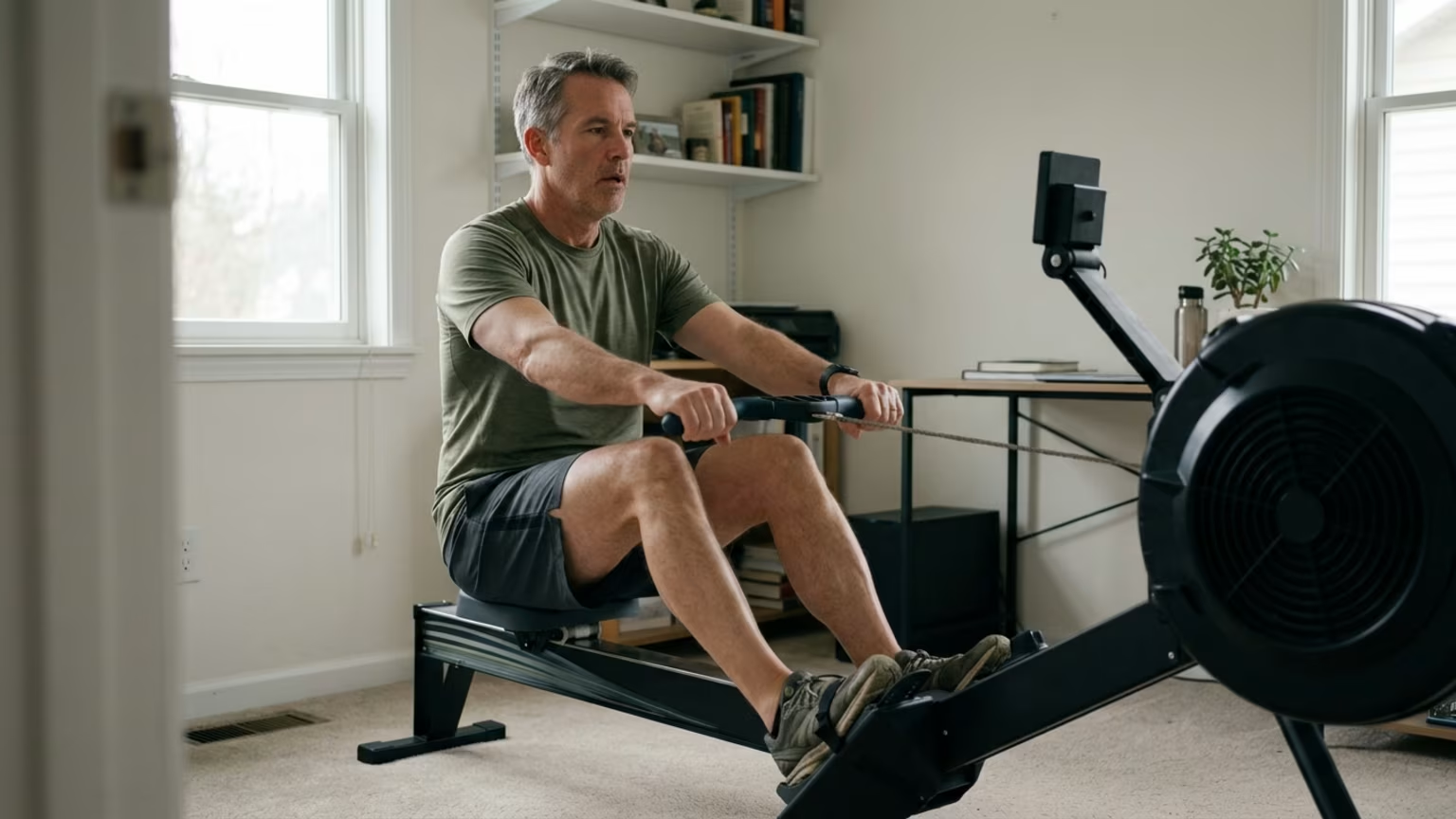
Andrew Huberman shared a weekly workout plan for staying capable after 50. Learn how veterans can adapt this fitness framework for long-term healthy aging.
Build better habits around strength, recovery, sleep, hormones and healthy aging with practical guidance for active military personnel and veterans.
Explore BattleVet