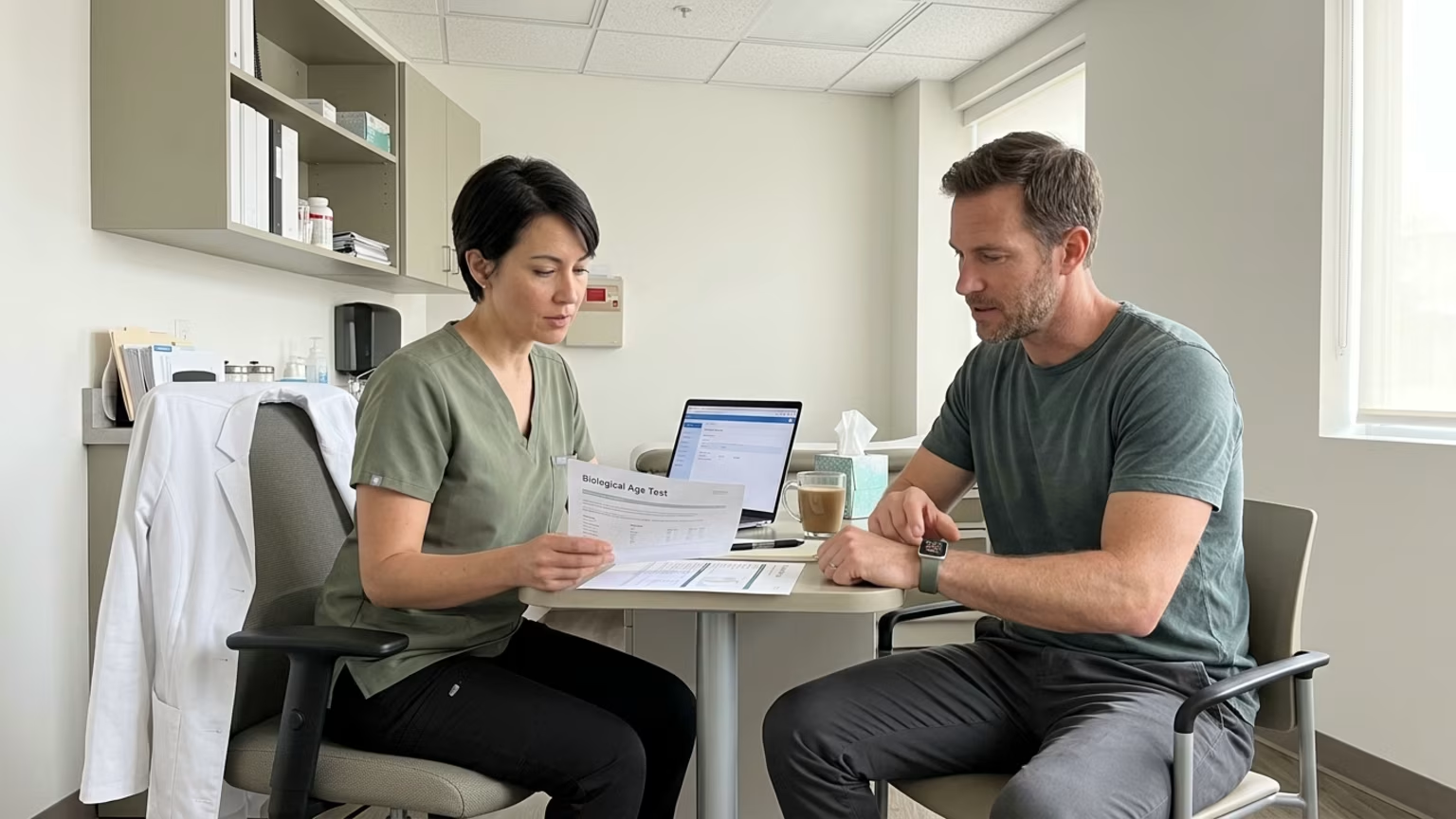

Stanford Medicine cautions against using biological age tests as definitive health markers. Learn why veterans should focus on functional capability instead.





On September 23, 2026, Stanford Medicine published a comprehensive review evaluating the accuracy of biological age tests. Science writer Sarah Williams authored the report. She quoted Stanford researchers Tony Wyss-Coray, Anne Brunet, and David Rehkopf to detail the current limitations of these popular tools. The researchers clearly cautioned against treating commercial biological age tests as definitive measures of overall health.
The review carefully separates chronological age from biological estimates. Chronological age simply marks the exact number of years a person has lived. Biological age is intended to describe age related changes in cells, organs, and biological processes over time. However, the Stanford review clearly states that no direct to consumer biological age clocks are approved by the U.S. Food and Drug Administration as medical diagnostic tools.
Active military personnel and veterans often look for precise data to measure fitness and readiness. Commercial age tests can cost several hundred dollars. They heavily market themselves as tools that can calculate a true biological age. Yet, Tony Wyss-Coray described the commercial biological age market as a bit like the wild West.
He cited deep uncertainty around test quality and the promotion of some products without human clinical trial evidence. Relying on a single consumer score for health decisions can therefore be highly misleading. Different tests measure entirely different biological systems. A test based on blood cell DNA may primarily reflect the aging of blood cells.
It might reveal very little about the condition of the brain, heart, or musculoskeletal system. The Stanford article uses the example of a highly fit 70-year-old marathon runner to explain this discrepancy. The runner's heart rate, blood pressure, and blood cell epigenomics could appear relatively young. Meanwhile, their brain derived proteins might indicate an older or impaired brain signal.
In our experience, we remember waking up after a poor night of sleep and realizing that training recovery was taking much longer than it used to. We realized that readiness is more than just pushing through the fatigue. It requires a dedicated approach to sleep and hormonal health, which completely shifted how we view long term capability. Tracking functional realities over time is far more useful than obsessing over an isolated laboratory test.
A single commercial score does not accurately judge physical capability or long term healthy aging. Stanford researchers emphasize that different tests can produce widely different results because they track separate metrics. Some commercial tests rely on metabolic markers, DNA methylation, or blood proteins. Others utilize gene transcription data, telomere length, or wearable derived measurements.
David Rehkopf, a Stanford professor of epidemiology and population health, estimated that many epigenetic clocks have approximately three years of error. This calculated error range illustrates why a result only a few years above or below chronological age is not a precise clinical diagnosis. The earliest epigenetic clocks discussed in the Stanford review were introduced in 2013. These initial tools were known as the Hannum and Horvath clocks.
Later tools, including GrimAge, were designed more to estimate mortality or future disease risk than to simply calculate biological age. Presenting every result as a literal count of the body's true age is therefore inaccurate. The Stanford article also notes that blood cell proportions can change during the day. This simple, natural fluctuation can potentially alter test results significantly.
Furthermore, many biological age tests may respond very slowly to positive behavior shifts. A person could make a genuine, sustained health change, and the test might take years to reflect it. Anne Brunet discussed rapamycin to illustrate this specific limitation. Rapamycin reliably extends lifespan and healthspan in animal studies.
However, epigenetic clocks in humans taking the drug recorded a slightly higher biological age. This conflict does not establish that the drug is harmful or ineffective. Instead, it shows that different organs can age at different rates, and researchers do not yet fully understand what every clock measures. Current physical capability research continues to focus on concrete functional data over abstract biological scores.
A 2026 systematic review of blood flow restricted walking included 12 separate studies. The detailed review reported small to moderate improvements in cardiovascular fitness, lower limb strength, and functional performance. However, the researchers rated the evidence quality low to very low and advised cautious interpretation. Another recent PubMed indexed review from 2026 highlights grip strength as a potentially important functional marker.
It associates grip strength with mortality, disability, and healthspan across various populations. Still, this evidence does not prove that grip strength alone measures a person's complete biological age. These detailed findings reinforce the need to prioritize functional capability rather than commercial testing scores. Wyss-Coray connects the biomarker discussion to the World Health Organization's concept of intrinsic capacity.
This concept focuses firmly on what a person can do across essential daily areas. These core areas include mobility, cognition, energy, and mood. Practical abilities like comfortable walking speed and lifting weight are highly relevant markers of physical resilience. Tracking walking speed, the ability to rise, and safe lifting capacity provides a reliable baseline for long term strength and fitness.
Stanford's review explicitly identifies regular aerobic activity and strength training as behaviors associated with longer life. They acknowledge that researchers are still studying how consistently those specific behaviors appear in biological clock results. Therefore, veterans should maintain both aerobic and strength training when medically appropriate, regardless of commercial testing scores. Prioritizing consistent sleep is also a critical protocol for overall readiness.
The Stanford article links adequate sleep with essential cardiovascular, metabolic, and cognitive health. Making sleep and recovery a priority builds daily capability better than tracking complex epigenetic scores. A healthy dietary pattern serves as another practical pillar for maintaining daily functional capacity. Diets rich in vegetables, whole grains, and lean protein are associated with lower rates of heart disease and diabetes.
Reducing processed foods supports these outcomes, even if it does not produce a predictable biological age reduction. For service members managing injuries or chronic conditions, functional tracking should be adapted with careful medical guidance. A test reporting an unexpectedly old or young result should prompt a discussion with a qualified clinician. Stanford researchers view biological clocks as potentially useful research tools, but physical capability and clinical context must always be evaluated together.
The field of aging research is actively moving beyond a single whole body age score. Researchers are now working toward measurements that may properly distinguish among specific organs and biological systems. Wyss-Coray's laboratory has already used repeated monthly blood samples from volunteers to study organ specific biological clocks. They utilize these samples to carefully investigate whether targeted interventions change those precise measurements.
This shift away from simple biological age calculations raises an important consideration for the future of veteran healthcare. As medical science develops advanced organ specific markers, how will future biomarker research effectively integrate with the practical, everyday physical capabilities that keep veterans strong and resilient over the long term?
Follow BattleVet for practical guidance on military and veteran health, strength, recovery, testosterone, sleep and healthy aging. Stay connected for new articles, research backed insights and clear information to help you stay capable for the years ahead.


A 2026 review shows combining protein supplements and exercise offers modest strength benefits for older adults. Learn why progressive training is the priority.

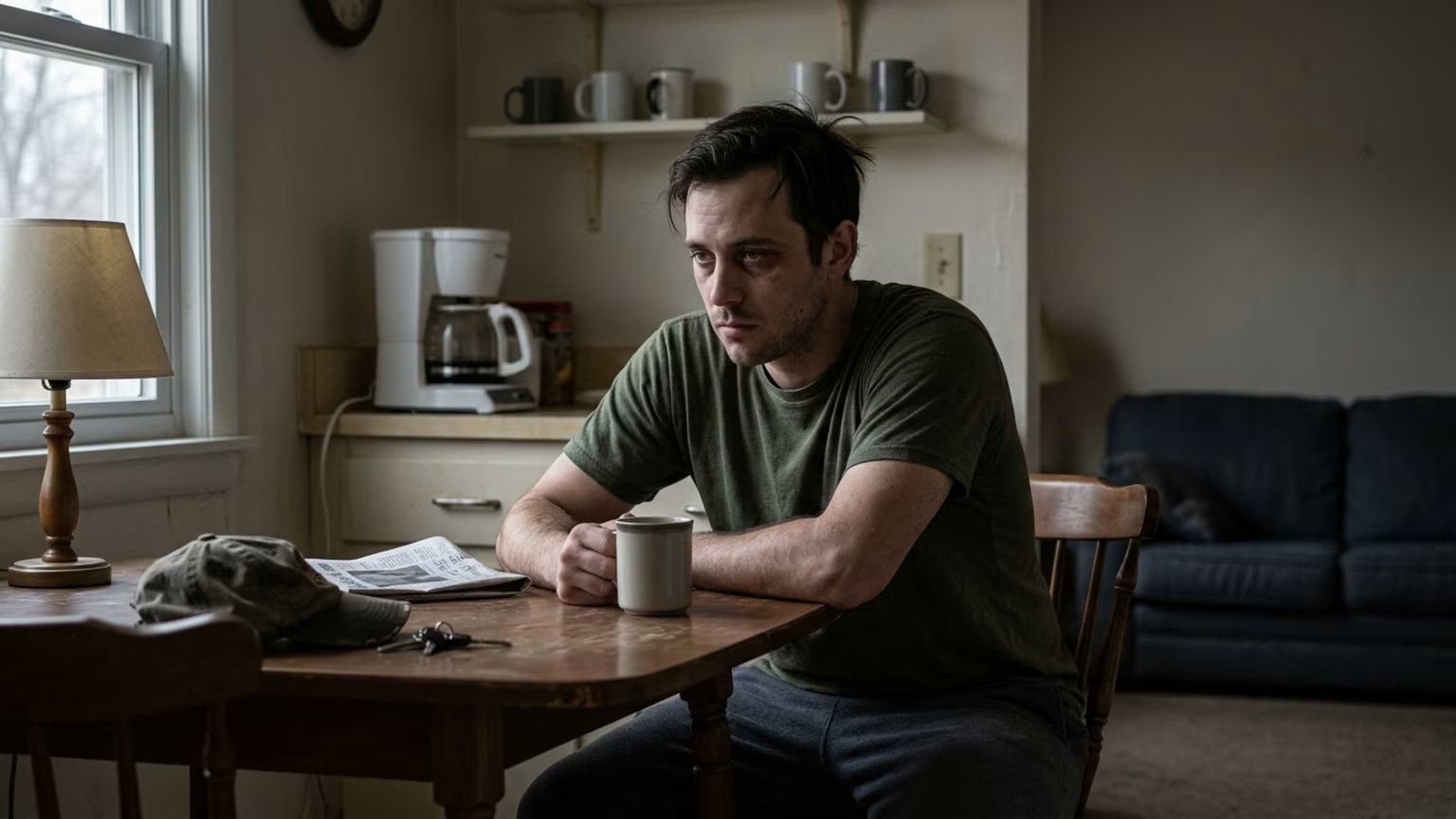
A September 2026 analysis examines how occupational trauma, chronic stress, and sleep disruption impact military readiness and long term veteran health.
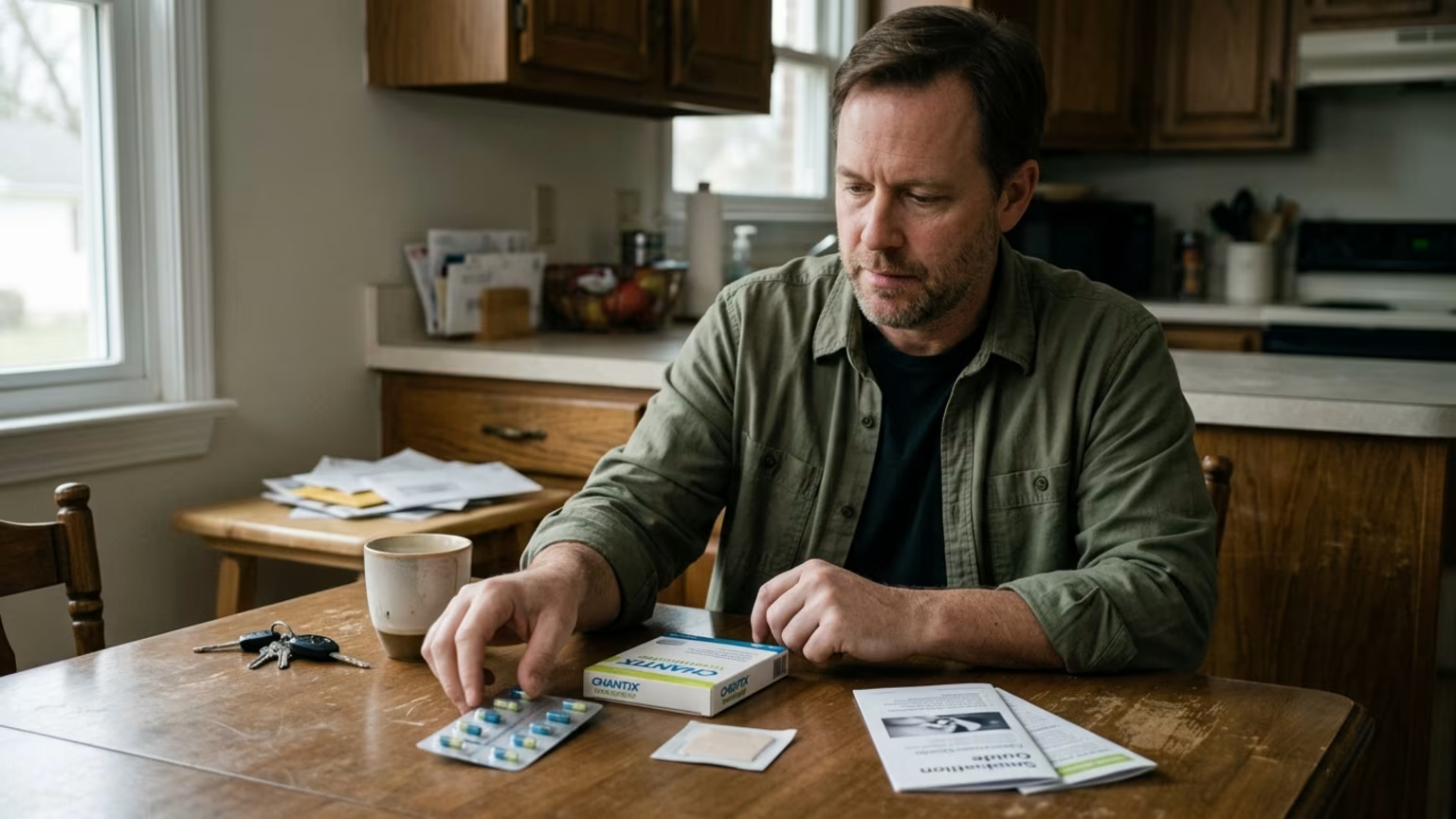
The 2026 VA/DoD clinical guideline recommends varenicline and combination NRT as preferred tobacco cessation treatments, shifting focus to medical care.
Build better habits around strength, recovery, sleep, hormones and healthy aging with practical guidance for active military personnel and veterans.
Explore BattleVet