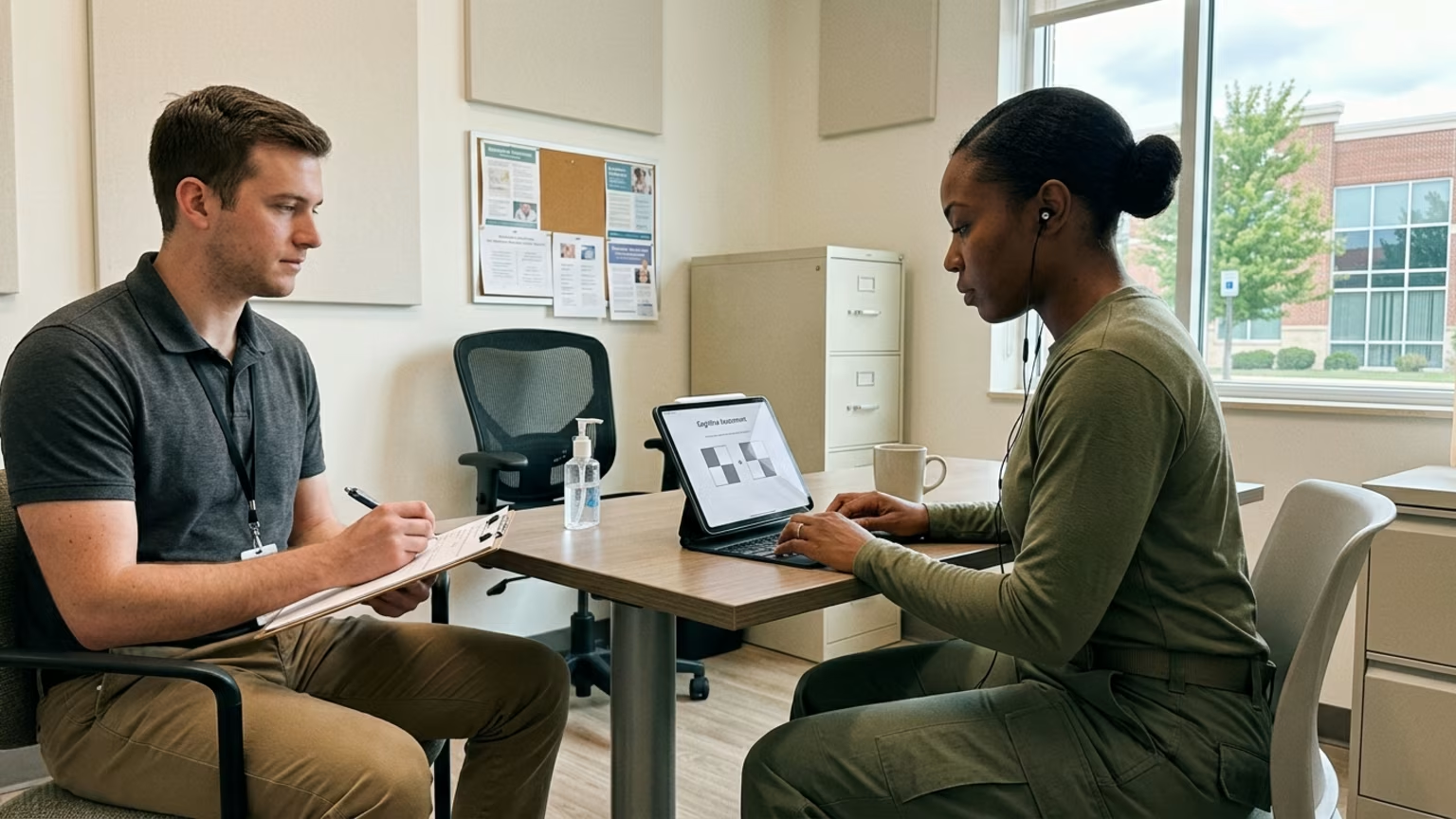

The Army reports 97 percent of Soldiers have completed its cognitive baseline assessment. Learn how this data tracks blast exposure and supports veteran health.





On September 23, 2026, the U.S. Army reported that about 97 percent of Soldiers had taken its Neurocognitive Assessment Tool. The Army describes this required baseline assessment as a way to monitor Soldier brain health. The tool is also intended to support recovery from traumatic brain injuries across the force. Personnel across the active-duty Army, National Guard and Army Reserve began taking this computer-based test in 2024.
According to Task & Purpose, the Department of Defense established the test in 2024 as a mandatory cognitive baseline requirement. BattleVet provides clear, research-backed guidance on military and veteran health. We connect physical performance with long-term health rather than treating them as separate subjects. Tracking cognitive health is just as important as maintaining physical strength, mobility and fitness.
This recent medical readiness update demonstrates a large-scale effort to document cognitive function before injuries occur. Understanding how physical impacts affect the human brain requires accurate starting data. The Neurocognitive Assessment Tool specifically measures memory, attention and processing speed. This data establishes a cognitive-health baseline for each individual service member.
Assistant Secretary of the Army for Installations, Energy and Environment Jordan Gillis stated that the tool sets a baseline for reaction times and memory. Gillis noted that blast impacts differ widely among individuals. Having a personalized cognitive baseline helps medical providers monitor brain health accurately over time. It can also assist with medical treatment if an injury is later identified.
Establishing this reference point removes some of the guesswork from post-injury medical evaluations. A baseline measurement is not a clinical diagnosis. The Army cautions that this test should not be presented as proof that a Soldier has or does not have a brain injury. Instead, it creates a personal reference point for future health decisions.
When medical professionals evaluate a service member later in their career, they can compare new cognitive results against this initial data. The medical necessity for this data is supported by recent research observations. A 2026 Medical Surveillance Monthly Report study summary reinforces the potential value of periodic neurocognitive and audiologic screening. This screening is particularly relevant for personnel operating in high-risk specialties.
The 2026 study summary explicitly points to prior evidence for possible blast-related neurological and auditory injury. This prior evidence combined with new findings strongly reinforces the potential value of periodic screening. Evaluating both neurocognitive and audiologic health provides a more complete picture of a service member's operational readiness. By tracking baseline cognitive data, the military aims to improve awareness around military health risks and support long-term physical restoration.
Proper cognitive monitoring ties directly into maintaining total capability as service members age. BattleVet covers healthy aging and longevity relevant to military and veteran populations. Having clear documentation of cognitive function during active service supports better healthcare conversations later in life. Understanding health priorities is essential during active service, transition and veteran life.
The Army reported that 97 percent of Soldiers have taken the initial assessment. This figure strictly measures testing compliance and testing completion across the force. It does not indicate how many personnel currently have cognitive impairment. Furthermore, the statistic does not show how many actual injuries the baseline assessment has successfully detected.
The Army describes this completion figure as evidence of its commitment to cognitive safety, medical readiness and warfighting capability. However, that is the Army's characterization and not an independently measured medical outcome. The true value of the baseline will be determined by how effectively it informs future medical care. Gathering the initial data is only the first step in a much longer process.
Testing requirements vary significantly based on specific occupational risk factors. The Army says all Soldiers must take the assessment every three years. Conversely, Soldiers in high-risk military occupational specialties must take the test annually. The Army identified field artillery, combat engineers and explosive ordnance disposal technicians among the career fields operating heavy weapons systems.
For these affected career fields, the testing schedule includes several specific operational triggers. The Army lists testing upon entering the military and immediately before deployment. Additional testing is also required after an injury or a suspected concussion. It is important to preserve the distinction between the standard three-year requirement and the accelerated schedule for high-risk roles.
Routine screening helps separate credible medical evidence from general assumptions about military service. While the available study summary supports the potential value of periodic screening, it does not provide exhaustive details. The available summary does not provide its methods, sample size, effect estimates or detailed limitations. Therefore, medical professionals rely on the ongoing collection of baseline data to build a clearer understanding over time.
Maintaining accurate and up-to-date medical records is highly valuable. Service members should understand their specific occupational requirements and ensure their testing is current. This diligence supports a stronger veteran lifestyle and healthcare strategy during the transition to civilian life. Accurate military medical records often form the foundation of veteran healthcare services.
The rollout of the Neurocognitive Assessment Tool represents a structured approach to tracking long-term health. The Army says this assessment sits within a broader blast-overpressure program. This comprehensive program includes hazard and risk assessment, exposure tracking and risk mitigation. It also covers cognitive monitoring, information management, illness reporting and specialized military training.
Relying on baseline testing does not replace the need for direct and immediate clinical evaluation. Service members must understand whether their occupational specialty falls under the high-risk annual requirements. If a service member experiences an injury or suspected concussion, they should actively raise the issue with medical personnel. Routine baseline testing is a monitoring tool rather than a substitute for proper clinical evaluation.
For service members focused on their training and performance, understanding the limits of a baseline is critical. A strong performance framework requires treating physical and cognitive health with equal respect. Documenting cognitive function protects a service member's ability to monitor healthy aging and longevity in the future. Service members should always advocate for comprehensive medical evaluations following any suspected head trauma.
The Department of Defense continues to expand its data collection methods regarding blast exposure. In September 2026, Federal News Network reported that the Pentagon had begun a new pilot program. This pilot involves a web-based application designed to collect detailed information about blast exposure. The initial monitoring phase uses cognitive assessments focused specifically on attention and memory speed and accuracy.
BattleVet views physical performance, recovery and stress management as deeply connected subjects. Proper recovery and sleep are critical components of maintaining cognitive health after heavy physical training or deployment. Navigating healthcare information with better context helps service members make informed decisions about their daily habits. Physical strength and cognitive sharpness both require structured recovery protocols.
Medical providers now possess baseline cognitive data for the vast majority of active personnel. The initial testing phase successfully established millions of data points regarding memory, attention and processing speed across the force. As the military implements web-based pilot applications and refines its blast-overpressure program, the focus will inevitably shift from data collection to practical clinical application. The essential question is how effectively this baseline data will translate into precise diagnostic practices and improved long-term treatment outcomes for veterans facing blast-related injuries.
Follow BattleVet for practical guidance on military and veteran health, strength, recovery, testosterone, sleep and healthy aging. Stay connected for new articles, research backed insights and clear information to help you stay capable for the years ahead.


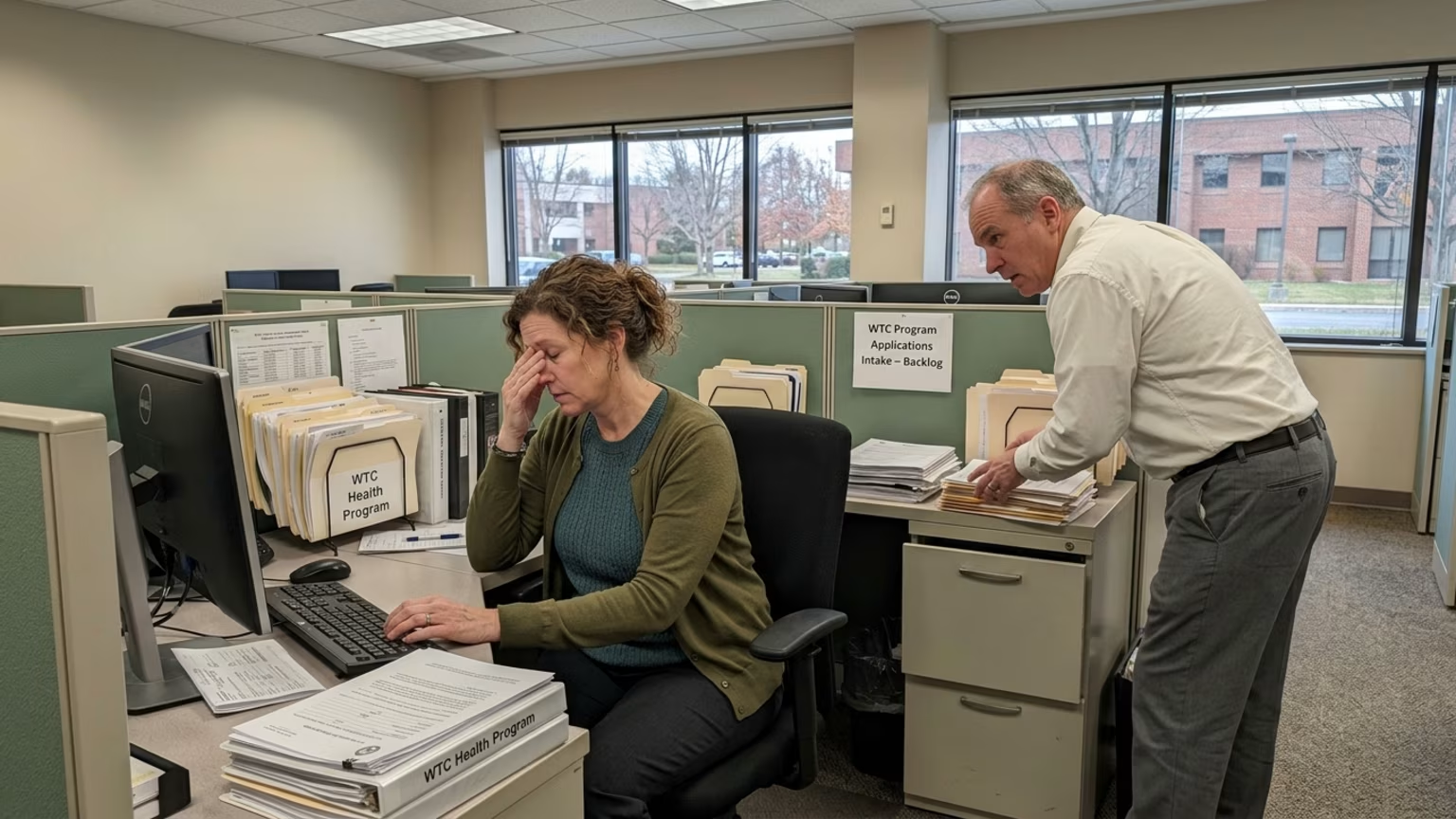
In August 2026, reports showed the World Trade Center Health Program operating 18% below its planned workforce. Learn how veterans can navigate these delays.


The proposed movement span framework focuses on adaptable physical capacity. Read how this emerging concept impacts veteran mobility and long term independence.
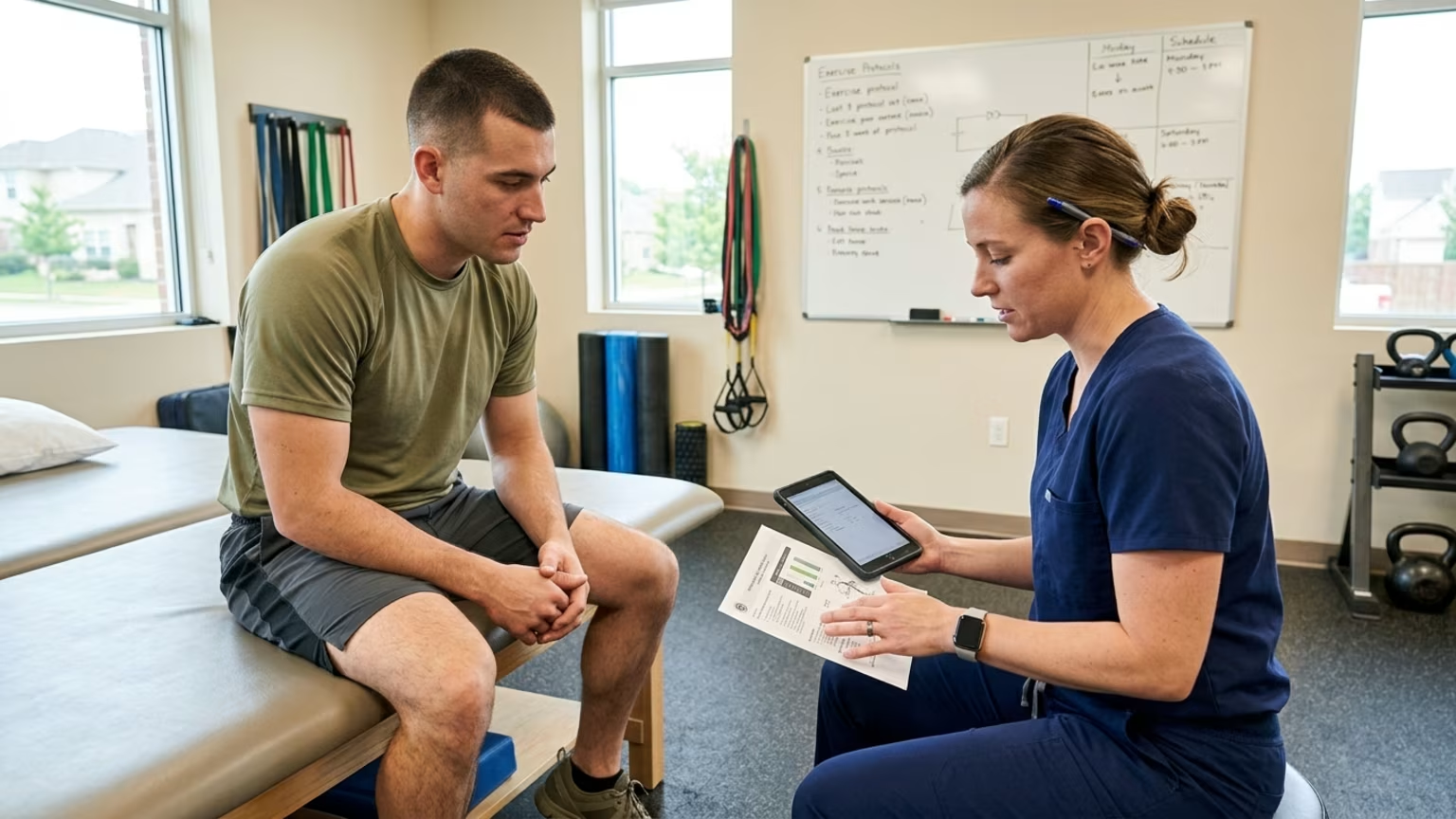
The Special Warfare Center demonstrated its integrated human performance model by hosting collegiate athletes. Learn how the H2F framework connects conditioning, nutrition, and injury recovery data.
Build better habits around strength, recovery, sleep, hormones and healthy aging with practical guidance for active military personnel and veterans.
Explore BattleVet