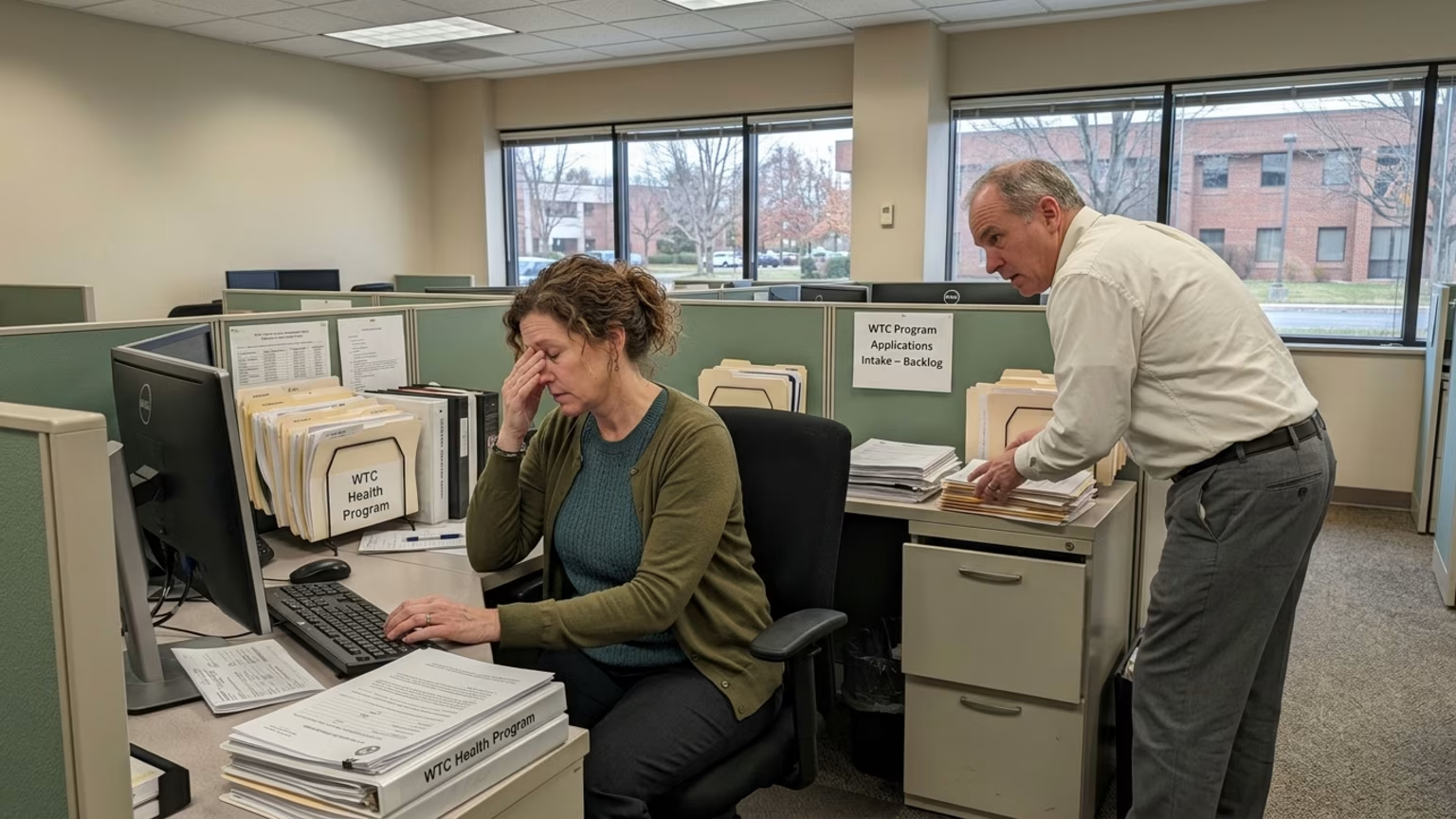

In August 2026, reports showed the World Trade Center Health Program operating 18% below its planned workforce. Learn how veterans can navigate these delays.





In August 2026, reporting revealed that the World Trade Center Health Program was operating below its designed staffing level. The program had 98 employees compared to a planned benchmark of 120. This shortfall left the operation 22 positions short, or approximately 18 percent below its planned federal workforce. Separate reporting from Politico found that the program's employee count had previously fallen from 93 at the beginning of 2025 to 83 by the spring of that year.
The Department of Health and Human Services authorized the program to begin filling 37 vacant positions in April 2026. Rebuilding this workforce has reportedly been a slow process. Dr. David Prezant of the FDNY described federal hiring as a slow process that could take years to restore lost capacity. He noted that the program was replacing staff at a rate of at most two to four people every few months.
Different officials have offered conflicting views on the pace of current hiring efforts. The White House said nearly 40 positions were being filled across the agency. In contrast, 9/11 Health Watch executive director Ben Chevat said only four people had actually been hired at the time of Politico's report. These unresolved hiring figures present a confusing picture for those monitoring the program's operational health.
This administrative bottleneck matters directly for veterans and former service members. The program provides medical monitoring and treatment for eligible responders and survivors connected to the World Trade Center, the Pentagon, and Shanksville response sites. The program is not itself the sole provider of all clinical services. Its federal workforce primarily oversees contracts, research, enrollment, and approvals.
Actual medical treatment is delivered through Centers of Excellence and a national provider network. This structure explains why clinical care has largely stabilized while administrative bottlenecks persist. Lawmakers and advocates have linked these ongoing staffing shortages to distinct friction points in patient care. A bipartisan congressional letter cited widespread delays in treatment authorizations, claims backlogs, and continuity of care disruptions.
Benjamin Chevat warned that reduced staffing at CDC and NIOSH had already affected enrollment and certification reviews. He also noted that staffing shortages combined with a major contractor transition could create additional oversight risks. This operational strain occurs exactly as the enrolled population grows older and requires more complex care. Congress secured longer term funding for the WTC Health Program and the September 11th Victim Compensation Fund, with funding described as extending through 2090.
While stable funding is important, appropriated money and operational staffing remain separate issues. Navigating these administrative delays requires proactive planning for those relying on military health resources. Federal officials and advocates disagree on the severity of the operational problem. HHS maintains a more reassuring assessment of the situation.
HHS said the program has the staff and resources needed to fulfill its mission and meet its responsibilities to the responders and survivors it serves. The agency stated that the program continues certification reviews, research, and care coordination without compromising its core mission. The demand on the health system is measurable and continuing to grow each year. CDC linked reporting stated that more than 154,700 people had enrolled in the program by June 2026.
Politico's coverage similarly described more than 140,000 first responders and survivors as receiving medical monitoring and treatment. The program added approximately 10,000 responders and survivors per year during the three years preceding the recent reports. This growing population is aging into a period where long latency illnesses become more common. Reporting placed the average age of a 9/11 first responder at 63.
This aging demographic is presenting with serious and sometimes delayed health conditions. A New York City Fire Department report cited by Politico found that more than 10,000 FDNY members had been certified with a 9/11 related physical health condition. Cancer and respiratory disease remain major parts of the program's workload. The CDC identifies cancer, respiratory conditions, digestive disorders, and mental health conditions among its covered categories.
Clinicians are actively watching for additional respiratory, cardiovascular, and autoimmune conditions as these individuals age. Health outcomes reported from particular clinical centers highlight the severity of these ongoing challenges. Research capacity is another critical area impacted by the current federal workforce gap. Politico reported that staffing problems disrupted approximately $20 million in annual research grants.
These grants are intended to study 9/11 related illnesses, evaluate treatments, and assess possible additions to the covered condition list. Coverage decisions remain a consequential pressure point for the aging population. Clinical leaders have sought coverage consideration for ischemic cardiovascular disease, systemic autoimmune disease, and cognitive or memory deficits. The ischemic cardiovascular disease request was rejected in 2026, and an appeal remained pending according to the reporting.
The current administrative environment reinforces the need for clear communication and proactive health management. Veterans who responded to the Pentagon or Shanksville sites must confirm their eligibility directly. Military status alone does not guarantee automatic enrollment in the program. The CDC directs potential members to its official application information and lists 1-888-982-4748 as the program contact number.
Do not wait for symptoms to become severe before seeking information or initiating the enrollment process. The program is designed to provide proactive medical monitoring alongside treatment for certified conditions. Administrative processes like enrollment and certification reviews may take longer than expected due to the reduced federal workforce. Starting this process early ensures that monitoring is in place before urgent medical interventions are required.
Members should expect possible administrative delays without assuming that clinical care has stopped. Current reporting distinguishes between largely restored direct patient care and slower administrative functions. Knowing this distinction helps patients manage their expectations when interacting with the federal health system. If a member experiences a delay in treatment authorization or certification, they should document the dates of their requests.
Escalating unresolved access problems requires a clear timeline of events and official responses. This documentation makes it much easier to seek assistance through a clinical center or a veterans service organization. Maintaining these records is a standard part of managing long term veteran lifestyle and healthcare needs. Proactive communication with providers can often bridge the gap during administrative slowdowns.
Administrative slowdowns mean that maintaining precise personal records is a priority. Keeping copies of exposure records, prior certifications, and clinical documentation can help members communicate with providers. If treatment authorizations or claims processing experience delays, having organized paperwork prevents unnecessary clinical pauses. Members should bring relevant appointment summaries to every medical visit to support continuity of care.
Enrollment in this specific monitoring program should supplement your standard healthcare rather than replace it. Veterans should continue their routine primary care, cancer screenings, and medication management through their broader health system. Maintaining regular checkups ensures that general health issues are caught early. This dual approach provides a strong foundation for overall physical capability and healthy aging.
Members should also ask their primary care clinicians about evaluating emerging or unresolved health conditions. Even when a specific condition's coverage status remains unsettled within the federal program, your primary care team can begin initial evaluations. Addressing these symptoms early is critical for long term recovery and physical resilience. Routine care remains the first line of defense for conditions that may not yet be officially covered.
Veterans Service Organizations often track policy changes and appeal statuses for major coverage petitions. Staying connected with these groups helps members monitor developments regarding ischemic cardiovascular disease and systemic autoimmune conditions. This external support network acts as an additional layer of information while federal administrative functions operate at a reduced capacity. Combining community resources with clinical care provides a more robust strategy for long term health management.
With $20 million in annual research grants disrupted by administrative gaps, how will the federal health system adapt to evaluate emerging late life illnesses for an aging responder population?
Follow BattleVet for practical guidance on military and veteran health, strength, recovery, testosterone, sleep and healthy aging. Stay connected for new articles, research backed insights and clear information to help you stay capable for the years ahead.



The proposed movement span framework focuses on adaptable physical capacity. Read how this emerging concept impacts veteran mobility and long term independence.

The Special Warfare Center demonstrated its integrated human performance model by hosting collegiate athletes. Learn how the H2F framework connects conditioning, nutrition, and injury recovery data.

The VA’s 2026 Annual Report analyzes veteran suicide data through 2024, highlighting outcomes for enrolled and unenrolled veterans alongside protocol updates.
Build better habits around strength, recovery, sleep, hormones and healthy aging with practical guidance for active military personnel and veterans.
Explore BattleVet