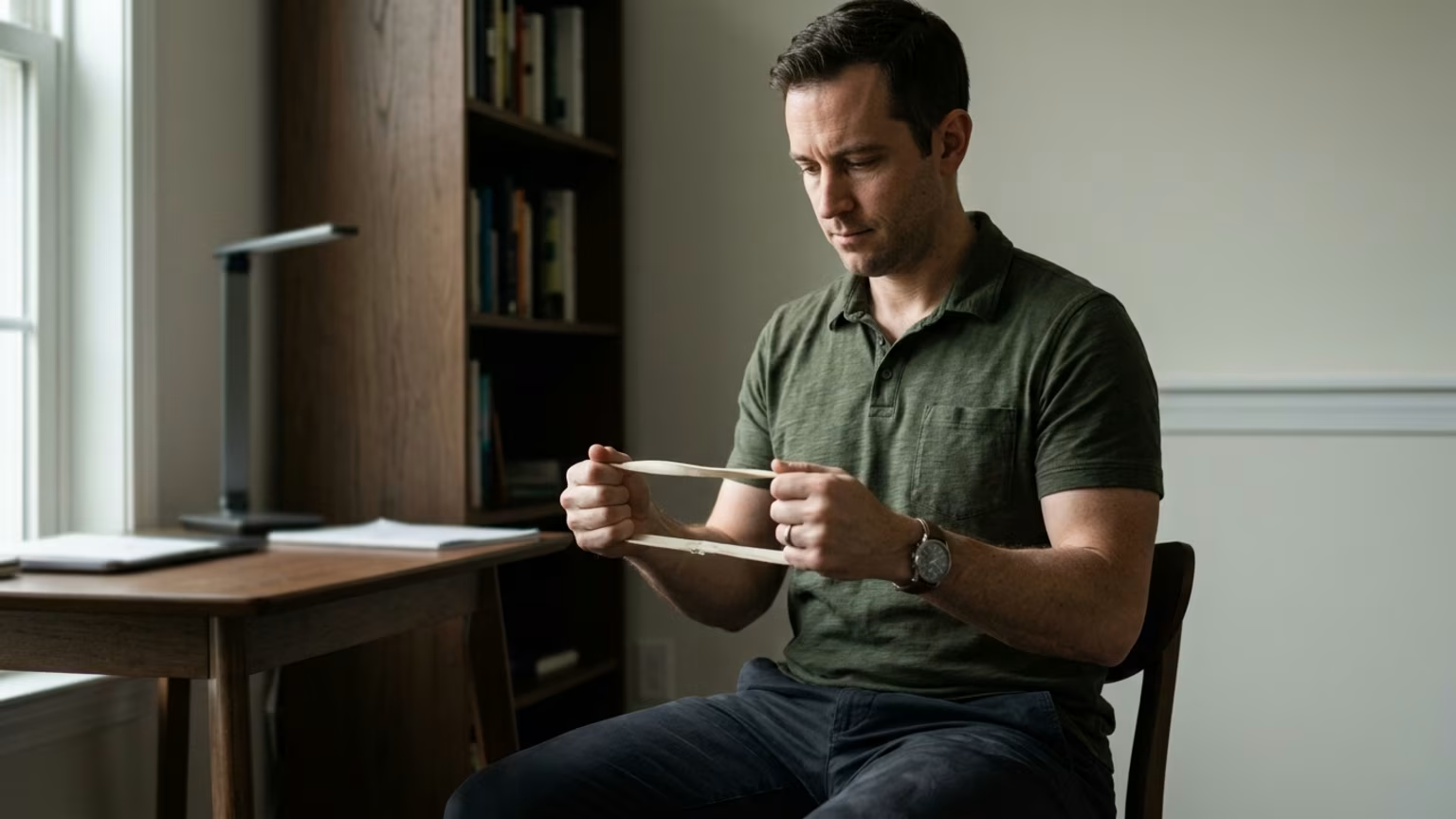

The proposed movement span framework focuses on adaptable physical capacity. Read how this emerging concept impacts veteran mobility and long term independence.





In September 2026, a new healthy aging framework called "movement span" was proposed in the Journal of Sport and Health Science. Dr. Li Li, a professor in the Department of Health Sciences and Kinesiology at Georgia Southern University, authored the opinion paper to introduce this concept. The framework describes the specific period of life when a person can move with confidence, responsiveness, and adaptive control. The primary article reports that this proposal shifts the focus from simply walking from place to place to adapting to everyday environmental demands.
This framework emphasizes the ability to react to unexpected changes and safely manage physical transitions. It broadens the traditional view of mobility beyond basic endurance to include complex, coordinated movements. For service members and veterans, maintaining this type of adaptable movement is essential for long term physical independence. The proposal helps organize how we think about functional aging, even though it is not yet an established clinical test.
This update matters significantly for active personnel and veterans who want to maintain their physical capability. Traditional aging models typically focus on lifespan, which measures total years lived, and healthspan, which tracks years lived without chronic disease. The movement span proposal sits alongside these existing ideas while drawing attention to functional physical independence. It highlights the duration of life spent moving confidently and adapting to changing physical surroundings.
Maintaining this capability is a central focus of BattleVet, where we emphasize that healthy aging and longevity rely on sustained physical function. Li’s proposed definition centers on sustaining movement that is confident, responsive, and adaptable. It avoids treating movement capacity as simply the ability to walk in a straight line. Instead, the framework recognizes that real life requires unexpected stops, turns, and constant physical adjustments.
Veterans often experience unique physical demands during active duty that can impact their joint health and mobility later in life. A framework that isolates movement span offers a targeted way to look at physical restoration and sustained capability. It separates the ability to perform complex physical tasks from simply living without a severe medical diagnosis. This distinction is critical for former service members who define health by their ability to remain active and capable.
This approach connects directly to the principles of maintaining strength, fitness and body composition over time. Physical capability requires more than basic cardiovascular health or overall muscle size. It demands coordination, power, and the physical capacity to recover from unexpected disruptions. When an individual steps off a curb unevenly, their balance and reaction time dictate whether they recover or fall.
While movement span is a proposed concept, it provides a highly useful way to organize thinking about functional aging. The primary article clarifies that movement span is not yet a standardized medical measurement or a validated clinical endpoint. The original proposal calls for future work on specific criteria, standardized protocols, and established reference data. Even as a developing framework, it reinforces the critical importance of preserving functional mobility as we grow older.
The component measures of the movement span framework have been studied extensively in older adult populations. A pooled analysis reviewed nine cohort studies involving more than 34,000 adults aged 65 and older. This comprehensive analysis found that a faster usual walking speed was associated with better survival rates. Specifically, each 0.1 meters per second increase in walking speed was associated with roughly a 12 percent lower mortality risk during the follow-up period.
It is important to understand that this survival evidence is an association rather than a direct, proven cause. The primary article cautions that the data does not prove that deliberately walking faster will extend an individual's life. Walking speed serves as a potentially useful summary of overall physical function and systemic health. It reflects how well different systems in the body work together, rather than acting as a simple metric to improve for a longer life.
Additional evidence for functional metrics comes from the LIFE randomized trial, which looked at structured physical activity. The trial enrolled 1,635 sedentary adults aged 70 to 89 with physical limitations who could still walk 400 meters. The physical activity group took part in a structured program centered on walking, resistance training, balance work, and flexibility exercises. Meanwhile, the comparison group attended standard health education workshops throughout the duration of the study.
Over an average of about 2.6 years, researchers tracked the rate of major mobility disability in both study groups. This severe disability occurred in 30.1 percent of participants in the physical activity group, compared to 35.5 percent in the health education group. The cited report notes that persistent mobility disability was also significantly less common in the exercise group. The LIFE trial offers clear evidence that a structured activity program can reduce major mobility disability in the studied older adult population.
It is necessary to maintain a clear, objective perspective on what this data means for military veterans. The available sources do not establish whether the LIFE trial’s participants included veterans or former military personnel. Furthermore, the specific results were not analyzed or adjusted specifically for military or veteran populations. The findings provide a strong foundation for the benefits of exercise in older adults, but they should not be assumed to be identical for every demographic.
The introduction of the movement span framework reinforces the need to train for adaptability rather than just simple endurance. The proposal identifies several potential assessment domains for evaluating functional aging and overall movement capacity. These include standardized gait speed testing, balance under varied sensory conditions, reaction to unexpected stimuli, and coordinated movement transitions. These transitions involve necessary daily actions like starting, stopping, turning, and changing direction safely.
For service members and veterans, the defensible takeaway is to consistently train a wide range of functional abilities. These protective abilities include walking speed, physical strength, explosive power, and everyday mobility. Veterans should use walking speed or other functional measures as possible indicators to discuss with a qualified medical clinician. These metrics are helpful conversation starters about physical decline, not stand alone forecasts of an individual’s lifespan or proof that specific exercises prevent disability.
Adopting this mindset early can change how veterans approach their physical fitness during their transition to civilian life. Instead of waiting for physical limitations to appear, former service members can proactively incorporate balance and mobility work into their weekly routines. This proactive approach shifts the goal from achieving short term fitness milestones to building long term physical resilience. By treating movement adaptability as a core component of overall training and performance, veterans can better prepare their bodies for the unpredictable physical demands of later life.
The Department of Veterans Affairs currently supports older veterans with programs that align with maintaining movement capacity and independence. The VA’s Age-Friendly Health Systems page describes targeted exercise and health promotion clinics tailored for older veterans. These dedicated clinics focus on physical limitations that may be modifiable through supervised exercise protocols. Accessing these specific services can be a highly practical part of a comprehensive Veteran lifestyle and healthcare strategy.
Additionally, the VA identifies STRIDE as a supervised walking program designed specifically for older veterans hospitalized with medical illnesses. The VA page confirms the existence of these older veteran exercise and walking services across its healthcare network. However, the available source does not report specific program outcomes or claim that these VA services implement Li’s specific movement span framework. Despite this, the existence of these supervised programs shows a clear institutional focus on preserving mobility during the aging process.
The concept of a dedicated movement span provides a highly useful new vocabulary for discussing physical capability as we age. As research continues to refine these specific assessment domains, we may see more specialized physical maintenance programs emerge for former service members. If these clinical standards are eventually validated, tracking adaptability and reaction time could become a routine part of healthy aging evaluations. How will future veteran healthcare systems adapt their clinical practices to measure, protect, and extend the functional movement span of those who served?
Follow BattleVet for practical guidance on military and veteran health, strength, recovery, testosterone, sleep and healthy aging. Stay connected for new articles, research backed insights and clear information to help you stay capable for the years ahead.


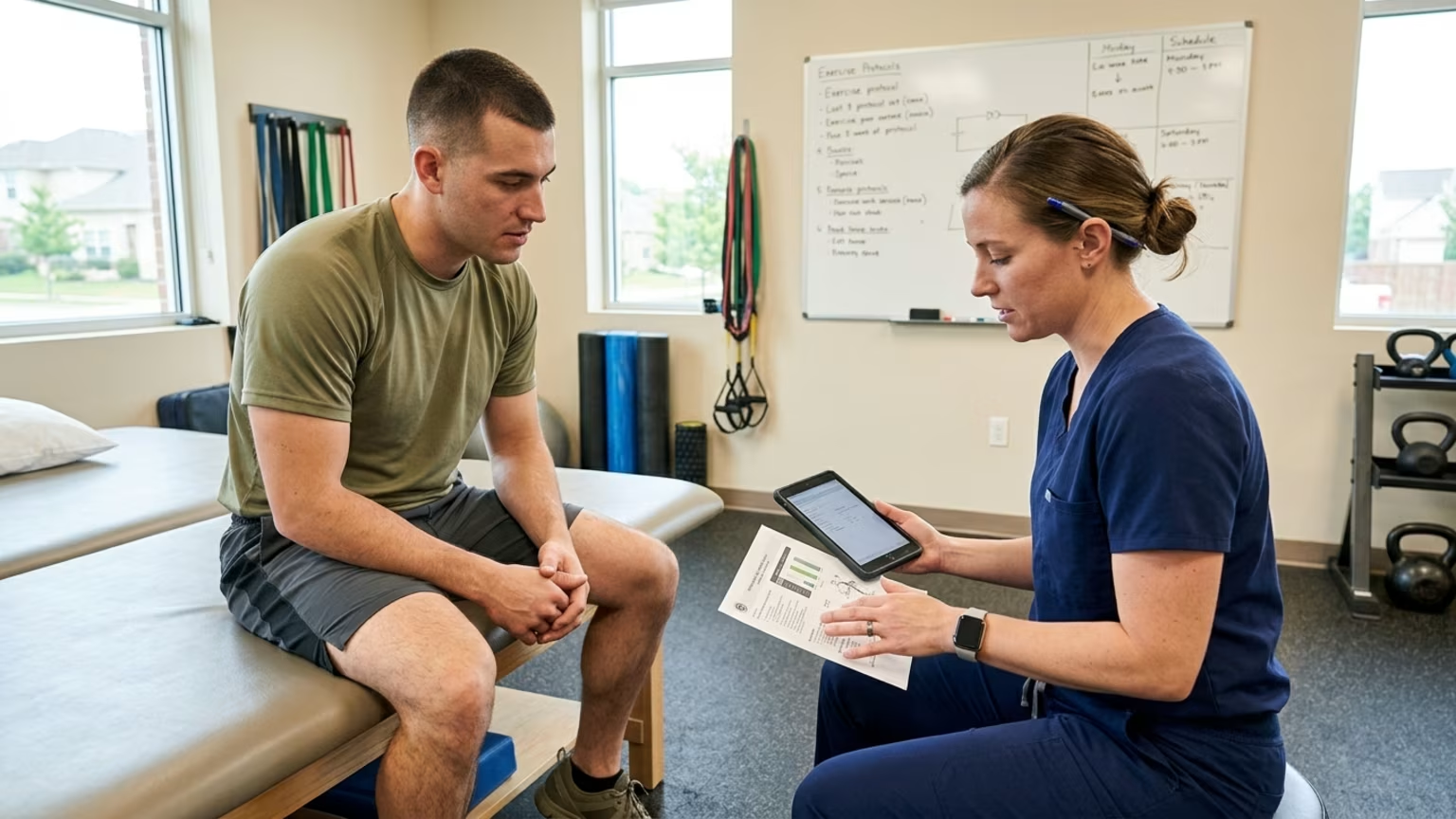
The Special Warfare Center demonstrated its integrated human performance model by hosting collegiate athletes. Learn how the H2F framework connects conditioning, nutrition, and injury recovery data.


The VA’s 2026 Annual Report analyzes veteran suicide data through 2024, highlighting outcomes for enrolled and unenrolled veterans alongside protocol updates.
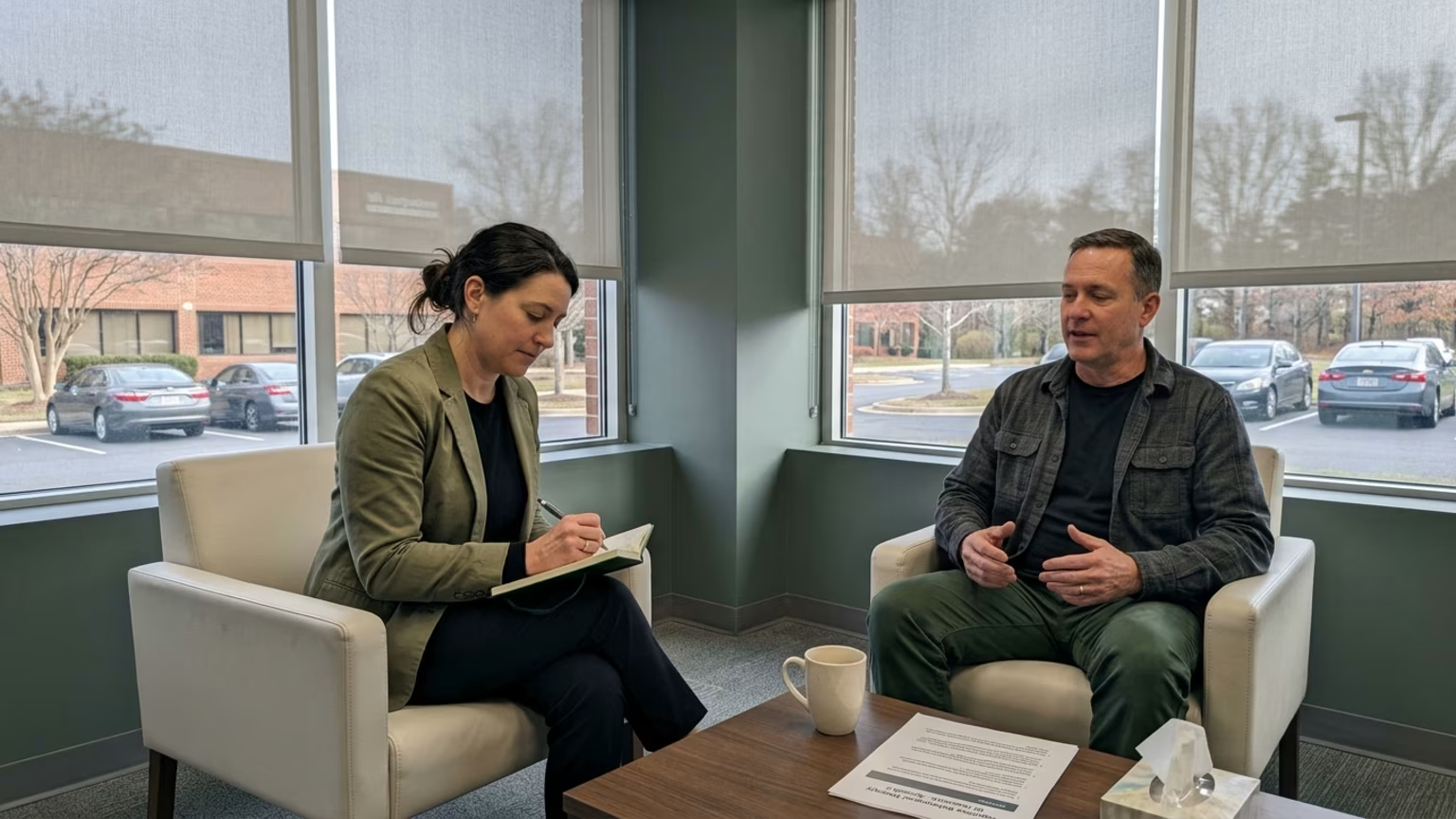
Military.com reports the VA offers an average six-session behavioral treatment for chronic insomnia. Learn how veterans can access this non-drug care option.
Build better habits around strength, recovery, sleep, hormones and healthy aging with practical guidance for active military personnel and veterans.
Explore BattleVet