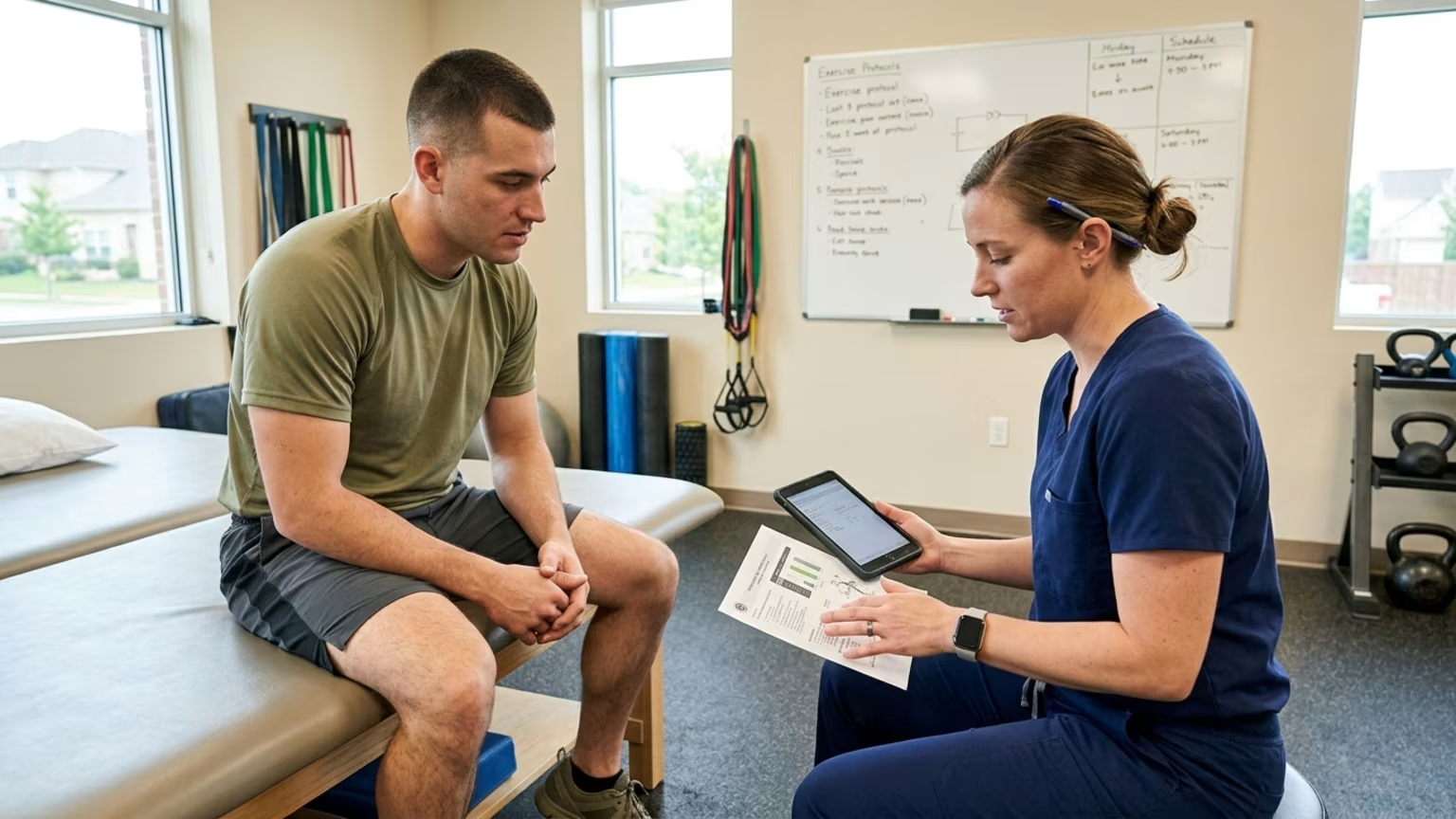

The Special Warfare Center demonstrated its integrated human performance model by hosting collegiate athletes. Learn how the H2F framework connects conditioning, nutrition, and injury recovery data.





The U.S. Army John F. Kennedy Special Warfare Center and School hosted 39 members of the University of North Carolina at Chapel Hill wrestling team at HP FORGE on September 21, 2026. This visit took place at the Human Performance Force Generation Training Center at Fort Bragg. The event demonstrated an integrated approach to readiness by combining physical conditioning with focused recovery planning. According to the event account, the visiting athletes rotated through three specific educational stations.
The structured rotation gave the collegiate team a practical look at military performance methods. The program started with a 30-minute workout led by a performance coach. Following the physical session, the athletes attended a nutrition discussion led by a dietitian. Finally, the team participated in a virtual reality shooting demonstration focused entirely on cognitive precision.
The physical training portion of the visit carried a specific historical connection to the university. The event account notes that the workout was based on the final training program developed by Nick Vetell. Vetell was a former UNC coach who later worked with the Human Performance and Wellness staff at the Special Warfare Center. He passed away in 2025.
Using his final program honored his dual connection to the university and the military performance center. An Army representative quoted in the event account described the facility's work as combining training with recovery and prevention services. The representative referred to the center as a unified shop for training, performance, and rehabilitation. The head coach of the UNC wrestling team noted that the visit gave his athletes a small taste of the expertise involved in preparing special operations soldiers.
This event illustrates a critical shift in how military organizations view physical capability and long term health. For decades, military readiness was measured almost exclusively through physical fitness tests and load bearing endurance. The HP FORGE model shows a different path that treats cognitive function and physical restoration as equally important components of strength. For active duty personnel and veterans, this military health framework offers a sustainable template for managing personal health.
The Army describes its Holistic Health and Fitness system as spanning five distinct readiness domains. These five domains define a comprehensive approach to human performance. The system includes physical readiness, mental readiness, and spiritual readiness. Nutritional habits and sleep readiness make up the final two components of this established framework.
By formally defining nutrition and sleep as pillars of the system, the military acknowledges that workouts alone cannot sustain a capable body. A physical training program will eventually fail if the participant ignores joint recovery, caloric intake, and adequate rest. Veterans can apply this framework to their own routines by viewing their health decisions through this wider lens. Transitioning out of active service often means losing the structured physical training environment of a unit.
Without a mandatory schedule, many former service members focus only on the physical domain while neglecting the nutritional and sleep components. Recognizing that all five domains interact is the first step toward building a durable lifestyle after separation. Rebuilding strict recovery and sleep schedules is just as important as lifting heavy weights. Connecting conditioning with proactive recovery prevents minor joint stress from becoming a chronic limitation.
The Army's approach demonstrates that physical therapy and mental health resources are central to maintaining peak physical function over time. Active personnel should view these support services as routine maintenance rather than emergency interventions. Treating recovery as a disciplined practice ensures that the body remains capable of handling high physical demands without breaking down. This multi-domain strategy directly supports healthy aging for service members and veterans.
Relying on physical grit to push through pain often leads to chronic joint issues later in life. The military now explicitly connects physical capability with proactive recovery planning. Veterans can adopt this same mindset to protect their long term mobility and overall strength. Proper training and performance metrics must account for how well the body rests between intense sessions.
Recent injury data provides a clear look at how integrated health teams impact military populations. Army Times reported a study involving about 1.42 million injuries documented among active-duty soldiers from 2017 through 2025. This large dataset compared units supported by holistic health teams against those following standard protocols. Soldiers in brigades with H2F teams spent 5.9% less time on limited duty after injury than soldiers in brigades without those teams.
The study details reveal important nuances about how these injuries were managed across different units. The report stated that the H2F group was slightly more likely to be placed on limited duty initially. This suggests that embedded teams might be more proactive in restricting movement early to prevent severe damage. Furthermore, the reduction in limited-duty time was greater for lower-body than upper-body injuries.
Other research highlights the importance of rapid assessment when dealing with joint and muscle issues. In a descriptive study of one Stryker brigade, researchers analyzed injury management by embedded physical therapists and athletic trainers. These embedded providers evaluated 63% of injuries within a week of onset. Prompt evaluation allowed the medical staff to establish appropriate care plans before the conditions worsened.
The same Stryker brigade study showed the direct impact of this rapid assessment protocol. The researchers reported that these teams managed 59% of the evaluated injuries without assigning time-loss. Keeping soldiers active while treating minor injuries prevents a total halt in physical conditioning. Interestingly, the study also found that 51% of these musculoskeletal injuries occurred directly during unit physical fitness training.
Additional reports point to similar estimates regarding recovery timelines across the broader force. A separate Army article quoted Dr. Tim Murray regarding recovery timelines for musculoskeletal injuries. He stated that the average duration of soldiers' profiles for these injuries drops by about five to six days per injury when following H2F programs. The article does not supply the analysis details needed to establish a firm causal effect.
However, the reported estimate clearly shows how the military measures the impact of integrated care on unit readiness. These developments should change how veterans and active personnel structure their weekly training schedules. Relying entirely on intense physical conditioning without a scheduled recovery plan is an outdated and inefficient model. The military is actively integrating nutrition education and cognitive precision work alongside heavy lifting and endurance drills.
Your personal routine should mirror this balance by allocating specific days to active recovery, mobility work, and proper sleep management. Maintaining optimal strength, fitness and body composition requires discipline in the kitchen and the bedroom. The data on injury management highlights the absolute necessity of seeking early medical assessment for joint pain. The Stryker brigade research demonstrated that evaluating an injury within the first week often prevents severe time loss.
Service members should stop attempting to push through acute pain during physical training sessions. Ignoring a minor issue frequently leads to a severe injury that requires a total cessation of physical activity. It is also critical to understand the boundary between a holistic training program and actual medical treatment. The UNC wrestling team visit was an educational rotation that demonstrated performance concepts, not a clinical rehabilitation session.
The Army representative noted that HP FORGE incorporates physical therapy and mental health services into its overall structure. However, participating in a tough workout based on a military template does not replace the need for individualized medical care. Veterans must take ownership of their health by building a routine that incorporates all five readiness domains. You cannot out-train a poor diet, and you cannot build sustainable strength while consistently operating on minimal sleep.
Integrating these domains requires a disciplined approach to grocery shopping, meal preparation, and evening routines. True physical capability requires treating nutrition and rest with the same seriousness as a heavy strength session. Veterans managing chronic pain or fresh injuries must seek out specific clinical guidance rather than simply adopting a new physical training protocol. Moving forward requires a fundamental shift in how former service members view their physical limits and recovery needs.
As the military continues to measure the long term impact of its five domain readiness framework, how will this data influence the future standard of care for veterans managing chronic musculoskeletal injuries?
Follow BattleVet for practical guidance on military and veteran health, strength, recovery, testosterone, sleep and healthy aging. Stay connected for new articles, research backed insights and clear information to help you stay capable for the years ahead.


The VA’s 2026 Annual Report analyzes veteran suicide data through 2024, highlighting outcomes for enrolled and unenrolled veterans alongside protocol updates.

Military.com reports the VA offers an average six-session behavioral treatment for chronic insomnia. Learn how veterans can access this non-drug care option.
A Nature Aging study explains how aging muscle trades power for protection. Learn what this biological shift means for veteran health and strength training.
Build better habits around strength, recovery, sleep, hormones and healthy aging with practical guidance for active military personnel and veterans.
Explore BattleVet