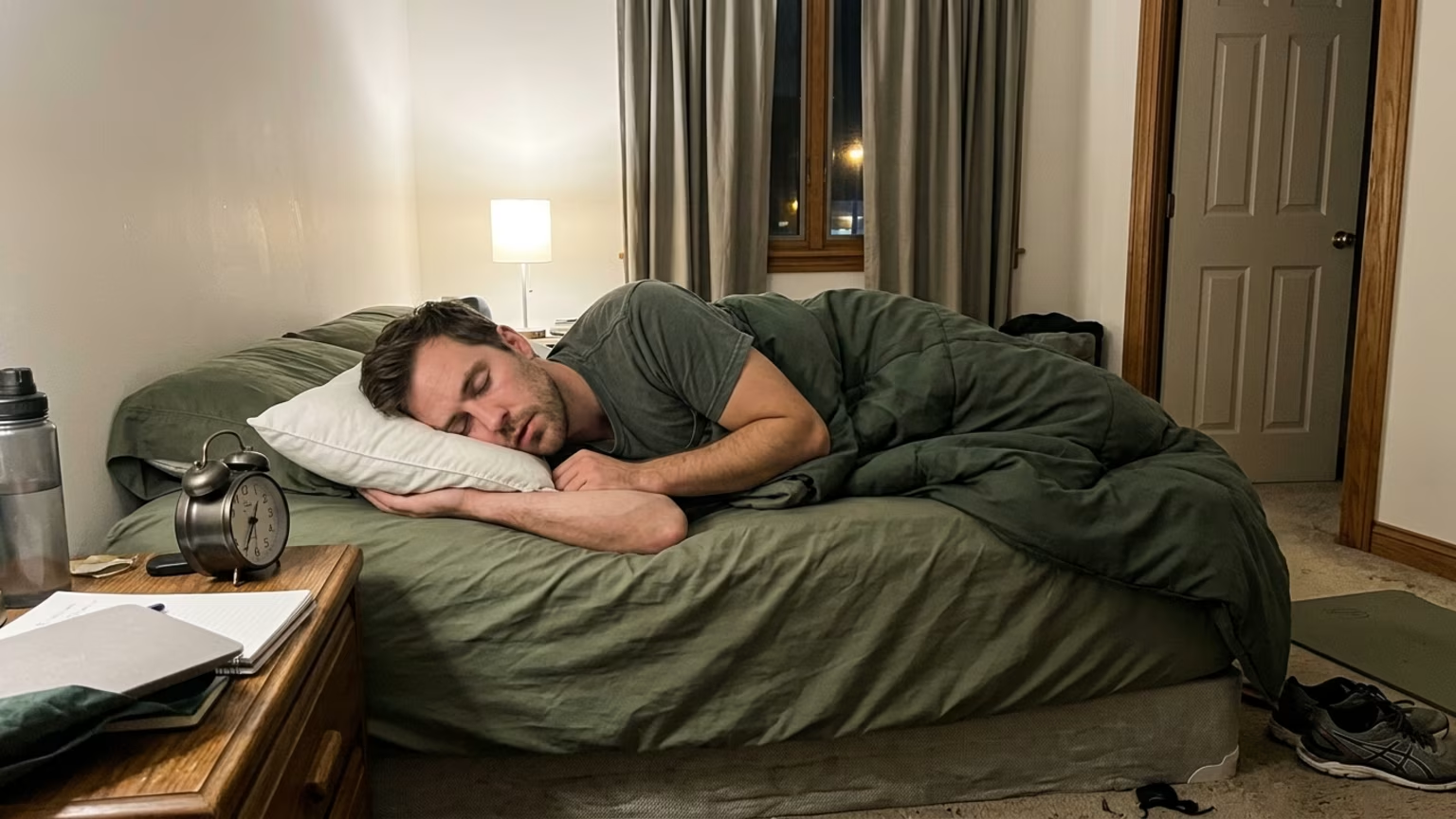

A new study shows that moderate evening exercise helps protect memory during restricted sleep by preserving slow-wave sleep. Learn the exact execution protocol.





A paper published in Sleep on August 26, 2026, examined how exercise interacts with sleep restriction. Researchers wanted to see if one session of moderate intensity exercise could reduce long term declarative memory impairment. The study enrolled 88 healthy young adults to test this physical and cognitive relationship. This group was 52 percent female with a mean age of 24.0 years and a standard deviation of 3.8 years.
The researchers designed the trial to isolate the specific variables of exertion and rest. Participants were randomly assigned to average sleep, sleep restriction, exercise before average sleep, or exercise before restricted sleep. The average sleep condition provided 8.5 hours of sleep opportunity per night. The restricted sleep condition provided only 4.5 hours of rest.
By comparing these distinct groups, the scientists could accurately measure cognitive degradation. Sleep was carefully recorded with polysomnography to allow researchers to quantify specific sleep stages. This monitoring is critical for understanding the exact mechanics of neurological recovery.
The study revealed a significant interaction between exercise and sleep condition for delayed recall. The delayed recall was measured with the discriminability index d'. This statistical interaction had a p value of 0.033 and a partial eta squared effect size of 0.056. These figures demonstrate a clear mathematical relationship between the physical effort and the subsequent cognitive performance.
Participants who exercised before restricted sleep performed significantly better on delayed recall than those who experienced restricted sleep without exercise. That specific comparison between the two groups produced a p value of 0.028. The exercise before restricted sleep group achieved delayed recall performance that was statistically comparable to both average sleep groups. This remarkable outcome highlights the potential power of strategic physical activity.
The biological driver behind this benefit was the proportion of slow wave sleep. Slow wave sleep statistically mediated the relationship between exercise and delayed recall. The mediation coefficient was B = 0.105 with a standard error of 0.091. The 95 percent bootstrap confidence interval was 0.073 to 0.924.
This suggests that pre sleep exercise helps preserve the specific sleep phase responsible for memory consolidation. The researchers concluded that acute moderate intensity exercise was associated with offsetting some negative effects of sleep restriction. This effect was heavily dependent on the proportion of slow wave sleep achieved. Understanding this mechanism is vital for any tactical approach to fatigue management.
The protocol tested in this research requires specific timing and measured intensity to be effective. Before learning, participants completed 30 minutes of evening cycling at 7 p.m. to elevate their heart rates. They maintained an intensity of 55 to 60 percent of their maximum oxygen uptake. This moderate effort provides a biological stimulus without overtaxing the central nervous system before bed.
At 10 p.m., the subjects learned 80 face and name pairs to test their memory capability. Memory was tested immediately and again after the sleep period using a recognition task. This comprehensive task involved 120 face and name pairs in total. The test included the 80 studied pairs alongside 40 novel pairs to accurately gauge recognition.
This rigorous testing confirmed the protective cognitive benefits of the prior physical exertion. Applying this requires deliberate planning when facing known sleep shortages during operational duties. If you anticipate a shortened sleep window, schedule 30 minutes of moderate aerobic work for the early evening. Do not push the intensity into a maximum effort zone.
The goal is to stimulate the body to prioritize slow wave sleep during the limited hours available. High intensity training could easily disrupt your ability to fall asleep entirely. After the exercise, you must protect the remaining sleep window at all costs. The U.S. Department of Veterans Affairs recommends consistent, relaxing bedtime rituals to support healthy sleep patterns.
These routines help signal that it is time to sleep. This transition period ensures your brain can quickly enter the restorative phases. Proper sleep hygiene maximizes the biological advantages gained from the moderate evening exercise. Follow our latest updates on the military health publication feed for more research on physical readiness.
A major error is treating physical exertion as a permanent replacement for adequate rest. The central practical message is not that exercise replaces sleep entirely. Exercise may provide a limited buffer for one specific memory outcome when sleep opportunity is reduced. It does not restore all cognitive functions or make chronic sleep loss safe. Service members must respect their biological limits regardless of their conditioning.
Another mistake is applying this single laboratory finding too broadly across diverse operational environments. The experiment tested a single evening exercise session in healthy young adults under controlled conditions. It did not test repeated operational sleep loss, military training, combat conditions, or veteran populations. The findings address delayed declarative memory rather than marksmanship, navigation, or psychomotor performance. You cannot assume that all tactical skills will be preserved equally.
Service members also err by ignoring broader readiness frameworks when planning their physical recovery. A U.S. Army article describing the Holistic Health and Fitness system identifies physical and nutritional readiness as key performance domains. Mental and sleep readiness are also included alongside spiritual readiness. The Army Reserve H2F performance model includes professionals working across physical, nutritional, cognitive, and sleep readiness.
Teams provide targeted interventions to geographically dispersed warfighters to maintain operational standards. Addressing only one domain is a critical strategic failure. Military human performance research explicitly includes the effects of sleep loss on endocrine and immune outcomes. Official studies also monitor changes in psychomotor skills and memory retention.
The official research examines interventions intended to counter sleep loss effects during military operations. Using evening exercise as a standalone fix ignores these comprehensive military health models. You can read more about comprehensive strategies in our editorial coverage on recovery to build a robust plan. Always prioritize a well rounded approach to your personal readiness.
The Army has stated that recovery, sleep, nutrition, and training loads affect readiness and injury risk. H2F lacks an enterprise wide solution for monitoring these factors and guiding targeted interventions across all units. This means individual service members and veterans must manage their own foundational routines daily. Protecting your sleep must always remain the baseline objective for sustained physical and cognitive capability. Relying on isolated tricks will eventually lead to burnout and degraded performance.
I remember waking up after a poor night of sleep and realizing that my training recovery was taking much longer than it used to. I realized that readiness is more than just pushing through the fatigue. It requires a dedicated approach to sleep and hormonal health, which completely shifted how I view long term capability. Finding effective ways to optimize recovery is essential for maintaining your physical standard. This personal realization aligns directly with the necessity of protecting your restorative rest phases.
If you struggle with chronic fatigue, you need more than a temporary exercise intervention. Veterans should escalate persistent sleep problems to qualified medical professionals for proper evaluation. A consistent approach to rest and stress management is the only reliable way to sustain performance. Short term tactics are helpful, but they cannot replace a sustainable lifestyle and rigorous sleep hygiene. You must build a foundation of healthy habits to support your long term health.
The study of 88 healthy young adults proves that biological mechanisms can provide a temporary buffer. A 4.5 hour sleep window will always be a disadvantage compared to a full night of rest. By understanding how to influence your own slow wave sleep, you can navigate these deficits more effectively. The bottom line is that strategic exertion can protect your memory when optimal rest is out of reach, just as restricting sleep to 4.5 hours threatens that very same capability.
Follow BattleVet for practical guidance on military and veteran health, strength, recovery, testosterone, sleep and healthy aging. Stay connected for new articles, research backed insights and clear information to help you stay capable for the years ahead.


Combat Stress’s workplace guidance emphasizes listening over diagnosis. Recent U.S. veteran insomnia research adds context for sleep and recovery concerns.


ErythroMer's reported storage design could matter for military care. An academic review still lists it as preclinical, with human evidence ahead.
A large veteran study links PTSD and documented social needs to later cognitive impairment, reinforcing the value of connected care planning.
Build better habits around strength, recovery, sleep, hormones and healthy aging with practical guidance for active military personnel and veterans.
Explore BattleVet