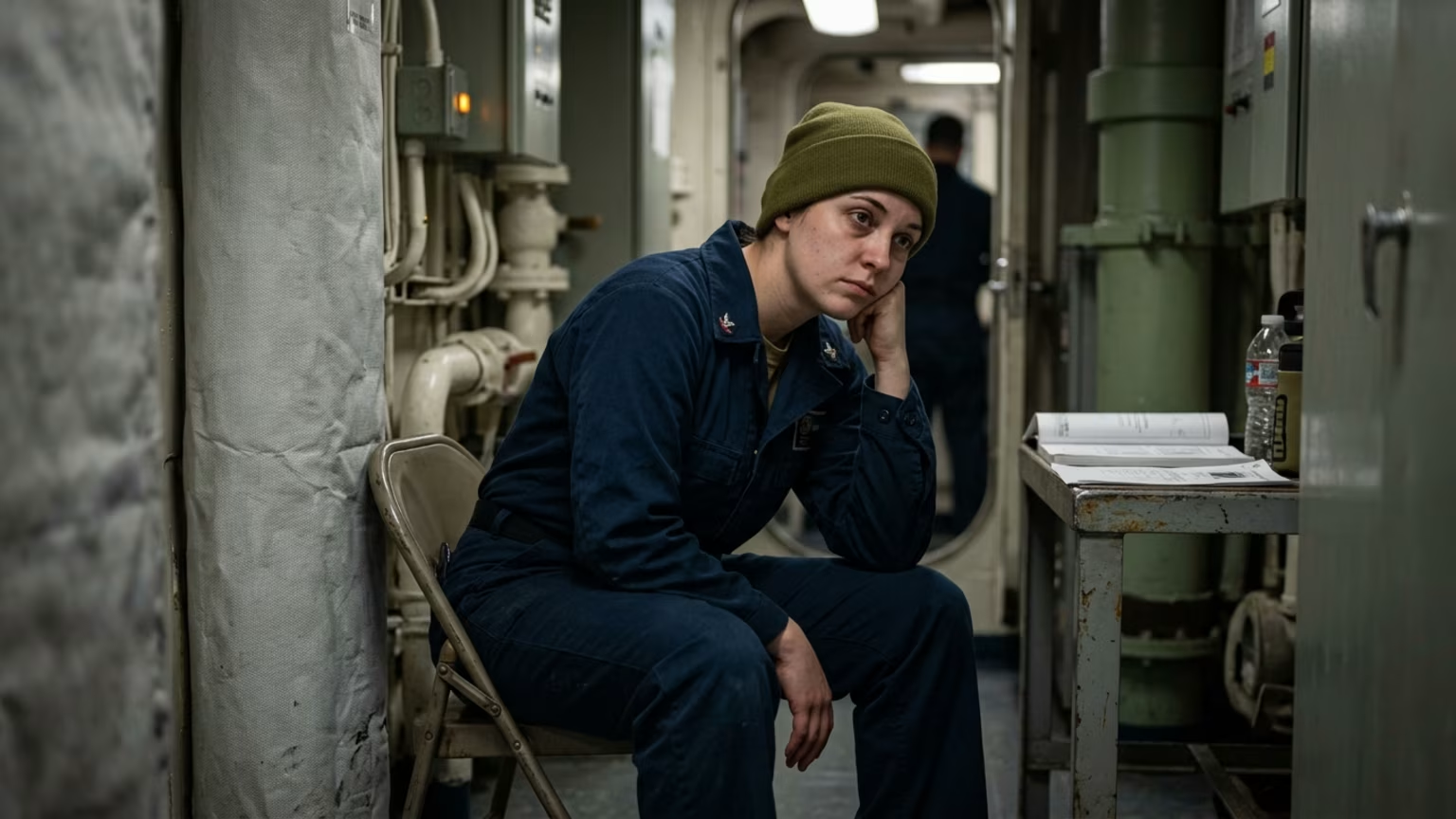

The USS Abraham Lincoln’s 266-day deployment exposes extreme operational strain. Learn why sleep deprivation and fatigue management demand immediate attention.





If you or someone you know is in a state of crisis, call 911 for immediate danger. You can also dial 988 and press 1 for the Veterans Crisis Line. Another option is to text 838255 to connect with trained responders. Securing firearms and medications during stressful periods should be arranged directly with a trusted clinician.
Endurance is often treated as a substitute for actual readiness. But pushing a crew past its biological limits does not create a more capable force. The reality of this operational strain was exposed in late August 2026. According to a Navy account described by The Connecticut Post, the USS Abraham Lincoln completed a 266-day deployment.
This specific mission included 200 days in a combat zone. Reports cited by the analysis described sailors working on almost no sleep while managing severe mental strain. The primary article says that meal plans had to be adjusted when fresh resupply was unavailable. The crew of sailors and Marines were repeatedly pushed to their limits without adequate recovery.
Treating operational tempo as a mere personnel statistic ignores the biological reality of sleep debt. When schedules change repeatedly without protected sleep opportunities, cognitive function declines rapidly. A carrier normally operates continuously through rotating watches. This constant operational pace means that a prolonged deployment affects both total sleep and the exact timing of rest.
The physical reality is that prolonged wakefulness mimics the cognitive impairment of alcohol intoxication. Asking a sailor to perform complex technical duties under these conditions introduces unnecessary risk. High operational tempo without adequate recovery periods systematically degrades both physical health and psychological resilience. This reality forces us to reevaluate how we define true military capability in modern conflicts.
I remember waking up after a poor night of sleep and realizing that my training recovery was taking much longer than it used to. I realized that readiness is more than just pushing through the fatigue. It requires a dedicated approach to sleep and hormonal health, which completely shifted how I view long term capability.
Active personnel and veterans know that long missions erode rest and performance. This reality makes deliberate post deployment decompression absolutely critical for basic military health. Leaders must recognize that unit availability today can conceal later costs in retention and family stability. The reporting links prolonged tempo directly with concerns about sleep and general wellness.
The primary analysis points out that the pace and duration of military operations define the operational tempo. When the recovery time available between these operations shrinks, the physical burden increases significantly. The Navy response acknowledged the 266-day deployment and the 200 combat-zone days. They admitted that sailors were pushed to their limits, highlighting a severe operational strain.
It is vital to distinguish normal readjustment from symptoms that continue to worsen. The available source material confirms that mental health concerns were reported during the deployment. While the analysis does not provide clinical diagnoses, the reported mental strain warrants immediate attention. The evidence supports serious concern and further investigation into fatigue management systems.
Evaluating these deployments requires looking past immediate mission completion. A short term success on paper might hide long term damage to human performance. Proper fatigue management must address the compounding effects of sustained stress. BattleVet emphasizes that physical restoration is a necessary component of maintaining strength.
The physical toll of sustained operations has been a documented concern for many years. The primary analysis notes that another Army sergeant major had said soldiers were busier now than ever before. In May 2025, an Army sergeant major warned that excessive operational tempo threatened physical and mental health. This excessive pace also threatens retention and family stability across the force.
This historical context aligns perfectly with earlier reports on naval operations. A 2015 Government Accountability Office warning associated the pace of sea deployments with constrained training. That same report noted a degradation in the condition of overseas-based ships. Sustained deployment tempo clearly creates a readiness trade-off even when ships remain at sea.
The consequences of delayed maintenance and reduced training are highly measurable. The article notes that 37% of warfare-readiness certifications for cruiser and destroyer crews in Japan had expired by June 2017. Later that same year, the USS Fitzgerald and USS John S. McCain were involved in separate commercial-ship collisions. Those two tragic incidents killed 17 sailors in total.
The reported statistics present a complex picture of operational endurance. Some reports cited the ship spending more than 250 uninterrupted days at sea. Other reporting noted that the deployment lasted roughly 279 days in total. These figures differ slightly from the official 266-day deployment figure provided by the Navy.
Extending a single ship deployment does not simply create additional military capacity. The analysis argues that moving the USS George Washington to relieve the Lincoln solved one regional coverage problem. However, this movement left the western Pacific without a U.S. aircraft carrier. Relieving one unit often creates a distinct vulnerability somewhere else.
Regardless of the exact metric used, the sheer duration points to extreme demands placed on personnel. The central readiness argument is that a unit's apparent short term availability carries hidden costs. Those costs usually manifest later in training delays and complex medical challenges. Ignoring these downstream effects creates a fragile operational framework.
Extended periods of minimal rest demand a major shift in how we manage physical restoration. Leaders must track actual sleep opportunities rather than just verifying a fully staffed watch bill. Commands should plan post deployment recovery as a critical phase of operational readiness. A defensible approach includes limits on repeated extended duty periods and monitoring of cumulative fatigue.
Commands must begin treating recovery time as a non-negotiable requirement. Personnel need the authority to report unsafe fatigue without being treated as unwilling to serve. If a sailor is physically compromised by lack of sleep, their performance naturally degrades. This degradation impacts the safety and efficiency of the entire operational unit.
A comprehensive fatigue management program requires protected sleep opportunities where mission conditions permit. Medical referrals and post deployment functioning should be tracked just as rigorously as equipment maintenance. When a service member returns home, comprehensive physical assessments should check for physiological exhaustion. Proper hormonal balance and nervous system recovery require more than just a long weekend.
Service members must monitor persistent exhaustion or concentration problems after prolonged missions instead of dismissing them. Treating these issues as a sign of physical weakness ignores basic human biology. Routine diagnostic testing can help track hormonal shifts caused by severe sleep deprivation. Medical providers should evaluate how prolonged missions impact systemic recovery and overall physiological function.
Establishing a predictable sleep schedule is one of the most effective ways to counteract prolonged operational stress. Service members returning from extended deployments should focus on creating a dark, quiet, and cool sleeping environment. Limiting exposure to artificial light before bed helps regulate disrupted circadian rhythms naturally. These small environmental adjustments make a significant difference in how the nervous system recovers over time.
Veterans can use these current events as a clear reminder that sleep regularity is a necessary health protective step. Prolonged missions leave a lasting impact on physical readiness and mental clarity. True recovery requires sustained daily routines over a long period of time. A few days of rest cannot instantly reverse months of accumulated sleep debt.
Former service members should pay close attention to how past deployments affect their current health. Healthy aging requires an honest assessment of past physical trauma and sleep disruptions. We encourage readers to utilize our veteran lifestyle and healthcare resources for structured guidance. Building a sustainable routine takes time, patience, and access to credible medical support.
Integrating consistent habits helps rebuild physical capacity effectively. This process is a core focus of our recovery and sleep editorial coverage. Returning to a structured civilian life means prioritizing sleep, stress and resilience without judgment. Consistent restorative practices support long term capability and healthy adaptation.
Will future naval operations implement enforceable sleep standards to protect the long term health of their crews? The physical toll of sustained deployments remains a persistent challenge for modern military planners. Fatigue inevitably collects its debt.
Follow BattleVet for practical guidance on military and veteran health, strength, recovery, testosterone, sleep and healthy aging. Stay connected for new articles, research backed insights and clear information to help you stay capable for the years ahead.


Combat Stress’s workplace guidance emphasizes listening over diagnosis. Recent U.S. veteran insomnia research adds context for sleep and recovery concerns.


ErythroMer's reported storage design could matter for military care. An academic review still lists it as preclinical, with human evidence ahead.
A large veteran study links PTSD and documented social needs to later cognitive impairment, reinforcing the value of connected care planning.
Build better habits around strength, recovery, sleep, hormones and healthy aging with practical guidance for active military personnel and veterans.
Explore BattleVet