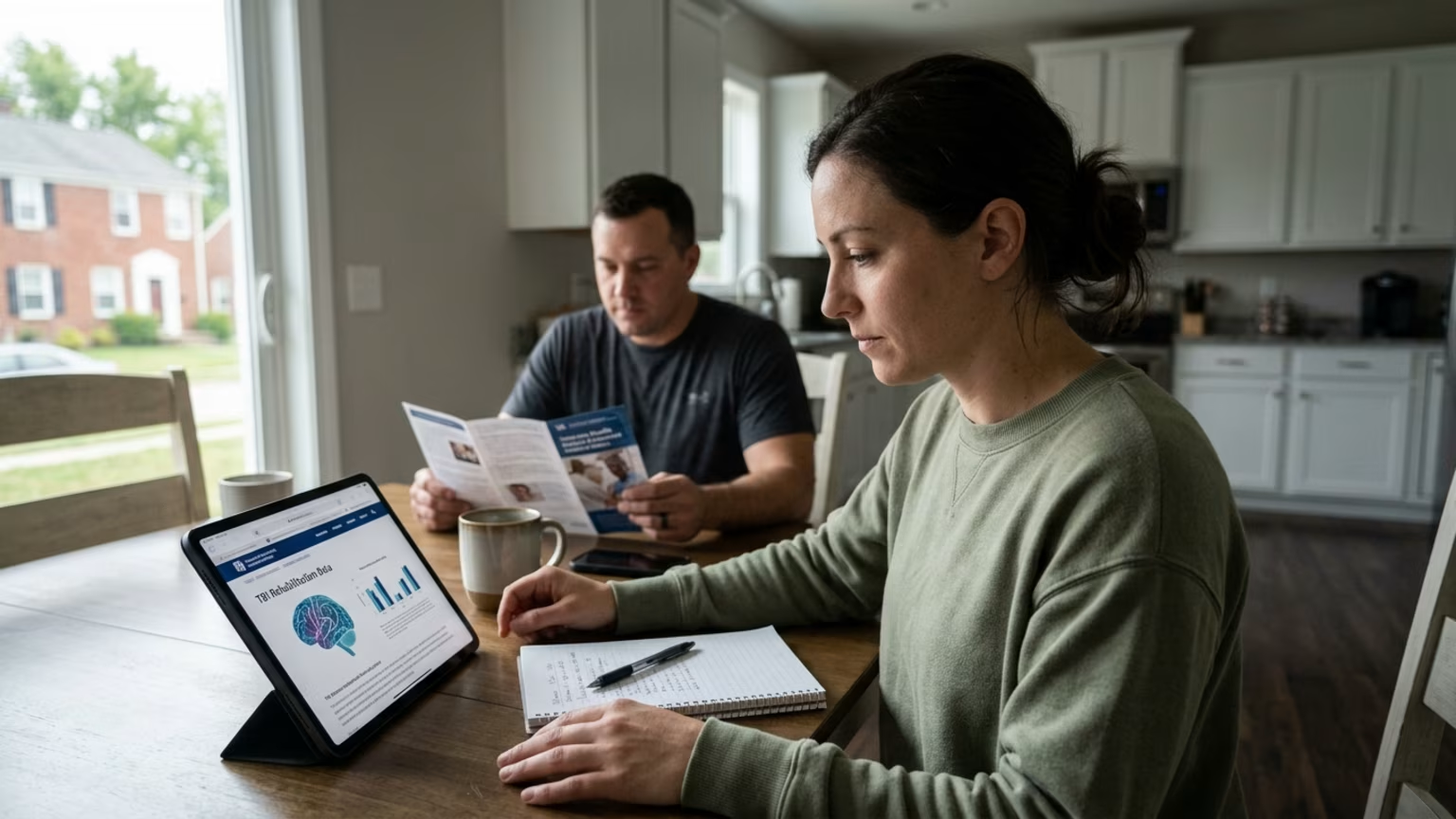

A new preprint reviews the science connecting TBI and CTE. Learn how clinical symptoms differ from pathology and why proactive symptom tracking matters.





Preprints.org recently indexed a newly posted manuscript titled "Traumatic Brain Injury, Chronic Traumatic Encephalopathy, and ..." on September 14, 2026. This document contributes to a broader scientific review of how traumatic brain injuries and repetitive head impacts relate to chronic neurodegenerative pathology. A preprint is a research paper that has not yet undergone formal journal peer review. The primary indexed record indicates an ongoing scientific effort to understand the lasting effects of head trauma.
This development highlights the importance of monitoring emerging data for military personnel who face routine exposure to concussive forces. Keeping track of early research helps health professionals evaluate current protocols for active service members and veterans. Traumatic brain injury and long term neurodegenerative risks remain critical concerns across the military community. Translating this complex neuropathology into practical health habits is essential for maintaining operational readiness.
The scientific conversation around head injuries has expanded significantly over the past decade. Researchers are looking beyond the immediate aftermath of a concussion to understand the decades that follow military service. While the primary manuscript was not machine-retrieved for independent review, the accessible evidence outlines a clear shift in medical focus. The field is moving toward longitudinal monitoring and a deeper examination of underlying biological mechanisms.
For service members, staying informed about these scientific updates provides crucial context for personal health decisions. It helps separate established clinical facts from the speculation that often surrounds head trauma in the news. A grounded understanding of the research encourages veterans to seek early evaluation rather than ignoring persistent symptoms. Informed personnel make better decisions regarding their own physical restoration.
Understanding the distinction between visible symptoms and specific neuropathological conditions is crucial for the military community. Service members often experience concussive and subconcussive impacts during training, combat, and routine deployments. A 2026 narrative review characterizes chronic traumatic encephalopathy, commonly known as CTE, as a neurodegenerative tauopathy associated with these repeated impacts. The same review describes possible underlying mechanisms for this complex condition.
These proposed mechanisms include mitochondrial dysfunction and metabolic stress. Researchers also point to neuroinflammation, axonal injury and abnormal protein accumulation as significant factors. Recognizing these biological processes helps clarify why recovery from head trauma can be complicated. The brain undergoes a complex metabolic response after an impact, which can take significant time to resolve.
However, it is equally important to understand the current limits of medical technology when assessing these changes. Currently available clinical diagnostic frameworks, fluid biomarkers and imaging methods remain limited in their specificity. The defining neuropathological feature of CTE is described as perivascular hyperphosphorylated tau concentrated at the depths of cortical sulci. Because diagnostic tools lack specificity, clinicians cannot definitively diagnose CTE in living patients using symptoms or scans alone.
This lack of a definitive living test can sometimes create anxiety for those experiencing cognitive friction. This distinction matters deeply for service members and veterans who are navigating life after service. Experiencing cognitive difficulties or physical fatigue does not automatically prove that a person has CTE. We approach military health by looking at the whole picture rather than rushing to the worst possible conclusion.
A calm and methodical evaluation of symptoms provides a much better foundation for long term capability. Fatigue and sleep disruptions are significant challenges, but they are often manageable with the right clinical interventions. Recognizing symptoms as a call to action rather than a definitive diagnosis empowers veterans to seek appropriate care. The focus should remain on treating observable symptoms and improving daily quality of life.
While military specific diagnostic tools are still developing, researchers have gathered specific statistical outcomes from other groups exposed to repeated head trauma. A recent case series examined 33 former NFL players with autopsy-confirmed CTE. In this specific autopsy-confirmed sample, impairment was most common in learning and memory, followed by executive function and language. The study also reported that greater global phosphorylated-tau burden was significantly associated with worse learning and memory performance.
The Boston University summary of that case series provided exact percentages for the observed cognitive challenges. Researchers reported memory problems in 63% of the participants. Executive-function impairment was found in 52% of the group. Furthermore, language impairment affected 41% of the sample, while attention impairment was noted in 26% of the studied individuals.
It is vital to view these numbers with proper context before applying them to military populations. These percentages describe a specific autopsy-confirmed NFL sample rather than the prevalence of symptoms among active duty troops or veterans. However, the data confirms that autopsy-confirmed CTE can coexist with measurable cognitive impairment in specific domains. This information helps clinicians understand the potential long term trajectories of repetitive head impacts.
Military specific research provides another critical layer of context for post-injury outcomes. A 15-year study by the Traumatic Brain Injury Center of Excellence examined the relationship between psychological stress and physical injury. The researchers found that PTSD can significantly influence neurobehavioral outcomes after a traumatic brain injury regardless of the initial injury severity.
This finding strongly supports the need to treat physical and psychological health together as one unified system. Neurobehavioral outcomes encompass everything from mood regulation to complex problem solving in daily life. When PTSD is present alongside a history of head trauma, the recovery landscape becomes more intricate. Recognizing this overlap allows healthcare providers to build more effective, comprehensive treatment plans for veterans.
The evolving understanding of head trauma reinforces the need for proactive health decisions and precise symptom monitoring. Military Health System guidance identifies fatigue, decreased energy, difficulty concentrating and increased distractibility as possible signs of a traumatic brain injury. These symptoms can easily overlap with sleep loss, high stress, PTSD or medication side effects. Because these signs are non-specific, they should serve as warning signals that warrant a proper clinical evaluation.
Protecting your baseline health is a critical component of navigating these symptoms effectively. I remember waking up after a poor night of sleep and realizing that my training recovery was taking much longer than it used to. I realized that readiness is more than just pushing through the fatigue. It requires a dedicated approach to sleep and hormonal health, which completely shifted how I view long term capability.
Addressing your recovery and sleep needs is a requirement for sustained physical and cognitive performance. Veterans should prioritize a regular sleep schedule and discuss persistent insomnia or daytime sleepiness with a medical professional. While current evidence does not prove that sleep protection prevents neurodegenerative disease, it is a sensible priority for physical restoration. Maintaining healthy sleep, stress and resilience habits provides a strong foundation for any recovery protocol.
Clinicians recommend tracking symptoms over time to help evaluate changes and identify potential triggers. A simple log of your sleep duration, headache frequency, mood changes and concentration levels gives healthcare providers valuable data. Recurrent concussions or blast exposures should always be discussed with a military or VA clinician. When symptoms persist, worsen, or interfere with daily functioning, medical attention is necessary.
Military health experts also advise using gradual, clinician-guided return-to-activity planning after any head impact. The reviewed sources support the careful clinical evaluation of symptoms, even if they do not provide a universal recovery timetable for every individual. Treating new neurological or psychiatric changes seriously is paramount for preventing secondary injuries. Memory decline, major mood changes, severe headaches, or altered consciousness always require prompt medical attention from a qualified professional.
The most effective recovery frameworks acknowledge the intersection of physical and psychological trauma. When TBI and PTSD overlap, treating them as a unified whole-person recovery process yields the best results. This approach ensures that mental health support and physical rehabilitation work together to restore optimal capability. Service members who proactively manage their symptoms often experience better long term health outcomes.
As researchers continue to investigate the biological mechanisms behind neuroinflammation and structural brain changes, the medical community hopes to develop more accurate diagnostic tools. The movement toward longitudinal monitoring suggests a shift away from relying solely on postmortem analysis for at-risk populations. Will future advancements in fluid biomarkers and imaging finally allow clinicians to definitively identify and treat these specific neurodegenerative changes in living veterans?
Follow BattleVet for practical guidance on military and veteran health, strength, recovery, testosterone, sleep and healthy aging. Stay connected for new articles, research backed insights and clear information to help you stay capable for the years ahead.


A recent Brown University study found younger military veterans have higher PFAS concentrations than civilians, prompting new clinical screening conversations.

A new survey highlights veteran perspectives on the Take Care of America's Veterans Act, detailing the debate over proposed disability rating changes.
TRICARE recently published updated guidance clarifying how Medicare, Social Security, and military health benefits coordinate for transitioning retirees.
Build better habits around strength, recovery, sleep, hormones and healthy aging with practical guidance for active military personnel and veterans.
Explore BattleVet