

A recent Brown University study found younger military veterans have higher PFAS concentrations than civilians, prompting new clinical screening conversations.





In September 2026, researchers published a detailed observational study regarding chemical exposures among former service members. The research, led by Brown University, appeared in the peer reviewed journal Environmental Health Perspectives. The study examined specific PFAS concentrations in blood serum among U.S. military veterans. The team then compared these chemical markers with concentrations found in non-veterans of similar ages.
This analysis identified that younger veterans carry higher concentrations of these persistent chemicals than their civilian counterparts. The authors of the study include Christian Hoover and colleagues. Their work focused on whether military service history might identify people who warrant a more detailed exposure conversation with a clinician. The researchers designed the project to avoid treating all veterans as an exposure homogeneous group.
PFAS constitute a large class of persistent chemicals used widely in consumer, industrial and occupational applications. Scientists often call them forever chemicals because they resist breaking down in the environment and persist biologically. This update is highly relevant for active personnel and veterans who want to maintain their physical capability. Understanding how past environments impact current biology is a core part of comprehensive veteran healthcare.
The research article identifies several serious health effects associated with long term PFAS exposure. These clinical conditions include kidney cancer, testicular cancer, cardiovascular disease and thyroid dysfunction. While these associations sound serious, readers should note that the veteran study was strictly an observational exposure analysis. The study did not test whether PFAS directly caused these conditions in the veteran population.
Medical experts view blood testing as a way to measure current or recent body burden. Elevated levels warrant attention, but they do not act as an immediate diagnosis of disease. A high concentration indicates that the body has absorbed these chemicals from the surrounding environment. Furthermore, the biological presence of these chemicals can change over a person's lifespan.
Joseph Braun, a Brown epidemiology professor and study author, explained that PFAS concentrations may decline after exposure ends. Some chemical compounds are gradually eliminated from the human body over time. Braun cited PFOA's approximate half life as 1.5 to 2 years. This biological clearance process means that elevated levels from previous occupational roles may slowly drop.
Understanding this biological clearance is important for managing expectations around blood testing. Tracking these metabolic changes over time is a valuable component of managing military health and long term vitality. The study acknowledges that elevated levels present a complex clinical picture for both patients and providers. Identifying the exact source of an individual's chemical exposure remains difficult in standard medical practice.
Veterans who understand these biological mechanisms are better equipped to navigate the modern healthcare system. Medical providers rely on patients to communicate their personal histories clearly during physical examinations. When former service members bring specific occupational details to their appointments, doctors can make more informed diagnostic choices. This collaborative approach between patient and physician ensures that any necessary testing produces actionable health data.
The study, formally titled Serum PFAS Concentrations Among US Veterans, relied on national health records. Lead author Christian Hoover and colleagues utilized eight cycles of the National Health and Nutrition Examination Survey. This specific data collection effort covered the lengthy period from 2003 through 2018. After applying national survey weights, the analysis represented an estimated 22.8 million U.S. adults older than 20 with prior military service.
The clearest statistical differences emerged among the younger demographic of former service members. Among veterans ages 20 to 39, PFAS concentrations were 13% to 24% higher than among non-veterans in the same age range. The researchers noted that these reported percentage differences varied depending on the specific chemical compound analyzed. Because of this variance, the findings should not be presented as one universal increase across all possible PFAS compounds.
The researchers also evaluated how these concentrations compared to established clinical guidelines for patient care. The data showed that young veterans were 18% more likely than young non-veterans to exceed a 20 ng/mL PFAS threshold. The National Academies of Sciences, Engineering and Medicine associates this 20 ng/mL threshold with clinical monitoring recommendations. Reaching this 20 ng/mL figure triggers a clinical monitoring threshold cited by the article.
Readers must understand that this 20 ng/mL benchmark is not a diagnosis of poisoning, cancer or thyroid disease. It simply serves as a reference point for doctors to consider further medical evaluation. Despite these elevated figures, the research team emphasized the boundaries of their observational data. The results show a clear statistical association between veteran status, age and chemical concentrations.
However, the study could not establish that military service itself caused the higher chemical concentrations. The researchers could not determine which specific sources explained the findings for individual study participants. The analysis also relied on health data collected up to 2018. Because of this timeframe, exposure patterns may not represent current military occupations or modern training environments.
The dataset may also not reflect current firefighting foam formulations or present day environmental contamination conditions. These limitations highlight why broad statistical findings require individualized medical review rather than uniform assumptions. The study did not establish that every young veteran has elevated PFAS levels. Furthermore, the findings do not suggest that every veteran should automatically receive PFAS testing without a clinical consultation.
The National Health and Nutrition Examination Survey provides a robust foundation for identifying national health trends over time. Researchers use this massive dataset to spot subtle patterns that smaller studies might easily miss. While the survey data provides excellent high level visibility, it cannot replace individual medical assessments. The researchers intentionally designed their analysis to highlight these broad demographic trends without making specific clinical diagnoses.
These findings shift how younger veterans should approach their preventive healthcare appointments and routine medical evaluations. Brown University stated that the study provides evidence that younger military veterans should consider screening for elevated PFAS levels. Lead author Christian Hoover specified that male veterans ages 20 to 39 should consider speaking with a physician about PFAS testing. These patients should discuss whether screening for health conditions associated with elevated PFAS levels is appropriate.
The study highlighted that younger veterans may be more likely to have had recent acute exposure through military work. Veterans scheduling an appointment should bring a detailed service and occupational exposure history to their clinician. Researchers pointed out that possible exposure sources could include firefighting foams, munitions and contaminated groundwater. A complete occupational history helps the doctor understand if targeted testing aligns with a patient's actual risk profile.
Preparing for a medical appointment requires active participation from the patient. Veterans should write down specific locations, deployment dates and duty descriptions before stepping into the doctor's office. This simple preparation step prevents important historical details from being forgotten during a short medical visit. A well documented personal history gives the treating physician a massive advantage when evaluating potential environmental health risks.
If a veteran proceeds with a blood test, the results require careful interpretation with a qualified healthcare professional. A simple blood result cannot identify the specific exposure pathway for individual veterans. Instead, the results should guide a structured medical conversation. Doctors can use this information to determine if monitoring the thyroid, liver, cardiovascular system and kidneys is necessary.
While the study found the clearest differences in younger groups, older veterans must also remain proactive. Hoover cautioned that older veterans may still have experienced elevated exposure earlier in life. The biological elimination of some compounds over time might simply make past exposures harder to detect in modern blood samples. Older veterans should not assume that the study's weaker age specific finding means their prior exposure was harmless.
Veterans of all ages should ensure their medical providers know about potential occupational hazards encountered during their service years. Integrating this historical knowledge into routine medical care supports practical, evidence based strategies for healthy aging. Proactive medical monitoring allows veterans to address potential issues before they develop into severe complications. Having clear discussions with a doctor is a vital step in maintaining lifelong physical resilience.
This research moves the conversation forward by treating veteran exposure as an individual clinical variable. It moves away from uniform group assumptions that often complicate large scale medical administration. Hoover noted that these findings could inform future Veterans Health Administration policies concerning coverage for PFAS testing. A clearer understanding of occupational hazards remains a vital component of modern veteran life and sensible healthcare planning. As medical science continues to evaluate environmental impacts, will the Veterans Health Administration establish standardized screening protocols for those with documented occupational risks?
Follow BattleVet for practical guidance on military and veteran health, strength, recovery, testosterone, sleep and healthy aging. Stay connected for new articles, research backed insights and clear information to help you stay capable for the years ahead.



A new survey highlights veteran perspectives on the Take Care of America's Veterans Act, detailing the debate over proposed disability rating changes.


TRICARE recently published updated guidance clarifying how Medicare, Social Security, and military health benefits coordinate for transitioning retirees.
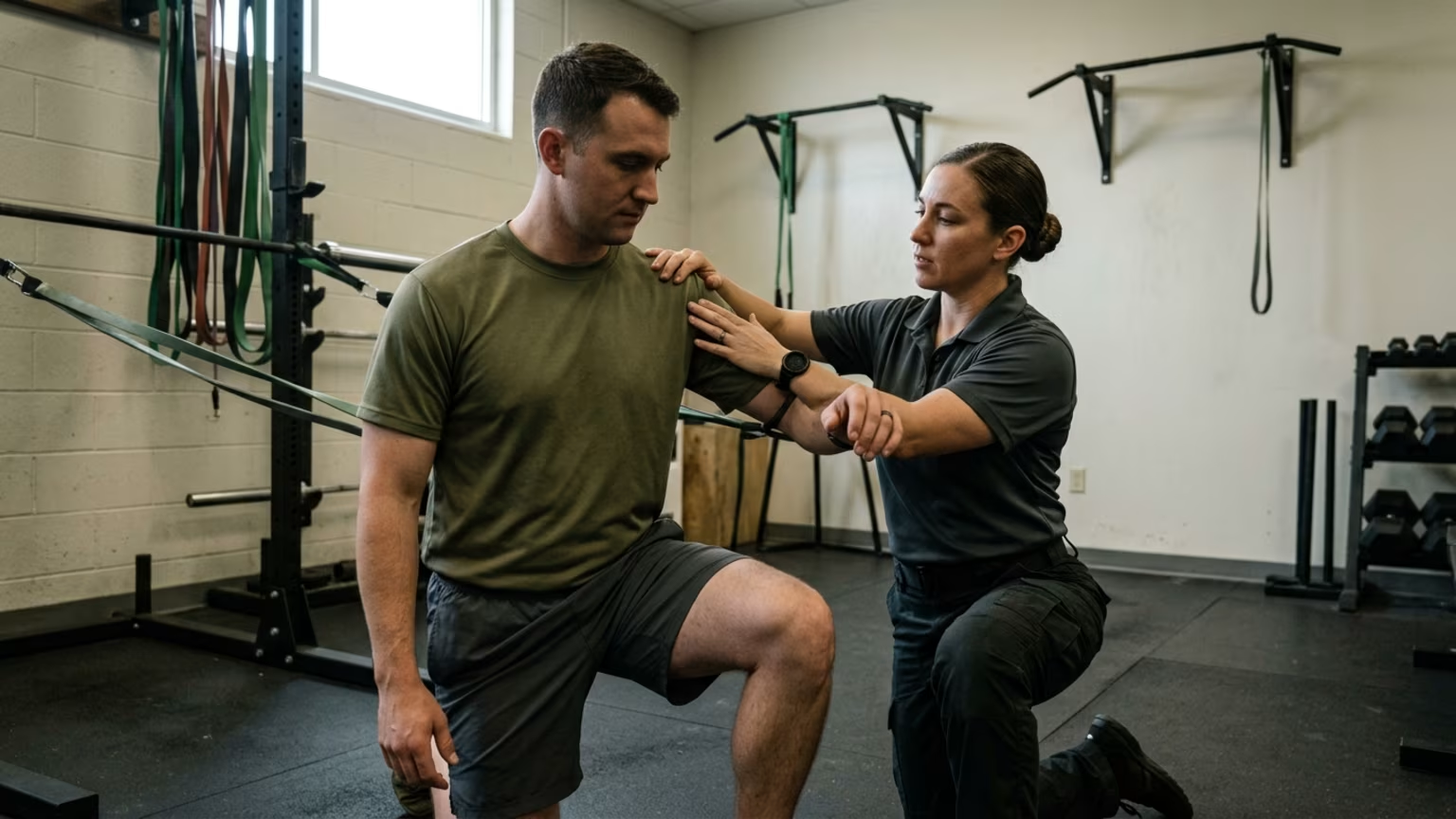
The U.S. Army recently highlighted APEX Fitness training for The Old Guard. We review H2F brigade injury data and structured military performance protocols.
Build better habits around strength, recovery, sleep, hormones and healthy aging with practical guidance for active military personnel and veterans.
Explore BattleVet