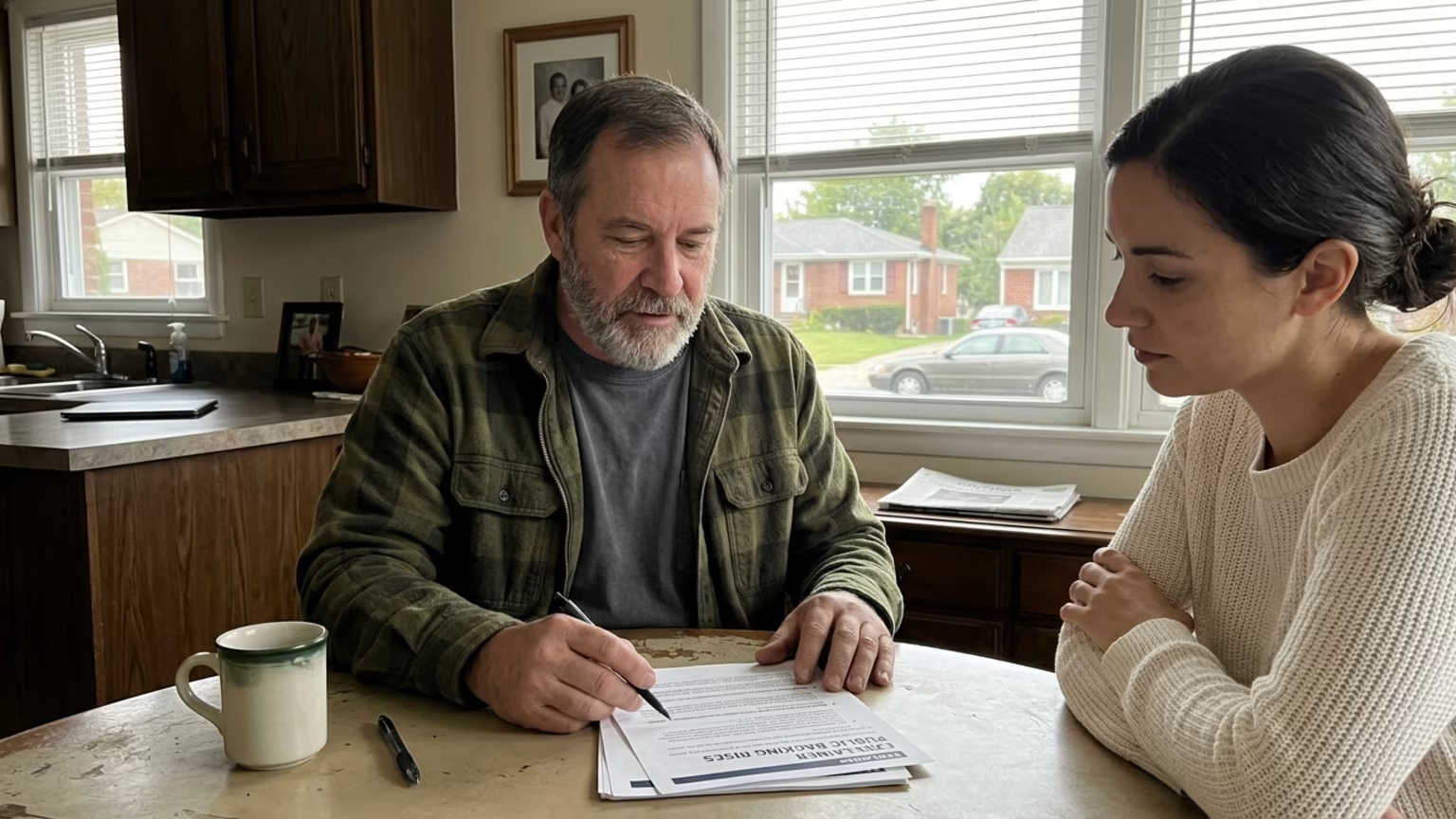

A new survey highlights veteran perspectives on the Take Care of America's Veterans Act, detailing the debate over proposed disability rating changes.





If you are in immediate danger, call 911. For 24/7 support, call or text 988 and press 1 for the Veterans Crisis Line, or text 838255.
Between August 14 and September 8, 2026, Mission Roll Call conducted a nationwide survey evaluating support for the Take Care of America’s Veterans Act. The organization surveyed 1,046 respondents nationwide and measured support before and after informational explainers. They found that 70.5 percent of respondents supported the legislation after receiving additional information about the bill. The House version of this legislation was introduced by Representative Mike Bost on June 10, 2026. It was referred to the House Veterans Affairs and Armed Services committees. Congress.gov lists the bill’s latest action as postponed proceedings on July 16, 2026, confirming its status as introduced rather than passed legislation.
This legislative update matters for active duty personnel and veterans because it proposes structural changes to future benefits. A central point of debate is Section 108, which would alter future claims for specific conditions without automatically changing current ratings. For many service members, respiratory conditions directly impact daily capability and physical readiness. Poor sleep affects everything from metabolic function to joint recovery.
I remember waking up after a poor night of sleep and realizing that my training recovery was taking much longer than it used to. I realized that readiness is more than just pushing through the fatigue. It requires a dedicated approach to sleep and hormonal health, which completely shifted how I view long term capability. Because conditions like sleep apnea affect overall health so deeply, proposed changes to how they are evaluated carry significant weight.
BattleVet focuses specifically on military and veteran health. We connect physical performance with long term health rather than treating them as separate subjects. Conditions like sleep apnea do not just affect a compensation rating. They directly impact body composition, cardiovascular resilience, and healthy aging over time. When policy proposals suggest changing how these conditions are evaluated, veterans need to understand the exact clinical criteria involved. Knowing how a diagnosis is rated helps service members prioritize their own physical restoration.
Understanding military and veteran health information without sorting through hype or sales driven content is a core challenge. This legislative debate perfectly illustrates the need for clear explanations relevant to military and veteran populations. When headlines announce sweeping changes, the resulting anxiety can obscure the actual facts of the bill. By focusing on the exact text of the legislation, we aim to provide confidence through clarity. Veterans deserve to know exactly what is being proposed so they can manage their health decisions with better context.
Reading consistent updates on military health helps veterans separate credible evidence from marketing claims and early research. Reviewing detailed information on our background also clarifies our evidence led standard. This specific legislative debate shows why separating credible evidence from hype is so important.
The Mission Roll Call survey highlighted how additional context influences public opinion on complex legislation. Before reading informational explainers, 55.3 percent of respondents supported the bill. After reviewing the material, support increased to 70.5 percent, and the share of respondents needing more information fell from 27.1 percent to 12.7 percent. This significant shift demonstrates how reviewing the full scope of a bill can alter initial perspectives.
Despite broad support for the overall package, Section 108 proved to be a major point of friction. The survey found that Section 108 was substantially less popular than the overall legislation. Only 29.8 percent supported the provision as proposed, while 31.3 percent opposed changing future ratings for tinnitus and sleep apnea. Interestingly, among respondents who opposed the Section 108 rating changes, 52.3 percent still supported the overall legislation. This indicates that opposition to one provision did not necessarily translate into opposition to the entire package.
When asked how Congress should handle the legislative impasse, respondents offered split opinions. The survey noted that 22.3 percent favored removing or modifying Section 108 and finding another funding mechanism. Another 21.9 percent supported advancing broadly supported provisions separately while negotiations continued. These responses suggest a strong desire to see progress on the less controversial aspects of the bill.
Respondents also identified several key priorities within the broader legislative package. Protecting disability compensation was the top priority at 55.4 percent. The Major Richard Star Act followed closely at 45.1 percent. Mental health and suicide prevention captured 38.1 percent of the vote.
Survivor benefits drew 36 percent, while community care reached 31.2 percent. Caregiver support registered at 25.2 percent of the total responses. These differing priorities highlight the challenge of passing comprehensive healthcare packages. Lawmakers must balance competing interests while attempting to satisfy a diverse veteran population.
A separate survey conducted by Disabled American Veterans presented a very different view of the legislation. While Mission Roll Call surveyed 1,046 respondents nationwide, Disabled American Veterans surveyed more than 4,200 veterans and related groups. The Disabled American Veterans questions focused heavily on protecting earned benefits and opposition to Section 108. This difference in methodology helps explain the contrast in their respective findings.
The Disabled American Veterans findings focused heavily on the financial implications of the bill. According to their survey, 84 percent opposed using veterans benefit reductions as a general offset. Furthermore, 80 percent opposed Section 108 specifically. The organization stated that the provision could reduce future disability compensation by 57 billion dollars for 1.5 million veterans.
These two surveys illustrate how different respondent pools capture different angles of the same issue. Mission Roll Call measured sentiment before and after an educational phase among a smaller national sample. Disabled American Veterans surveyed a much larger group with a specific focus on the protection of existing benefit frameworks. Neither survey should be viewed as the sole definitive measure of all veteran opinion.
The details of Section 108 highlight an important shift in how certain conditions might be evaluated in the future. For sleep apnea, reporting on the proposal indicates the new framework would tie ratings closely to treatment response. The reported proposed scale would provide a 0 percent rating when the condition is asymptomatic with or without treatment. It would offer a 10 percent rating when treatment provides incomplete relief.
More severe medical impacts would correspond to higher ratings under the proposed structure. A 50 percent rating would apply when treatment is ineffective or cannot be used because of another qualifying condition. A 100 percent rating would only be granted when there is documented end organ damage. This proposed structure places a heavy emphasis on medical documentation, treatment efficacy, and functional outcomes.
For tinnitus, the proposed legislation would fundamentally alter the compensation model. Under the proposal described in reporting on the bill, tinnitus would generally no longer receive its own separate compensable rating. However, a 10 percent rating could remain available in certain cases involving service connected hearing loss. Veterans planning future claims should ensure their medical records accurately reflect their symptoms and treatment responses.
Because the bill remains introduced legislation, veterans should not assume their current healthcare or benefits are changing tomorrow. Anyone affected by a potential future claim should preserve relevant medical records, diagnostic testing, and treatment documentation. Monitoring the actual legislative process provides a more accurate picture than reacting to early social media debates. Maintaining a detailed personal health record is a foundational step for protecting your long term interests.
The shift toward evaluating treatment effectiveness requires a more active role from the patient. If you are prescribed a device for sleep apnea, consistent use and regular follow up appointments become critical data points. Documenting whether the treatment actually resolves your fatigue or if it provides incomplete relief will be essential under the proposed rules. This approach mirrors our broader guidance on maintaining strength, mobility, and fitness as you age.
Tracking your metrics and communicating clearly with your healthcare provider ensures that your true medical status is always accurately recorded. Seeking objective resources for managing sleep and resilience can help you prepare for these clinical conversations. By staying engaged with discussions on healthy aging, veterans can better anticipate how their healthcare needs might evolve. Keeping your medical documentation current is about taking ownership of your physical capability for the decades ahead.
As lawmakers continue to debate the balance between funding constraints and necessary healthcare expansions, the core challenge remains unresolved. Will future legislative efforts find a way to modernize disability criteria without alienating the very veterans they are designed to protect?
Follow BattleVet for practical guidance on military and veteran health, strength, recovery, testosterone, sleep and healthy aging. Stay connected for new articles, research backed insights and clear information to help you stay capable for the years ahead.



A recent Brown University study found younger military veterans have higher PFAS concentrations than civilians, prompting new clinical screening conversations.


TRICARE recently published updated guidance clarifying how Medicare, Social Security, and military health benefits coordinate for transitioning retirees.
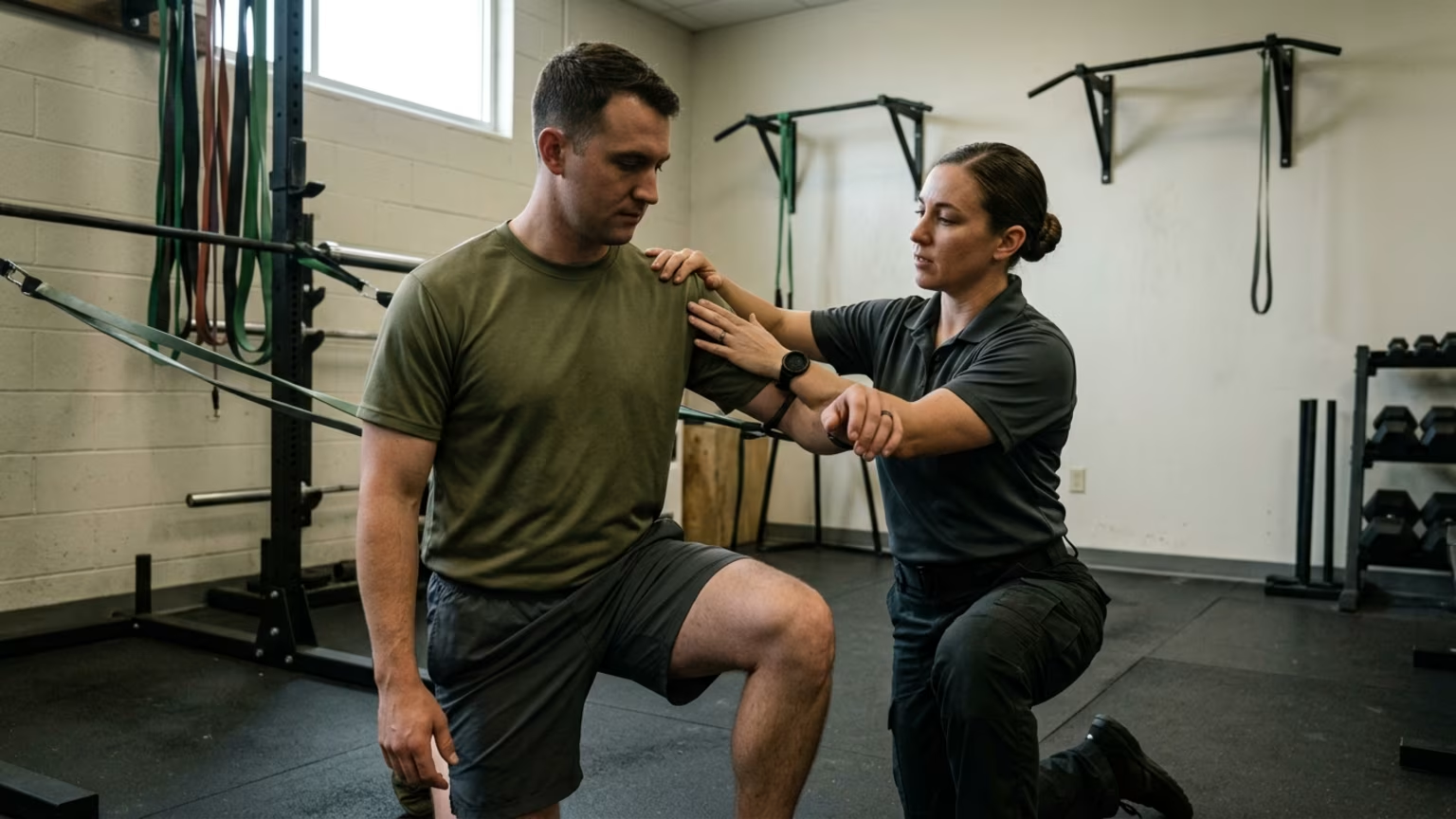
The U.S. Army recently highlighted APEX Fitness training for The Old Guard. We review H2F brigade injury data and structured military performance protocols.
Build better habits around strength, recovery, sleep, hormones and healthy aging with practical guidance for active military personnel and veterans.
Explore BattleVet