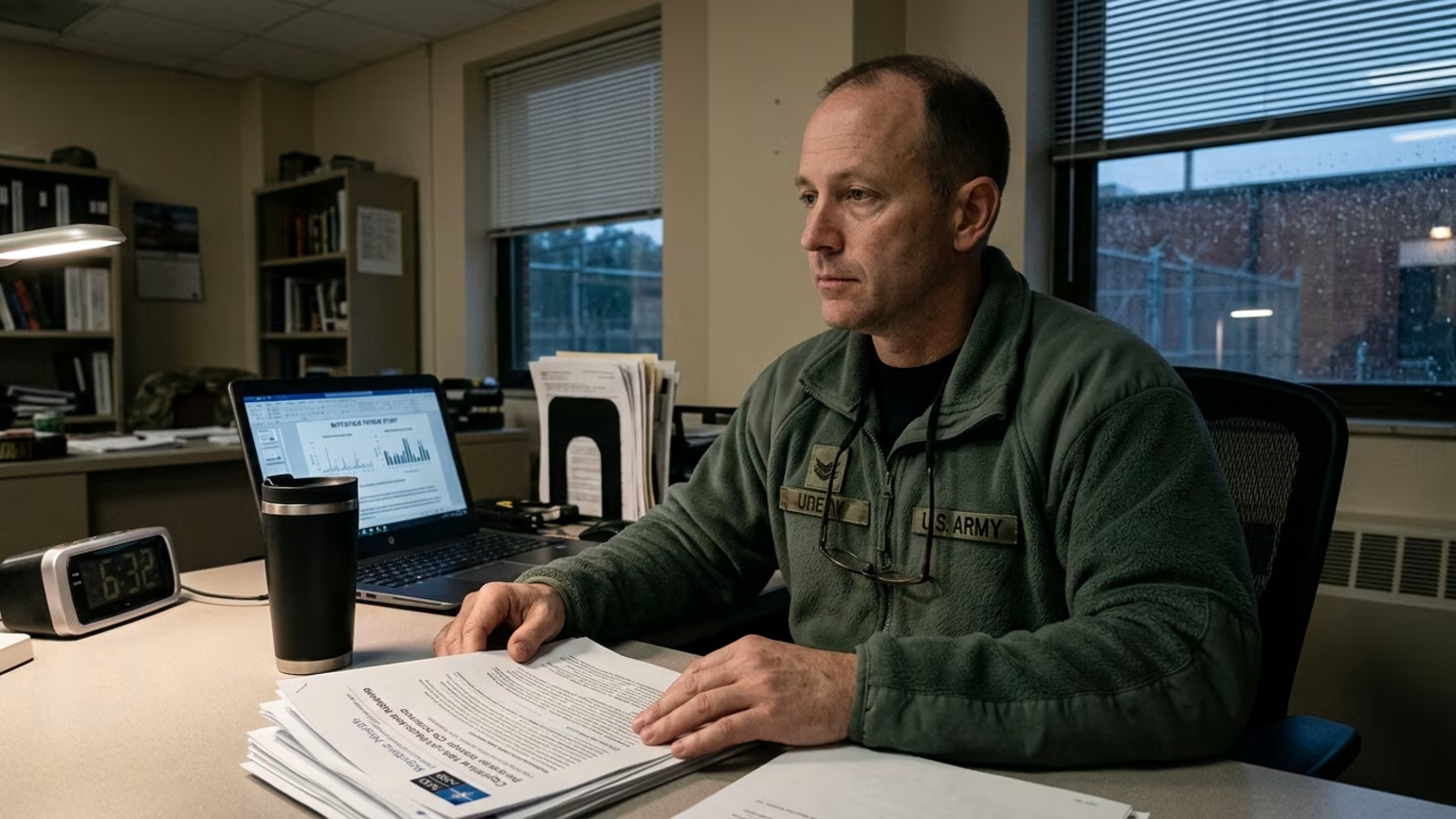

A NATO science summit explored how battlefield sleep loss degrades cognitive performance and why modern military readiness requires structured team mitigation.





Soldiers in a 53-hour field test receiving only three hours of sleep showed distinct deterioration. The review reports deterioration in several mood and orientation measures alongside an increase in depression. This physical and mental degradation directly affects operational readiness and unit safety. Continuous hyper-vigilance produces rapid cognitive fatigue that compromises decision-making in high-stress environments.
An infantry commander in a remote outpost must evaluate threats and direct personnel after 40 hours awake. The demand for continuous decisions without adequate rest creates a heavy physical and mental burden. This field reality forces leaders to choose between relying on individual willpower or implementing structured team mitigation. The right approach determines whether a unit maintains its capability or faces severe performance decline.
Military personnel often rely on personal resilience and individual countermeasures to manage fatigue during operations. U.S. military research programs include behavioral and pharmacological strategies intended to counter the operational effects of sleep loss. These individual interventions can provide short-term alertness when immediate threats prevent restorative sleep. However, they do not replace the cognitive recovery provided by actual rest.
A 2026 Military Medicine review describes links between sleep deprivation and multiple cognitive impairments. The review highlights specific deficits in reaction time, reasoning, and emotional regulation. Inadequate sleep also impairs basic learning, memory retention, and overall processing speed. These cognitive impairments become especially consequential in stressful military environments.
The military views these cognitive deficits as direct threats to mission success. Reduced processing speed limits a service member's ability to interpret complex battlefield information quickly. Impaired memory prevents personnel from recalling critical procedures during sudden engagements. A degraded reasoning capacity makes it difficult to adapt when operational plans inevitably change.
The same review cites studies measuring the exact impact of sustained wakefulness on troops. Twenty-four hours without sleep produced slower responses and reduced alertness among military academy cadets and Army soldiers. The research shows that total sleep deprivation produces more rigid thinking and less flexible decision-making. Relying entirely on individual grit fails to address this fundamental cognitive decline.
Inadequate sleep connects directly with reduced emotional self-regulation and increased risk-taking behavior. Troops experiencing severe sleep loss struggle to inhibit poor responses during chaotic situations. The field test showing increased depression after three hours of sleep highlights the psychological cost. Treating these effects as simple fatigue ignores the deep impact on warfighter performance.
Scientists from six NATO countries met at the Uniformed Services University of the Health Sciences on July 6, 2026. The summit examined battlefield fatigue and troop performance to give researchers a firsthand combat perspective. This approach prevents scientists from relying exclusively on laboratory or observational data. The event brought together operational personnel and researchers working on fatigue mitigation, sleep, and traumatic brain injury.
The summit was hosted by the university's Department of Military and Emergency Medicine. Army Col. Daniel Kearney briefed researchers using his experience commanding an infantry company. He led this unit through 15 months of combat in Afghanistan’s Korengal Valley. His account illustrated how operational demands prevent leaders from simply stepping away to rest.
Kearney served with the unit featured in the 2010 documentary Restrepo. This acclaimed film won the Grand Jury Prize at the Sundance Film Festival. It also received a nomination for Best Documentary Feature at the 83rd Academy Awards. According to Dr. Francis O’Connor, Kearney has spent nearly seven years of his military career deployed in combat environments.
Kearney used his deployment experience to advocate for a shared approach to readiness. He described the immense physical and mental burden of making continuous decisions without adequate sleep. He emphasized that fatigue mitigation depends on both leaders and teams rather than individual effort alone. O’Connor noted that Kearney views the group as stronger than the individual when managing severe fatigue.
The demand for continuous vigilance takes a severe toll over a long deployment. Kearney's firsthand account gave researchers a vital perspective on combat and combat fatigue. Operational demands often force leaders to operate in a state of chronic exhaustion. Hearing this reality directly from a commander anchors scientific research in operational truth.
A 2026 Military Medicine supplement introduced a biopsychosocial model to formalize this modern approach. This model treats sleep deprivation as the result of interacting biological, psychological, and social factors. It emphasizes that sleep loss affects both performance and overall well-being in operational settings. Finding sustainable recovery strategies requires looking beyond basic biology to understand team dynamics.
Leaders must evaluate different mitigation strategies based on their specific operational context. O’Connor argued that commanders may discount rest and sleep efficiency when they focus heavily on physical fitness. Both physical conditioning and sleep health function as core components of warfighter readiness. Treating sleep as a separate wellness concern limits a unit's overall capability.
Units should use buddy observation for warning signs of severe cognitive fatigue. These signs include deteriorating attention, unusual irritability, and slowed responses. Leaders must plan protected sleep opportunities and distribute fatigue-monitoring responsibilities across the entire team. Sharing this burden prevents any single service member from reaching the point of critical failure.
The military already applies structured fatigue management in other high-risk operational areas. Army safety guidance recommends seven to eight hours of sleep before driving and regular rest breaks. This guidance clearly identifies heavy eyelids, frequent yawning, and lane drifting as warning signs requiring a stop. While driving rules differ from combat operations, the fundamental principle of structured mitigation remains identical.
Active service members should avoid treating alertness aids as permanent substitutes for actual sleep. Available research supports investigating countermeasures but does not justify assuming they eliminate cognitive consequences. Accessing reliable military health guidance helps personnel understand the limits of chemical stimulants. Professional assessment remains necessary for anyone experiencing persistent insomnia, nightmares, or excessive daytime sleepiness.
The most defensible strategy involves structured sleep planning and active team accountability. Early recognition of cognitive decline supports readiness far better than ignoring the biological need for rest. No schedule or countermeasure can guarantee normal performance during prolonged periods of sleep loss. Personnel must understand that healthy sleep practices directly protect their operational effectiveness.
Veterans and former service members can apply these exact principles outside of deployment. Fatigue-related problems with attention and judgment deserve careful management in civilian life. Sleep quality connects deeply to resilience and psychological functioning in military and veteran populations. Utilizing dedicated sleep and resilience resources helps veterans maintain long-term physical and mental health.
The infantry commander in a remote outpost cannot invent extra hours of rest. However, that leader succeeds by treating sleep as a critical tactical asset rather than an individual luxury. Managing fatigue through team support and structured planning prevents catastrophic errors. A cohesive approach to sleep ultimately keeps the entire unit capable and safe.
Follow BattleVet for practical guidance on military and veteran health, strength, recovery, testosterone, sleep and healthy aging. Stay connected for new articles, research backed insights and clear information to help you stay capable for the years ahead.


Combat Stress’s workplace guidance emphasizes listening over diagnosis. Recent U.S. veteran insomnia research adds context for sleep and recovery concerns.


ErythroMer's reported storage design could matter for military care. An academic review still lists it as preclinical, with human evidence ahead.
A large veteran study links PTSD and documented social needs to later cognitive impairment, reinforcing the value of connected care planning.
Build better habits around strength, recovery, sleep, hormones and healthy aging with practical guidance for active military personnel and veterans.
Explore BattleVet