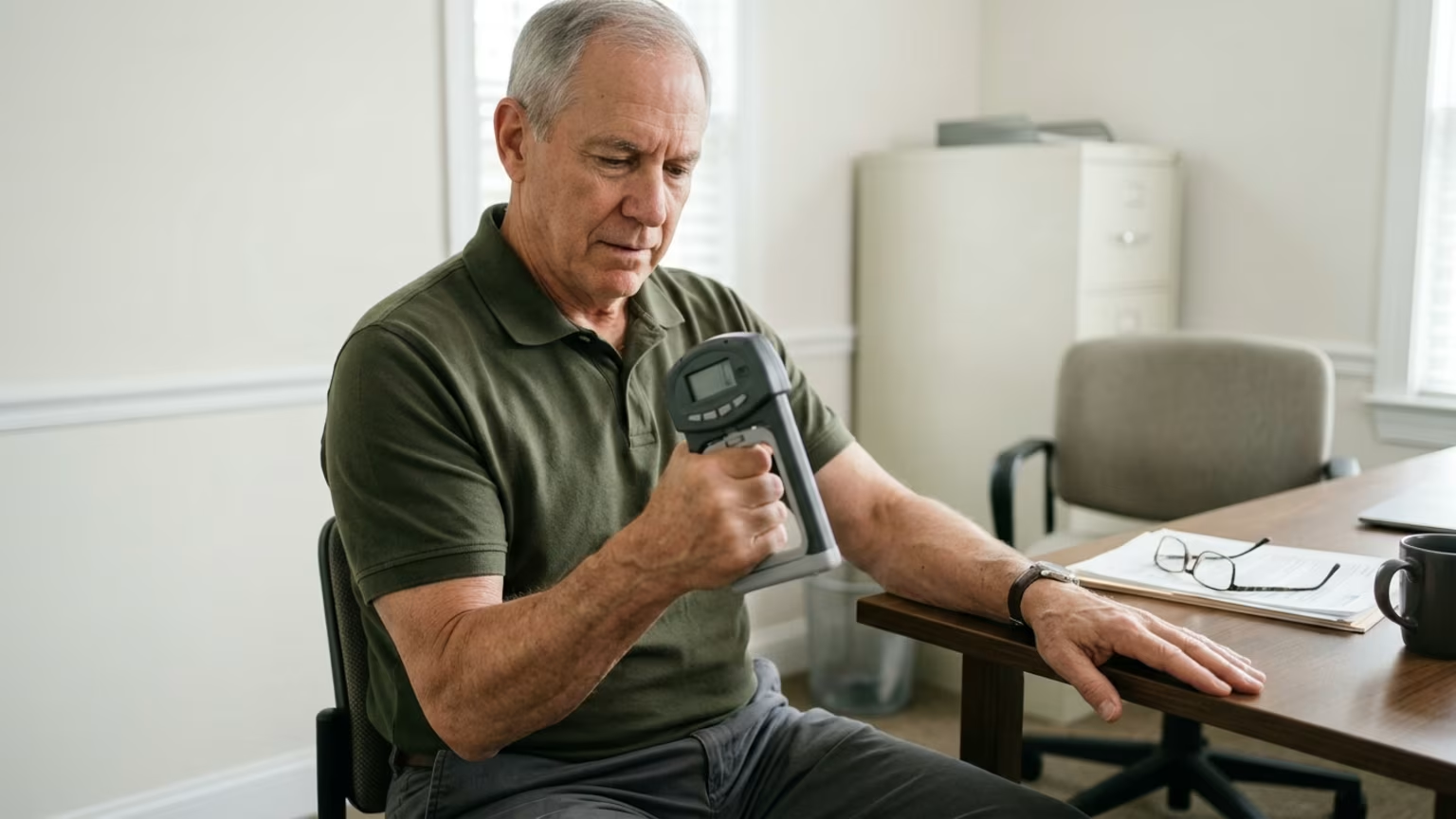

New research highlights sit-to-stand muscle power as a strong indicator of healthy aging and functional ability, offering an alternative to handgrip testing.





In late September 2026, Exercise New Zealand highlighted new research evaluating how we measure physical capability as we age. According to a report by Aus Leisure, scientists are comparing sit-to-stand muscle power against traditional handgrip strength. The coverage detailed a 2026 study of older adults that evaluated these two specific metrics. The findings suggest that lower body power might offer stronger signals about longevity and daily function.
Maintaining physical independence is a primary goal for veterans and former service members. For years, medical professionals have used grip strength as a simple way to estimate overall health. Handgrip tests are fast, inexpensive, and easy to perform in a standard clinical setting. However, daily tasks like getting out of a chair or catching your balance require a different physical skill.
Veterans often transition from highly structured active duty fitness tests to self-managed health routines. During active service, physical assessments measure endurance, raw strength, and immediate mission readiness. As veterans age, the priorities shift toward maintaining mobility and staying out of the hospital. Understanding the difference between raw strength and muscle power changes how we view physical maintenance.
Absolute strength tells you how much weight you can move in a single effort. Power tells you how fast you can generate force to move that weight. As people age, they often lose muscle power faster than they lose pure strength. For example, catching yourself during a stumble requires rapid force generation rather than a slow, heavy lift.
If lower body power is a better indicator of health risks, it provides a highly practical target for staying capable. Heavy lifting is not always possible or advisable for individuals with joint wear and tear. A focus on moving efficiently and powerfully offers a sustainable path for long-term health. Building a plan around these functional movements aligns perfectly with healthy aging and longevity strategies.
This connects physical performance directly with lifelong health outcomes. It supports the core focus of Military Health & Veteran Wellness initiatives across the community.
The recent coverage draws on several observational studies tracking aging populations. These studies evaluate how different physical markers correlate with health outcomes over time. Aus Leisure detailed findings from multiple research efforts to illustrate this connection.
A 2026 paper in Experimental Gerontology examined a cohort from the Toledo Study for Healthy Aging. This research included 2,134 adults aged 65 and older. The scientists compared sit-to-stand muscle power directly with handgrip strength. They wanted to understand how each metric related to physical function and mortality in an older population.
Aus Leisure reports that low sit-to-stand power was associated with poorer functional ability in both men and women. The study also linked low power to higher all-cause mortality across both sexes. Notably, the researchers found a specific difference when evaluating men in the study group. For men, low sit-to-stand power had a stronger association with slow walking speed than low handgrip strength did.
The coverage also highlighted a separate study published in Mayo Clinic Proceedings in 2025. This research followed 3,889 men and women aged 46 to 75. Because the cohort included middle-aged adults, it is not exclusively an over-65 sample. The scientists tracked these participants for a median duration of 10.8 years.
The findings showed significant differences in mortality hazards between the highest and lowest groups. Aus Leisure reports that men in the lowest relative-power group had a mortality hazard 5.88 times that of the highest-power group. Women in the lowest group faced a mortality hazard 6.90 times higher than their high-power counterparts. These figures remained significant after researchers adjusted for age and other health factors.
It is crucial to understand what these hazard ratios actually mean. The large numbers compare the extreme ends of the study group. They do not mean that an individual's personal risk of death is multiplied by the same exact amount. The available source does not provide enough detail to calculate absolute risk or translate the comparison into an individual prognosis.
Despite these limitations, the comparisons remain highly relevant for health tracking. In its account of this 2025 study, Aus Leisure noted an important comparison. Relative muscle power was a stronger predictor of mortality than relative handgrip strength in this specific group. This strongly supports the value of lower body power assessments for middle-aged and older adults.
Aus Leisure also described a study from the Journal of Sport and Health Science. This research evaluated 1,876 adults aged 65 and older. The findings linked low sit-to-stand power to several severe health events. In men, low power was associated with a history of falls and fractures.
For women in the study, low lower body power was linked to hip fractures and hospitalization. The research noted that low power correlated with longer hospital stays and higher all-cause mortality in both sexes. A later European Journal of Preventive Cardiology article provided further context for middle-aged populations. It reported that performance on a sitting-rising test predicted natural and cardiovascular mortality in participants aged 46 to 75.
It is important to remember that these are observational studies reporting associations. The sources do not claim that low power directly caused these deaths. They also do not prove that power-focused exercise guarantees an extended lifespan. Instead, they position lower body function as a critical marker of overall health.
These findings support a gradual shift in how we approach exercise in later decades. The goal is to safely build capability without rushing into advanced or heavy movements. Exercise New Zealand Chief Executive Richard Beddie commented on the practical application of this data. He said the findings warrant bringing power into conversations about exercise and aging.
Beddie suggested that muscle power belongs alongside established messages about general fitness and strength. Exercise New Zealand recommends building a solid foundation of strength and movement skill first. You must be able to perform a movement safely before you try to perform it quickly. This methodical approach reduces the risk of injury and supports proper physical restoration.
Once a person establishes good technique, they can practice moving an appropriate resistance more quickly. The source clearly states that exercise should reflect the individual's age, ability, experience, and health. This means there is no universal training protocol that applies to everyone. Seeking professional guidance is recommended for appropriate exercise selection and safe progression.
For military veterans, the most defensible application of this research is highly individualized. You should treat lower-body function as a relevant topic to discuss with a qualified clinician. A medical or exercise professional can help you evaluate your current baseline safely. Relying on credible training and performance resources can also help you understand these concepts better.
Balancing your training with adequate recovery and sleep is equally important. The research does not provide a validated home test or a universal training dose. It simply emphasizes that the ability to move efficiently matters for long-term health. Tailoring an exercise plan to your specific needs is the best way to support your physical capability.
Small, consistent improvements in movement quality often yield the best results over time.
As researchers continue to evaluate the metrics of healthy aging, the importance of lower body power is becoming clearer. Grip strength remains a useful and accessible tool for basic health screening. However, assessing how well a person can move from a seated position offers valuable insight into their functional future. Will veteran healthcare systems eventually adopt standardized power assessments to better track mobility and independence over time?
Follow BattleVet for practical guidance on military and veteran health, strength, recovery, testosterone, sleep and healthy aging. Stay connected for new articles, research backed insights and clear information to help you stay capable for the years ahead.


A recent VA update details how Million Veteran Program research informs clinical care. Learn how study data shapes future veteran medical decisions.

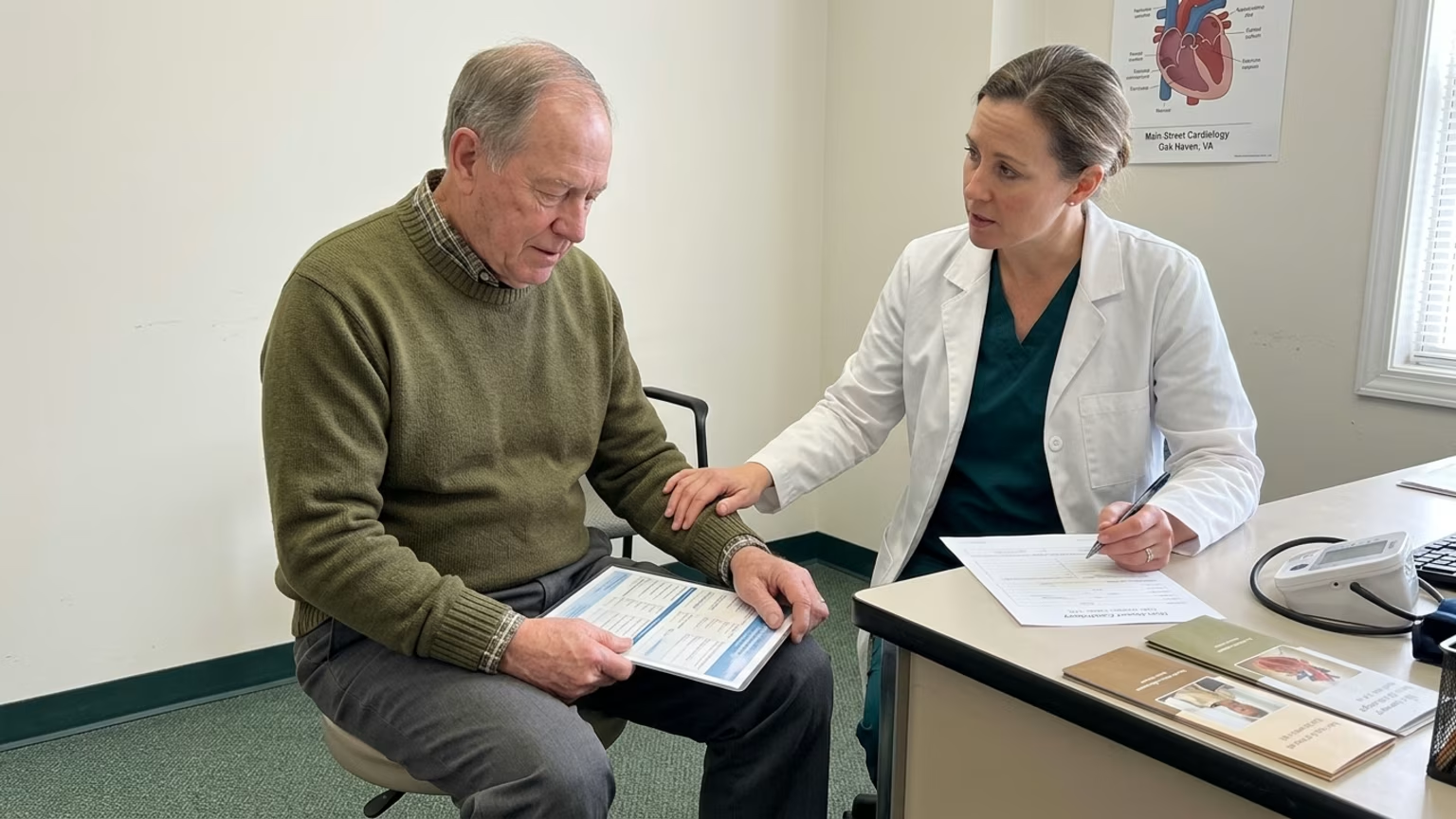
A recent Singapore study associates weaker grip strength and lower lean muscle mass with early left-atrial heart changes in older adults.
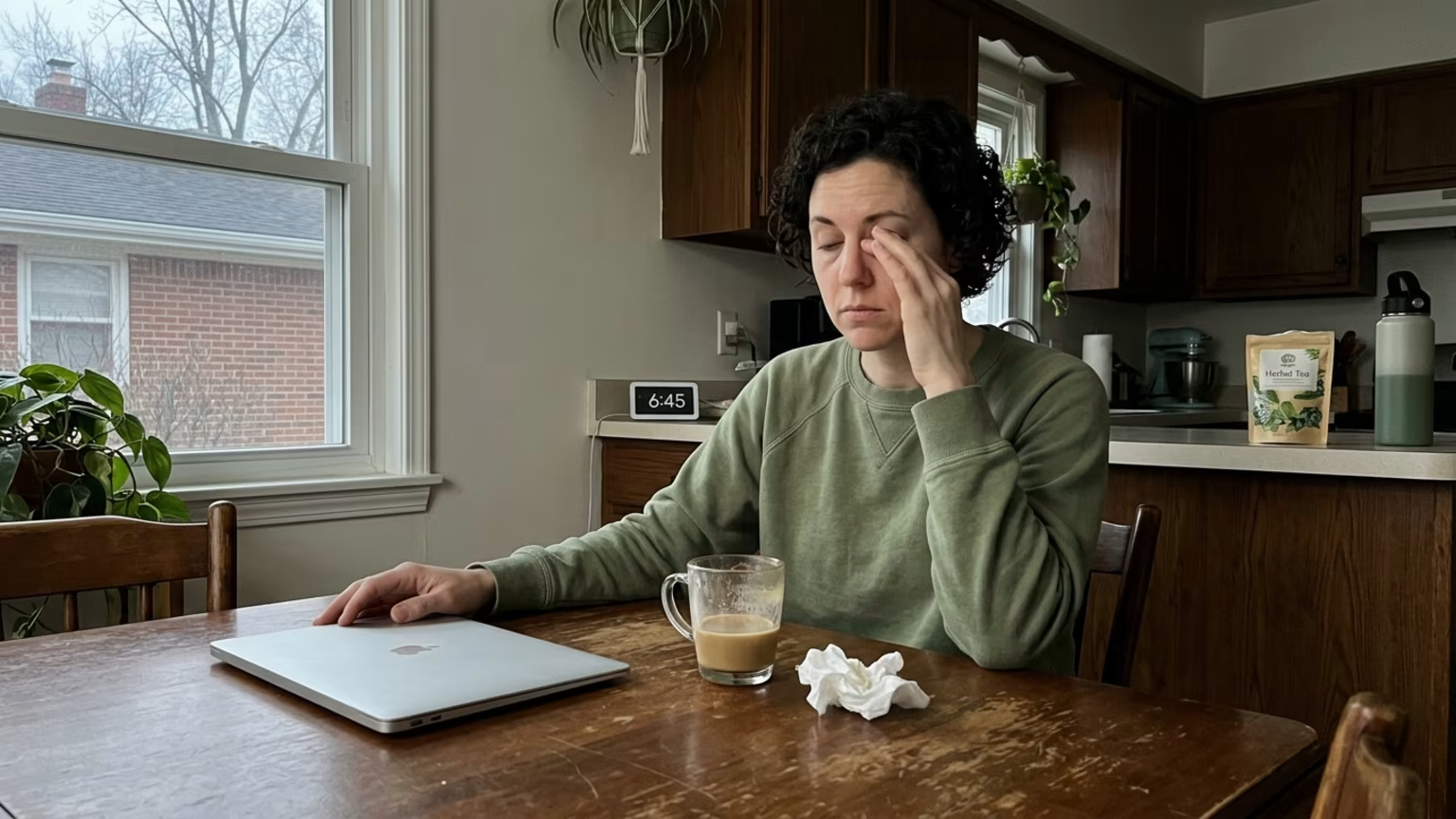
Texas A&M research highlights how genetics influence individual sleep needs. Learn why an eight-hour target may not fit everyone and how it impacts recovery.
Build better habits around strength, recovery, sleep, hormones and healthy aging with practical guidance for active military personnel and veterans.
Explore BattleVet