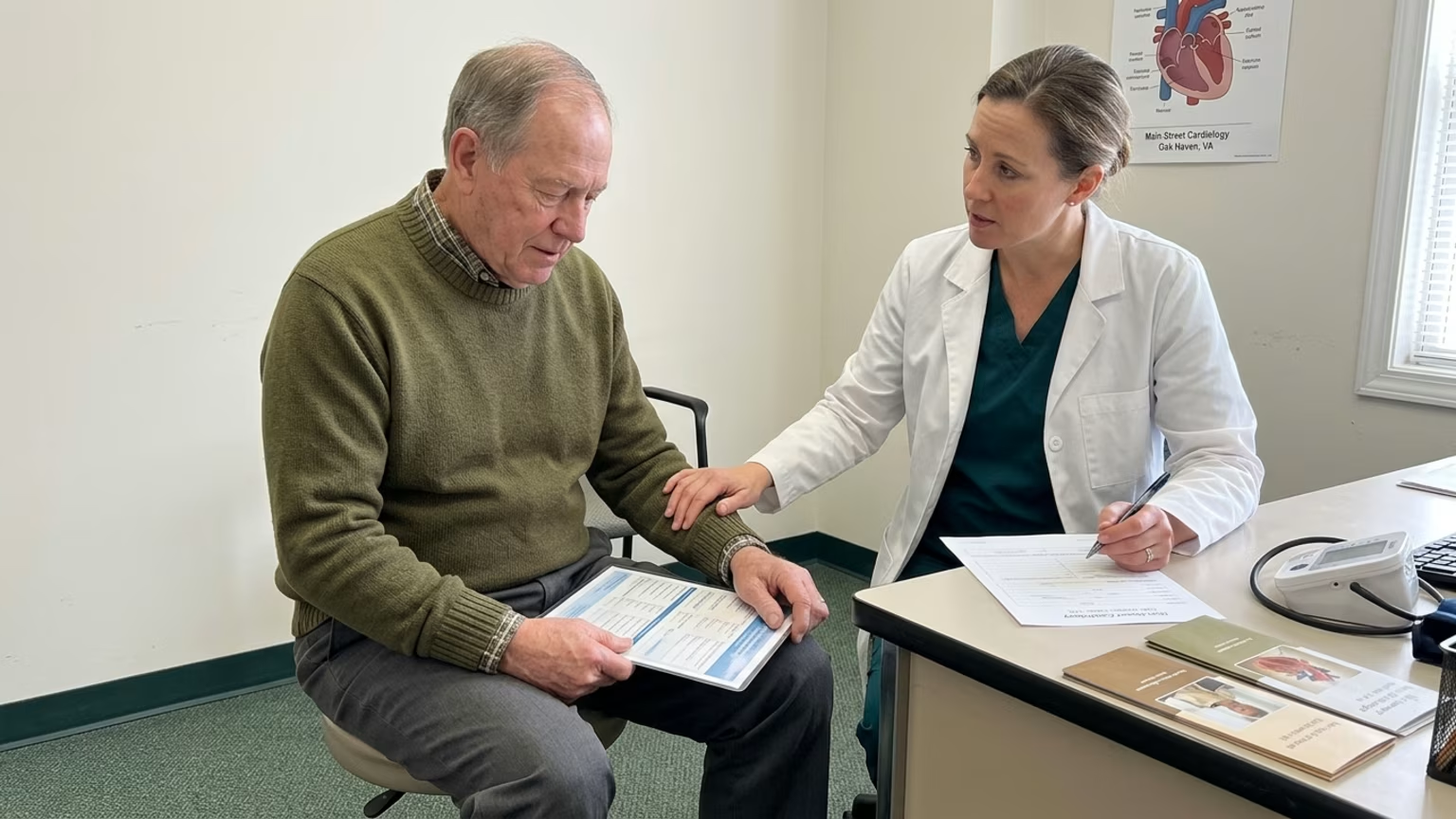

A recent Singapore study associates weaker grip strength and lower lean muscle mass with early left-atrial heart changes in older adults.





Recent coverage from The Straits Times reported on new cardiovascular research published in Communications Medicine. A research team from the National Heart Centre Singapore examined older adults to track potential early signs of heart decline. The researchers found that weaker handgrip strength and lower lean muscle mass were associated with reduced function in the left atrium of the heart. The news report noted that the study was published on Aug. 22 but did not specify the exact year.
This new research highlights a critical connection between muscular capability and internal organ health. Veterans and active service members often track physical performance purely as a measure of tactical readiness or athletic ability. We typically view muscle mass as a necessary tool for movement, manual labor, and structural joint protection. However, clinical studies like this one demonstrate that skeletal muscle health can also serve as a vital window into hidden cardiovascular changes.
Our team at BattleVet constantly emphasizes the deep relationship between outward capability and internal medical health. In our experience, physical markers often highlight deeper physiological needs. I remember waking up after a poor night of sleep and realizing that my training recovery was taking much longer than it used to. I realized that readiness is more than just pushing through the fatigue. It requires a dedicated approach to sleep and hormonal health, which completely shifted how I view long term capability. A noticeable drop in grip strength might operate the exact same way, acting as a subtle physical signal about deeper systemic stress.
Recognizing these physical signals early gives you a significant advantage in maintaining your long term wellness. Health priorities inevitably change during active service, the transition to civilian life, and your later veteran years. Rather than ignoring a loss of power or writing it off as normal aging, you can use these functional markers to start informed conversations with your clinician. Understanding how your body changes over time is a core part of reading healthy aging articles. When we view physical strength as a practical health metric, we can make smarter decisions about our preventative medical evaluations.
Navigating healthcare information requires separating credible evidence from trends and marketing claims. You might see fitness brands exaggerating studies like this to sell specialized workout gear. At BattleVet, our evidence led approach focuses on what the data actually supports. The research does not suggest that training your grip will directly cure an aging heart. Instead, it suggests that your grip strength acts as an external gauge for internal aging. Understanding this difference helps you manage your health decisions with better context and much less anxiety.
The National Heart Centre Singapore research team evaluated 255 participants as part of the Cardiac Ageing Study. These participants had a mean age of 71, and about 44% of the cohort were women. The formal study period ran from September 2014 to December 2017. The individuals involved were explicitly described as not having heart issues, stroke, or cancer prior to their evaluation.
Researchers conducted comprehensive health assessments on the group within a single day. These tests included detailed MRIs, clinical questionnaires, and thorough skeletal-muscle evaluations. By gathering all this health data simultaneously, the medical team could accurately compare physical strength metrics with direct imaging of the heart chambers. They wanted a clear snapshot of how lean muscle mass correlated with the size and function of the heart.
The primary findings focused on the left atrium rather than the left ventricle. The researchers reported a larger left-atrial-to-left-ventricular volume ratio among the participants with weaker grip or lower lean muscle mass. NHCS cardiologist Angela Koh stated that the study examined muscle strength and mass in relation to heart function. She noted that this larger volume ratio showed less effective coordination between the heart chambers.
It is vital to clearly understand the limits of this collected data before changing your health routines. The results represent observational associations based on a relatively small group of 255 older adults. The article reports an association, not definitive evidence that muscle loss directly causes heart dysfunction. Furthermore, the researchers did not report later heart failure diagnoses or other clinical outcomes for these specific participants.
This research strongly reinforces the idea that physical decline should prompt a broader medical review. A weaker grip is not a standalone diagnosis for heart failure or any other cardiovascular condition. Louis Teo, director of the NHCS Heart Failure Programme, suggested that handgrip testing combined with lean muscle assessment might simply help identify people at risk in the community. It serves as a potential early warning system, not a replacement for professional medical imaging or specialized cardiac evaluation.
If you notice a meaningful decline in your own strength or physical function, you should raise the issue during routine medical care. You can ask your primary doctor if your physical changes warrant a deeper assessment in the context of your overall health. The Singapore study does not provide a universal diagnostic cutoff, sensitivity metric, or specificity score for deciding when to seek an evaluation. Because the participants were free of existing heart issues, stroke, or cancer, these findings should not be assumed to apply directly to people managing those specific conditions.
It is also important to approach your physical training without unnecessary fear. A single weak workout or a tired grip after a long week is completely normal. The clinical focus is on a chronic, meaningful decline in your baseline strength over time. If you track your workouts and notice a steady drop in your physical capability, that data becomes a useful tool for your doctor. Clear, research backed guidance helps us avoid panic while still taking proactive steps toward better health.
For military and veteran readers, staying physically active remains a reliable cornerstone of preventative health. While the Singapore study does not prove that building muscle prevents heart decline, maintaining lean mass clearly supports your physical independence. Engaging in consistent exercise helps preserve your joint function and overall mobility as you age. If you want to learn more about preserving your physical capability over time, reviewing our strength, fitness and body composition resources is a practical next step.
Veterans looking for structured lifestyle support can utilize established physical activity programs designed for their needs. A VA News feature describes the MOVE! Weight Management Program for Veterans as a practical option for building healthier routines. The program combines useful nutrition education, physical activity, and ongoing lifestyle support. Veterans can easily take part through in-person sessions or by utilizing VA Video Connect from home.
The VA feature includes individual veteran accounts detailing personal weight loss and positive changes in health measures. However, this is a program story rather than a formally controlled medical evaluation. It reports no study sample size, comparison group, or population-level outcome analysis. The MOVE! program offers great examples of sustained activity and peer accountability, but it should be presented as program experience rather than concrete proof of a cardiovascular benefit.
Consistent strength training and daily movement remain powerful tools for maintaining your long term health. Whether you train in a commercial facility or follow a home routine, tracking your physical capability over time provides highly valuable data. Your baseline grip strength, daily recovery rate, and muscular endurance tell a story about your current physiological state. By paying close attention to these physical metrics, you can work more effectively with your healthcare providers. Exploring other military health articles can further assist you in understanding how these different physical markers connect to your long term wellness.
As researchers continue to investigate the complex links between our muscular and cardiovascular systems, we have to consider how everyday physical markers might shape standard medical screening. Will simple functional tests like grip strength eventually become a routine part of preventative cardiac care for aging veterans?
Follow BattleVet for practical guidance on military and veteran health, strength, recovery, testosterone, sleep and healthy aging. Stay connected for new articles, research backed insights and clear information to help you stay capable for the years ahead.


Texas A&M research highlights how genetics influence individual sleep needs. Learn why an eight-hour target may not fit everyone and how it impacts recovery.

Stanford neurosurgeon Odette Harris discusses treating concussion as a brain injury and addresses the overlooked effects of TBI in women veterans.
The VA announced new informed-consent steps for psychotropic medications starting in 2027. Learn how this policy updates patient education and consent rules.
Build better habits around strength, recovery, sleep, hormones and healthy aging with practical guidance for active military personnel and veterans.
Explore BattleVet