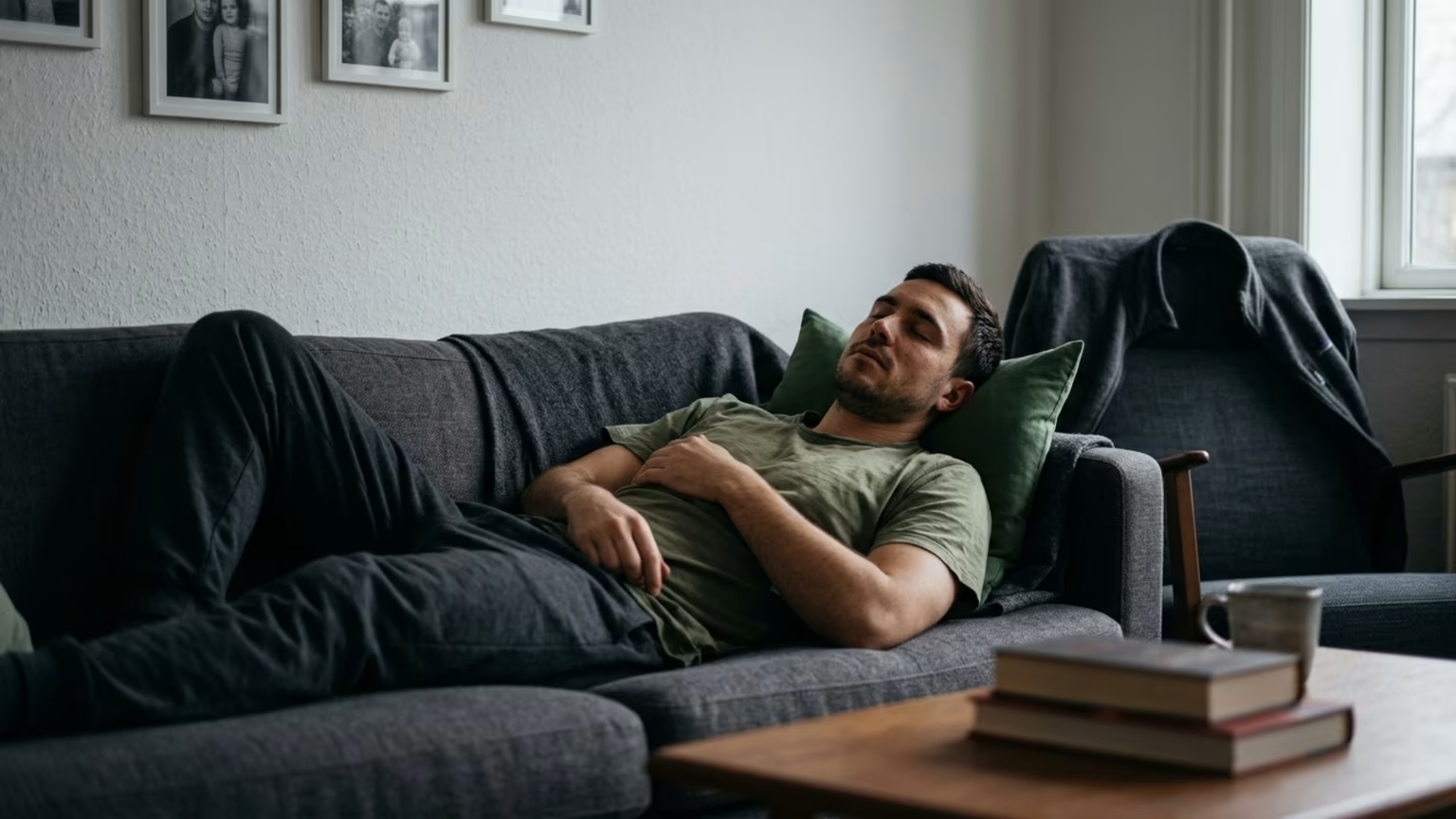

A clinical review of the military sleep method reveals its true benefits and limits for insomnia, sleep apnea, and veteran recovery.





The clock reads 0200. You shift your weight on the mattress, stare at the ceiling, and try to force your brain to shut down. You run through a checklist of muscle relaxation techniques you read about online.
The common belief is that the "military sleep method" is a guaranteed technique that will knock you out in exactly two minutes. The clinical reality is much less dramatic. Acibadem Hospitals Group analyzed this routine in an August 18, 2026 medical article authored by Dr. Şule Eren, MD. The report clarified that this method is simply a relaxation tool combining progressive muscle relaxation, calm breathing, and mental imagery.
Acibadem explicitly says the method is not a cure for insomnia, sleep apnea, anxiety, or other sleep disorders. It may help some people with occasional difficulty falling asleep when stress or pre-sleep overthinking is involved. However, the results vary significantly between individuals. It is not intended to force sleep or replace the diagnosis and treatment of a serious underlying condition.
The internet often pitches this routine as an officially issued military protocol that guarantees immediate results. In reality, the Acibadem article notes there is no single official version of the routine. Most iterations simply share the same broad elements of sequential relaxation, slow breathing, and attention focusing. The method grew popular because it addresses a very real need to manage physical tension in high pressure environments.
Military specific sleep challenges include demanding schedules, high operational tempo, and difficult sleeping environments such as barracks. These factors make a fast relaxation tool highly appealing to active duty personnel. However, relying on a simple breathing exercise to instantly cure chronic sleep deprivation creates unrealistic expectations. Poor sleep requires more comprehensive medical evaluation when it impairs daily functioning or produces persistent daytime fatigue.
Military sleep problems carry major consequences for operational capability and long term health. A 2026 Military Medicine article states that two-thirds of U.S. Army soldiers chronically obtain less than the recommended seven or more hours of sleep. The same source reports that soldiers on duty report insufficient sleep at twice the rate of civilians. Insufficient sleep is associated with impaired cognition, increased stress, reduced morale, and greater illness and injury risk.
Sleep loss is increasingly treated as an operational issue rather than merely a comfort problem. Service members working rotating shifts, overnight duty, or irregular operational schedules may struggle to apply a fixed bedtime routine consistently. When the physical environment prevents restful sleep, simple mental imagery is rarely enough to bridge the gap. True recovery requires an approach that matches the severity of the operational environment.
The military community is recognizing that fatigue degrades performance just as severely as physical injury. Leaders and medical personnel now view healthy sleep as a core component of force readiness. Expecting a single breathing routine to override days of continuous operations simply ignores the biological limits of the human body. Practical solutions must address the root causes of exhaustion rather than masking them with quick fixes.
While the specific military sleep method lacks clinical trials validating a two minute success rate, research provides clear data on structural sleep issues. The prevalence of insomnia diagnoses among U.S. Army soldiers increased by 658% between 2003 and 2011 in one retrospective study. Deployed soldiers received twice as many insomnia diagnoses as non-deployed soldiers in that same analysis. These figures highlight the massive scale of sleep disruption across the force.
Relaxation techniques can reduce muscle tension, but they cannot fix every underlying cause of sleep disruption. A breathing routine will not resolve chronic pain, medication side effects, depression, or restless legs. A person may have both insomnia and an undiagnosed physical condition at the exact same time. This is why clinicians emphasize the limits of relaxation tools when dealing with persistent exhaustion.
A relaxation routine certainly cannot fix a physical obstruction in your airway. Department of Veterans Affairs researchers reported that 21% of Veterans in a survey of nearly 20,000 people had sleep apnea, compared with 9% of non-Veterans. This higher prevalence makes sleep apnea a particularly important alternative explanation when a nightly relaxation routine fails to resolve poor sleep. Veterans must not assume that every sleep problem is simply stress related insomnia.
The medical data strongly supports looking beyond simple relaxation for long term health. The VA survey revealing high sleep apnea rates among Veterans highlights the critical need for comprehensive medical evaluations. When a physical obstruction repeatedly stops a person from breathing during the night, no amount of mental imagery will restore their rest. Clinicians increasingly prioritize diagnostic sleep studies to catch these hidden physical barriers to recovery.
Improving sleep often requires a combination of behavioral therapies and schedule adjustments. VA research reports that a smartphone program called CBT-i Coach was associated with significant improvements in sleep quality and insomnia symptoms among Veterans with chronic insomnia. Similar benefits were reported among Veterans both with and without PTSD or sleep apnea. Medical science clearly supports treating the underlying behaviors and thoughts related to sleep.
Adjusting physical routines can also yield measurable improvements in rest quality. A 2026 Military Medicine study found that changing physical training time from morning to afternoon successfully improved sleep. This suggests that operational schedule changes can complement individual relaxation techniques. Finding the right balance of daily activity is a key part of maintaining healthy aging over the long term.
Shedding the myth of an instant sleep cure changes how you approach your nightly recovery routine. You can absolutely still use progressive relaxation as a low pressure wind down tool. You generally adopt a comfortable position and relax your face. Then you relax your jaw and shoulders before moving down through your arms and legs, focusing your mind on a neutral phrase while breathing slowly.
You must pair these techniques with consistent and realistic daily habits. Acibadem recommends keeping a regular sleep schedule, limiting late day caffeine, and reducing evening screen exposure. You should also maintain a dark and quiet bedroom while allowing time for a proper wind down period. Reviewing resources on recovery and sleep provides excellent baseline guidance for building these foundational habits.
Building a resilient sleep routine takes time and consistent discipline. You should approach your sleep environment with the same focus you apply to your physical training. Small changes like reducing ambient light and maintaining a cool room temperature provide significant cumulative benefits over time. Consistency builds the biological momentum your body needs to reliably enter deep and restorative sleep cycles.
Using a relaxation routine incorrectly can sometimes make your sleep problems worse. Watching the clock, demanding immediate results, or interpreting wakefulness as failure can increase mental arousal. You should track your daily patterns rather than judging the success of a single night. Note your sleep timing, caffeine intake, duty schedule, and next day alertness so a clinician can accurately assess your situation.
You must be willing to escalate your approach when serious physical red flags appear. Acibadem identifies loud snoring, witnessed breathing pauses, gasping, and morning headaches as major warning signs. Excessive daytime sleepiness and unintentional daytime sleep are also clear indicators of a larger medical issue. Sleepiness while driving should be treated as a severe safety hazard rather than a cue to try a longer relaxation session.
If you struggle with chronic insomnia, you should ask a primary care provider about specialized cognitive treatments. VA Houston describes cognitive behavioral therapy for insomnia as a short term structured treatment that addresses behaviors and thoughts. This therapy provides an alternative path for veterans diagnosed with clinical insomnia who wish to avoid relying entirely on medication. Comprehensive guides on managing sleep, stress and resilience often highlight CBT-I as a highly effective clinical option.
Veterans can often access these evidence based treatments through multiple health care pathways. The VA provides access to CBT-I through primary care, mental health clinics, and specialized sleep medicine departments. Discussing your specific symptoms with a provider helps them determine if a formal sleep study is necessary. Taking this step is crucial for identifying conditions that relaxation exercises simply cannot treat.
The medical community is actively shifting how it views the intersection of sleep and military capability. Future research will likely focus heavily on treating sleep as a critical component of physical readiness rather than an individual failure. Clinicians are learning how to better distinguish between occasional stress related insomnia and complex disorders like sleep apnea. Medical professionals will continue developing targeted strategies for personnel facing demanding operational tempos.
Technology will also play a larger role in delivering effective behavioral interventions to service members. The success of digital self management tools like the CBT-i Coach demonstrates that structured support can successfully reach veterans remotely. We expect to see more clinical trials evaluating how schedule adjustments and digital therapies work together in active military populations. This ongoing research will help refine how the military approaches fatigue management and long term physical capability.
Public awareness regarding sleep disorders among veterans will continue to grow as researchers publish more long term data. We anticipate greater collaboration between military health systems and private researchers to develop specialized recovery programs. Future studies will likely explore how environmental factors and operational tempo directly alter sleep architecture over a career. This expanding knowledge base will ultimately lead to more effective treatments and better overall health outcomes for former service members.
Better sleep starts with replacing internet myths with practical, evidence based habits. Stay informed with BattleVet, address the physical realities of your recovery, and keep building your capability for the long term.
Follow BattleVet for practical guidance on military and veteran health, strength, recovery, testosterone, sleep and healthy aging. Stay connected for new articles, research backed insights and clear information to help you stay capable for the years ahead.


Combat Stress’s workplace guidance emphasizes listening over diagnosis. Recent U.S. veteran insomnia research adds context for sleep and recovery concerns.


ErythroMer's reported storage design could matter for military care. An academic review still lists it as preclinical, with human evidence ahead.
A large veteran study links PTSD and documented social needs to later cognitive impairment, reinforcing the value of connected care planning.
Build better habits around strength, recovery, sleep, hormones and healthy aging with practical guidance for active military personnel and veterans.
Explore BattleVet