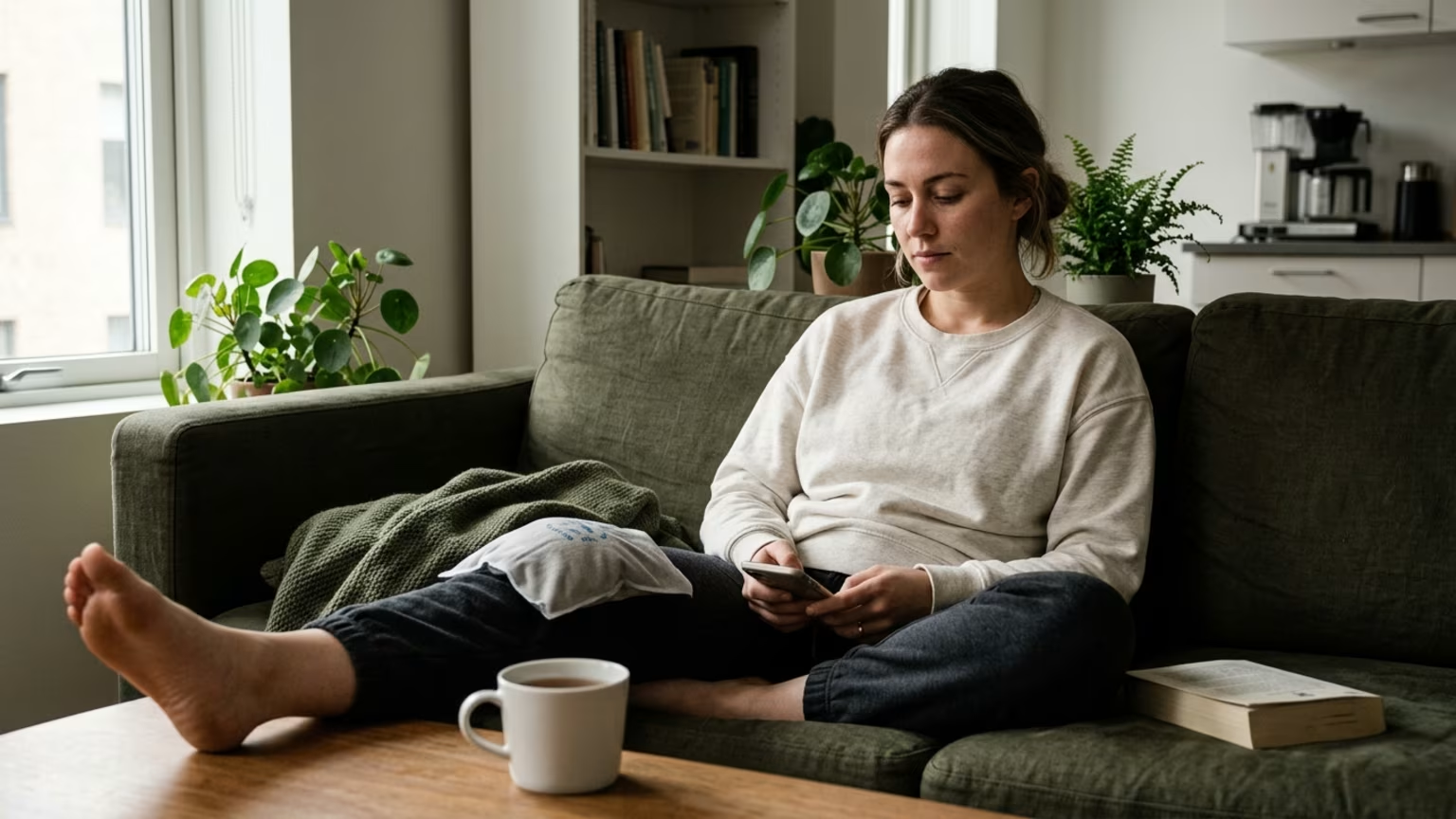

A 2026 MedDay segment highlights how late exercise affects sleep and why optimal rest matters for veteran physical recovery and biological aging clocks.





A single late-night workout should not ruin the following day, yet the physical effects often linger. In our experience with military fitness routines, late sessions can leave you staring at the ceiling. On August 19, 2026, a MedDay segment published by ClickOrlando raised two related health questions regarding this exact issue. The broadcast examined whether some forms of exercise can become counterproductive and whether getting more sleep is associated with healthier biological markers.
Service members routinely train under less than ideal conditions. Irregular schedules, night operations, and early formations mean workouts happen whenever time allows. We frequently assume that a demanding workout is strictly beneficial regardless of when it occurs. However, prioritizing intensity without planned rest can eventually compromise physical readiness.
The MedDay segment highlighted questions about whether some forms of exercise can backfire and discussed evidence related to getting more sleep. The primary concern is that highly demanding physical activity right before bed might delay sleep onset. When veterans maintain intense regimens without monitoring their rest, they risk blunting their physical adaptations. Linking your physical training regimen directly to rest ensures that hard work translates into capability.
Many former service members develop a mindset that categorizes sleep as a luxury rather than a tactical necessity. Operating on minimal rest becomes a badge of honor during active duty deployments. However, carrying that same operational mentality into civilian life eventually degrades your physical resilience. Transitioning toward a healthier framework means acknowledging that elite performance requires equally elite restoration strategies.
We have seen this dynamic firsthand within our own community. "I remember waking up after a poor night of sleep and realizing that my training recovery was taking much longer than it used to. I realized that readiness is more than just pushing through the fatigue. It requires a dedicated approach to sleep and hormonal health, which completely shifted how I view long term capability." A structured approach to rest helps veterans maintain strength and metabolic health over the long term.
Recent research provides granular detail regarding exactly how late workouts influence rest. A reported Nature Communications analysis of more than four million nights from nearly 15,000 active people found that later strenuous exercise was associated with poorer sleep. The study report said that people exercising intensely within two hours of bedtime fell asleep about 30 minutes later on average and had higher nighttime heart rates.
Real-world data suggest that exercising very close to bedtime can be problematic for some people. Keeping the body in a highly activated state delays the normal transition into rest. Sleep expert Harris, quoted by the New York Post, said vigorous exercise near bedtime can make it harder for the body to wind down and recommended leaving at least two hours between demanding exercise and bedtime.
The available reporting identifies two hours as a practical minimum recommendation from one expert and roughly four hours as a recovery-oriented target from the wearable-data report, but neither should be described as a universal medical rule. Athletes and veterans must measure their own responses to late activity. Tracking metrics like resting heart rate provides concrete feedback on your recovery status. This personal data proves far more valuable than blindly following generic fitness advice.
While evening exercise requires caution, it is not categorically harmful to your routine. Controlled evidence indicates that appropriately timed evening high-intensity exercise may not substantially impair sleep. A 15-trial meta-analysis found that high-intensity exercise ending two to four hours before bed generally did not disrupt sleep, although acute exercise was associated with a small reduction in REM sleep.
Specifically, the only statistically significant pooled change reported was a small, 2.34% reduction in rapid-eye-movement sleep after acute evening high-intensity exercise. For active service members, this means you do not necessarily need to cancel a late workout entirely. Adjusting the timeline by a few hours can preserve both the fitness stimulus and the rest period. Maintaining strong recovery and stress resistance habits remains entirely possible for those who must exercise in the evening.
Understanding the limits of your own recovery capacity prevents burnout and persistent injury. Service members routinely push past standard limits to achieve their mission objectives. However, applying that same aggressive strategy to evening physical training often yields diminishing returns. Your central nervous system needs adequate time to transition from high alert to restorative rest.
The MedDay broadcast also touched on fresh evidence regarding sleep duration and overall health markers. A common assumption is that sleeping more is always advantageous for physical restoration. However, recent scientific analyses indicate a nonlinear relationship between total sleep time and specific health indicators. A 2026 Nature study found that several biological-aging measures were most favorable within a sample-specific sleep range of roughly 6.4 to 7.8 hours.
Coverage of the study reported statistically significant nonlinear relationships for nine of 23 biological-aging clocks. The researchers observed that both unusually short and unusually long sleep periods could be associated with less favorable biological markers. Forcing yourself to stay in bed for excessive hours does not automatically translate to better restoration. Recovery is an active biological process that requires optimal conditions rather than mere extended duration.
The concept of biological aging clocks provides a unique window into cellular health and physical decline. These clocks measure how specific organs and systems wear down over time compared to your chronological age. When researchers mapped these markers against sleep data, they discovered that moderation outperformed extremes. Maintaining a sleep schedule within the recommended optimal range helps preserve cellular function and prevents accelerated physical aging.
Sleeping excessively long hours could indicate underlying physical strain rather than optimal athletic recovery. In a study of 2,410 participants, researchers reported an association between longer self-reported sleep and higher blood levels of p-tau181, beginning around 8.5 to nine hours. These findings require cautious interpretation, as prolonged sleep can sometimes act as a marker for accumulating fatigue or other health variables.
Consistency often proves just as crucial as the total duration achieved each night. A study discussed in Sleep associated greater sleep regularity with lower risk across several cardiometabolic markers, independent of sleep duration. Veterans should focus on establishing a predictable rhythm rather than just chasing a high number of hours on a fitness tracker. Adopting a sustainable daily schedule supports comprehensive long term veteran healthcare goals far more effectively than erratic periods of binge sleeping.
Managing the gap between intense training and rest is a highly practical skill for veterans. If evening workouts repeatedly result in restless nights, experiment with ending the session much earlier. Protecting the hours leading up to sleep allows your nervous system to downregulate effectively. When military operations or work obligations make late sessions unavoidable, adjust the specific type of physical activity.
The same expert advised that lower-intensity movement may be more suitable close to bedtime. Activities like stretching, restorative yoga or light Pilates can effectively reduce muscle tension. Lower-intensity evening movement was specifically recommended by the quoted expert as a more sleep-compatible option. Replacing a heavy lifting session with mobility work right before bed allows the nervous system to settle properly.
Adjusting your habits requires patience and a willingness to step back from chronic high intensity workloads. Start by logging your workout times alongside your wakefulness periods during the night. A pattern of declining performance plus worsening sleep is more actionable than a single poor night. This data allows you to make informed adjustments instead of guessing about your recovery status.
Tracking your own baseline metrics will reveal exactly how different workouts affect your night. Pay attention to subjective soreness, resting heart rate, and perceived exertion during the following day. By periodizing your routine intentionally, you ensure that every workout contributes to your physical capability rather than detracting from your overall recuperation.
As science continues to refine our understanding of biological clocks and training timing, how will the military adapt its standardized physical readiness programs to prioritize scheduled recovery? If your evening workouts currently disrupt your rest, shift your highest-intensity training to the morning and reserve the hours before bed strictly for light mobility work.
Follow BattleVet for practical guidance on military and veteran health, strength, recovery, testosterone, sleep and healthy aging. Stay connected for new articles, research backed insights and clear information to help you stay capable for the years ahead.


Combat Stress’s workplace guidance emphasizes listening over diagnosis. Recent U.S. veteran insomnia research adds context for sleep and recovery concerns.


ErythroMer's reported storage design could matter for military care. An academic review still lists it as preclinical, with human evidence ahead.
A large veteran study links PTSD and documented social needs to later cognitive impairment, reinforcing the value of connected care planning.
Build better habits around strength, recovery, sleep, hormones and healthy aging with practical guidance for active military personnel and veterans.
Explore BattleVet